


Medical Industry Value Chain Analysis Framework




Try Before you Buy Download Free Sample Product
 Impress Your
 Audience
 100%
100% Editable
 Save Hours
 of Time


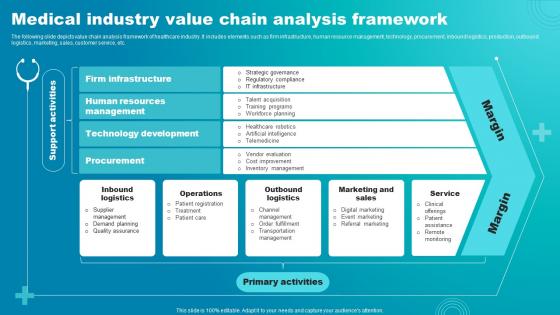
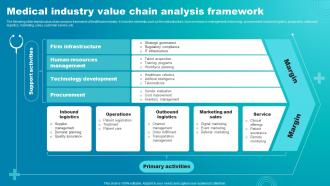
The following slide depicts value chain analysis framework of healthcare industry. It includes elements such as firm infrastructure, human resource management, technology, procurement, inbound logistics, production, outbound logistics, marketing, sales, customer service, etc.
People who downloaded this PowerPoint presentation also viewed the following :
Medical Industry Value Chain Analysis Framework with all 9 slides:
Use our Medical Industry Value Chain Analysis Framework to effectively help you save your valuable time. They are readymade to fit into any presentation structure.








FAQs for Medical Industry Value
So there are basically five pieces to the medical value chain: R&D where they develop new treatments, manufacturing, distribution/logistics, healthcare delivery like hospitals and clinics, and patient monitoring. Everything's super connected though - way more than other industries I've seen. Digital health is kinda blowing up the traditional boundaries too, which is creating weird new opportunities everywhere. If you're thinking strategy stuff, I'd figure out where your company sits right now. Then look at what's next to you - those adjacent areas are usually your best bet for expanding or finding partners.
Honestly, suppliers can make or break your whole operation. Good ones keep your costs down and inventory steady - you'll never deal with those panic moments when you're out of critical supplies. But man, one unreliable supplier and suddenly you're scrambling to find alternatives while your entire system falls apart. I've watched hospitals get completely thrown off by delayed shipments. The trick is finding suppliers who actually get healthcare - they know about regulations and timing requirements. Don't put all your eggs in one basket though. Having backup options saves you from those absolute nightmare scenarios.
Honestly, tech makes healthcare so much smoother across the board. AI diagnostics catch things earlier, and those electronic records finally sync up properly (thank god). Telemedicine cuts your wait times way down too. On the supply side, automated inventory means hospitals won't randomly run out of ventilators or whatever when everything hits the fan. Wearables are pretty cool for spotting problems before they blow up into ER visits. My advice? Figure out what's driving you crazy first, then find the tech that fixes that exact headache.
Okay so regulatory compliance is basically what keeps the whole medical industry from falling apart. FDA has to approve every drug and device before it hits shelves. Manufacturers follow strict quality rules, plus there's paperwork for literally everything - R&D, manufacturing, distribution, you name it. Healthcare providers need it for licenses too. Honestly, it's a massive headache sometimes but keeps patients safe. The thing is, don't treat compliance like some afterthought checkbox. It'll mess with your timelines and costs big time if you ignore it early on. Build that stuff into your plans from the start.
Look, R&D is basically the starting point for everything in healthcare. New drugs, devices, treatments - it all begins there. Without that research money upfront, manufacturers would have nothing to make and hospitals nothing to buy. Here's the crazy part though - we're talking billions just for one drug, which is why prices end up being so insane by the time patients see them. Honestly, if you want to predict market shifts, just follow whoever's dumping cash into R&D in your space. Those companies will tell you where things are headed way before anyone else catches on.
Look, patient data management is seriously the thing that holds healthcare together. When your systems actually talk to each other, doctors can coordinate care instead of fumbling around in the dark. The amount of time that gets completely wasted when nothing connects is honestly insane. Good data flow means faster diagnoses and better outcomes for patients, plus way less paperwork nightmare for staff. Costs drop too, which is nice I guess. First step? Audit what you've got now - bet you'll spot some glaring holes pretty quick. Fix those and you're already ahead of most places.
Honestly, you can't keep doing the "we'll figure it out ourselves" thing anymore - it just doesn't work. Start by mapping your current partnerships and find the weak spots. Those supplier and insurer relationships? Make them tighter. Same with patient referral networks. Partner up with medical device companies and pharma for better pricing and early tech access. Data analytics is huge right now - use it to prove your value to insurance companies and show you're actually improving outcomes. Oh, and look into buying specialty clinics or teaming up with telehealth platforms. Vertical integration's where the smart money's going. Focus on the relationships that'll give you the biggest bang for your buck first.
Dude, medical device companies are drowning in red tape. FDA approvals? Years and millions of dollars down the drain before you even know if it'll work. Supply chains keep getting wrecked - good luck finding those niche components when everything's backordered. Then there's the whole reimbursement mess where insurance companies change their minds constantly. Hospitals want massive discounts too, which is fun. My advice? Build compliance stuff into development from day one instead of scrambling later. Also get backup suppliers lined up early. Trust me on that one - you don't want to be hunting for alternatives when you're already behind schedule.
Distribution is honestly where everything falls apart in healthcare. You've got life-saving meds stuck in warehouses while people need them - makes zero sense. Cold chain breaks down, regulatory red tape, basic shipping screwups - all of it cascades into higher costs and worse patient outcomes. We're talking 15-30% cost inflation just from distribution issues alone. Here's what I'd do: map out who your distribution partners actually are, then figure out where stuff typically gets delayed. That's probably where you're bleeding money. It's wild how one bottleneck can mess up your entire supply chain.
So globalization basically flipped the whole medical supply game on its head. Manufacturing costs dropped big time with offshore production, plus R&D collaboration got way faster internationally. But here's the catch - you're juggling suppliers across continents now instead of just regional ones. COVID really showed us how fragile these global chains can be, didn't it? The regulatory stuff is honestly a nightmare since every country has different rules. My advice? Spread your suppliers around geographically and actually build real relationships with local distributors in your main markets. Don't put all your eggs in one basket.
Partnerships totally flip the script on who controls what in healthcare. Big pharma hooks up with tech companies for digital stuff, hospitals team with device makers - it's wild how these deals reshape everything. Companies can suddenly expand into areas they'd never touch solo and split the massive risks involved. What's really smart is how they use these alliances to cut out the middlemen (sorry, traditional distributors!). When two giants join forces, they're basically building walls to keep competitors out. Watch how these moves create new power players - it happens faster than you'd think.
Insurance companies basically run the show in healthcare - they decide what's covered, set reimbursement rates, and control which drugs make it onto their approved lists. Honestly, it's kinda crazy how much power they have. Your treatment options? Yeah, those are shaped by what insurers will actually pay for. They force drug companies to compete on price and make providers prove their treatments actually work (not just look fancy). If you're trying to get into healthcare or develop anything medical, you'll need to figure out how to play their game first. They're the ones standing between patients and pretty much everything else.
So basically, good supply chain management saves hospitals tons of money through smarter buying and less waste. You're cutting out those crazy expensive emergency orders (like 2-3x normal price - ouch). Plus no more expired stuff sitting around or duplicate orders. The real money maker though? Getting all your facilities to use the same products so you can buy in bulk. Way better negotiating power that way. You'll also spot usage patterns better, which helps predict what you actually need. Honestly, it's boring operational stuff but the savings add up fast. I'd start by checking how quickly you're turning over inventory.
Dude, three things you gotta nail: shared data systems, joint innovation projects, and actually aligning everyone's goals. Get interoperable platforms so pharma, providers, and payers can all see the same patient info in real time - sounds basic but nobody does it right. Cross-functional teams are clutch, especially when your R&D people talk directly to clinicians about what actually matters. Most collaborations tank because departments still chase their own metrics instead of shared wins. Oh and set up KPIs that reward group outcomes, not individual department victories. That's honestly where you'll see the biggest shift happen.
Honestly, patients are acting more like actual consumers now and it's changing everything in healthcare. They want the same convenience they get from Amazon - telemedicine, direct testing without going through doctors first, all that stuff. Manufacturers can't just focus on making things work anymore, they need to think about whether patients actually like using them. Providers are scrambling to be more transparent about costs because people demand it now. Even saw some hospital near me posting surgery prices online which seemed crazy until I realized... why shouldn't they? Bottom line - patient satisfaction scores matter as much as clinical results these days.
-
This visual representation is stunning and easy to understand. I like how organized it is and informative it is.
-
Innovative and creative templates with high-quality designs. Helped me with my presentation as the slides were easy to edit.