


Comprehensive Guide To Mixed Reality Powerpoint Presentation Slides TC CD




Try Before you Buy Download Free Sample Product
 Impress Your
 Audience
 100%
100% Editable
 Save Hours
 of Time


Grab our Comprehensive Guide to Mixed Reality PowerPoint presentation. Immerse yourself in the dynamic Mixed Reality MR universe with our cutting-edge PPT Bundle. It presents an in-depth Overview of Mixed Reality, providing a solid foundation for understanding future immersive experiences. It presents the key elements of MR technology and the key advantages of mixed reality technology and explains how it reshaped global industries. Moreover, the Mixed Reality development PPT templates present diverse Devices and Technologies using Mixed Reality, from AR glasses to VR headsets. Equip yourself with the knowledge of Tools Required for MR Development and explore Best Practices to craft compelling mixed reality experiences. The PPT bundle presents a comparative VR, AR, and MR analysis. It also shows the Transition to Implementation and Adoption, understanding the Steps to Implement, adopting Best Practices, and ensuring Privacy and Security. Additionally, the Mixed Reality explained PPT slides present a Market Overview of Mixed Reality Technology, global trends, market share, and key growth drivers. Explore diverse Industry Applications from healthcare and gaming to education and manufacturing, supported by real-world case studies, such as Toyota, Airbus, and Happy Finish. Download Today.
People who downloaded this PowerPoint presentation also viewed the following :
Content of this Powerpoint Presentation
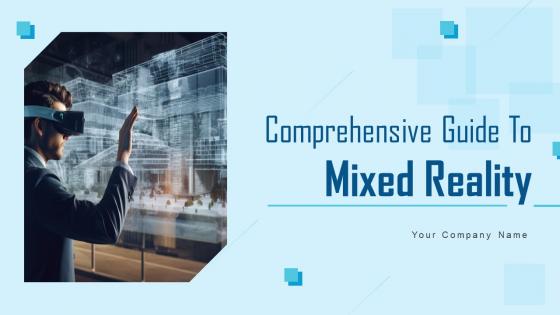
Slide 1: This slide introduces Comprehensive Guide To Mixed Reality. State your company name and begin.
Slide 2: This is an Agenda slide. State your agendas here.
Slide 3: This slide shows Table of Content for the presentation.
Slide 4: This slide shows title for topics that are to be covered next in the template.
Slide 5: This slide showcase information pertaining to mixed reality in order to understand the technology and it’s aspects.
Slide 6: This slide contains essential components of mixed reality technology that are involved in its functioning. It includes various components such as environmental understanding etc.
Slide 7: This slide showcase key benefits of implementing mixed reality in business operations. It includes various advantages such as building strong customer base, establishing trustworthiness etc.
Slide 8: This slide represents various types devices and technologies using mixed reality to enhance user experience. It includes various devices such as smartphones and mobile devices etc.
Slide 9: The slide contains information pertaining to tools needed to develop mixed reality development. It includes various tools such as mixed reality development kits etc.
Slide 10: This slide represent key tactics for building an efficient and user friendly mixed reality. It includes various practices such as understanding environment, focusing on user experience etc.
Slide 11: This slide present comparison between virtual, artificial and mixed reality to thoroughly understand differences among them.
Slide 12: This slide showcases limitations of using mixed reality technology in business processes. It includes various drawbacks such as limited hardware, limited content, technical challenges etc.
Slide 13: This slide represent significant components of mixed reality that ensure its smooth running. It includes various elements such as object surface and boundaries, body position and movements etc.
Slide 14: This slide shows title for topics that are to be covered next in the template.
Slide 15: This slide represent process involved in implementing mixed reality for virtual recognition to create simulated environment.
Slide 16: This slide showcase key tactics to leverage mixed reality adoption in business. It include various practices such as devising and designing mixed reality application etc.
Slide 17: This slide represents various methods to strengthen privacy and security in mixed reality to secure user data. It includes various approaches such as protecting user interactions etc.
Slide 18: This slide shows title for topics that are to be covered next in the template.
Slide 19: This slide represent global market size mixed reality technology. It includes global value from year 2022 to 2029, compound annual growth rate and key insights.
Slide 20: This slide showcase latest mixed reality trends in industry. It includes various trends such as digital identity and realistic avatars, metaverse and meta integration etc.
Slide 21: This slide represent major growth drivers behind increasing market size of mixed reality technology. It includes various drivers such as increase in government etc.
Slide 22: This slide represent global market overview of mixed reality technology to gain insights pertaining performance factors.
Slide 23: This slide present analysis of survey pertaining to adoption rate of mixed reality technology by businesses.
Slide 24: This slide highlights statistical information of mixed reality. This slide equip stakeholders with valuable insights which further leverage them in making strategic decisions.
Slide 25: This slide shows title for topics that are to be covered next in the template.
Slide 26: This slide contains information pertaining to augmented and virtual reality to thoroughly understand both technologies.
Slide 27: This slide represent relationship between mixed, augmented and virtual reality. It includes comparison based on various parameters such as virtually simulated surrounding, Requirements etc.
Slide 28: This slide shows title for topics that are to be covered next in the template.
Slide 29: This slide presents Industry applications of Mixed reality.
Slide 30: This slide represent real life applications of mixed reality technology to understand functioning and processes involved in it.
Slide 31: This slide present real life applications of mixed reality technology to understand functioning and processes involved in it.
Slide 32: This slide shows title for topics that are to be covered next in the template.
Slide 33: This slide contains intel pertaining to use of mixed reality in video gaming industry. It includes various components such as overview and features of mixed reality in gaming industry.
Slide 34: This slide represent effects of mixed reality on video gaming industry. It includes various effects such as blend of real and virtual worlds, gateway to metaverse etc.
Slide 35: This slide contains upcoming mixed reality trends and technologies for gaming industry to enhance development of games.
Slide 36: This slide shows title for topics that are to be covered next in the template.
Slide 37: This slide represent information related to mixed reality in medical sector. It includes various elements such as overview and features of mixed reality in healthcare.
Slide 38: This slide present global market size mixed reality technology in healthcare industry. It includes global value from year 2023 to 2028, compound annual growth rate and key insights.
Slide 39: This slide showcase industry use cases of mixed reality technology in healthcare facilities. It includes various use cases such as enhanced medical training, real time diagnostics etc.
Slide 40: This slide represent effects of using mixed reality technology in healthcare industry. It includes various elements such as integration with medical devices etc.
Slide 41: This slide shows title for topics that are to be covered next in the template.
Slide 42: This slide showcase information related to use of mixed reality in architecture engineering. It includes various elements such as overview and features of mixed in construction.
Slide 43: This slide contains advantages of using mixed reality in architectural engineering. It includes various benefits such as better project planning, on-job planning, increased safety etc.
Slide 44: This slide showcase industry use cases of mixed reality technology in construction. It includes various applications such as site planning and design visualization etc.
Slide 45: This slide displays limitations of mixed reality in architectural engineering. It includes various limitations such as hardware limitations, data quality etc.
Slide 46: This slide shows title for topics that are to be covered next in the template.
Slide 47: This slide represents intel pertaining to use of mixed reality in learning institutions. It includes various components such as overview and features of mixed reality in education industry.
Slide 48: This slide highlights advantages of mixed reality technology in education sector. It includes various benefits such as universal, multi purpose teaching tool etc.
Slide 49: This slide represents information related to major players of mixed reality in learning sector. It includes various parameters such as company, founded year etc.
Slide 50: This slide shows title for topics that are to be covered next in the template.
Slide 51: This slide represent information related to mixed reality technology in army trainings. It includes various elements such as overview and benefits.
Slide 52: This slide showcase industry use cases of mixed reality technology in army training. It includes various use cases such as training and simulation, synthetic training environment etc.
Slide 53: This slide shows title for topics that are to be covered next in the template.
Slide 54: This slide represent information pertaining to use mixed reality technology in sports industry. It includes overview along with key benefits of mixed reality in sports.
Slide 55: This slide showcases use cases of mixed reality implementation in sports industry. It includes various use cases such as virtual stadiums, coaching and technique improvement etc.
Slide 56: This slide shows title for topics that are to be covered next in the template.
Slide 57: This slide represent information pertaining to use mixed reality technology in manufacturing sector. It includes overview along with key benefits of mixed reality in manufacturing.
Slide 58: This slide present real life examples of mixed reality implementation in manufacturing business. It includes various use cases such as virtual prototyping, real-time data visualization etc.
Slide 59: This slide elaborates advantages of mixed reality in manufacturing facility to optimized workflows. It includes various advantages such as reducing call-out times for maintenance etc.
Slide 60: This slide shows title for topics that are to be covered next in the template.
Slide 61: This slide showcase information pertaining to use of mixed reality in aviation industry. It includes various components such as overview and advantages of mixed reality in aviation.
Slide 62: This slide represents a map of airport passenger journey using mixed reality technology. It includes various components such as check-in, security, dwell time, boarding, departure etc.
Slide 63: This slide showcases mixed reality issues that are commonly faced in aviation industry. It includes challenges such as security and privacy, acceptance, cost and regulations.
Slide 64: This slide represent effects of using mixed reality technology aviation industry. It includes various elements such as integration with medical devices, make better clinical decisions etc.
Slide 65: This slide shows title for topics that are to be covered next in the template.
Slide 66: This slide showcase Toyota case study for building mixed reality application to showcase their vehicles. It includes various components such as company details, company name, headquarters etc.
Slide 67: This slide represent case study on mixed reality for virtual meetings to enhance collaboration. It includes various components such as company details, company name etc.
Slide 68: This slide present airbus case study to implement mixed reality technology. It includes various components such as company details, company name, headquarters, number of employees etc.
Slide 69: This slide represent case study on Ford GT40 experience by happy finish using mixed reality technology. It includes various components such as company details, company name etc.
Slide 70: This slide shows all the icons included in the presentation.
Slide 71: This slide is titled as Additional Slides for moving forward.
Slide 72: This slide represent architecture for mixed reality simulation environment. It include various components such as windows device portal, surgeon interaction, I/O manager, VR models etc.
Slide 73: This slide present information pertaining to mixed reality technology with power apps. It includes various elements such as introduction to mixed reality in power apps etc.
Slide 74: This is About Us slide to show company specifications etc.
Slide 75: This is Our Vision, Mission & Goal slide. Post your Visions, Missions, and Goals here.
Slide 76: This is Our Team slide with names and designation.
Slide 77: This slide depicts Venn diagram with text boxes.
Slide 78: This slide contains Puzzle with related icons and text.
Slide 79: This is a Thank You slide with address, contact numbers and email address.
Comprehensive Guide To Mixed Reality Powerpoint Presentation Slides TC CD with all 87 slides:
Use our Comprehensive Guide To Mixed Reality Powerpoint Presentation Slides TC CD to effectively help you save your valuable time. They are readymade to fit into any presentation structure.










FAQs for Comprehensive Guide To Mixed Reality Powerpoint Presentation
Honestly, the coolest stuff is letting kids dissect virtual frogs or walk through ancient Rome - way better than staring at textbooks. Medical students can practice surgeries without, you know, actual consequences. 3D molecular structures are huge for chemistry classes. Language learning is interesting too since you can drop students in virtual Paris and force them to order coffee in French. Engineering programs are obsessed with it. The engagement factor alone is worth it - kids actually pay attention. I'd start with just one subject where the 3D aspect really matters instead of going crazy with everything at once.
So mixed reality is crazy good for engagement because people can actually mess around with your products first. Like trying on clothes virtually or seeing how that couch looks in their actual living room - honestly beats the hell out of guessing from photos. Your audience isn't just sitting there watching anymore, they're playing around and getting emotionally invested. Oh, and they'll definitely post those cool AR moments on their stories, which is basically free marketing. I'd say start simple though - even basic product filters can bump your engagement way up.
VR throws you into a completely fake world - like those gaming headsets that block out everything real. AR is different though, it just puts digital stuff over what you're already seeing through your phone or whatever. Mixed reality gets weird because it actually talks to your real space. Digital objects will duck behind your couch or match your room's lighting, which honestly blows my mind every time. Regular AR just dumps info on top of everything without really "knowing" where it is. I'd mess around with some AR apps first if you want to dip your toes in - way easier starting point.
So mixed reality basically lets you and your coworkers hang out in the same virtual space and mess around with 3D stuff together. Way better than those boring Zoom calls where everyone's just staring at screens. You can actually point at things and work on projects like you're in the same room - it's wild the first time you try it. Great for design work, training people, or just brainstorming around digital whiteboards. Though honestly, you gotta pick the right situations where being able to move around and touch things actually matters over regular tools.
Oh dude, mixed reality is changing medical training in crazy ways. Students can practice surgeries on virtual patients that appear right in front of them - no real bodies needed. Super weird seeing someone operate on a floating heart, but it works. You get instant feedback and can redo procedures until you're solid. The safety thing is huge since nobody's at risk while you're learning. Remote collaboration is cool too - you can train with people anywhere. Honestly, I'd check out HoloLens stuff if you're thinking about med school. Most big programs already use it.
Dude, hardware is everything with MR. Bad gear = bad time, simple as that. You want decent display resolution so virtual stuff doesn't look pixelated against real objects. Processing power matters too - nobody wants laggy tracking that makes you feel sick. Field of view is probably underrated tbh, narrow FOV feels like peering through a straw. The sensors do all the spatial mapping so virtual things can actually sit on your table instead of floating weirdly. Oh and cameras help with the whole "seeing reality" part obviously. Trust me, spend the extra money upfront or you'll just be disappointed later.
Hardware fragmentation is going to be your worst enemy - what works on HoloLens will totally break on Magic Leap since they handle spatial mapping completely differently. Performance gets nasty fast when you're rendering real and virtual stuff together. Occlusion is another nightmare when virtual objects need to hide behind real ones. UX design becomes this whole different beast because people don't interact with MR like regular apps at all. Honestly, just pick one device and get really good at that first. I made the mistake of trying to support everything from day one - don't do that. Focus on nailing the core experience, then expand later.
So mixed reality lets you mess around with 3D prototypes before actually building anything - saves you crazy amounts of cash and time. Your team can literally grab virtual models and move them around in real space, which beats the hell out of expensive physical mockups. Design problems? You'll catch them way earlier. The coolest part is when everyone can walk around the same virtual product together, even if they're in different cities. Honestly feels like sci-fi the first time you do it. I'd say start with something simple though - maybe just basic product visualization so people aren't overwhelmed by the tech.
Okay so mixed reality can seriously mess with your head - but in cool ways too. Your brain starts thinking you're actually IN that virtual space, which feels amazing until you take the headset off and feel all disoriented. Some people get "VR legs" (yeah that's a real thing, like being on a boat but weirder). The psychological stuff varies though - therapeutic apps help with anxiety and PTSD, but intense games might make you nauseous or overstimulated. Honestly I'd start with shorter sessions and work your way up. Regular breaks are clutch for avoiding those weird aftereffects.
So mixed reality is like putting a digital layer over the real world for city planning. Planners can walk around with headsets and see traffic patterns or new buildings overlaid right where they'd actually go. Honestly, the coolest part is getting residents involved - they can see exactly what changes would look like instead of just staring at boring blueprints in meetings. Makes everything way clearer for everyone. You should definitely start with something small though, maybe one neighborhood project? See how people react when they can actually visualize what you're proposing. Game changer for getting buy-in.
Oh man, there's definitely some sketchy stuff to think about. Privacy's huge - you're collecting data on people's actual environments, not just screens. Consent gets weird too because most people don't really get what they're signing up for. Honestly, the reality distortion thing kinda freaks me out - when digital and real blur together, that's got to mess with your head somehow. Then there's the usual suspects: addiction potential, accessibility gaps, behavior manipulation. I'd say just be super upfront about data collection and maybe think twice about the mental health stuff down the road.
So basically, you can overlay digital stuff onto real historical sites - tourists see how ancient buildings actually looked originally or watch events happen right where they went down. Pretty cool when it works well. Museums are using it to preserve fragile artifacts too, making 3D models people can examine without damaging the real thing. They're doing this with Roman ruins, medieval manuscripts, all kinds of stuff. Just make sure your content's historically accurate and actually engaging - nobody wants to put on AR goggles for a snooze-fest history lesson, you know?
Honestly, the headsets are getting way lighter and more powerful - Apple's Vision Pro basically forced everyone else to catch up. Hand tracking is finally reliable too, which is huge. AR glasses won't look like total dork goggles much longer either. Mixed reality is blowing up beyond just gaming - healthcare, training, remote work stuff. The real game changer happens when prices drop enough for regular people, probably 2027ish? Maybe sooner if competition gets fierce. Oh and if you're thinking about jumping in, start messing around with Unity or Unreal now.
So mixed reality basically lets you practice scary stuff without actually dying - firefighters can train on building collapses, pilots handle emergency landings, all that. Way more engaging than just watching training videos (though honestly those old safety videos from the 80s are kinda hilarious). You can mess up over and over until it becomes second nature. Actually doing the motions beats reading about procedures any day. Oh, and you'll want to figure out which of your riskiest scenarios would work best first - those are your golden opportunities for this tech.
Make your buttons and interactive stuff BIG - like 2cm minimum because trying to grab tiny things in VR is frustrating as hell. Don't put important elements at the edge of your vision since neck strain sucks. Layer your info so it's not overwhelming, and keep the main UI within easy arm reach. Visual feedback is crucial - users need to know when they've actually touched something. Oh and depth can be your friend for organizing content. Test with real people early though, because I swear what seems obvious to you won't make sense to half your users.
-
The templates are easy to get, and the chat customer support is excellent.
-
The customer care of SlideTeam is very responsive. I was having a payment issue and they fixed it for me in no time.