


Comprehensive Guide To Technical Audit DK MD





Try Before you Buy Download Free Sample Product
 Impress Your
 Audience
 100%
100% Editable
 Save Hours
 of Time


Our Comprehensive Guide To Technical Audit DK MD are topically designed to provide an attractive backdrop to any subject. Use them to look like a presentation pro.
People who downloaded this PowerPoint presentation also viewed the following :
Content of this Powerpoint Presentation
Slide 1: This slide introduces Comprehensive Guide to Technical Audit. State your company name and begin.
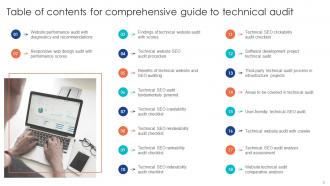
Slide 2: This slide shows Table of Content for the presentation.
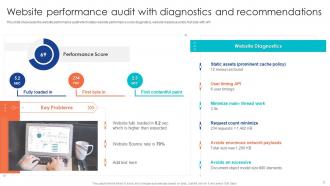
Slide 3: This slide presents Website performance audit with diagnostics and recommendations.
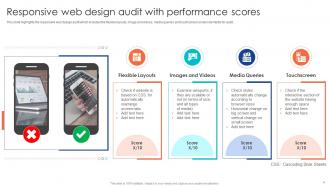
Slide 4: This slide displays Responsive web design audit with performance scores.
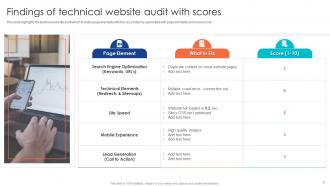
Slide 5: This slide represents Findings of technical website audit with scores.
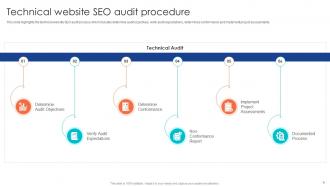
Slide 6: This slide showcases Technical website SEO audit procedure.
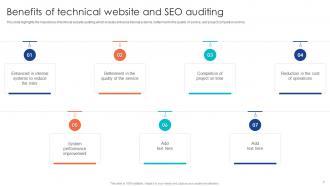
Slide 7: This slide shows Benefits of technical website and SEO auditing.
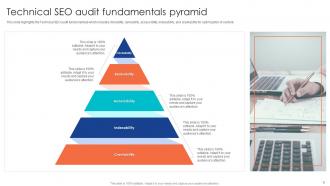
Slide 8: This slide presents Technical SEO audit fundamentals pyramid.
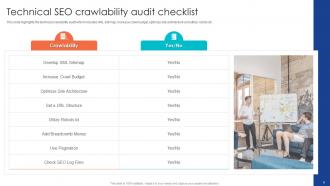
Slide 9: This slide displays Technical SEO crawlability audit checklist.
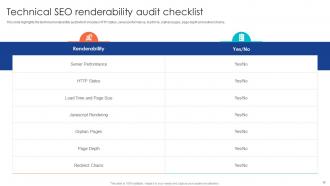
Slide 10: This slide represents Technical SEO renderability audit checklist.
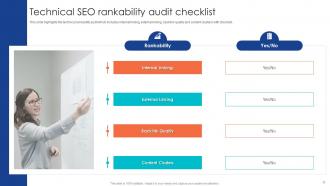
Slide 11: This slide showcases Technical SEO rankability audit checklist.
Slide 12: This slide shows Technical SEO indexability audit checklist.
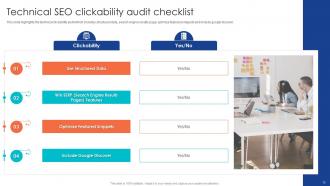
Slide 13: This slide presents Technical SEO clickability audit checklist.
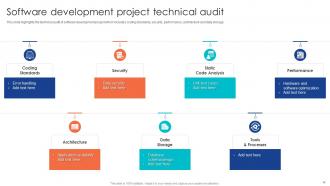
Slide 14: This slide displays Software development project technical audit.
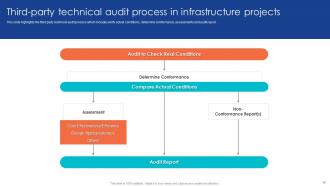
Slide 15: This slide represents Third-party technical audit process in infrastructure projects.
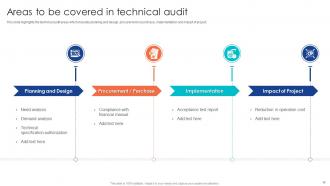
Slide 16: This slide showcases Areas to be covered in technical audit.
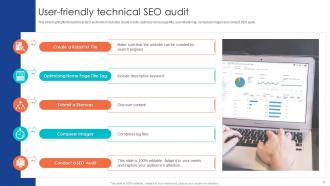
Slide 17: This slide shows User-friendly technical SEO audit.
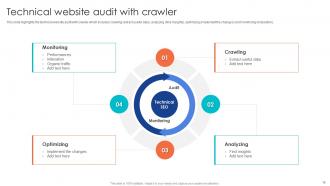
Slide 18: This slide presents Technical website audit with crawler.
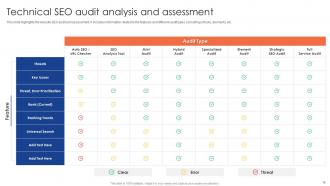
Slide 19: This slide displays Technical SEO audit analysis and assessment.
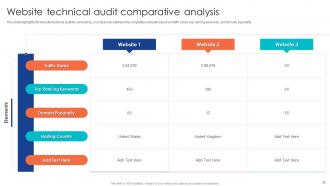
Slide 20: This slide represents Website technical audit comparative analysis.
Slide 21: This is a Thank You slide with address, contact numbers and email address.
Comprehensive Guide To Technical Audit DK MD with all 26 slides:
Use our Comprehensive Guide To Technical Audit DK MD to effectively help you save your valuable time. They are readymade to fit into any presentation structure.








FAQs for Comprehensive Guide To Technical
Key components of a technical audit for medical devices include design controls verification, risk management assessment, software validation, biocompatibility testing, and regulatory compliance documentation. These audits streamline quality assurance by evaluating manufacturing processes, clinical performance data, and post-market surveillance systems, with many healthcare organizations finding that comprehensive technical audits ultimately deliver faster regulatory approvals and enhanced patient safety outcomes.
Regulatory compliance significantly shapes technical audit processes by requiring adherence to FDA, ISO 13485, and IEC standards throughout design controls, risk management, and quality systems validation. These requirements streamline audit frameworks by establishing clear documentation protocols, traceability matrices, and performance benchmarks, with medical device manufacturers finding that compliance-driven audits ultimately deliver faster regulatory approvals and enhanced market access.
Common pitfalls during technical audit of medical devices include inadequate documentation review, insufficient risk assessment protocols, overlooking regulatory compliance requirements, neglecting cybersecurity vulnerabilities, and failing to validate software components. These oversights can compromise patient safety and regulatory approval, with many healthcare organizations finding that thorough preparation, cross-functional team involvement, and systematic verification processes ultimately deliver enhanced device reliability and faster market clearance.
Risk management practices integrate into medical device technical audits through ISO 14971 compliance assessments, hazard analysis reviews, risk control verification, and post-market surveillance evaluations. These systematic approaches enable auditors to evaluate manufacturer risk processes, validate mitigation strategies, and ensure ongoing safety monitoring, with medical device companies finding that integrated risk-audit frameworks ultimately deliver enhanced regulatory compliance and patient safety outcomes.
Software validation in medical device technical audits ensures that software performs its intended functions safely and meets regulatory requirements like FDA 21 CFR Part 820 and ISO 13485. This critical process enables manufacturers to demonstrate compliance, minimize patient safety risks, and accelerate market approval timelines, with many healthcare organizations finding that robust validation streamlines regulatory submissions while delivering competitive advantages in increasingly regulated markets.
Technical audits address product lifecycle management issues in medical devices by evaluating design controls, risk management processes, regulatory compliance documentation, manufacturing quality systems, and post-market surveillance mechanisms. Through systematic assessment of these interconnected processes, medical device manufacturers can identify gaps in traceability, streamline regulatory submissions, and enhance patient safety protocols, while ensuring compliance with FDA and international standards, ultimately delivering faster time-to-market and reduced regulatory risk.
Key metrics include compliance rates with regulatory standards, identification of critical vulnerabilities, time to resolution for identified issues, cost reduction from preventive measures, and improvement in device reliability scores. These assessments enable medical device manufacturers to streamline quality assurance processes, minimize regulatory risks, and enhance patient safety outcomes, with many healthcare organizations finding that comprehensive auditing ultimately delivers faster market approvals and reduced liability exposure.
Assessing documentation adequacy involves evaluating design controls, risk management files, clinical evaluation reports, quality management records, and regulatory compliance documentation against applicable standards like ISO 13485 and FDA QSR requirements. Through systematic review processes, auditors examine traceability matrices, verification and validation protocols, and post-market surveillance data, while ensuring documentation completeness supports regulatory submissions, ultimately delivering comprehensive compliance assurance and streamlined approval pathways.
ISO 13485 provides the foundational quality management framework for medical device technical audits, establishing systematic requirements for design controls, risk management, regulatory compliance, and manufacturing processes. This standard enables auditors to evaluate comprehensive quality systems across development, production, and post-market surveillance phases, with medical device manufacturers finding that ISO 13485 compliance streamlines regulatory approvals and enhances market credibility globally.
Organizations ensure continuous improvement following technical audits by implementing systematic monitoring processes, establishing regular review cycles, and creating cross-functional improvement teams that track corrective actions. Through automated compliance tracking systems and structured feedback loops, medical device companies streamline quality management, enhance regulatory adherence, and accelerate product development timelines, with many manufacturers finding that proactive audit follow-up ultimately delivers sustained operational excellence and competitive market positioning.
A failed technical audit can result in regulatory non-compliance, product recalls, market withdrawal, and significant financial penalties for medical device manufacturers. Beyond immediate costs, companies face damaged reputation, delayed product launches, increased scrutiny from regulatory bodies, and potential legal liabilities, with many organizations finding that comprehensive remediation and re-certification processes can take months while competitors gain market advantage.
Audit findings should be communicated through structured reports with executive summaries, detailed technical assessments, risk classifications, and clear corrective action plans tailored to each stakeholder group's needs. Medical device manufacturers increasingly use standardized reporting frameworks that enable regulatory teams, quality assurance, and senior management to quickly understand compliance gaps, prioritize remediation efforts, and maintain FDA approval timelines, ultimately delivering enhanced patient safety and competitive market positioning.
Best practices for preparing for a technical audit of medical devices include establishing comprehensive documentation systems, conducting pre-audit internal reviews, ensuring regulatory compliance verification, implementing quality management protocols, and maintaining detailed traceability records. These preparation strategies streamline the audit process by minimizing compliance gaps, accelerating reviewer access to critical documentation, and demonstrating systematic quality controls, ultimately delivering faster audit completion and stronger regulatory standing.
Technical audits for medical devices vary significantly by class, with Class I devices requiring basic quality system reviews and documentation verification, Class II devices needing comprehensive design controls and risk management assessments, and Class III devices demanding the most rigorous premarket approval evaluations including clinical data validation. These escalating audit requirements reflect increasing patient risk levels, with Class III audits involving extensive regulatory scrutiny, clinical trial documentation review, and post-market surveillance protocols, ultimately ensuring that higher-risk devices like pacemakers and artificial hearts meet the most stringent safety standards.
Emerging trends include artificial intelligence for predictive analysis, blockchain for supply chain transparency, IoT integration for real-time monitoring, digital twins for virtual testing, and cloud-based audit platforms. These technologies streamline compliance processes by automating documentation, enhancing traceability, and enabling continuous monitoring, with many medical device manufacturers finding that strategic implementation ultimately delivers faster regulatory approvals and improved patient safety outcomes.
-
“I always have a wonderful experience with SlideTeam. It's my ""go to"" when I need a template.”
-
I am not the best at presentations but using SlideTeam’s PPT template made it easier for me. Thank you SlideTeam!