


Confidential Cloud Computing Powerpoint Presentation Slides




Try Before you Buy Download Free Sample Product
 Impress Your
 Audience
 100%
100% Editable
 Save Hours
 of Time


This PowerPoint presentation briefly explains confidential computing technology, covering its importance, various technologies, consortiums, and architecture. In this Confidential Cloud Computing PowerPoint Presentation, we have covered the overview of the confidential computing environment, including an introduction, key features, functions, benefits, and business scenarios. It also comprises the importance of confidential computing for users, its technical stack, and how it provides complete data security. In addition, this Confidential Computing Consortium PPT contains an overview of the confidential computing consortium, covering its structure and different membership levels. Also, the Confidential Cloud Computing PPT presentation includes the architecture, working, primary approaches, and different technologies used to protect in-use data. Furthermore, this Confidential Computing Market template caters to a section of the confidential computing market that covers market segments, executive summary, growth drivers, the adoption rate of confidential computing in North America ad APAC, and the total addressable market overview. Moreover, this Confidential Computing Hardware deck comprises applications of confidential computing technology in different sectors such as healthcare and research, finance, engineering and manufacturing, and automobiles. Lastly, this Confidential Computing Technology PPT contains a budget, the future of the technology, an implementation roadmap and timeline, and a case study. Download our 100 percent editable and customizable template, which is also compatible with Google Slides.
People who downloaded this PowerPoint presentation also viewed the following :
Content of this Powerpoint Presentation
Slide 1: This slide introduces Confidential Cloud Computing. Commence by stating Your Company Name.
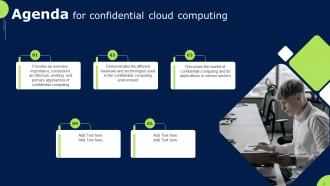
Slide 2: This slide depicts the Agenda of the presentation.
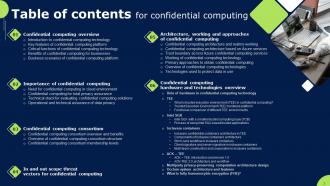
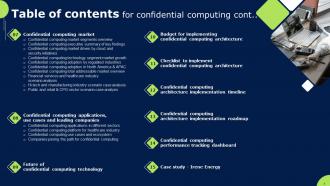
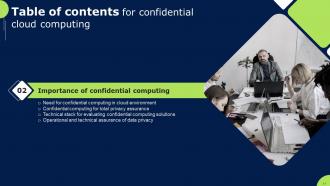
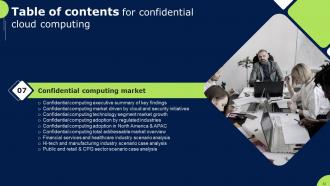
Slide 3: This slide incorporates the Table of contents.
Slide 4: This is yet another slide continuing the Table of contents.
Slide 5: This slide highlights the Title for the Topics to be covered further.
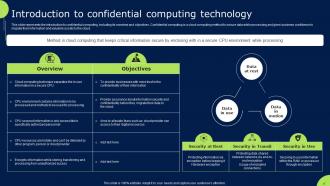
Slide 6: This slide represents the introduction to confidential computing, including its overview and objectives.
Slide 7: This slide depicts the key features of confidential computing platform.
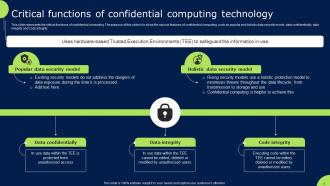
Slide 8: This slide highlights the critical functions of confidential computing.
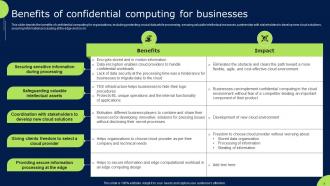
Slide 9: This slide shows the benefits of confidential computing for organizations.
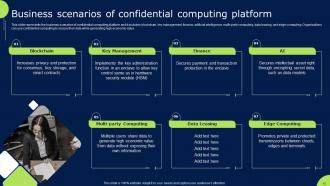
Slide 10: This slide reveals the Business scenarios of confidential computing platform.
Slide 11: This slide includes the Head8ing for the Contents to be discussed next.
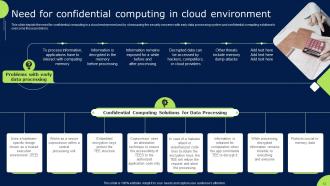
Slide 12: This slide displays the Need for confidential computing in cloud environment.
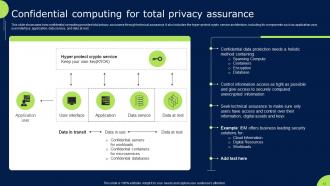
Slide 13: This slide showcases how confidential computing provides total privacy assurance through technical assurance.
Slide 14: This slide depicts the technical stack while assessing confidential computing solutions.
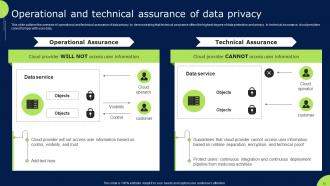
Slide 15: This slide outlines the overview of operational and technical assurance of data privacy.
Slide 16: This slide mentions the Title for the Ideas to be discussed next.
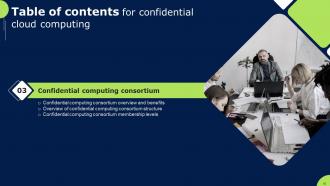
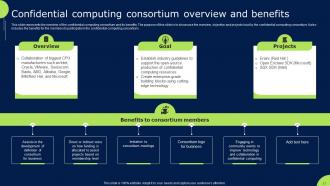
Slide 17: This slide represents the overview of the confidential computing consortium and its benefits.
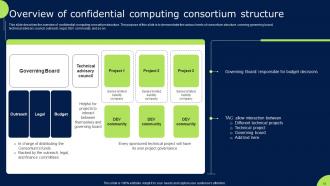
Slide 18: This slide describes the overview of confidential computing consortium structure.
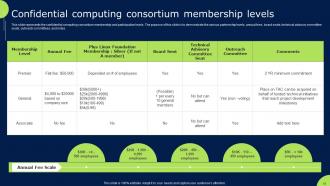
Slide 19: This slide shows the confidential computing consortium membership and participation levels.
Slide 20: This slide portrays the Heading for the Ideas to be covered in the following template.
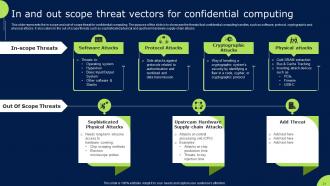
Slide 21: This slide represents the in-scope and out-of-scope threat for confidential computing.
Slide 22: This slide highlights the Title for the Contents to be discussed next.
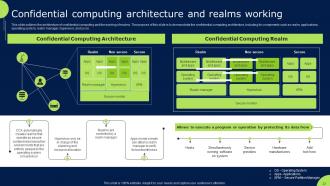
Slide 23: This slide outlines the architecture of confidential computing and the working of realms.
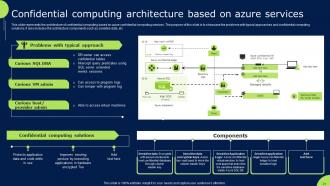
Slide 24: This slide presents the architecture of confidential computing based on Azure confidential computing services.
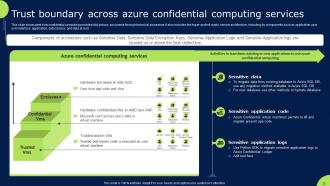
Slide 25: This slide outlines the trust boundary architecture of Azure confidential computing services.
Slide 26: This slide describes the working of confidential computing technology.
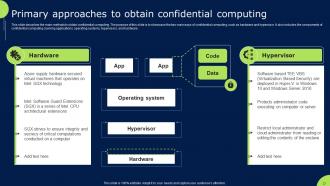
Slide 27: This slide states the main methods to obtain confidential computing.
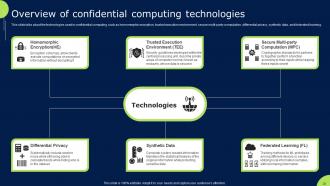
Slide 28: This slide talks about the technologies used in confidential computing.
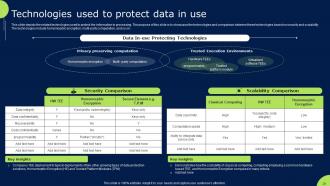
Slide 29: This slide depicts the related technologies used to protect the information in processing.
Slide 30: This slide indicates the Heading for the Topics to be covered further.
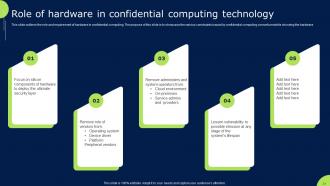
Slide 31: This slide outlines the role and requirement of hardware in confidential computing.
Slide 32: This slide showcases the Title for the Topics to be discussed next.
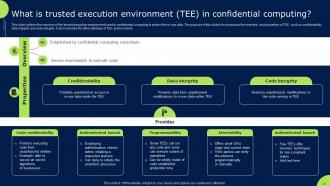
Slide 33: This slide reveals the overview of the trusted execution environment used in confidential computing.
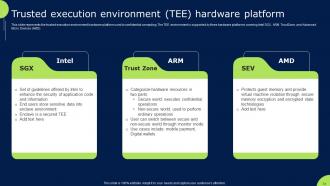
Slide 34: This slide represents the trusted execution environment hardware platform used in confidential computing.
Slide 35: This slide talks about the functional comparison between different TEE environments available in the market.
Slide 36: This slide displays the Heading for the Contents to be covered further.
Slide 37: This slide describes the deployment of applications in Intel SGX with smaller TCB.
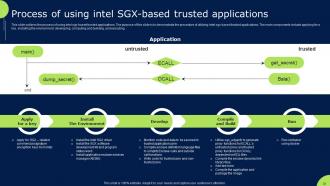
Slide 38: This slide outlines the process of using Intel SGX-based trusted applications.
Slide 39: This slide mentions the Title for the Ideas to be discussed in the next template.
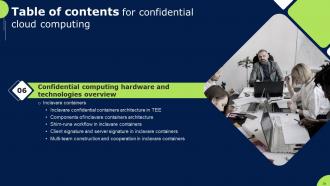
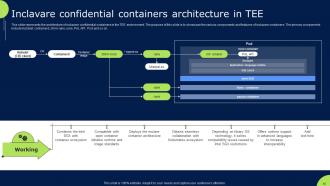
Slide 40: This slide represents the architecture of inclavare confidential containers in the TEE environment.
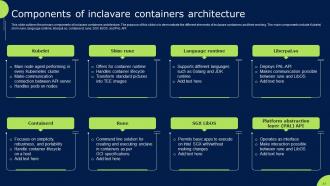
Slide 41: This slide states the Components of inclavare containers architecture.
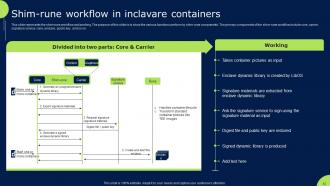
Slide 42: This slide talks about the Shim-rune workflow in inclavare containers.
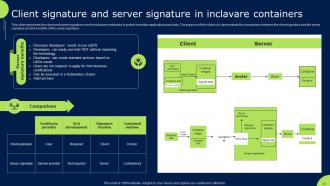
Slide 43: This slide displays the Client signature and server signature in inclavare containers.
Slide 44: This slide outlines the architecture of multi-team construction and cooperation.
Slide 45: This slide portrays the Heading for the Ideas to be covered in the upcoming template.
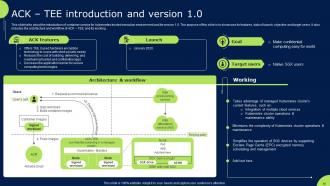
Slide 46: This slide shows the introduction of Container Service for Kubernetes trusted execution environment and its version 1.0.
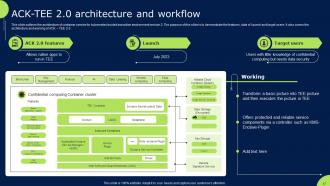
Slide 47: This slide reveals the architecture of Container Service for Kubernetes trusted execution environment version 2.
Slide 48: This slide elucidates the Title for the Contents to be discussed further.
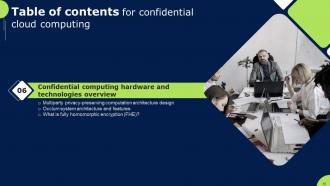
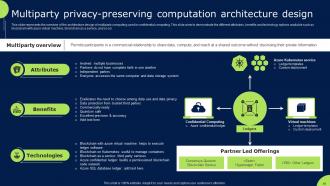
Slide 49: This slide represents the overview of the architecture design of multiparty computing.
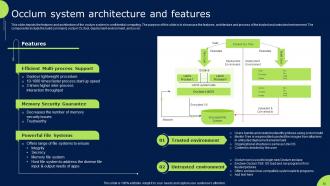
Slide 50: This slide exhibits the Occlum system architecture and features.
Slide 51: This slide represents the overview of fully homomorphic encryption used in confidential computing.
Slide 52: This slide indicates the Heading for the Topics to be covered in the following template.
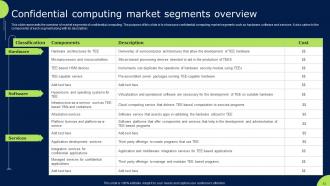
Slide 53: This slide presents the overview of market segments of confidential computing.
Slide 54: This slide talks about Confidential computing executive summary of key findings.
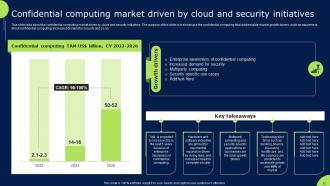
Slide 55: This slide displays the Confidential computing market driven by cloud and security initiatives.
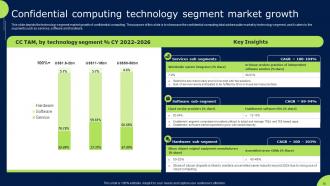
Slide 56: This slide depicts the technology segment market growth of confidential computing.
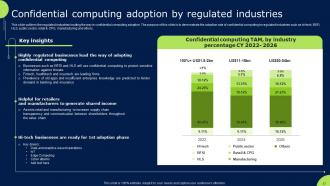
Slide 57: This slide outlines the regulated industries leading the way in confidential computing adoption.
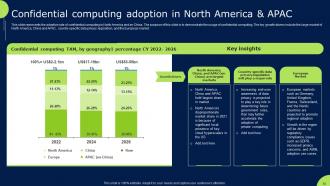
Slide 58: This slide represents the adoption rate of confidential computing in North America and ex-China.
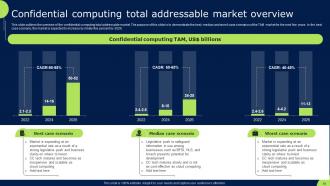
Slide 59: This slide showcases the overview of the confidential computing total addressable market.
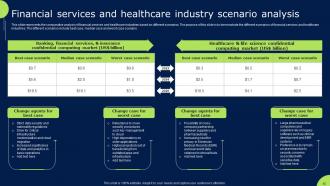
Slide 60: This slide portrays the comparative analysis of financial services and healthcare industries.
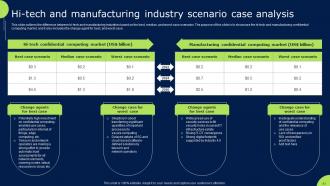
Slide 61: This slide depicts the Hi-tech and manufacturing industry scenario case analysis.
Slide 62: This slide discusses the comparative analysis between the public, retail and consumer packaged goods sectors.
Slide 63: This slide incorporates the Title for the Ideas to be discussed next.
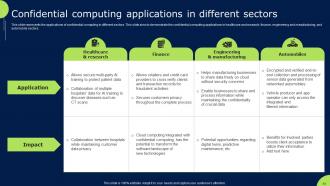
Slide 64: This slide represents the applications of confidential computing in different sectors.
Slide 65: This slide depicts the confidential computing platform for the healthcare industry
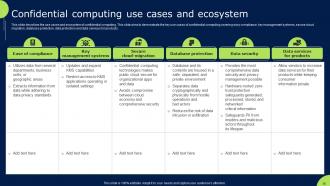
Slide 66: This slide describes the use cases and ecosystem of confidential computing.
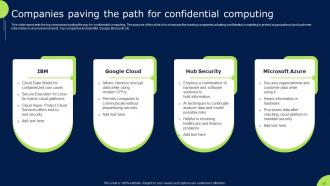
Slide 67: This slide presents the top companies leading the way for confidential computing.
Slide 68: This slide highlights the Heading for the Ideas to be covered in the upcoming template.
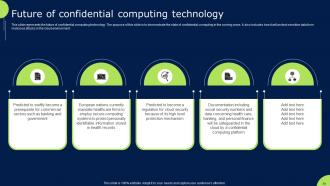
Slide 69: This slide reveals the future of confidential computing technology.
Slide 70: This slide contains the Title for the Contents to be discussed next.
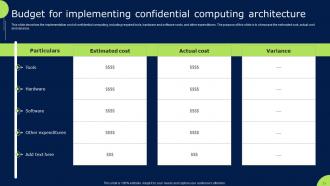
Slide 71: This slide showcases the Budget for implementing confidential computing architecture.
Slide 72: This slide dipslays the Heading for the Topics to be covered in the next template.
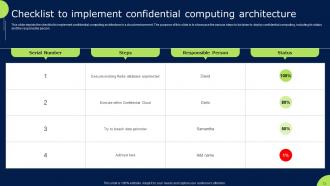
Slide 73: This slide depicts the checklist to implement confidential computing architecture in a cloud environment.
Slide 74: This slide presents the Title for the Topics to be discussed next.
Slide 75: This slide outlines the implementation timeline for confidential computing architecture.
Slide 76: This slide displays the Heading for the Contents to be covered in the upcoming template.
Slide 77: This slide represents the implementation roadmap for confidential computing architecture.
Slide 78: This slide shows the Title for the Ideas to be discussed next.
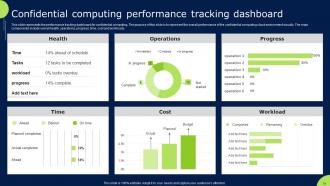
Slide 79: This slide highlights the performance tracking dashboard for confidential computing.
Slide 80: This slide incorporates the Heading for the Ideas to be covered in the forth-coming template.
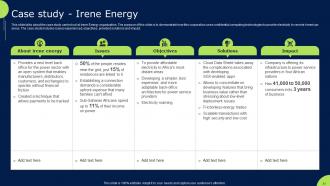
Slide 81: This slide talks about the case study carried out at Irene Energy organization.
Slide 82: This is the Icons slide containing all the Ideas used in the plan.
Slide 83: This slide is used for depicting some Additional information.
Slide 84: This slide showcases the Venn diagram.
Slide 85: This is the Puzzle slide with related imagery.
Slide 86: This slide contains the Post it notes for reminders and deadlines.
Slide 87: This slide elucidates information related to the Financial topic.
Slide 88: This is the 30 ,60, 90 days plan slide for effective planning.
Slide 89: This is the Thank You slide for acknowledgement.
Confidential Cloud Computing Powerpoint Presentation Slides with all 88 slides:
Use our Confidential Cloud Computing Powerpoint Presentation Slides to effectively help you save your valuable time. They are readymade to fit into any presentation structure.



















FAQs for Confidential Cloud Computing
So basically, your data stays encrypted even when it's actually being processed - not just sitting in storage. Normally when cloud services work on your stuff, it's completely exposed. Pretty sketchy if you think about it. Confidential computing uses special hardware that keeps everything encrypted in memory too. Way better protection against insider threats and breaches. Compliance becomes less of a nightmare. Honestly? If you're dealing with anything remotely sensitive, I'd definitely check if your cloud provider has this. The peace of mind alone makes it worth looking into.
So basically, your data gets encrypted in three ways - when it's just sitting there, when it's moving around, and even while it's being processed (which is pretty neat, honestly). Regular cloud can't do that last part. Hardware-based secure enclaves keep everything locked down from everyone, even the cloud company itself. If hackers break in, they'll just see scrambled nonsense. First thing you should do is figure out what sensitive stuff you're actually putting in the cloud. Then find a provider that does hardware-level encryption during processing, not just storage.
Start with data residency - figure out where your cloud provider actually stores stuff since each region has its own rules. Encryption compliance is huge too (FIPS 140-2 and all that). Industry regs like HIPAA or PCI DSS obviously matter depending on your sector. Here's the annoying part though - lots of compliance frameworks are still playing catch-up with confidential computing, so you'll probably end up explaining the tech to auditors. Honestly, just build a matrix comparing your current requirements against what the confidential cloud offers. Trust me, it's boring work but saves major pain down the road.
So basically confidential computing makes these secure little bubbles in memory that keep your data encrypted even when it's actually running - not just sitting there. It's like having a locked safe inside the CPU itself, which is honestly pretty cool. Your stuff stays protected from the OS, hypervisor, and even those cloud admins who can usually see everything. You can run sensitive workloads on someone else's servers without them accessing your actual data. Intel SGX and AMD SEV are good starting points if you want to mess around with it - though fair warning, the learning curve's a bit steep at first.
So basically, regular cloud computing leaves your data exposed while it's being processed - like the CPU can see everything naked, you know? Storage and transmission are encrypted but processing isn't. Confidential computing fixes this with special hardware that creates these encrypted "bubbles" around your apps. Your data stays locked up even while it's actively running. Pretty neat tech honestly. If you're handling anything sensitive, I'd definitely check out what AWS, Azure, or Google offer for this. Way better than crossing your fingers and hoping nobody peeks.
Healthcare and finance are huge for this stuff - they're constantly dealing with HIPAA, PCI compliance, all that regulatory nightmare. Government agencies love it too for obvious reasons. Basically anywhere you're processing sensitive data but still need to actually work with it - like analyzing patient records or running financial models without exposing the raw data. AI companies are all over it since nobody wants their training datasets stolen by competitors. Oh, and law firms are getting into it big time since client confidentiality is literally what keeps them in business. If a data breach would completely wreck your company, you should probably look into this.
So basically these hardware security features are what make confidential cloud computing actually work. Intel SGX, AMD SEV, ARM TrustZone - they all create these isolated "secure enclaves" where your stuff runs protected even from the cloud provider. Which is honestly pretty impressive if you think about it. The encryption and memory protection happens right at the chip level, so you're not just crossing your fingers and hoping the software's secure. Oh, and there's this attestation thing that lets you verify you're actually running in a legit secure environment before sending sensitive data.
Start with solid identity verification, then build role-based permissions around least privilege - only give people what they actually need. ABAC is honestly way better than traditional methods if you can swing it since it's so much more flexible. Encrypt everything in transit and at rest, obviously. Don't reinvent the wheel though - just use your cloud provider's IAM tools, they're usually pretty solid. The real trick is staying on top of it with regular access reviews because people's jobs change all the time. Oh, and set up alerts for weird access patterns so you'll catch sketchy stuff early.
Look, people think confidential computing makes your data bulletproof against everyone - even the cloud provider. Not true though. You're still trusting the hardware and attestation stuff. Also, it's not just for banking data or whatever. Works great for regular workloads too when you want that extra shield. Oh and the whole "it's impossibly hard to set up" thing? Most cloud providers have actually made it pretty easy now (thank god). My advice? Just try a small pilot first and see what happens with your specific setup.
So confidential cloud is pretty cool - it creates encrypted spaces where your data stays protected even while it's being processed. Not just sitting in storage, but actively running. The cloud provider literally can't peek at your stuff, which honestly blew my mind when I first learned about it. Uses hardware encryption like Intel SGX or AMD SEV to create these isolated environments. Even if hackers get admin access (yikes), your data's still locked down tight. Oh, and if you're dealing with super sensitive stuff, figure out which workloads actually need this level of protection first - no point overdoing it everywhere.
Honestly, the performance hit is gonna be your biggest headache - we're talking 10-50% slower because of all that encryption overhead. Hardware support is still pretty limited too, you need those specific processors with secure enclaves. Your dev team will probably struggle with the learning curve, especially around key management stuff. The whole tooling ecosystem feels kinda half-baked compared to regular cloud services, if I'm being real. I'd definitely start with something that's not performance-critical first. That way you can figure out all the quirks without screwing up your main production stuff.
Start with your current security costs as a baseline - that's crucial. Then after 6-12 months, compare the difference. You're looking at hard savings like fewer breach costs, compliance fines, and security staffing overhead. Don't sleep on the softer stuff though - it honestly matters just as much. Things like faster launches for sensitive projects, new partnerships with security-focused clients, lower insurance rates. I'd track incident response costs, audit expenses, customer churn rates too. The revenue protection from keeping customer trust? That's probably your biggest win but hardest to quantify.
Start with SOC 2 Type II - that's your bare minimum for data security stuff. ISO 27001 is solid too. HIPAA if you're touching healthcare data, obviously. Oh and FedRAMP matters way more than people realize if you do any government work. Even indirect stuff. Confidential computing gets weird though - you need attestation and hardware-level protection like Intel SGX or AMD SEV. But here's the thing: actually ask for their compliance reports. Don't just trust the marketing page. Check those audit dates because some companies love showing off certifications from like 2019.
So confidential computing is pretty cool - it's basically hardware-level encryption that protects your data even while it's running computations. TEEs create these isolated "enclaves" where multiple parties can work on shared sensitive stuff without exposing it to each other or the cloud provider. The hardware handles attestation and encryption automatically, which saves you from building crypto protocols yourself (thank god because that's a pain). SGX is probably the most common one you'll see. Perfect for collaborative analytics or when you need joint ML training but can't share raw data. Honestly way more practical than I expected when I first heard about it.
Hardware-based trusted execution environments are going mainstream now. Zero-trust is getting built right into cloud platforms too. Homomorphic encryption actually works for real stuff finally – that one blew my mind honestly. All the big cloud providers are rolling out confidential computing services, and the tooling doesn't suck anymore which is huge. For regulated industries, this isn't optional tech anymore, it's becoming required. I'd definitely work it into your infrastructure planning sooner rather than later. The whole space feels like it's moving at warp speed right now.
-
Spacious slides, just right to include text. SlideTeam has also helped us focus on the most important points that need to be highlighted for our clients.
-
Definitely recommend SlideTeam to all who need help with PowerPoint presentations. Their design team can create anything you need.