


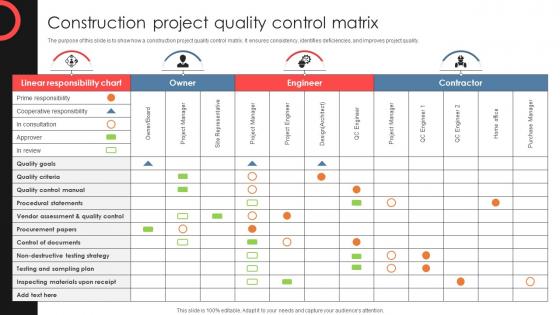
Construction Project Quality Control Matrix




Try Before you Buy Download Free Sample Product
 Impress Your
 Audience
 100%
100% Editable
 Save Hours
 of Time


The purpose of this slide is to show how a construction project quality control matrix. It ensures consistency, identifies deficiencies, and improves project quality.
People who downloaded this PowerPoint presentation also viewed the following :
Construction Project Quality Control Matrix with all 9 slides:
Use our Construction Project Quality Control Matrix to effectively help you save your valuable time. They are readymade to fit into any presentation structure.









FAQs for Construction Project
You need solid quality standards and regular checkpoints throughout your process. Documentation is huge - can't track defect patterns without it. Make sure your team actually knows what to look for (crazy how many places skip proper training). Supplier quality matters too since their mess becomes your mess downstream. Map out your critical control points first, then build inspections around those. Oh, and have a decent corrective action process when things go sideways. Start with the basics and you'll catch most issues before they blow up.
So QC happens after you make stuff - basically testing and inspecting to catch defects. QA is the opposite, you're setting up processes beforehand to stop problems from even happening. QC = final checkpoint to see if things meet your specs. Meanwhile QA is designing your whole production flow so it consistently works well. People confuse these constantly, honestly drives me nuts sometimes! Start with QA to build solid processes first. Then add QC checkpoints to grab whatever still slips through the cracks.
Dude, the tech stuff has been a game changer for quality control. Instead of waiting around for reports after everything's done, you get real-time data flowing in constantly. Those automated inspection systems? They spot defects way faster than we ever could. AI pattern recognition is honestly getting pretty wild these days. IoT sensors keep tabs on your whole production environment while digital dashboards show you what's happening across everything instantly. Saves so much tedious manual work too. I'd say pick one process to automate first - don't go crazy trying to digitize your whole operation right away.
Think of SPC like a smoke detector for your production line - it catches problems way before they blow up into costly disasters. You're basically plotting your key metrics on control charts and watching for weird patterns or stuff going outside normal limits. Way better than scrambling to fix things after they're already broken, honestly. Pick your most critical process variables first, then set up some basic charts to track them. The whole point is shifting from constantly inspecting finished products to actually controlling quality while you're making them. You'll catch trends and variations super early compared to old-school inspection methods.
Honestly, people hate being told they need to follow new steps - that's your biggest headache right there. Different departments will do things their own way no matter what you say. Training costs add up fast too. Getting good data is impossible when half your team thinks the whole thing's pointless. Oh, and keeping documentation updated? Good luck with that mess. The worst part is everyone gets excited at first, then completely loses interest after like two months. Start with just one department though. Get them some quick wins so you can actually point to results when other teams inevitably push back.
Track your defect rates and customer complaints first - that's where you'll see real impact. Rework costs matter too, plus how fast you're resolving issues. Customer satisfaction scores are huge, honestly more important than some of the technical stuff. Don't forget employee feedback either. Are you catching problems earlier than before? That's a good sign things are working. Process compliance rates tell you if people are actually following the new procedures. Oh, and set up something simple to track maybe 3-4 key things each month. Compare it to where you started - makes it way easier to see progress.
Dude, when your quality control sucks, customers just stop trusting you. They get burned once with a crappy product and boom - they're done. Returns pile up, reviews tank, and honestly? Word spreads fast these days. People expect their stuff to work consistently, not be some weird lottery every purchase. I learned this the hard way with a brand I used to love - now I won't touch them. Your best customers won't stick around or tell friends about you. Way better to catch problems before shipping than deal with angry people later.
Training your people is probably the most underrated part of quality control, honestly. When workers actually know what they're doing and what to watch for, they'll catch problems way earlier instead of everything piling up at the end. People give a damn about doing good work when they understand why their piece matters to the whole thing. Plus trained employees aren't scared to speak up if something looks off. I'd figure out where your biggest quality issues are happening first, then focus your training right there. Oh and confident workers = way fewer headaches for everyone.
Honestly, start by getting your processes locked down - like actual written protocols your team can follow. Training has to be consistent too, can't have people just winging it. Track stuff like how fast you respond to complaints and whether you're actually fixing them. Mystery shopping is clutch for this, though I always felt bad for the employees getting tested. Your front-line people need power to solve problems right there instead of passing everything up to managers. Survey your customers regularly, but here's the thing - you gotta actually DO something with their feedback or it's pointless.
So ISO certification is basically like getting forced to write down all your quality stuff - sounds awful but honestly it helps a ton. You'll document procedures, track your numbers, do audits. It's this framework that keeps everyone doing quality the same way. The whole process will probably show you holes in what you're doing now that you had no clue about (happened to us). I'd start by just mapping what you currently do for quality control. That way you can see what actually needs to be written down and made official.
Honestly, there's some really good stuff out there that'll cut down your manual work big time. Minitab and JMP are solid picks for data analysis and control charts. Real-time tracking? MES systems like Wonderware or Ignition handle that. iAuditor is clutch for digital checklists - way better than those annoying clipboards we used to deal with. Document workflows get easier with Monday.com or Smartsheet for approvals and tracking revisions. My advice? Figure out what's eating up most of your time first, then grab one tool to fix that specific problem.
Honestly, just pick a few spots in your process where you can grab data consistently - inspections, customer complaints, that kind of stuff. Digital tools beat paper logs every time (learned that the hard way). Get your team to actually log everything though - that's the real challenge. Focus on patterns instead of obsessing over single incidents. I'd start with maybe 3-4 metrics that really matter to you. Once those are running smooth, add more. Real-time dashboards are clutch if you can swing it. Don't try to track everything at once or you'll burn out fast.
So PLM and quality control are basically best friends - they share everything. Your QC data gets fed straight into the PLM system at every step, from design checks all the way to after launch. PLM becomes like your memory bank for all the quality stuff - defects, patterns, fixes, you name it. What's nice is when you find quality issues, that info goes right back into design changes and supplier choices. Oh, and process tweaks too. The key thing? You want that data flowing smoothly between systems so you're not repeating the same mistakes over and over.
Dude, stop making quality just the QC team's problem - spread it around to everyone. Get your leadership actually talking about it and putting money behind it, not just lip service. Train people so they get why quality matters for *their* job specifically. Honestly? Half these quality issues happen because nobody gives a shit in the first place. Set up ways for workers to flag problems without getting in trouble. When someone catches something good, make a big deal about it publicly. Oh, and tie quality stuff into performance reviews so it actually matters. Most crucial thing - let people hit the brakes on processes when something's wrong.
Think of audits like getting your car inspected - they catch problems before you're stranded on the highway. They're basically quality control checkups that verify your processes actually work the way you think they do. You'll spot compliance issues, find improvement opportunities, and make sure everyone's following the same procedures. Honestly, I'd rather deal with a small audit finding than explain a major screwup to my boss later. Schedule them regularly instead of waiting for things to go sideways. They help you catch trends early and keep quality issues from snowballing into disasters.
-
I was never satisfied with my own presentation design but SlideTeam has solved that problem for me. Thank you SlideTeam!
-
“There is so much choice. At first, it seems like there isn't but you have to just keep looking, there are endless amounts to explore.”