


Construction staff safety training proposal powerpoint presentation slides




Try Before you Buy Download Free Sample Product
 Impress Your
 Audience
 100%
100% Editable
 Save Hours
 of Time


Workplace safety can never be emphasized enough. Few occupations demand more attention to steer clear of workplace hazards. The construction industry is more susceptible to workplace accidents due to the nature of the job. Embarking on a new construction project calls for proper workplace safety training. Therefore, SlideTeam designers decided to dedicate their latest design to workplace safety training service providers. Introducing the all-new Construction Staff Safety Training Proposal PowerPoint Presentation Slides. This business proposal PPT slide deck satisfies your need to document your expertise in a virtual format. Occupational safety service providers can successfully pitch their services, thereby converting more leads. The cover letter is articulated to pique the attention of your client. It hooks the viewers by offering a glimpse of the complete project and the value that it will create. The infographic style cover letter also features appealing design elements. The whole business proposal incorporates state-of-the-art vector graphics to ensure a quality experience. This safety at the workplace PowerPoint theme helps you gain notability. It instantly sets you apart in the sea of cookie-cutter business proposal templates. Elaborate on the objectives and context of the project. Reveal your plan of action for safety training services. Break down the whole project into phases like kick-off, sitemap, and training. Inform your clients about the scope of your workplace safety training services with the help of cutting-edge data visuals. Divide the duration of the project into the number of days required to complete each stage. Pitch additional services to your clients through this PPT slideshow, like consulting, security, and risk assessment. Neatly compile the cost involved at each stage of the project. Once you are through with the preliminary business proposal details, present a crisp company overview. Highlight your experience with the help of client testimonials and case studies. Finally, mention the statement of work and contract. Hit the download button and start personalizing right away.
People who downloaded this PowerPoint presentation also viewed the following :
Content of this Powerpoint Presentation
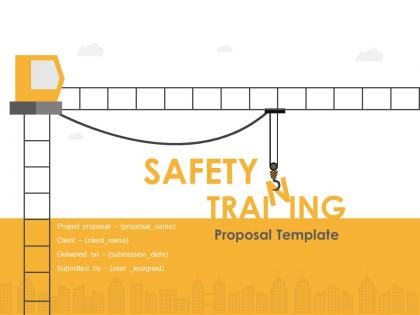
Slide 1: This slide introduces Construction Safety Training Proposal Template. State Client Name, Submission date and User assigned.
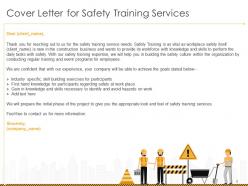
Slide 2: This slide displays Cover Letter for Safety Training Services.
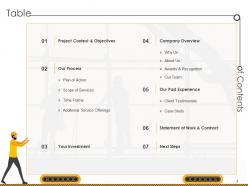
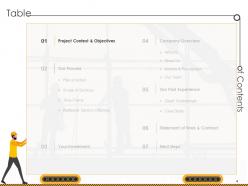
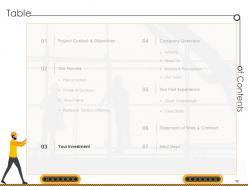
Slide 3: This slide displays Table of Content of the presentation.
Slide 4: This slide depicts Table of Content of Presentation.
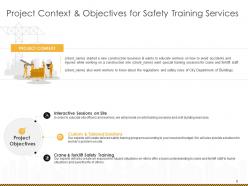
Slide 5: This slide describes Project Context & Objectives for Safety Training Services
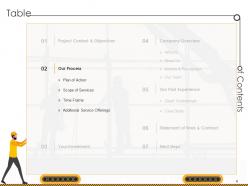
Slide 6: This slide shows Table of content.
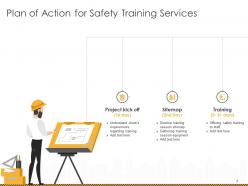
Slide 7: This slide describes Plan of Action for Safety Training Services.
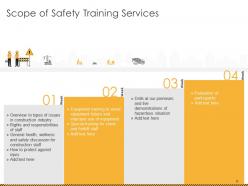
Slide 8: This slide is continued with Scope of Safety Training Services
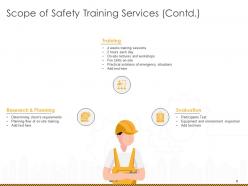
Slide 9: This slide provides Overview to types of issues in construction industry.
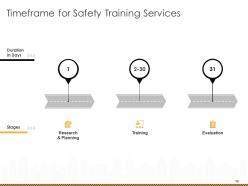
Slide 10: This slide showcases Timeframe for Safety Training Services.
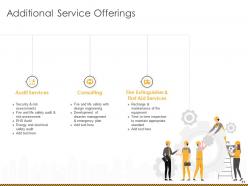
Slide 11: This slide shows Additional Service Offerings.
Slide 12: This slide shows Table of content.
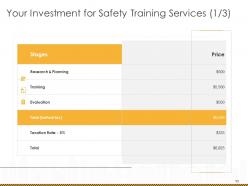
Slide 13: This slide depicts Investment details for Safety Training Services.
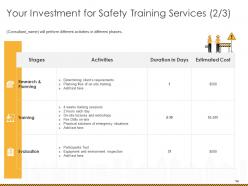
Slide 14: This slide showcases Investment details for Safety Training Services.
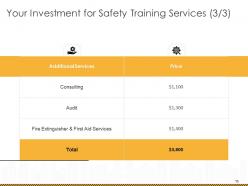
Slide 15: This slide showcases Investment details for Safety Training Services.
Slide 16: This slide depicts Table of Content.
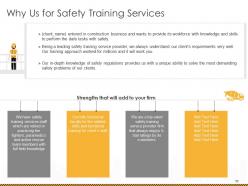
Slide 17: This slide shows reasons for choosing us Safety Training Services Depicts Strengths that will add to your firm
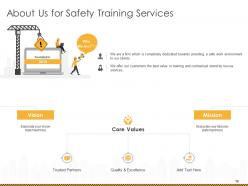
Slide 18: This is About Us slide with Vision, Mission and Goal of Company.
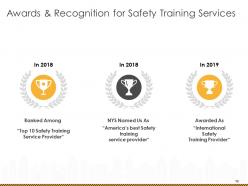
Slide 19: This slide displays Awards & Recognition for Safety Training Services
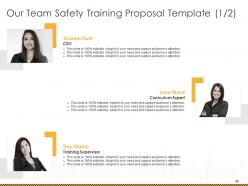
Slide 20: This is Our Team slide with Names and Designations.
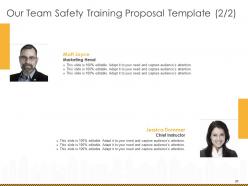
Slide 21: This is Our Team slide.
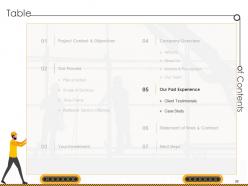
Slide 22: This slide shows Table of content.
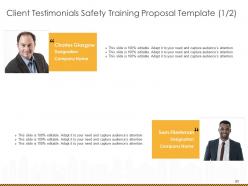
Slide 23: This slide displays Client Testimonials Safety Training Proposal Template
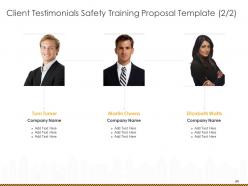
Slide 24: This slide shows Client Testimonials Safety Training Proposal Template.
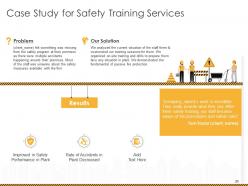
Slide 25: This slide showcases Case Study for Safety Training Services.
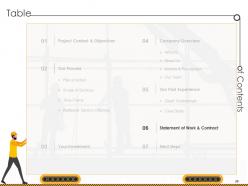
Slide 26: This slide shows Table of Content.
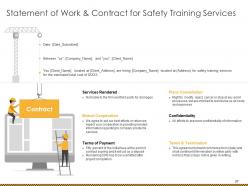
Slide 27: This slide showcases Statement of Work & Contract for Safety Training Services
Slide 28: This slide shows Table of content.
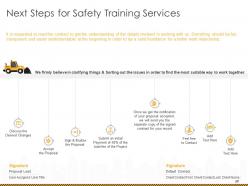
Slide 29: This slide showcases Next Steps for Safety Training Services.
Slide 30: This is Contact Us slide with Email Address, Address and Contact number.
Slide 31: This is Icons Slide for Construction Staff Safety training Proposal
Slide 32: This is Additional Slides for moving forward.
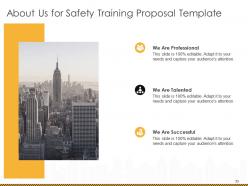
Slide 33: This is About Us slide to showcase Company specfications.
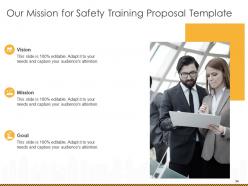
Slide 34: This is Our Mission slide with Mission, Vision and Goals.
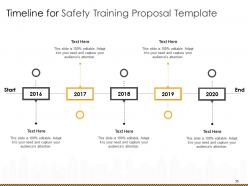
Slide 35: This slide showcases Timeline process.
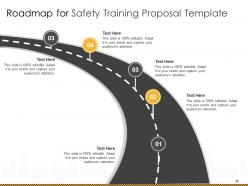
Slide 36: This slide showcases Roadmap process.
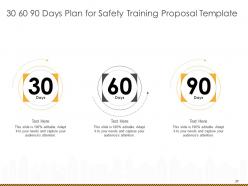
Slide 37: This is 30 60 90 Days Plan slide.
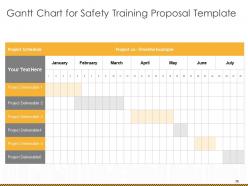
Slide 38: This slide represents Gantt Chart for Safety Training Proposal Template.
Construction staff safety training proposal powerpoint presentation slides with all 38 slides:
Use our Construction Staff Safety Training Proposal Powerpoint Presentation Slides to effectively help you save your valuable time. They are readymade to fit into any presentation structure.
FAQs for Construction staff safety training proposal
Honestly, you gotta make it hands-on or your crew will zone out completely. Show them how to actually use the equipment instead of just talking about it. Cover the specific hazards on your actual site - not some generic stuff. PPE requirements, emergency procedures, all that. Regular refresher sessions are huge too, maybe monthly meetings so people don't forget. Oh and document everything! I know the paperwork sucks but trust me, you'll thank yourself later if OSHA comes knocking. Interactive training beats death-by-PowerPoint every single time.
Honestly, VR training is a game changer for dangerous stuff. Workers can practice heights, heavy machinery, emergency responses - all without the actual risk. They mess up? No big deal, try again. Way more engaging than those boring safety videos everyone zones out during. Plus people actually remember what they learn when they've experienced it firsthand. You can even simulate your specific worksite hazards before anyone sets foot there. I'd start simple - maybe fall protection or basic equipment handling. The safety awareness improvements are pretty immediate, and compliance goes up too. It's like learning to drive in a simulator first, you know?
Compliance is your safety net, honestly. Keeps you meeting OSHA standards and protects everyone from legal headaches. You'll need to cover the usual suspects - fall protection, hazard communication, equipment safety stuff. Document everything too, which is annoying but necessary. Skip it and you're looking at fines, shutdowns, or actual injuries that could've been avoided. I learned this the hard way at my last job. Treat compliance as your starting point, not the finish line. Just make sure those training records stay current and easy to find when inspectors show up.
Honestly, monthly is the absolute minimum but I'd push for more. Day one training for newbies is non-negotiable. After that, do refreshers whenever you bring in new equipment or - God forbid - after accidents happen. Weekly toolbox talks are gold if you can swing it, way better than those mind-numbing generic safety videos nobody pays attention to. Focus on what's actually happening on your site that week, not some cookie-cutter stuff. Oh, and document everything religiously - inspectors love their paperwork and you don't want to get caught without records.
Falls are your biggest killer - seriously, they're like a third of all construction deaths. After that, you've got struck-by accidents from equipment or stuff falling on people, electrocution, and getting caught in machinery or trenches. Heat illness is sneaky common too, which honestly surprised me when I first learned that. You'll want to cover PPE basics, chemical hazard communication, and excavation safety. But honestly? Start with fall protection training first since that's where you'll save the most lives. The other stuff matters, but falls are just so damn deadly in this industry.
Look at your incident rates before and after - that's what actually matters, not just completion certificates. Near-miss reports usually go up after good training (weird but true) because people start noticing more stuff. Do follow-up observations to see if they're really using what you taught them. Safety audit scores help track progress too. Employee surveys are fine but focus on whether behavior changed, not if they "enjoyed" the session. I'd set up reviews every few months to compare your numbers. The real test? Whether accident rates drop. Everything else is just supporting data.
Dude, make it hands-on - that's the biggest game changer. Real accident case studies hit way harder than boring PowerPoints, especially if they're from your actual industry. I always throw in photos or videos from job sites because honestly, nobody wants to be that guy in the incident report. Get people talking with questions throughout, and break things up with group problem-solving stuff. Quick scenario exercises work great. The trick is tying everything back to what they actually do every day instead of just rattling off OSHA rules. Oh, and rotating who presents different sections keeps things fresh - people tune out when it's the same voice for an hour straight.
First thing - figure out what specific risky stuff your crew actually does daily. Find trainers who've done that work before, not just read about it. PowerPoints are useless for this kind of thing. Set up real practice sessions where people can mess up safely first. Mix classroom time with hands-on demos. Your trainers better have legit certifications AND field experience - both matter. Honestly, most safety training is just theater that nobody remembers. Make yours about actual situations they'll face. Do refreshers every few months and yeah, document it all because compliance headaches suck.
Dude, skipping proper safety training is asking for trouble. OSHA will come down hard with fines and violations. If someone gets seriously injured or dies? You're looking at potential criminal charges and massive lawsuits. Insurance premiums will skyrocket too. The whole thing becomes this endless paperwork nightmare - trust me, I've seen it happen. Your company's reputation gets trashed in the industry. Way better to spend the money upfront on real training than deal with that mess later. Just make sure everyone's actually certified, not just some fake signatures on forms.
Honestly, it's such a game-changer when workers can actually understand what you're telling them about safety. I've seen too many near-misses because someone just smiled and nodded through training they couldn't follow. Your team will spot hazards better and know what to do in emergencies when they're learning in their own language. Plus they'll actually ask questions instead of staying quiet when confused - which is huge. Compliance goes way up too. I'd start with the critical stuff first, like your emergency procedures and equipment manuals, then work outward from there.
Skip the boring PowerPoint stuff and do actual site walkthroughs with new people - they'll remember real hazards way better. Pair each newbie with a safety buddy for the first couple weeks too. Trust me, questions always pop up after the official training's over. I've watched so many people act like they get it during orientation, then completely panic when they hit something weird on-site. Oh and document everything obviously - check in at 30, 60, 90 days. The whole point is making safety automatic, not just another stupid requirement they have to sit through.
Dude, mobile apps are perfect for safety training - your crew already has their phones glued to them anyway. Quick safety reminders, mini training modules when they're waiting around, maybe throw in some quizzes with badges to make it less boring. Workers can download stuff offline which is clutch since job site internet sucks. You'll be able to see who's actually doing the training and who needs a kick in the butt. Honestly, I'd test it with just your supervisors first. Once you figure out what works, then roll it out to everyone else.
Honestly, you gotta make it personal - like "this keeps you going home to your kids" instead of boring compliance stuff. Real stories from your actual sites work way better than made-up scenarios. I'd let workers find the hazards themselves rather than just talking at them. Makes them feel like the experts, you know? Peer training is gold too - having the experienced guys share their close calls hits different. People tune out when it feels like another corporate box to check, but they listen when it's about protecting what matters to them.
Dude, you should totally talk to your workers before throwing together safety training. They know the real hazards they deal with every day, not just textbook stuff. Half the protocols in manuals are actually confusing or don't work in practice - workers will tell you straight up what's broken. Their near-miss stories are gold too, way better than boring generic examples. People actually listen when they feel heard and see their real job situations in the training. I mean, nobody wants another snooze-fest PowerPoint session. Just do quick interviews or feedback chats with your crew first.
Dude, real case studies are absolute game-changers for safety training. Workers actually pay attention when you tell them about that guy who fell through a roof last year instead of showing another boring slide about harnesses. Stories stick way better than rules - people remember the drama. Plus everyone starts sharing their own scary moments, which honestly gets pretty intense sometimes. One real incident per session and suddenly your team's actually engaged instead of scrolling their phones. It's wild how much more they retain when it's "this happened to Jim down the road" versus generic protocol
-
Great designs, Easily Editable.
-
Use of different colors is good. It's simple and attractive.
-
Amazing product with appealing content and design.
-
Perfect template with attractive color combination.