


Consumer decision making powerpoint presentation slides




Try Before you Buy Download Free Sample Product
 Impress Your
 Audience
 100%
100% Editable
 Save Hours
 of Time


Showcase buying trends conveniently with Consumer Decision Making PowerPoint Presentation Slides. Display four determining factors in the consumer decision-making model by downloading our buying decision PPT template deck. Our consumer behavior PowerPoint slideshow designers have professionally crafted a blueprint to represent customer decision-making trends. Our purchase decision PowerPoint presentation encompasses the core areas like the decision-making process, and the challenges involved. This purchase decision PPT presentation offers strong visualization tools like graphs, and mind maps to make data easily comprehensible. Our buyer preference PowerPoint templates illustrate product and patronage motives that influence the consumer’s decision to purchase. Another advantage of using this consumer preference PPT slideshow is that you can showcase a real-life use case. Our customer purchase motives PowerPoint template gives you access to performance indicators to ascertain buyer behavior. So, grab this complete deck of consumer purchase decision PPT and represent the behavior of your customer base.
People who downloaded this PowerPoint presentation also viewed the following :
Content of this Powerpoint Presentation
Slide 1: This slide introduces Consumer Descision Making. State your Company name and begin.
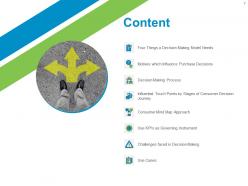
Slide 2: This slide displays the Content of the presentation.
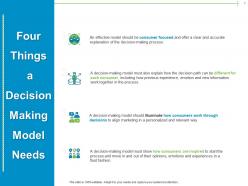
Slide 3: This slide describes Four Things a Decision Making Model Needs.
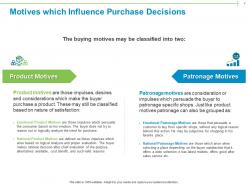
Slide 4: This slide describes about motivating which Influence Purchase Decisions.
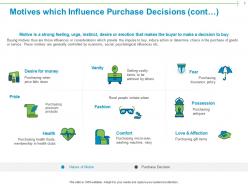
Slide 5: This slide is continued with Motivating which Influence Purchase Decisions.
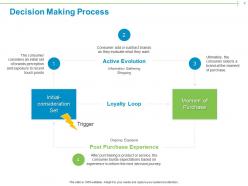
Slide 6: This slide showcases Decision Making Process.
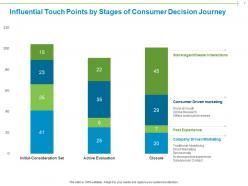
Slide 7: This slide describes Influential Touch Points by Stages of Consumer Decision Journey.
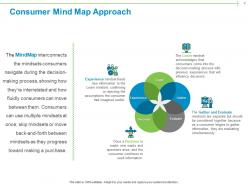
Slide 8: This slide showcases Consumer Mind Map Approach.
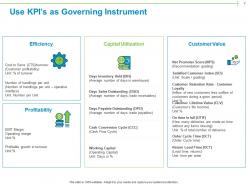
Slide 9: This slide describes Use KPI’s as Governing Instrument.
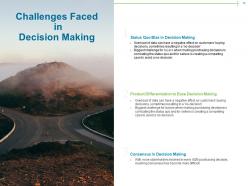
Slide 10: This slide presents Challenges Faced in Decision Making.
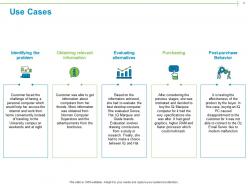
Slide 11: This slide showcases Use Cases Identifying the problem, Obtaining relevant information, Evaluating alternatives, Purchasing, Post-purchase Behavior.
Slide 12: This is Consumer Decision Making Icons Slide.
Slide 13: This slide is titled as Additional Slides.
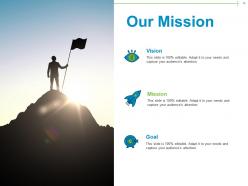
Slide 14: This is Our Mission slide with Vision, Mission and Goal.
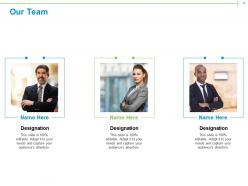
Slide 15: This is Our Team slide with names and designations.
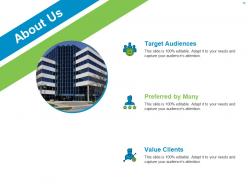
Slide 16: This is About Us slide to showcase Company specifications.
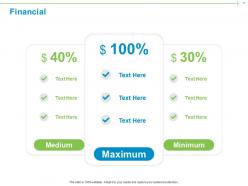
Slide 17: This is Financial slide to showcase finance related stuff here.
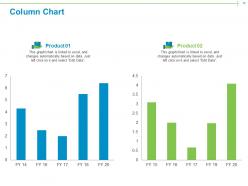
Slide 18: This slide displays Column Chart with different product comparison.
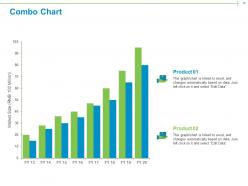
Slide 19: This slide displays Combo Chart with different products comparison.
Slide 20: This is Idea Generation slide to highlight facts and information.
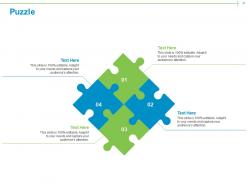
Slide 21: This is Puzzle slide with icons and text boxes.
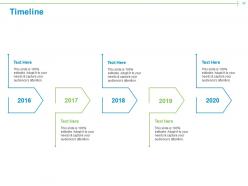
Slide 22: This is Timeline slide.
Slide 23: This is Thank You slide with Address, Email address and Contact number.
Consumer decision making powerpoint presentation slides with all 23 slides:
Use our Consumer Decision Making Powerpoint Presentation Slides to effectively help you save your valuable time. They are readymade to fit into any presentation structure.

FAQs for Consumer decision making
Honestly, it comes down to a few big things. Convenience is huge - people want that one-click, same-day delivery stuff. Reviews matter more than anything (I literally won't buy something without checking them first). Price is still important, but it's more about feeling like you're getting good value. Your customers expect you to actually know them and what they want. Oh, and the whole sustainability thing is becoming a real factor, especially if you're targeting millennials or Gen Z. Bottom line: make buying from you stupid easy and get those reviews flowing. Social proof basically sells itself once you've got it rolling.
Dude, emotions totally beat logic when people buy stuff. Your brain processes feelings way faster than it does specs and features - that gut reaction hits first. Look at Apple fanboys paying crazy prices when there's cheaper phones that work just as well. Or Nike loyalists who won't touch other brands. Honestly, I think most purchase decisions happen in like 2 seconds based purely on how something makes you feel. The smart move? Make people love how your brand feels, then throw in some good rational reasons they can use to justify it later. Works every time.
Honestly, social media reviews are huge for buying stuff now. People trust random strangers online more than fancy ads - which makes total sense when you think about it. When I'm shopping, I always scroll through reviews to see what could go wrong or if it's actually worth it. Gen Z especially lives by this stuff since they're constantly on these apps anyway. Most people won't even buy something without checking reviews first. It's become part of the whole research thing before you spend money. Way more reliable than whatever the company's trying to sell you.
Ok so perceived value is that moment when someone decides if what you're selling is actually worth their money. People weigh the benefits against the cost - and honestly, price isn't everything. I mean, we all overpay for Starbucks sometimes but it feels worth it, right? Your product could be amazing, but if customers can't see why they need it, they'll just scroll past. The trick is explaining benefits, not just listing what it does. Help them picture how it fixes their actual problem. Make that connection super clear in your messaging and you're golden.
So age and income definitely affect what people buy and how much they can spend. Young people usually go for tech stuff, experiences, trendy brands - you know the drill. Older folks tend to stick with quality and brands they trust. Money sets the limits obviously, but rich people will sometimes drop serious cash on random things just because they can. Though honestly, these are just generalizations since everyone's different. I'd say start with the demographic stuff when you're figuring out your market, then dig deeper into what actually motivates people beyond just their age and paycheck.
So there's this whole 5-step thing customers go through: they realize they have a problem, search for info, compare options, actually buy something, then decide if they're happy afterward. Companies basically try to influence you at every single step - which honestly can be pretty annoying sometimes. They'll run ads to make you think you need stuff, flood Google with their content, show off why they're better than competitors, and make buying stupidly easy (Amazon's one-click is genius though). Then they'll email you afterward to make sure you don't regret it. Once you notice this pattern, you'll see it everywhere.
So basically people get weird when they buy something that doesn't match what they expected or their values. Their brain does this thing where they'll rationalize the purchase to feel better about it. Some customers hunt down positive reviews afterward to convince themselves they made a good choice. Others just return stuff if they can't shake the regret. Pretty wild how we protect our own egos, right? Here's the thing though - you gotta send follow-up emails highlighting why their purchase was smart. Beat that buyer's remorse before it even starts.
Loyal customers are basically on autopilot - they don't comparison shop or even see competitor ads half the time. It's like tunnel vision, you know? Their brain just picks the familiar option to avoid thinking too hard or risking disappointment. Makes it super tough for competitors to break in, even with better deals or features. The only real shot you have is timing it right - catch people when their go-to brand screws up somehow. That's your opening. I've seen this with iPhone users who finally switched after a terrible update or whatever. Target those "betrayal moments" if you want any hope of stealing customers.
Your cultural background basically determines everything about how you shop. Like, red packaging screams "lucky!" to Chinese consumers but feels dangerous to Americans - wild how different that is. Religion plays a huge role too, plus what your parents taught you about money and status. Some cultures prioritize family purchases while others focus on individual wants. Generational gaps matter more than people think. Marketing messages get filtered through all these cultural lenses, so what works in one country might totally flop elsewhere. You can't just assume everyone thinks the same way - gotta research each market properly.
Honestly, surveys and interviews work great if you don't make them feel like corporate BS. Watch what people actually do on your site with analytics - actions beat words every time. Social media is where you'll find the real tea since people don't hold back there. Small focus groups are solid too, just keep them chill. Heat mapping shows you where eyes go versus where people click. The magic happens when you combine everything and notice weird patterns. Like, someone swears they're budget-conscious but keeps buying the expensive stuff. People are fascinating contradictions.
Dude, e-commerce completely changed how people shop. Instead of that old awareness-to-purchase thing, customers are all over the place now. They'll see something on Instagram, watch YouTube reviews, then buy it somewhere totally different - maybe even from your competitor (brutal, I know). People can research forever, read real customer reviews, price-shop across like 50 sites. Plus those return policies? Game changer. You've gotta be everywhere your customers are looking and make finding product info super simple. The linear funnel is basically dead.
Oh man, marketers are sneaky good at this stuff. They'll throw "only 3 left!" everywhere because scarcity freaks people out. Social proof is massive too - we see those 5-star reviews and suddenly everyone else is doing it, so why not us? Then there's anchoring where they show some crazy expensive option first so everything else looks like a steal. Celebrity endorsements work because, let's be real, we're all a little sheep-like sometimes. Loss aversion hits different though - tell someone what they're missing and they'll panic-buy faster than telling them what they'll gain. Free samples are genius since you feel guilty not buying after.
So loyalty programs mess with your head in a smart way - once you start earning points, switching brands feels like throwing money away. Your brain gets attached to those rewards like they're actual cash you've invested. Quick wins early on are crucial for hooking people (nobody wants to wait forever for their first reward). Then you space out the bigger stuff to keep them coming back instead of just hitting up whatever store's closest. Honestly, most programs suck because the rewards feel impossible to reach. The good ones make you feel like you're actually getting somewhere worthwhile.
Honestly, just be straight with people. False scarcity and hidden fees are total BS - nobody likes feeling tricked. Give customers real info so they can decide for themselves. There's a big difference between persuasion and manipulation, you know? Like, you can definitely influence someone's choice without being sketchy about it. I always think about how I'd want to be treated when I'm buying something. Provide actual value. Respect that people aren't idiots. Yeah, you want sales, but not at the cost of being one of those companies everyone complains about online.
So basically, data analytics shows you patterns in buying behavior that you'd never catch just looking at spreadsheets manually. You can track customers from their first visit all the way through repeat purchases and see exactly where people drop off. The predictive stuff is honestly pretty crazy - like spotting seasonal trends, figuring out which products sell together, even predicting who's about to stop buying from you. I'd start with whatever transaction data you already have, then add web analytics on top. That combo will show you what's actually making people buy (or not buy). Worth mentioning though - sometimes you'll find correlations that don't actually mean anything, so don't go too deep down rabbit holes.
-
The Designed Graphic are very professional and classic.
-
Good research work and creative work done on every template.