


Corporate Debt Restructuring Powerpoint Presentation Slides




Try Before you Buy Download Free Sample Product
 Impress Your
 Audience
 100%
100% Editable
 Save Hours
 of Time


Provide an overview of the entire process of debt restructuring by utilizing Corporate Debt Restructuring PowerPoint Presentation Slides. Showcase how an organization can use it as a tool to lower the debt. Initially, this presentation provides an overview of the organization, its services, and its financial performance. These economic parameters include revenues, gross profit, net profit, and earnings per share. Perform an in-depth analysis of its current financial performance of the organization with the help of content-ready PPT visuals. Multiple key aspects of the performance are covered, such as the Income Statement, balance sheet, cash flow statement, and other key ratios are captured. Discuss the multiple options that can help the organization recover from their debts are considered by using the CDR PPT slideshow. These methods can be Merger and Acquisition, Debt Restructuring, Financial Restructuring, and Bankruptcy. The impact of debt restructuring can also be evaluated using this PPT slide deck. Display multiple KPIs Key performance indicators that are decided to study the overall effect of debt restructuring by using PPT layouts. So download this ready-to-use Corporate debt presentation without further delay.
People who downloaded this PowerPoint presentation also viewed the following :
Content of this Powerpoint Presentation
Slide 1: This slide introduces Corporate Debt Restructuring. State your Company name and begin.
Slide 2: This slide shows Corporate Debt Restructuring Objectives.
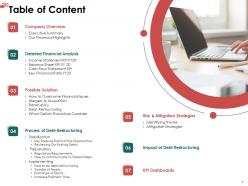
Slide 3: This slide shows Table of Content
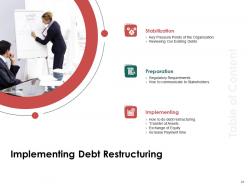
Slide 4: This slide displays Table of Content
Slide 5: The purpose of the following slide is to provide a brief introduction of the organization, as it highlights the company’s background, vision and mission.
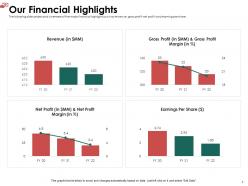
Slide 6: The following slide prides and overview of the major financial highlights such as revenue, gross profit net profit and earning per share.
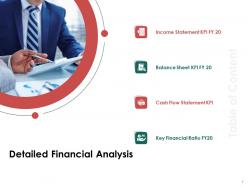
Slide 7: This slide displays Detailed Financial Analysis
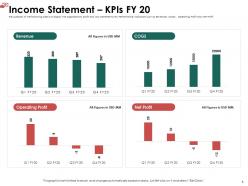
Slide 8: The purpose of the following slide is to display the organizations profit and loss statements Key Performance Indicators such as Revenues, COGS , Operating Profit and Net Profit
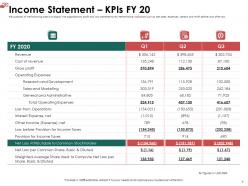
Slide 9: The purpose of the following slide is to display the organizations profit and loss statements Key Performance Indicators such as Net Sales, Expenses , EBITDA and Profit before and after tax.
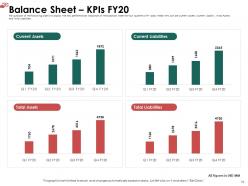
Slide 10: The purpose of the following slide is to display the key performance indicators of the balance sheet for four quarters of FY 2020. These KPIs can be Current assets, Current Liability , Total Assets and Total Liabilities.
Slide 11: The purpose of the following slide is to display the key performance indicators of the balance sheet for four quarters of FY 2020. These KPIs can be Current assets, Current Liability , Total Assets and Total Liabilities.
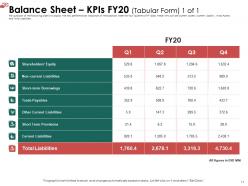
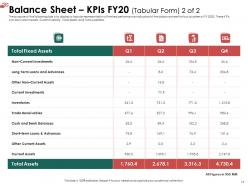
Slide 12: The purpose of the following slide is to display a tabular representation of the key performance indicators of the balance sheet for four quarters of FY 2020. These KPIs can be Current assets, Current Liability , Total Assets and Total Liabilities.
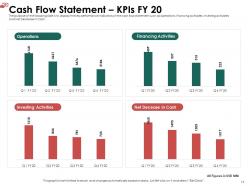
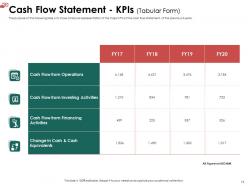
Slide 13: The purpose of the following slide is to display the key performance indicators of the cash flow statement such as operations, financing activates, investing activates and Net Decrease in Cash .
Slide 14: The purpose of the following slide is to show a tabular representation of the major KPIs of the cash flow statement of the previous 4 years.
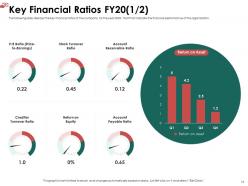
Slide 15: The following slide displays the key financial ratios of the company for the year 2020, that that indicate the financial performance of the organization.
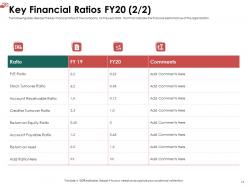
Slide 16: The following slide displays the key financial ratios of the company for the year 2020, that that indicate the financial performance of the organization.
Slide 17: This slide shows Table of Content
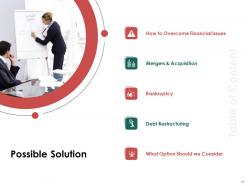
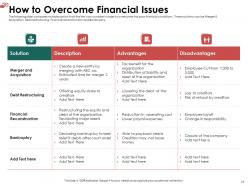
Slide 18: The following slide compares multiple option that the firm can consider in order to overcome the poor financial conditions . These solutions can be Merger & Acquisition, Debt restructuring, Financial reconstruction and Bankruptcy.
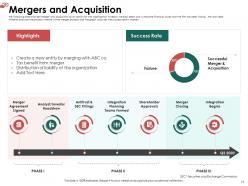
Slide 19: This slide analyzes merger and acquisition as an option for the organization to repay the bad debts and overcome financial issues that the firm has been facing . The provided timeline analyses the process timeline of the merger process and the graph analyses the success rate in market.
Slide 20: This slide analyzes bankruptcy as an option for the organization to repay the bad debts and overcome financial issues that the firm has been facing .The provided graph analyses the success rate of this step.
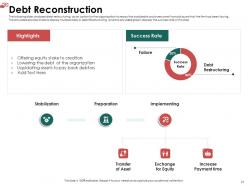
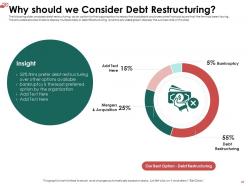
Slide 21: The following slide analyzes debt restructuring as an option for the organization to repay the bad debts and overcome financial issues that the firm has been facing . The provided process timeline display multiple steps in debt Restructuring and the provided graph displays the success rate of this step
Slide 22: The following slide analyzes debt restructuring as an option for the organization to repay the bad debts and overcome financial issues that the firm has been facing . The provided process timeline display multiple steps in debt Restructuring and the provided graph displays the success rate of this step
Slide 23: This slide provides Table of Content
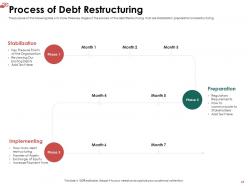
Slide 24: The purpose of the following slide is to show three key stages of the process of the debt Restructuring that are stabilization ,preparation and restructuring
Slide 25: This slide shows Table of Content
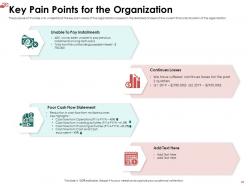
Slide 26: The purpose of this slide is to understand the key pain areas of the organization based on the detailed analysis of the current financial situation of the organization
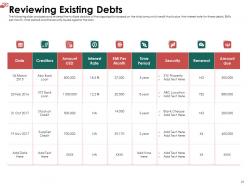
Slide 27: The following slide analyzes and reviews the multiple debtors of the organization-based on the total amount of credit that is due, the interest rate for these debts, EMIs per month, time period and the security issued against the loan.
Slide 28: This slide displays Table of Content
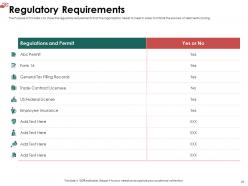
Slide 29: The Purpose of this slide is to show the regulatory requirements that the organization needs to meet in order to initiate the process of debt restructuring.
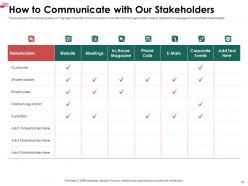
Slide 30: The purpose of the following slide is to highlight the main communication channels that the organization uses to spread the message across multiple stakeholders.
Slide 31: This slide displays Table of Content
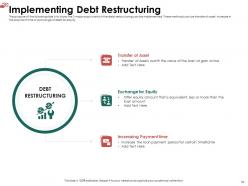
Slide 32: The purpose of the following slide is to show the 3 major ways in which the debt restructuring can be implemented. These methods can be transfer of asset, increase in the payment time or exchange of debt for equity
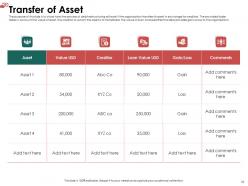
Slide 33: The purpose of this slide is to show how the process of debt restructuring will work if the organization transfers its asset in exchange for creditors. The provided table takes in account the value of asset, the creditor to whom the asset is to transferred, the value of loan and weather the deal provides gain or loss to the organization.
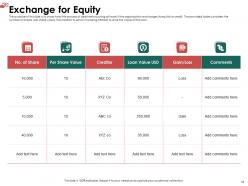
Slide 34: The purpose of this slide is to show how the process of debt restructuring will work if the organization exchanges its equity for credit. The provided table considers the number of shares, per share value, the creditor to whom it is being offered to and the value of the loan.
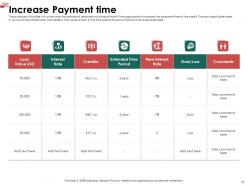
Slide 35: The purpose of this slide is to show how the process of debt restructuring will work if the organization increases the payment time of the credit. The provided table takes in account the interest rate, the creditor, the value of loan & the time period to which the loan has to be extended
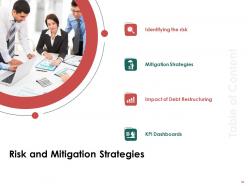
Slide 36: This slide shows Table of Content.
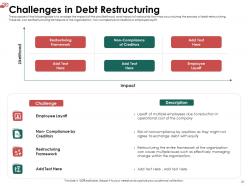
Slide 37: The purpose of the following slide is to analyze the impact of the and likelihood and impact of various risk that may occur during the process of debt restructuring. These risk can be Restructuring framework of the organization, Non-compliance of creditors or employee layoff.
Slide 38: This slide provides multiple mitigation plans for effectively managing the risk within the organization . The provided table analyzes the risk its Impact/Likelihood and mitigation plan for it.
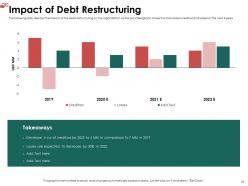
Slide 39: This slide displays the impact of the debt restructuring on the organization as the provided graph shows the forecasted creditors and losses for the next 4 years
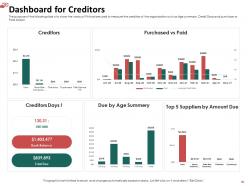
Slide 40: The purpose of the following slide is to show the various KPIs that are used to measure the creditors of the organization such as Age summary, Credit Dyas and purchase vs Paid Graph.
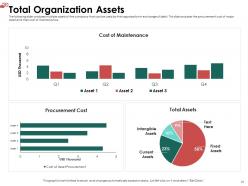
Slide 41: This slide analyzes multiple assets of the company that can be used by the organization in exchange of debt. This slide analyses the procurement cost of major asset and their cost of maintenance.
Slide 42: This is Corporate Debt Restructuring Icons Slide.
Slide 43: This slide is titled as Additional Slides for moving forward.
Slide 44: This slide reminds about Coffee break.
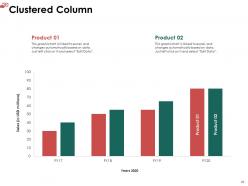
Slide 45: This slide displays Clustered column chart for product comparison.
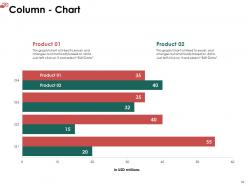
Slide 46: This slide shows Column - Chart for comparison of products.
Slide 47: This slide is titled as Post it Notes.
Slide 48: This slide displays Venn diagram.
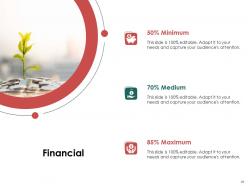
Slide 49: This slide shows Finance in percentage.
Slide 50: This slide represents Magnifying Glass for highlightning important content.
Slide 51: This is Idea Generation slide to highlight important message and facts.
Slide 52: This is Thank you slide with Contact details.
Corporate Debt Restructuring Powerpoint Presentation Slides with all 52 slides:
Use our Corporate Debt Restructuring Powerpoint Presentation Slides to effectively help you save your valuable time. They are readymade to fit into any presentation structure.









FAQs for Corporate Debt Restructuring
Watch your cash burn rate first - that's the big one. If you're bleeding money faster than making it, or have loan payments coming due with no way to cover them, you need help now. Credit downgrades are brutal too, though honestly once those hit you're already pretty screwed. Covenant violations will trigger lender calls real quick. Your debt ratios climbing into scary territory is another sign. Oh, and interest coverage getting thin means trouble ahead. Don't be the guy who waits until everything's on fire - talk to lenders early while you've still got options.
So basically, public companies have to deal with way more bureaucratic BS during restructuring. SEC filings, shareholder votes, the whole nine yards. Private companies? They can just hash things out with lenders behind closed doors - so much cleaner honestly. With public companies you're also dealing with stock price drama and analysts breathing down your neck, which makes everything messier. I've seen deals drag on forever just because of compliance stuff. Private companies skip all that noise and focus on actually fixing their debt. Just plan for extra time if it's public - the regulatory hoops are real.
Dude, this stuff can literally make or break everything. When people don't know what's happening, they freak out and bail - I've watched it happen so many times. Creditors, employees, suppliers, investors... they all need regular updates or they'll assume the worst. Be upfront about where you stand but don't sound defeated, you know? Give them timelines and be real about the challenges ahead. Honestly, half the battle is just making sure nobody feels blindsided by bad news. Map out who's talking to which groups early on - it'll save you major headaches later.
Check what Moody's, S&P, and Fitch actually care about for your industry first - they all weight debt ratios and cash flow metrics differently. Grab your current rating reports to see which numbers they're obsessing over. Here's the annoying part: restructuring usually hurts your rating initially even when it fixes underlying problems. Rating agencies absolutely hate uncertainty. I'd run scenarios showing how your key ratios change after restructuring, then compare those to their thresholds. Oh, and definitely call your rating analysts before you do anything major. They're way more helpful when you're upfront about what's coming rather than surprising them later.
Watch out for cancellation of debt income - that's the killer. IRS sees forgiven debt as taxable income, which honestly sucks when you're already hurting financially. There are outs though, like if you're insolvent or filing bankruptcy. Your interest deductions might change too, plus there's weird stuff with asset tax basis that can bite you later. Oh, and definitely get your tax guy involved early - like, before you sign anything. Trust me on this one. You don't want to get blindsided by a massive tax bill after thinking you caught a break.
You're gonna run into three main valuation methods everywhere: DCF models, liquidation analysis, and comparable company analysis. DCF is honestly your workhorse here - shows whether the restructured company can generate enough cash for its new debt load. Liquidation gives you the worst-case scenario (what creditors actually get if things fall apart). Comps provide market context for your valuation multiples. Most people I know also do sensitivity analysis to test different recovery outcomes - which makes sense since bankruptcy situations are messy. I'd start with a solid DCF and build everything else around those projections.
So debt restructuring rules are completely different depending where you are. Chapter 11 in the US is pretty sweet for companies - they keep control while sorting things out. Europe's all over the place though. UK has schemes of arrangement, Germany protects creditors more, and don't get me started on the EU trying to make everyone play nice together. Asia generally favors creditors. These differences totally change your timeline and who holds the cards during negotiations. Honestly, you'd be crazy not to check local rules first before planning anything - saved my ass more than once.
Look, you need a solid restructuring plan with realistic cash flow numbers before you even walk in there. Show them what makes your business worth saving - those customer relationships or market position they'd lose if you went under. Timing's crucial though, don't wait until you're drowning. Honestly? Get a restructuring advisor if you can swing it - they know how to talk to lenders. The whole point is proving they'll get more money back from restructuring than just liquidating everything. I've seen companies wait too long and basically have no leverage left.
Honestly, AI analytics can be a game changer for debt restructuring. It'll crunch through your financial data in hours instead of weeks - we're talking cash flow projections, risk assessments, all that heavy number work. What's pretty slick is how it spots patterns in your debt portfolio and suggests restructuring moves you probably wouldn't think of. Real-time covenant monitoring too, which catches problems early. My old firm used to spend forever on this stuff manually. Bottom line: let the AI handle the data grunt work so your team can actually focus on the negotiations and big picture strategy calls.
Honestly, most companies screw this up by waiting way too long to talk to their lenders. By then you're in panic mode trying to negotiate while everything's on fire. Poor communication kills these deals fast. Don't be overly optimistic about timelines either - I've seen firms promise the moon then miss every deadline. The paperwork is absolutely brutal, way more complex than people think. Covenant modifications, intercreditor stuff... it's a mess if you don't know what you're doing. My advice? Get restructuring pros involved early and actually be realistic about your projections. Trust me on this one.
Look at where you're actually bleeding out first. Got cash problems but the business model works? Go financial - renegotiate debt, extend payment terms, maybe trade some debt for equity. Core operations are fucked though? Like you're in a dying industry or costs are insane? Fix that shit first. Most companies honestly need both, but you can't do everything at once. Here's my test: if you had zero debt tomorrow, would this thing still make money? Yes = tackle the financial mess. No = operations first, otherwise you'll just end up back in the same hole.
Look, these vulture funds buy up distressed debt dirt cheap from banks who want out. Once they own it, they basically control your fate in restructuring talks. Some will work with you if they think there's money in a turnaround. Others? They'll push hard for liquidation to grab whatever assets they can. I've seen deals go sideways real quick when management didn't figure out early which type they were dealing with. You gotta map out who bought what chunks of debt and what their game plan is. Trust me, they didn't buy in to be nice.
Look, creditors won't trust a mess of a company - they need to see you've got your act together. Independent board members and clear decision processes? That's what makes them think "okay, these people might actually pull this off." Plus it speeds everything up since your team can actually make decisions without running in circles. Honestly, the transparency thing is huge too - stakeholders hate being kept in the dark. I mean, yeah, desperate executives are usually involved (that's kinda the point), but creditors want to know competent people are calling the shots. Sort out your governance first, then start those conversations.
Honestly, bankruptcy's gonna hurt you way more long-term than just working things out informally. The public stigma alone is brutal - plus you're looking at way higher costs when you need financing later. Informal negotiations are clutch because you keep better relationships with creditors and stay in control of operations. Recovery happens faster too. The trick is moving early though, before you're completely screwed and have no choice. Nobody wants to deal with that whole bankruptcy mess anyway - it's expensive and everyone loses talent. Way better to hash things out privately if you can swing it.
Document everything religiously - seriously, this stuff comes back to bite you later. Get your lawyers involved from day one, not when problems start. Follow proper governance procedures and don't play favorites with creditors in the same class. Disgruntled creditors will absolutely sue if they think you screwed them over (learned that the hard way). Keep everyone in the loop throughout the whole process. Your legal team should stress test whatever structure you're proposing to spot weak points. Transparency's your friend here - along with rock-solid documentation of every decision you make.
-
Awesomely designed templates, Easy to understand.
-
Use of different colors is good. It's simple and attractive.
-
Design layout is very impressive.
-
Great product with highly impressive and engaging designs.
-
Innovative and Colorful designs.
-
Topic best represented with attractive design.