


Corporate Event Communication Plan Powerpoint Presentation Slides




Try Before you Buy Download Free Sample Product
 Impress Your
 Audience
 100%
100% Editable
 Save Hours
 of Time


The Corporate Event Communication Plan outlines the communications actions the company will take to ensure the events success. It should divide the event communication strategy into two phases: pre-event and post event. This presentation covers an overview of the upcoming corporate event, along with a sample of the event poster and event message structure. It also covers a detailed event communication timeline, budget plan, and calendar for effective event communication and management. The PPT slides provide a detailed overview of the events associated risks and some mitigation strategies for those risks. Also, the PPT deck highlights the benefits of identifying the correct target audience for the event communication along with the target audience profile. Furthermore, the PowerPoint slides include the communication plan along with various communication strategies for each stage, such as Pre event, during the event, and post-event. This complete deck also contains Communication challenges faced during the event. Lastly, it provides KPI dashboards for tracking event success based on Event gross revenue, Revenue and registrations, and the active number of attendances. Get access to this powerful template now.
People who downloaded this PowerPoint presentation also viewed the following :
Content of this Powerpoint Presentation
Slide 1: This slide introduces Corporate Event Communication Plan. State Your Company Name and begin.
Slide 2: This slide states Agenda of the presentation.
Slide 3: This slide presents Table of Content for the presentation.
Slide 4: This slide highlights title for topics that are to be covered next in the template.
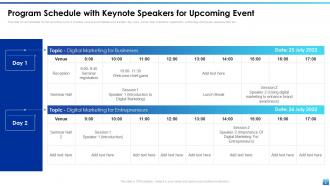
Slide 5: This slide displays Program Schedule with Keynote Speakers for Upcoming Event.
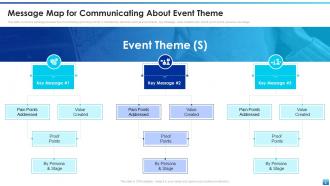
Slide 6: This slide represents Message Map for Communicating About Event Theme.
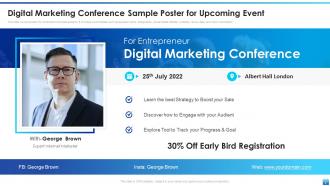
Slide 7: This slide showcases Digital Marketing Conference Sample Poster for Upcoming Event.
Slide 8: This slide highlights title for topics that are to be covered next in the template.
Slide 9: This slide shows 8 Week Event Communication Timeline.
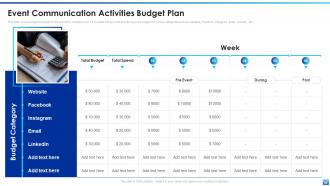
Slide 10: This slide presents Event Communication Activities Budget Plan.
Slide 11: This slide displays Content Calendar for Event Communication Planning.
Slide 12: This slide highlights title for topics that are to be covered next in the template.
Slide 13: This slide represents Types of Risks Associated with Upcoming Event.
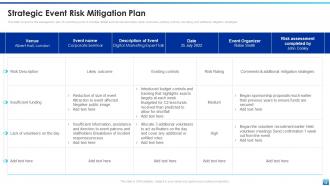
Slide 14: This slide showcases Strategic Event Risk Mitigation Plan.
Slide 15: This slide highlights title for topics that are to be covered next in the template.
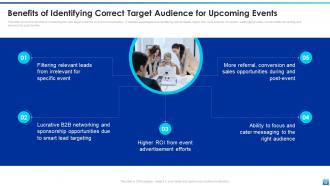
Slide 16: This slide shows Benefits of Identifying Correct Target Audience for Upcoming Events.
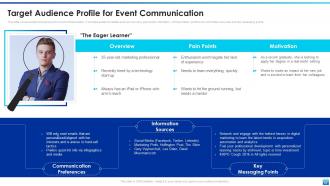
Slide 17: This slide presents Target Audience Profile for Event Communication.
Slide 18: This slide highlights title for topics that are to be covered next in the template.
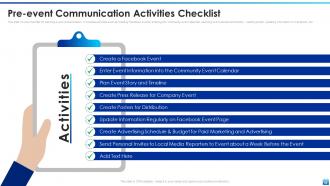
Slide 19: This slide displays Pre-event Communication Activities Checklist.
Slide 20: This slide represents Creating Landing Page for Upcoming Event.
Slide 21: This slide showcases Email Marketing Strategies for Communicating About Upcoming Event.
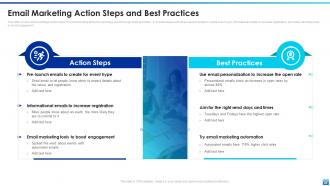
Slide 22: This slide shows Email Marketing Action Steps and Best Practices.
Slide 23: This slide presents Facebook Marketing for Communicating about Upcoming Event.
Slide 24: This slide displays Instagram Marketing for Communicating About Upcoming Event.
Slide 25: This slide highlights title for topics that are to be covered next in the template.
Slide 26: This slide represents Push Notification Strategy for Audience Engagement During the Event.
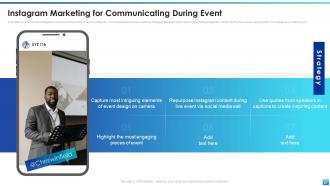
Slide 27: This slide showcases Instagram Marketing for Communicating During Event.
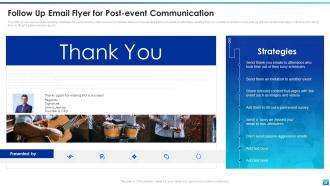
Slide 28: This slide shows Follow Up Email Flyer for Post-event Communication.
Slide 29: This slide presents Dashboard for Tracking Event Revenue and Registrations.
Slide 30: This slide displays Dashboard for Tracking Active Number of Attendances.
Slide 31: This slide represents KPIS for Tracking Event Communication Success.
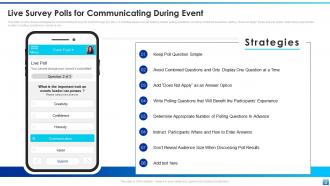
Slide 32: This slide showcases Live Survey Polls for Communicating During Event.
Slide 33: This slide shows Dashboard for Tracking Event Gross Revenue.
Slide 34: This slide presents Event Communication Challenges Faced by Company.
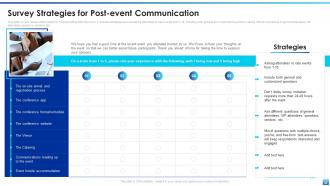
Slide 35: This slide displays Survey Strategies for Post-event Communication.
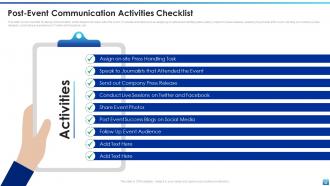
Slide 36: This slide represents Post-Event Communication Activities Checklist.
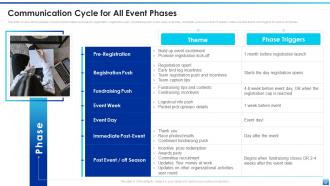
Slide 37: This slide covers various phases of event communication.
Slide 38: This slide displays Icons for Corporate Event Communication Plan.
Slide 39: This slide is titled as Additional Slides for moving forward.
Slide 40: This slide displays Mind Map with related imagery.
Slide 41: This slide shows Post It Notes. Post your important notes here.
Slide 42: This slide showcases Magnifying Glass to highlight information, specifications, etc.
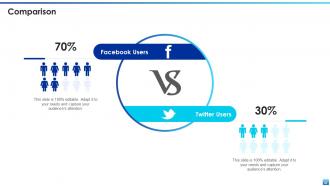
Slide 43: This is a Comparison slide to state comparison between commodities, entities etc.
Slide 44: This is an Idea Generation slide to state a new idea or highlight information, specifications etc.
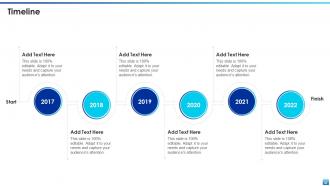
Slide 45: This is a Timeline slide. Show data related to time intervals here.
Slide 46: This slide presents Roadmap with additional textboxes.
Slide 47: This is a Thank You slide with address, contact numbers and email address.
Corporate Event Communication Plan Powerpoint Presentation Slides with all 52 slides:
Use our Corporate Event Communication Plan Powerpoint Presentation Slides to effectively help you save your valuable time. They are readymade to fit into any presentation structure.


























FAQs for Corporate Event Communication Plan
Okay so you'll want to figure out who needs what info first - like employees vs clients vs vendors all need totally different updates. Then map out your timing: announcements before it happens, regular check-ins, day-of stuff, and don't skip the follow-up (seriously, that's where you actually see if it worked). Hit multiple channels too - email, Slack, your company site, texts for the really urgent things. Oh and communicate way more than you think you need to, but make each message actually useful. People can smell generic updates from a mile away.
Think of your event communication like a good TV show - you need those cliffhangers to keep people coming back! Send teaser content early to build buzz. Update them on speaker changes or schedule tweaks as they happen. During the event, throw in polls or Q&As because honestly, nobody wants to just sit there like a bump on a log. Map out maybe 3-4 key moments where reaching out actually matters. Don't forget the follow-up afterward with takeaways and resources - that's where you turn one-time attendees into your biggest fans.
Honestly, segmentation makes or breaks your event comms. Different groups care about totally different stuff - your CEO wants high-level updates while attendees need all the nitty-gritty logistics. I learned this the hard way once, trust me. Map out who needs what info first. Then customize everything - tone, timing, channels. Execs might want quick emails, but your regular attendees? They'll actually read colorful Slack messages or texts. It's weird how much the format matters. Don't send everyone the same generic blast - you'll just end up confusing people or boring them to death.
Honestly, tech makes event communication so much easier. I'd start with automated emails before your event - keeps people updated on schedules and all that logistics stuff. During the actual event, live polls and chat features are game changers for engagement (seriously, people love voting on random stuff). Social media walls work great too if your crowd's into that. After everything wraps up, automated surveys help you get feedback without chasing people down. Just don't go crazy with too many tools - pick maybe 2 or 3 that actually work together. I learned that one the hard way!
Look, you need a crisis team ready beforehand - like actual people with specific jobs, not just a vague plan. One person talks to media, period. Everyone else focuses on keeping attendees in the loop through whatever channels work - apps, announcements, social media. Honestly, saying something fast beats crafting the perfect message while people freak out. Your first update should say what happened, what you're doing, and when they'll hear from you next. Oh, and keep those contact lists handy because hunting for phone numbers during chaos is the worst. Always circle back once it's over.
Honestly, I'd weave feedback collection into every step instead of just dumping one huge survey at the end. Send quick pre-event surveys when you announce it. During the actual event, use real-time polls and pulse checks between sessions - people forget stuff so fast otherwise. Follow up within 48 hours while it's all still fresh in their minds. But here's the thing, some of my best feedback has come from random hallway conversations or suggestion boxes. People say different things when it feels less formal. Mix up your approach and make it stupidly easy for them to respond at multiple points, not just afterward.
Honestly, timing is everything - don't spam people or they'll just ignore you completely. Your CEO doesn't need to know where to park, but new hires absolutely do. Different audiences need different info, you know? Always test your links first because broken registration pages are the worst. I learned that one the hard way lol. Track what's actually working instead of just sending stuff out randomly. Setting up a calendar with all your messages mapped by audience will literally save your sanity later. Trust me on this one.
Okay so branding consistency is huge for corporate events - like, way more important than people think. You want your emails, signage, and social stuff to all look like they came from the same company, you know? Attendees spot that right away and it makes everything feel legit. Honestly, I've seen some events that look like a total mess because they didn't coordinate anything. Keep your colors, fonts, and messaging the same across everything. Your hashtag should match your brand voice too. Maybe put together a quick toolkit for your team so nobody goes rogue with Comic Sans or whatever.
Honestly, stick with email as your main thing - people actually check it and you can see who opened what. Text messages are clutch for last-minute stuff though, like if the venue changes or whatever. Everyone reads those right away. LinkedIn's solid if your crowd is corporate types, and event apps are pretty good for quick updates. I mean, social media's fine for getting the word out broadly but don't rely on it as your go-to. My take? Build everything around email, then pick maybe one other channel that makes sense for your specific people.
Honestly, just write up a super simple one-page summary of what you're trying to accomplish with this event. Skip the fancy business speak - nobody has time for that. Get it out to your sponsors, vendors, internal people, speakers... basically everyone who matters. Then do a kickoff meeting where you can actually talk through everything and field their questions. Regular email updates help too as things evolve. The trick is being really specific about what success looks like for your particular event (not some generic template). I'd start on that summary doc ASAP and get it moving.
Honestly, post-event communication is how you actually know if your event was worth it or just felt good in the moment. Send surveys within 24-48 hours while people still remember stuff - track engagement rates, ROI, all that. Don't rely on those post-event high vibes. People expect some kind of follow-up anyway, so might as well make it useful. Here's the thing though: set up your feedback system before the event starts. Way easier than scrambling afterward. Without this step, you're basically just guessing if you hit your goals or totally whiffed it.
Honestly, start your social media push like 6-8 weeks out if you can swing it. Pick a hashtag early - trust me, it'll save you so much headache later when you're trying to track everything. Before the event, tease it across all your platforms. During the actual thing, go live with behind-the-scenes stuff and repost what attendees are sharing. Real-time posts of the good moments work great too. The follow-up is huge though - share highlights afterward and thank people. Oh, and definitely keep posting related content for a bit to ride that momentum. It's basically about creating buzz before, energy during, then stretching it out after.
Oh definitely check out Eventbrite or Cvent first - they've got all those communication templates built right in. Saves you so much time on save-the-dates and follow-ups. Project management stuff like Asana works great too for tracking your timeline, though honestly? Google Sheets does the job if you're broke lol. Main thing is picking one spot where you can see everything - speaker info, logistics, thank you notes, all that. Just make sure it's something your team already uses regularly. Otherwise people won't actually update it and you're screwed. Oh and definitely customize whatever templates you pick to match your company's style.
Okay so here's the thing - people actually remember stories, not boring lists of agenda items. Try framing your event like a narrative instead. Maybe "the journey to innovation" or whatever fits your theme. I've literally watched quarterly meetings go from snoozefests to something people get excited about just by adding story elements. Your attendees should feel like they're part of the story, not just sitting there listening. Find your main message first. Then build a beginning-middle-end structure around it for all your communications - before, during, and after the event. Works way better than bullet points, trust me.
Track your open rates and website traffic first - those tell you if people actually saw your stuff. RSVPs vs. who shows up is always eye-opening (and usually depressing lol). Social engagement matters, but don't get sucked into vanity metrics like I always do. What really counts is how many people went from seeing your content to actually registering. Oh, and set up UTM codes! Sounds fancy but it just shows which channels brought the best people. Media mentions are gold too - you want folks talking positively about your event.
-
The designs by SlideTeam are honestly the best I have seen so far. Will be definitely coming back for more.
-
A fantastic collection of templates. I'll likely use this as my go-to resource for future templates and support.