

Event Planning Service Company Profile Powerpoint Presentation Slides




Try Before you Buy Download Free Sample Product
 Impress Your
 Audience
 100%
100% Editable
 Save Hours
 of Time


A company profile is a summary that describes business information for potential clients, stakeholders and investors. Check out our competently designed presentation on Event Planning Service Company Profile, representing the executive summary, company introduction with values, beliefs, mission, vision, etc. Also, it provides a glimpse of our specialization in event planning, service offerings, business model, and company history and milestones. Further, this PPT shows our global presence with significant clients across the globe. Moreover, it covers event management team structure, leadership members, certifications, and awards and recognitions. Additionally, this profile showcases our major events, upcoming events, major clients and their testimonials, global partners, and financial highlights such as annual revenue, net profit, and operating expenses. Also, it captures market share and comparison with competitors based on financials and services. It also focuses on marketing mix, business expansion plans, SWOT analysis, CSR initiatives, and case studies. Customize our 100 percent editable company profile through assistance from our highly-skilled research or design team. Get access now.
People who downloaded this PowerPoint presentation also viewed the following :
Content of this Powerpoint Presentation
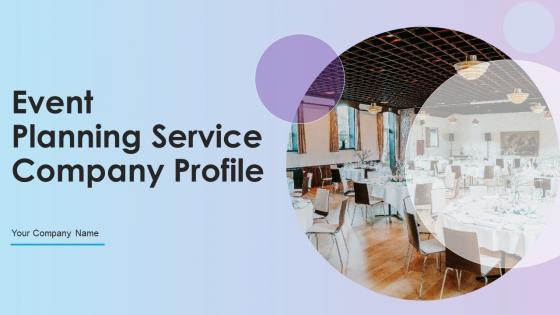
Slide 1: This slide introduces Event Planning Service Company Profile. State Your Company Name and begin.
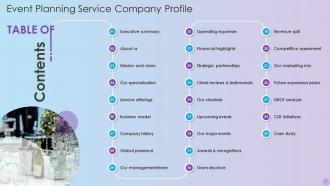
Slide 2: This slide presents Table of Content for the presentation.
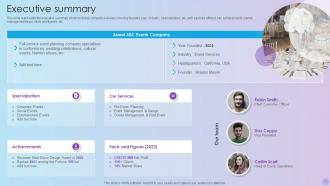
Slide 3: This slide represents the executive summary which includes company overview.
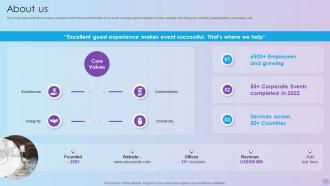
Slide 4: This slide presents company overview which shows introduction of our event management company.
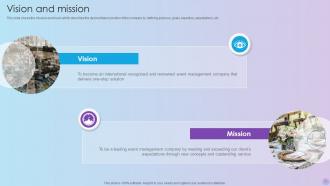
Slide 5: This slide shows the mission and vision which describes the desired future position of the company.
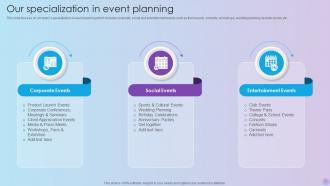
Slide 6: This slide focuses on company’s specialization in event planning.
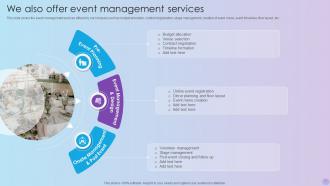
Slide 7: This slide covers the event management services offered by our company.
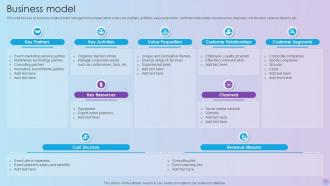
Slide 8: This slide displays business model of event management company.
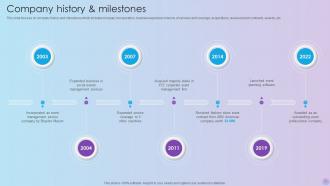
Slide 9: This slide focuses on company history and milestones.
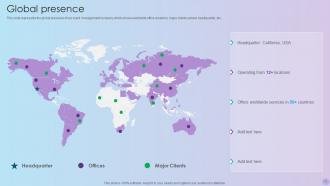
Slide 10: This slide represents the global presence of our event management company.
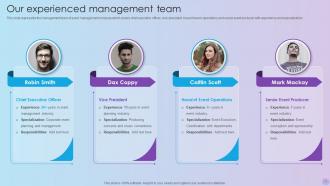
Slide 11: This slide showcases Our experienced management team.
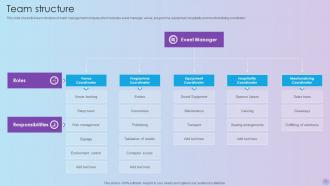
Slide 12: This slide shows the team structure of event management company.
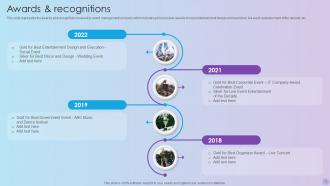
Slide 13: This slide represents the awards and recognitions received by event management company.
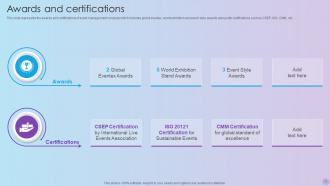
Slide 14: This slide displays the awards and certifications of event management company.
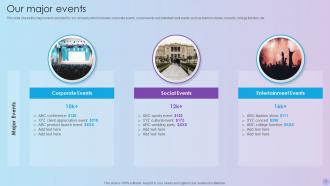
Slide 15: This slide showcases the major events executed by our company.
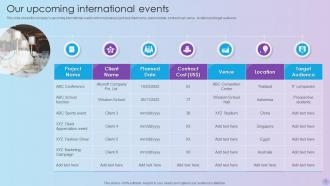
Slide 16: This slide shows the company’s upcoming international events.
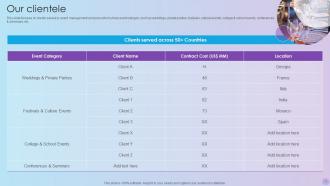
Slide 17: This slide focuses on clients served by event management company.
Slide 18: This slide shows the major clients associated with our event management company.
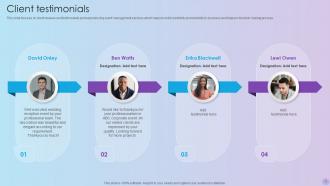
Slide 19: This slide focuses on client reviews and testimonials post experiencing event management services.
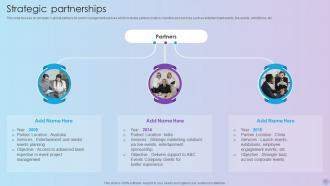
Slide 20: This slide presents company’s global partners for event management services.
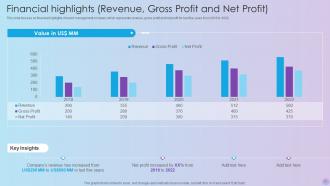
Slide 21: This slide focuses on financial highlights of event management company.
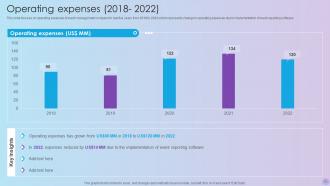
Slide 22: This slide displays operating expenses of event management company for last five years.
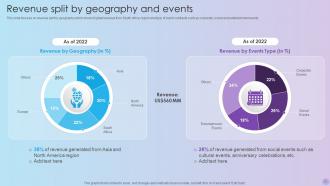
Slide 23: This slide represents revenue split by geography i.e. which region shows highest revenue.
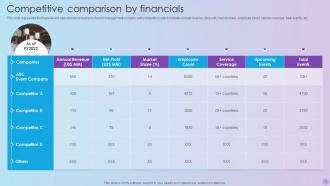
Slide 24: This slide showcases the financial and operational comparison of event management company.
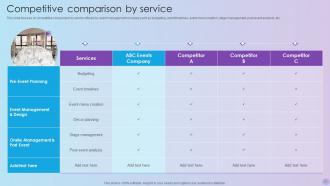
Slide 25: This slide focuses on competitive comparison by service offered by event management.
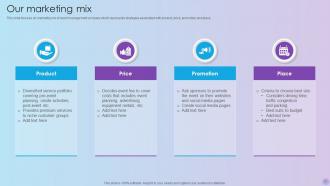
Slide 26: This slide shows marketing mix of event management company.
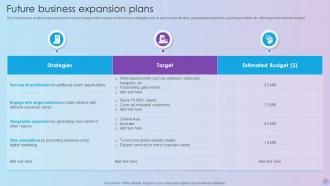
Slide 27: This slide focuses on future expansion plans of event management company.
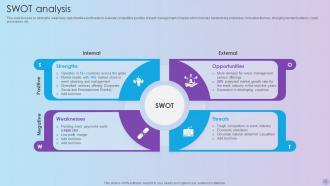
Slide 28: This slide displays strengths, weakness, opportunities and threats to evaluate competitive position.
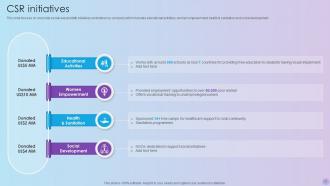
Slide 29: This slide focuses on corporate social responsibility initiatives undertaken by company.
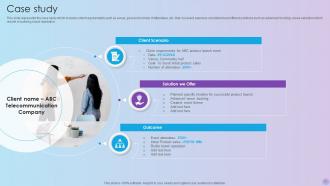
Slide 30: This slide represents the case study which includes client requirements.
Slide 31: This slide displays Icons for event planning service company profile.
Slide 32: This slide is titled as Additional Slides for moving forward.
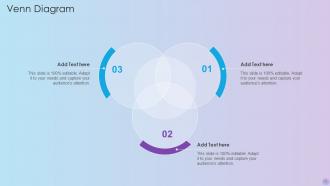
Slide 33: This slide depicts Venn diagram with text boxes.
Slide 34: This slide shows Post It Notes. Post your important notes here.
Slide 35: This is Our Target slide. State your targets here.
Slide 36: This slide provides 30 60 90 Days Plan with text boxes.
Slide 37: This is Our Team slide with names and designation.
Slide 38: This is Our Mission slide with related imagery and text.
Slide 39: This slide contains Puzzle with related icons and text.
Slide 40: This is About Us slide to show company specifications etc.
Slide 41: This is a Thank You slide with address, contact numbers and email address.
Event Planning Service Company Profile Powerpoint Presentation Slides with all 46 slides:
Use our Event Planning Service Company Profile Powerpoint Presentation Slides to effectively help you save your valuable time. They are readymade to fit into any presentation structure.







FAQs for Event Planning Service Company Profile
Okay so first things first - get your timeline, budget, venue and logistics sorted. Those are make-or-break. Work backwards from your event date and map out when you need vendors booked, final headcounts, all that stuff. Budget's gonna drive everything else, so nail that down ASAP. Don't skip the boring stuff either - permits, insurance, weather backup plans (because Mother Nature loves ruining outdoor events, obviously). Oh and don't forget cleanup afterward! Build in extra time for each big milestone too. I swear something always takes way longer than you think it will.
Dude, seriously start with whatever's driving you crazy right now - for me it was tracking RSVPs manually (nightmare). Project management apps are clutch for deadlines, and those vendor coordination tools actually work. Social media schedulers will save your sanity since you won't be posting at 2am anymore. The VR venue walkthrough thing is getting pretty cool too, though I haven't tried it yet. Registration platforms handle the boring stuff automatically. Honestly just pick one tool first. Don't go overboard trying to digitize everything at once - you'll burn out.
Set your total budget first, then break it down by percentages. Venue and catering usually eat up like 40-50%, entertainment around 10%, decor maybe 5-10%. Definitely pad it with a 10-15% buffer because something will go sideways - it just always does. Get at least three quotes for big stuff, and honestly, use a basic spreadsheet to track everything. The small fees are what'll kill you though - taxes, tips, all that random stuff vendors spring on you later. I'd check your spending weekly so you don't get slammed at the end.
Honestly, it's all about matching your event's vibe to the space. Corporate stuff needs solid WiFi and AV gear, weddings need those Instagram moments. I always check if people can actually move around without bumping into each other first - sounds obvious but you'd be surprised. Then hit the practical stuff: parking, catering rules, whether your crowd will rattle around in a huge ballroom. Downtown works for business, somewhere prettier for celebrations. Oh and definitely visit at the same time of day you're planning the event. Trust me on that one - lighting and noise can be totally different.
Okay so branding is like your event's whole personality - colors, logos, fonts, messaging, all that visual stuff. You'll want everything to match because it looks way more professional. People actually pay attention to details like welcome bags and signage more than you'd expect. Get your brand guidelines sorted early and send them to all your vendors so they're not doing their own random thing. Oh and it makes the social media content so much easier when everything has the same vibe. Trust me, consistent branding is what separates amateur events from the ones people actually remember and talk about later.
Track your attendance vs target and whether you stayed on budget - that stuff's pretty straightforward. Post-event surveys are gold though, send them out within 48 hours while people actually remember what happened. Social media mentions tell you a lot too since everyone posts about events they enjoyed. Oh, and don't forget any specific goals you set beforehand like leads or sales. But honestly? The biggest win is when your client comes back for round two and starts recommending you to their network. That's when you know you nailed it.
Maximalism is everywhere right now - bold colors, crazy pattern mixing, the works. Sustainable stuff is big too, like local flowers and reusable pieces. Interactive installations are killing it because everyone wants those perfect photo moments. Curved furniture's replaced all those sharp edges we used to love. Also warm lighting instead of harsh spots makes everything look way better. Honestly, clients can't get enough of this stuff when you show them mood boards with these elements mixed together. Oh and the texture layering thing - that's pretty key too.
Honestly, it's way easier than you'd think! Pick venues with good environmental policies - LEED certified is ideal but not required. Local, seasonal catering is a no-brainer (and tastes so much better too). Ditch disposable stuff wherever you can. Digital programs, reusable badges, actual plates instead of paper ones. I always forget about transportation until last minute, but carpooling incentives help. Oh, and vet your vendors early - some really don't care about green practices at all. The trick is baking this stuff in from the start rather than scrambling later.
Honestly, nail down the basics first - who does what, when stuff's due, payment details. Super boring but saves you later. I always make some shared doc or timeline thing because vendors get weird when they feel out of the loop. Check in regularly, especially when crunch time hits. Oh and build in extra time for everything - they're gonna need it, trust me. The best vendors actually become like collaborators and will totally save your ass when something goes wrong (which it will). Having backup contacts for the big stuff is clutch too.
Oh man, cultural stuff is HUGE for events. You've gotta think about timing - like don't schedule during religious holidays. Food restrictions are obvious but colors? That's where it gets tricky. Red screams celebration in China but means death elsewhere. Communication styles vary too - some cultures are super direct, others... not so much. I once totally bombed a client dinner by not checking if it conflicted with Ramadan. Just ask your main contacts upfront what you should know about their culture and work backwards from there.
You need solid objectives first - like are you after more attendees or leads? Figure out your target audience and where they actually spend time. Budget breakdown's obviously key too. Mix digital stuff (social, email) with traditional if it makes sense for your crowd. Oh and timing - this is where people mess up constantly. Work backwards from your event date for content planning. Actually had a friend whose amazing conference flopped because they started promoting way too late. Don't skip the post-event follow-up either, that's where the real value happens.
Honestly, feedback is like gold for your next event. Grab it from everyone - attendees, vendors, your team - while it's all still fresh. I always forget to do this part, but documenting everything is clutch. When multiple people mention the same issue (like crappy audio), that's your red flag right there. Just throw together a quick form or dump notes in a Google doc, whatever works. The real magic happens when you actually look back at those notes while planning round two. You'll avoid so many headaches just by not making the same dumb mistakes twice.
Eventbrite's your best bet for tickets and registration. Project management? Asana or Monday.com work great. Whova and Bizzabo are solid for full event apps too. Honestly though, I've watched people stress over finding the "perfect" setup when a basic spreadsheet does the job fine for smaller stuff. Cvent's really good if you're doing corporate events - their reporting is actually useful. Here's the thing: don't go crazy with like 10 different tools. Pick 2-3 max that play nice together. I'd start with one main platform and add others only when you hit a wall. Way less headache that way.
Okay so first thing - always have backup plans ready before anything even kicks off. Backup vendors, emergency contacts, alternative schedules, all that stuff. When shit hits the fan (and it will), stay calm and communicate fast with everyone involved. Having solid relationships with vendors who can pivot quickly is huge. Oh and definitely pick ONE person to handle crisis mode - otherwise you'll have like five people all freaking out over the same issue which just makes it worse. After everything's done, sit down and figure out what went wrong so you're better prepared next time.
Honestly, event planners are total lifesavers. You won't be stressed about coordinating vendors or making sure everything runs on time - they handle all that chaos. Their connections with venues usually get you better prices too, which is nice. The biggest thing though? They've literally seen everything go wrong, so they come with backup plans you'd never think of. I mean, who thinks about what happens if the cake delivery truck breaks down? DIY works for like birthday parties, but anything bigger gets messy fast. If you can swing it budget-wise, I'd totally go pro.
-
I am a big fan of their newsletters because that is how I found my perfect requirement at the time of urgency. Thank God, I kept opening those.
-
The designs by SlideTeam are honestly the best I have seen so far. Will be definitely coming back for more.