


Cultural Event Planning Service Proposal Powerpoint Presentation Slides




Try Before you Buy Download Free Sample Product
 Impress Your
 Audience
 100%
100% Editable
 Save Hours
 of Time


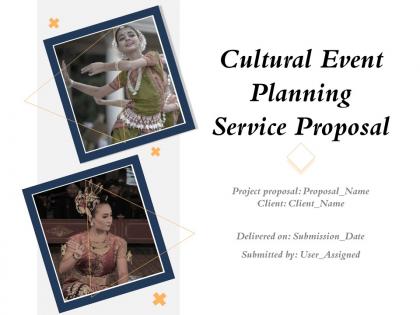
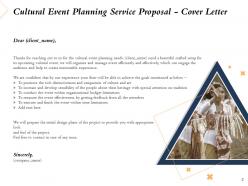
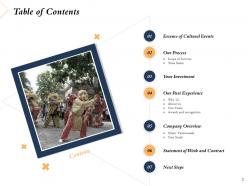
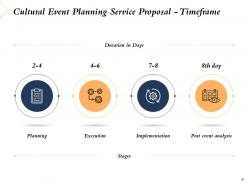
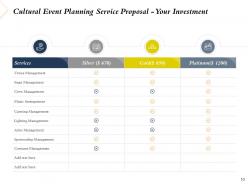
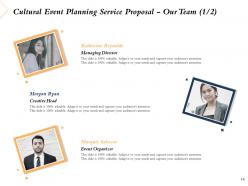
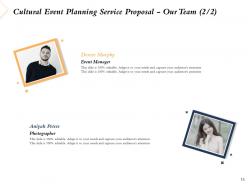
Event planning means managing a project and its activities, including venue booking, creating budgets and timelines, obtaining permits, coordinating transportation, choosing speakers and preparing keynotes, arranging event equipment, risk management, live polling, and developing contingency plans. A Cultural event is a celebration that marks a special occasion or cause. These are organized to promote the diverse culture and may run for days and weeks. The events are managed and held by the event management company who is responsible for crafting the setup and various other roles. Utilize our expertly-designed Cultural Event Planning Service Proposal PowerPoint Presentation Slides and create a successful pitch for your clients to immediately captivate their attention. Present your ideas and plans creatively to your clients with our aesthetically-designed cultural fair PowerPoint template. Introduce your services to your clients with the help of this smartly-planned cover included in the proposal. List the events, games, and other requirements in chronological order and discuss all the arrangements to be done prior to the event. With the help of a pictorial representation, note down all the sections of your proposal in the table of contents of this innovative cultural festival template. Explain the essence of culture and how these events help people attain skills like teamwork, presentation, leadership, and interpersonal communication. Make your proposal creative by adding meaningful information to it. Elucidate how it helps people explore various art forms of dance, music, and other cultural activities concisely with our topic-specific PowerPoint proposal template. Discuss your scope and plans in an orderly manner like planning, implementation, execution, and post-event analysis. Showcase the expected time duration of each activity by incorporating our cultural celebrations PPT layout. Since people always look for cost-efficient services, so make sure your budget plan meets their requirements. Talk about your past experience and showcase the total number of events that were a big hit to make a profound impact on your clients. Just download the Event planning, insert it on your presentation and then share it with who so ever you are looking to share with. Go about everything calmly with our Event Planning Powerpoint Presentation Slides. Don't allow it to get hectic.
People who downloaded this PowerPoint presentation also viewed the following :
Cultural Event Planning Service Proposal Powerpoint Presentation Slides with all 32 slides:










FAQs for Cultural Event Planning Service Proposal
Start with your budget and venue - seriously, book the venue ASAP because good ones disappear fast. Figure out your audience and what you're actually trying to accomplish first though. Booking speakers is honestly such a nightmare, so tackle that early too. Marketing timeline comes next, plus setting up registration (ugh, the tech stuff). Don't forget catering, permits if needed, all that boring logistics stuff. Oh and staffing - you'll need more people than you think. Always pad your timeline because something WILL go wrong. I learned that the hard way last year when our sound guy just didn't show up.
Honestly, cultural themes touch everything - your colors, food, music, how the whole night flows. Skip the surface-level stuff though because nobody needs another cringey "international" party with random decorations from Party City. Do some actual research into traditional music, meaningful symbols, proper dress codes. Small things matter too - like how people greet each other or where they sit. Oh, and definitely talk to people from that culture first! They'll tell you what's respectful vs. what's gonna make you look ignorant. Even seating arrangements can be culturally significant, which I didn't know until recently.
Skip the surveys - nobody does those anyway. Coffee chats work way better, or just show up where people already hang out. Build actual relationships first. Ask what THEY want instead of pushing your vision (this part trips up so many organizers). Partner with local businesses and schools since they've got the connections already. Oh, and give people real planning roles, not just setup duty. Face-to-face beats social media every time for trust-building. You'll want to start this whole process like 3-4 months out minimum.
Okay so first thing - talk to the elders about what's totally off-limits. Like, what would make them lose their minds if you changed it? Those are your no-touch zones. Everything else though? Fair game for some creative updates. Think logistics, marketing, how people actually experience the event. AR storytelling could be pretty cool, or just making it more Instagram-friendly (Gen Z will eat that up, trust me). The goal is making innovation work WITH tradition, not against it. Sometimes the tech stuff actually makes the traditional elements shine brighter. Start with those conversations first - then you can brainstorm without accidentally stepping on landmines.
Honestly, marketing can make or break your event - I've seen amazing cultural shows flop because nobody knew about them. Start promoting at least 6-8 weeks early so word can spread naturally. Hit up social media, local papers, community groups, even those old-school flyers (they're weirdly effective sometimes). Focus on what makes your event special culturally. People need time to get excited and tell their friends - that's how these things really take off. The difference between 50 and 500 attendees? Usually just better promotion timing.
Honestly, surveys right after the event work great - just ask people what they learned and how they felt about it. Social media's your friend too, check out hashtags and see what people are posting. I'd do maybe 5 quick questions to start? The real gold though is following up with some folks a few weeks later. That's when you find out what actually stuck with them versus just the initial excitement. Numbers are cool but the personal stories people tell you - that's where you see if your event actually made a difference. Don't overthink it at first, you can always get fancier later.
Start planning accessibility on day one, seriously. Check that your venue actually has working ramps, elevators, and decent bathrooms - you'd be shocked how many places claim they're accessible but aren't. Get ASL interpreters and audio descriptions sorted early. Create quiet spaces for people with sensory issues, and make your signage high-contrast so it's readable. Oh, and don't forget about ticket pricing barriers - that's huge. Honestly, just call up local disability orgs right away. They'll catch stuff you'd never think of and save you headaches later.
Oh man, tech can totally change your events! AR apps are pretty cool - people just point their phones at stuff for instant info. QR codes work great too for artist bios and audio guides. Live streaming became massive during the pandemic and honestly never went away, which is smart since it reaches way more people. Those social media walls showing real-time posts? They create serious buzz. Mobile ticketing makes entry way smoother too. My advice? Pick one or two features that actually fit your budget first. You can always add more later once you see what works.
Ugh, cultural sensitivity stuff will get you every time if you're not careful. Budget is the other killer - I swear these events always end up costing way more than you plan for. Coordination between different community groups? Total nightmare because everyone has their own process. Honestly, the whole thing is like herding cats sometimes. Don't make assumptions about who's coming or accidentally leave groups out of your planning. Start super early, like uncomfortably early. Add extra money to whatever budget you think you need. Most importantly - run everything by actual people from those communities first before you commit to anything.
Oh man, cultural sensitivity is HUGE for events. Like, it touches everything - what food you serve, when you schedule stuff, decorations, activities, all of it. I'd definitely survey your audience first to figure out their backgrounds, religious stuff, dietary restrictions, how they like to communicate. Trust me, I've watched events crash and burn when planners just assumed everyone was cool with pork or scheduled something during Ramadan. Super awkward. When you're actually running the event, stay flexible - if people seem uncomfortable about something, pivot quickly. Give yourself extra time to make changes too.
Honestly, start with what you need most - funding, promotion, or logistics help. Media partnerships are huge for getting your name out there. Venues might cut you deals or let you use cooler spaces than you could normally afford. Don't sleep on museums and libraries either - people actually trust their recommendations, plus they've got built-in audiences. Corporate sponsors are obvious but local community groups? Pure gold for grassroots buzz. Oh, and good food vendors can totally save your event's vibe (learned that the hard way). Map out your biggest gaps first, then go after partners who crush it in those areas.
Oh man, cultural events are like money magnets for towns! Tourism dollars pour in, hotels get booked up, restaurants stay busy. You're creating jobs too - temporary ones but still. My favorite local festival probably brings in crazy revenue and I never even thought about it until now. The whole community benefits - vendors, security people, caterers, even Uber drivers. Honestly, the ripple effect is wild. Plus there's that community pride thing which you can't put a price on. When you pitch your event idea, lead with the economic stuff. Stakeholders love hearing about dollar signs.
Get community groups involved right from the start - they'll hook you up with speakers and perspectives you'd never find on your own. Mix up your planning committee too, don't just grab the usual suspects. Oh, and feedback forms are clutch - ask people straight up if they felt included because honestly, they'll tell you what you screwed up. Think about the practical stuff early: interpreters, food restrictions, wheelchair access. Your marketing should actually show the diversity you want, not just talk about it. But here's the thing - invite these communities to help plan, not just show up.
Honestly, feedback is like gold for your next event. Grab it however you can - surveys, social media, even just chatting with people as they're heading out. Whatever complaints keep popping up? That's your to-do list. I've seen so many planners ignore the obvious patterns - like if your sound sucks at three events in a row, maybe it's the equipment or venue, not bad luck. Don't sleep on the positive stuff either though. It shows you what's actually hitting with your crowd. Keep a simple spreadsheet or something so you're not reinventing the wheel every time.
Okay so first thing - make a crazy detailed budget with literally everything. Venue, talent, marketing, insurance, staff, plus all those random costs that somehow always show up. I learned the hard way to tack on like 15-20% extra because trust me, something will go sideways. Don't put all your eggs in one basket for funding though. Mix it up with grants, sponsors, ticket sales, partnerships - whatever you can get. Arts grants are great but apply super early since they take forever. Local businesses will usually sponsor if you can prove it'll actually help the community and get their name out there. Oh and track your spending constantly! Have a backup plan ready.
-
Easily Understandable slides.
-
Very unique and reliable designs.
-
Topic best represented with attractive design.
-
Presentation Design is very nice, good work with the content as well.
-
Content of slide is easy to understand and edit.