


Corporate Induction Program For New Staff Powerpoint Presentation Slides





Try Before you Buy Download Free Sample Product
 Impress Your
 Audience
 100%
100% Editable
 Save Hours
 of Time


An induction program is used within many organizations to welcome new employees to the company and prepare them for their new roles and responsibilities. Grab our insightfully designed template on Corporate Induction Program for New Staff, highlighting the company information with key values, business services, and partners worldwide. It also includes the induction program schedule, which comprises the checklist, training subjects, and an overview of management roles and responsibilities. Moreover, it focuses on the new employees introduction to the company and facility tour of departments and offices with company operational hours. Further going, it mentions the company policies and procedures, including the dress code policy, target and incentive policy, Data protection and incentive policy, probation period policy, referral bonus policy, employee welfare policy, increment policy, and general rules and regulations with long service award to employees. At last, the PPT includes induction program evaluation, feedback forms, and HR induction program dashboards. Get access to this 100 percent editable template now.
People who downloaded this PowerPoint presentation also viewed the following :
Content of this Powerpoint Presentation
Slide 1: This slide introduces Corporate induction program for new staff. State your company name and begin.
Slide 2: This slide states Agenda of the presentation.
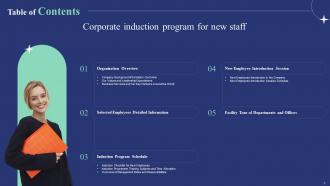
Slide 3: This slide presents Table of Content for the presentation.
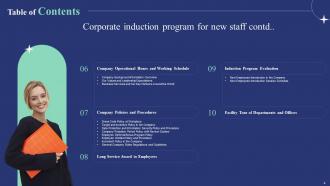
Slide 4: This is another slide continuing Table of Content for the presentation.
Slide 5: This slide highlights title for topics that are to be covered next in the template.
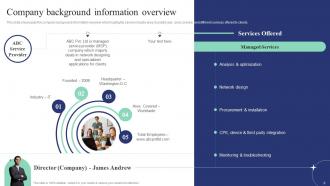
Slide 6: This slide displays Company Background Information Overview.
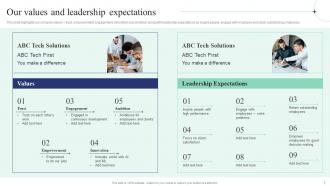
Slide 7: This slide represents Our Values and Leadership Expectations.
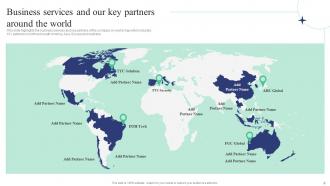
Slide 8: This slide showcases Business Services and Our Key Partners Around the World.
Slide 9: This slide highlights title for topics that are to be covered next in the template.
Slide 10: This slide shows Selected Employees Detailed Information.
Slide 11: This slide highlights title for topics that are to be covered next in the template.
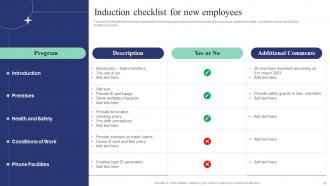
Slide 12: This slide presents Induction Checklist for New Employees.
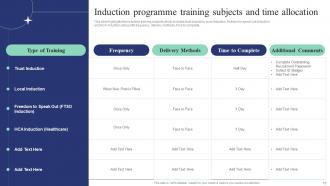
Slide 13: This slide displays Induction Programme Training Subjects and Time Allocation.
Slide 14: This slide represents Overview of Management Roles and Responsibilities.
Slide 15: This slide highlights title for topics that are to be covered next in the template.
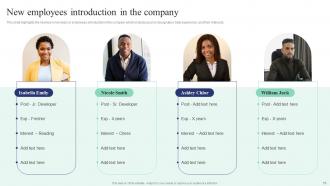
Slide 16: This slide showcases New Employees Introduction in the Company.
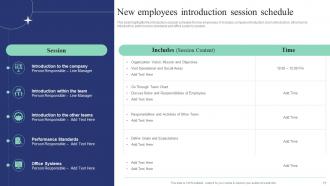
Slide 17: This slide shows New Employees Introduction Session Schedule.
Slide 18: This slide highlights title for topics that are to be covered next in the template.
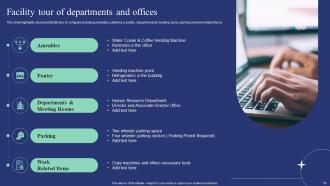
Slide 19: This slide presents Facility Tour of Departments and Offices.
Slide 20: This slide highlights title for topics that are to be covered next in the template.
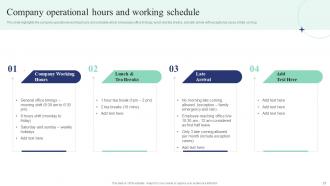
Slide 21: This slide displays Company Operational Hours and Working Schedule.
Slide 22: This slide highlights title for topics that are to be covered next in the template.
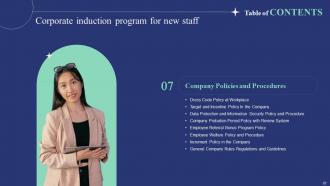
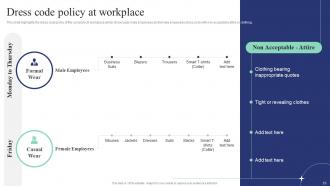
Slide 23: This slide represents Dress Code Policy at Workplace.
Slide 24: This slide showcases Company Leave and Holiday Policy.
Slide 25: This slide shows Target and Incentive Policy in the Company.
Slide 26: This slide presents Data Protection and Information Security Policy and Procedure.
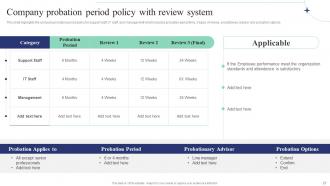
Slide 27: This slide displays Company Probation Period Policy with Review System.
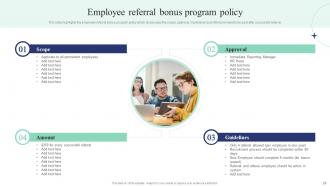
Slide 28: This slide represents Employee Referral Bonus Program Policy.
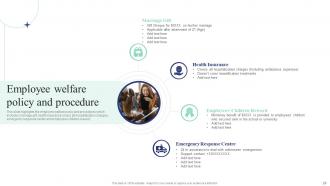
Slide 29: This slide showcases Employee Welfare Policy and Procedure.
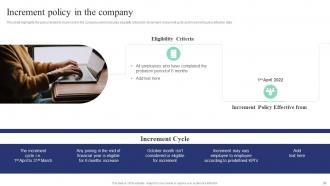
Slide 30: This slide shows Increment Policy in the Company.
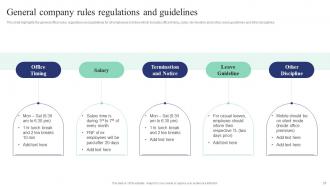
Slide 31: This slide presents General Company Rules, Regulations, and Guidelines.
Slide 32: This slide highlights title for topics that are to be covered next in the template.
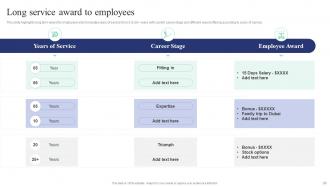
Slide 33: This slide displays Long Service Award to Employees.
Slide 34: This slide highlights title for topics that are to be covered next in the template.
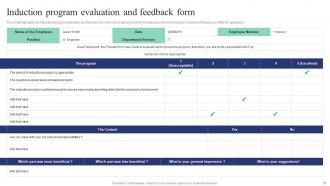
Slide 35: This slide represents Induction Program Evaluation and Feedback Form.
Slide 36: This slide highlights title for topics that are to be covered next in the template.
Slide 37: This slide shows HR Induction Program Dashboard highlighting Training Cost and Active Employee Count.
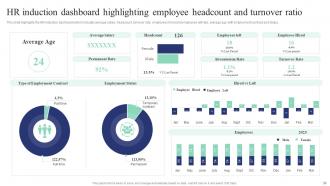
Slide 38: This slide presents HR Induction Dashboard Highlighting Employee Headcount and Turnover Ratio.
Slide 39: This slide contains all the icons used in this presentation.
Slide 40: This slide is titled as Additional Slides for moving forward.
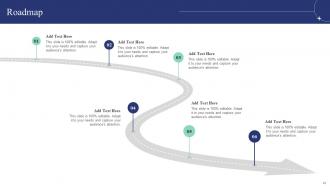
Slide 41: This slide presents Roadmap with additional textboxes.
Slide 42: This slide contains Puzzle with related icons and text.
Slide 43: This is an Idea Generation slide to state a new idea or highlight information, specifications etc.
Slide 44: This slide provides 30 60 90 Days Plan with text boxes.
Slide 45: This slide shows Post It Notes. Post your important notes here.
Slide 46: This slide provides Clustered Column chart with two products comparison.
Slide 47: This is a Timeline slide. Show data related to time intervals here.
Slide 48: This slide depicts Venn diagram with text boxes.
Slide 49: This is a Thank You slide with address, contact numbers and email address.
Corporate Induction Program For New Staff Powerpoint Presentation Slides with all 54 slides:
Use our Corporate Induction Program For New Staff Powerpoint Presentation Slides to effectively help you save your valuable time. They are readymade to fit into any presentation structure.














FAQs for Corporate Induction Program For New Staff
Honestly, you want new people to not feel completely lost their first few weeks - that sinking feeling is the worst! Get them familiar with who does what and how things actually work around there. Cover the boring stuff like systems and logins, but don't forget the cultural bits too. Company values might sound cheesy, but it genuinely helps people fit in faster. Short version: give them both the practical "how to do your job" info and the "this is how we roll here" context. Nobody should be figuring out basic processes while trying to learn their actual role. Set them up to win, not struggle.
Honestly, good induction programs work because they stop people feeling like lost puppies on day one. You want new hires connecting with the culture and understanding where they actually fit in - not just wandering around confused. Set up buddy systems too, so they can ask those awkward questions without looking dumb in meetings. Interactive stuff beats death-by-PowerPoint every time (trust me on this one). Clear expectations from the start make people way more invested. It's really about relationship building - though I guess that sounds cheesy but it's true. Focus on making them feel part of things early.
Definitely hit the basics first - company background, mission, org chart, plus all the boring but necessary policy stuff like HR and safety. IT setup is huge too because honestly, watching new people struggle with logins and systems is painful for everyone. Role expectations and team intros are key. If you're doing this in person, throw in a office tour so they don't spend week one wandering around looking lost. I'd make a template you can tweak for different positions - way easier than starting from scratch each time.
Honestly, automation is where it's at for onboarding. Digital platforms let new hires knock out all the paperwork and training videos before day one – saves everyone time. HR software handles the reminders and task tracking automatically. VR for safety training sounds overkill but it's actually pretty solid now. The trick is finding tools that play nice together instead of managing a million different logins. Oh, and definitely tackle your biggest time-wasters first. Like, if you're still doing equipment requests by email, start there.
Your company culture basically runs the whole show when it comes to onboarding new people. Like, if you've got a collaborative vibe, new hires will actually get support from their teammates. Learning-focused places? They'll have way better training and mentors. I've watched programs crash and burn when there's a huge gap between what HR sells and what people actually experience day-to-day. Culture affects everything - how feedback happens, whether anyone has time to properly help newcomers settle in. The key is making sure your induction stuff matches your real culture, not whatever sounds good on paper.
Don't wait until the end to ask for feedback - that's where most places screw up. After each training module, send quick pulse surveys. Weekly manager check-ins work great too. I'd also do a proper sit-down after their first month. Keep it stupid simple though - rating scales, short digital forms, maybe just grab coffee and chat. The magic happens when you actually DO something with their feedback. Tell them "hey, we changed X because of what you said." Oh, and start looking for patterns across different new hire groups - you'll spot bigger problems that way. Makes a huge difference honestly.
Ugh, the worst part is definitely info overload - companies dump everything on new people when they're already stressed out. Also, departments never sync up properly. HR tells them one thing, then their actual manager does something completely different (so annoying). Most people just tune out during those endless presentations too, especially when the content feels super generic. And honestly? Half these programs have zero follow-up, so everyone forgets what they learned anyway. Break things down into smaller pieces and make it actually relevant to what they'll be doing day-to-day.
Digital stuff is huge for remote onboarding - they're missing all those random hallway conversations, you know? Mail them a welcome package first (seriously, who doesn't love getting packages?). Set up virtual coffee dates with teammates and create some online modules they can work through whenever. Don't forget to assign a buddy for questions. Since you can't just walk over to check on them, be way more deliberate about it. I'd do weekly one-on-ones their first month to see how things are going.
Honestly, retention rates are your best bet - check how many people stick around after 90 days and a full year. Time-to-productivity matters too (like when they actually start hitting targets instead of just existing). I always think engagement surveys tell you more than completion rates, but track both anyway. Oh, and definitely get feedback from managers - they see things new hires won't admit to. Don't go crazy measuring everything though. Pick 2-3 metrics max or you'll drown in data that doesn't actually help you fix anything.
Stories are way better than boring bullet points - trust me on this one. Instead of just rattling off company values, tell people about that time those values actually mattered in a real situation. Maybe when someone made a tough call or how a failure taught everyone something important. I've watched new hires completely zone out during the usual corporate stuff, but their eyes light up when you share actual examples. Keep it simple: problem, response, outcome. Oh, and those 2-minute videos from different team members? Total game changer for breaking up presentations.
Look, compliance training is basically covering your ass legally - yours and the company's. New employees need to learn the big no-nos right away: harassment stuff, data rules, safety protocols, whatever regulations apply to your industry. I know it's dry as hell, but trust me, it beats getting slapped with fines or lawsuits later. You're learning the game rules before jumping in. The real benefit? There's a paper trail proving everyone got trained properly. If something goes sideways down the line, you'll be glad that documentation exists.
Pair each new person with someone who's been around the block - they'll handle the real insider stuff while HR does their policy thing. Weekly coffee chats work great for the first three months, or just quick calls if that's easier. Your mentor introduces them to the right people and explains all those weird unwritten rules every office has. They're also perfect for those questions newbies won't ask in front of everyone (trust me, there are always some). Just make sure both people know what you're expecting from this whole setup upfront.
Get them a buddy for sure - someone who'll grab lunch and answer weird random questions. The lunch part is seriously underrated for breaking awkwardness. Have their desk and computer actually ready day one (you'd be surprised how often this gets forgotten). Walk them around to meet people face-to-face instead of those useless intro emails nobody reads. Give them a real plan for the first week so they're not just sitting there. Honestly, removing that "outsider" feeling fast is everything. Start setting this stuff up like a week before they start.
Yeah totally! Each industry focuses on whatever could seriously mess things up for them. Tech companies are all about product walkthroughs and agile stuff. Healthcare? They're obsessed with compliance and patient safety - which honestly makes sense given the stakes. Manufacturing goes hard on safety training since you're dealing with massive equipment that could literally crush you. Financial services drowns you in regulatory training and risk management protocols. It really comes down to what'll either make or break someone in that field. Just figure out your biggest risks and must-have skills, then build your program around those.
Make everyone feel welcome from the jump - use inclusive language everywhere and show diverse role models in your presentations. People learn differently so mix up your formats. Pair newbies with buddies from different departments too. I swear, most programs feel like they're built for one specific type of person which is so frustrating. Cover different cultural backgrounds, work styles, accessibility needs - the whole thing. Oh and send out a quick survey after their first week to see what's actually working. Getting feedback early is clutch because you'll catch issues before they become real problems.
-
“One of the best experiences with SlideTeam for my presentation.Everything on time, communication is efficient and price is reasonable. All good in one place.”
-
Thanks to SlideTeam, we have an ideal template to present all the info we need to cover. Their slides give our numbers and projections a more clear and enchanting look.