


Corporate Staffing Powerpoint PPT Template Bundles





Try Before you Buy Download Free Sample Product
 Impress Your
 Audience
 100%
100% Editable
 Save Hours
 of Time


Our Corporate Staffing Powerpoint PPT Template Bundles are topically designed to provide an attractive backdrop to any subject. Use them to look like a presentation pro.
People who downloaded this PowerPoint presentation also viewed the following :
Corporate Staffing Powerpoint PPT Template Bundles with all 17 slides:
Use our Corporate Staffing Powerpoint PPT Template Bundles to effectively help you save your valuable time. They are readymade to fit into any presentation structure.

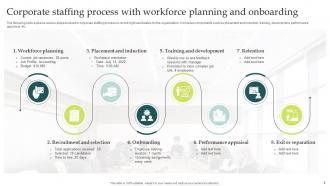
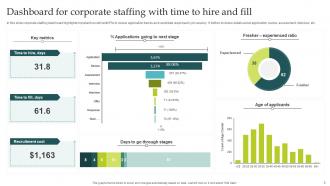
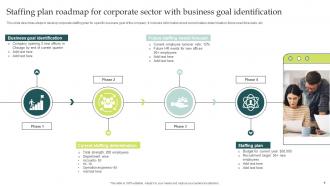
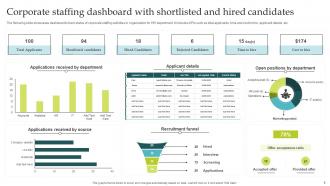







FAQs for Corporate Staffing Powerpoint
Corporate staffing faces challenges including talent scarcity, rising compensation expectations, lengthy hiring processes, skills gaps, and intense competition from other employers. These obstacles require strategic solutions like enhanced employer branding, streamlined recruitment technologies, and competitive benefits packages, with many organizations finding that proactive talent pipeline development and flexible work arrangements ultimately deliver faster hiring cycles and stronger candidate attraction in increasingly competitive markets.
Companies can effectively leverage technology for staffing through applicant tracking systems, AI-powered resume screening, video interviewing platforms, automated scheduling tools, and predictive analytics for candidate assessment. These technologies streamline recruitment by reducing manual tasks, accelerating candidate evaluation, and improving hiring accuracy, with many organizations finding that strategic technology integration delivers faster time-to-hire and enhanced talent acquisition outcomes.
Employer branding significantly enhances talent attraction by showcasing company culture, values, career development opportunities, and competitive compensation packages across multiple channels. Strong employer brands enable organizations to differentiate themselves in competitive markets, reduce recruitment costs, and attract higher-quality candidates, with many companies finding that authentic branding ultimately delivers faster hiring cycles and improved employee retention rates.
Diversity and inclusion initiatives reshape corporate staffing through expanded recruitment channels, bias-free hiring processes, inclusive job descriptions, and equitable advancement pathways. These strategies enable organizations to access broader talent pools, enhance innovation through varied perspectives, and improve employee retention, with many companies finding that diverse teams deliver stronger financial performance and competitive advantage.
Best practices for corporate onboarding include structured orientation programs, comprehensive role-specific training, early integration with team members, clear goal setting, and regular check-ins during the first 90 days. These approaches streamline new hire integration by establishing expectations, building relationships, and accelerating productivity, with many organizations finding that systematic onboarding ultimately reduces turnover while enhancing employee engagement and performance.
Data analytics enhances corporate staffing decisions by analyzing employee performance patterns, predicting turnover risks, identifying skill gaps, and optimizing recruitment channels through comprehensive workforce data. Through predictive modeling and performance metrics, organizations streamline hiring processes, reduce costly mis-hires, and improve retention rates, with many companies finding significantly faster placement times and better cultural fits.
Remote work fundamentally reshapes corporate staffing by expanding talent pools globally, reducing physical office requirements, and necessitating new performance management approaches, digital collaboration tools, and flexible employment structures. Organizations increasingly find that while remote staffing delivers cost savings and access to specialized skills, it also requires enhanced communication systems, cultural integration strategies, and outcome-based evaluation methods to maintain productivity and cohesion.
Staffing agencies offer external expertise, broader candidate networks, and specialized industry knowledge, while in-house recruitment teams provide deeper company culture understanding, direct stakeholder relationships, and long-term strategic alignment. Through strategic partnerships, organizations increasingly leverage both approaches, with agencies handling volume hiring and specialized roles, while internal teams focus on executive positions and culture-critical hires, ultimately delivering enhanced recruitment efficiency.
Companies should track time-to-fill, cost-per-hire, employee retention rates, quality of hire scores, and hiring manager satisfaction metrics to evaluate staffing effectiveness. These measurements enable organizations to streamline recruitment processes, optimize resource allocation, and enhance talent acquisition outcomes, with many finding that comprehensive tracking ultimately delivers improved operational efficiency and stronger competitive advantage in talent markets.
Businesses create talent pipelines through strategic university partnerships, internship programs, employee referral systems, continuous skills development initiatives, and proactive candidate relationship management. These approaches streamline recruitment by building relationships before needs arise, with many organizations finding that investing in talent communities reduces hiring costs, accelerates placement timelines, and ultimately delivers competitive advantage in increasingly competitive markets.
Corporate staffing compliance considerations include equal employment opportunity laws, wage and hour regulations, background check requirements, immigration verification, and data privacy protections. These legal frameworks ensure fair hiring practices while minimizing organizational risk, with many corporations finding that proactive compliance strategies streamline recruitment processes, enhance workplace diversity, and ultimately deliver stronger legal protection and competitive talent acquisition advantages.
Internal promotions and career development programs significantly enhance corporate staffing by improving employee retention, reducing recruitment costs, and building institutional knowledge continuity. These strategic initiatives create clear advancement pathways that boost engagement and productivity, with many organizations finding that promoting from within delivers faster role transitions, stronger cultural alignment, and ultimately competitive advantage through reduced turnover.
Organizations can improve retention through competitive compensation packages, comprehensive benefits, flexible work arrangements, clear career development paths, and regular performance feedback. These strategies enhance employee satisfaction by addressing work-life balance, professional growth opportunities, and recognition needs, with many companies finding that investing in mentorship programs and creating positive workplace cultures ultimately reduces recruitment costs while building stronger, more engaged teams.
Corporate culture significantly influences staffing decisions by shaping job descriptions, interview processes, candidate evaluation criteria, and onboarding approaches. Companies increasingly prioritize cultural fit alongside technical skills, with organizations in sectors like technology and finance finding that alignment between candidate values and company culture enhances employee retention, team collaboration, and overall performance, ultimately delivering stronger business outcomes.
Social media plays a pivotal role in modern corporate staffing through talent sourcing, employer branding, candidate assessment, and relationship building. These platforms enable organizations to access broader talent pools, showcase company culture, and engage passive candidates, with many companies finding that strategic social media presence significantly reduces recruitment costs while attracting higher-quality candidates.
-
The design is very attractive, informative, and eye-catching, with bold colors that stand out against all the basic presentation templates.
-
Wonderful templates design to use in business meetings.