


Critical success factors project management ppt inspiration




Try Before you Buy Download Free Sample Product
 Impress Your
 Audience
 100%
100% Editable
 Save Hours
 of Time


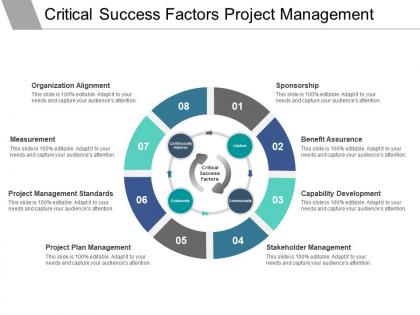
Critical success factors project management PPT inspiration plays an indomitable role in understanding the major factors that drive the growth of any project. This project management success factors PowerPoint template is uniquely designed to offer a robust slide background that will help in listing the different factors that influence growth. It is an effective way to lay out a project plan that has wide reach influence. The critical success factors of any project management comprise of sponsorship, benefit assurance, capability development, stakeholder management, project plan management, project management standards, measurement, and organizational alignment. This project success drivers PowerPoint model helps to monitor the revenue growth and understand success too. The template is aesthetically pleasing, grand and deeply engaging for the audience. The project management success PPT presentation visual is completely editable and is available in both as PowerPoint and keynote template. The template has different text placeholder. Make use of this project management PPT presentation graphic to unlock the success drivers of your project. Curb bad habits in their infancy with our Critical Success Factors Project Management Ppt Inspiration. Guide folks to go about it correctly.
People who downloaded this PowerPoint presentation also viewed the following :
Critical success factors project management ppt inspiration with all 5 slides:
Impress folks with the feasibility of your ideas with our Critical Success Factors Project Management Ppt Inspiration. It allows you to interact with your colleagues.



FAQs for Critical success factors project
Honestly? Scope, communication, and having the right people. That's it. I've watched so many projects completely blow up because someone thought they could wing the communication part or skip getting proper resources. Don't do that to yourself. Keep stakeholders in the loop constantly - like, annoyingly so sometimes. Scope creep will kill you if you're not careful about it from the start. And look, all the fancy project management tools in the world won't save you if your team doesn't have the skills or bandwidth. Get that sorted first. Everything else is just window dressing compared to nailing those three things.
Honestly, communication can totally make or break your project. When everyone's on the same page about goals and timelines, you won't have that awful moment where half your team built something completely different. Regular check-ins help you catch problems before they explode into disasters. Your stakeholders actually know what's going on (which they'll love you for). Be upfront when things go wrong - people appreciate honesty way more than finding out later. Set up those weekly touchpoints now. Trust me, it'll save your sanity when deadlines get crazy.
Honestly, stakeholder engagement can make or break your project. I've watched so many solid plans fall apart because someone forgot to loop in the right people - it's painful to see! You want buy-in from the start, so identify who actually has influence over your success. Regular check-ins are your friend here. Don't just blast them with updates though. Listen to what they're saying and address concerns before they become real problems. Oh, and definitely don't save this stuff just for kickoff meetings. Make it part of your ongoing routine or you'll regret it later.
Look, risk management is your project's early warning system - it stops things from completely falling apart. You identify problems before they hit and protect your timeline, budget, all that stuff. Honestly, skipping it is like driving at night with your headlights off and just hoping for the best. Pretty stupid move if you ask me. The trick is baking it into your planning right from the start. Don't wait until you're already in crisis mode. It's way better than actual insurance because you can actually use it when you need it.
Honestly, communication and recognition are your best friends here. Break things into small wins so people actually feel like they're making progress - then make a big deal about celebrating those moments. People need to see how their daily grind connects to something bigger, you know? Give them space to own their work when you can. Oh, and this might sound obvious but remove roadblocks fast when they pop up. Weekly check-ins are clutch for reading the room. Most PMs I know totally skip the celebration part and wonder why everyone's burnt out.
Honestly, getting your resource allocation right can totally save your project timeline. You want the right people doing what they're best at, when you actually need them to do it. Mess this up and you'll hit bottlenecks that'll push everything back - plus your team gets burned out, which sucks for everyone. I learned this the hard way on a project last year! Quality goes up when people aren't stretched too thin or working outside their strengths. My advice? Figure out what you need early and add some wiggle room because something always comes up unexpectedly.
Honestly, clear goals are like having GPS for your project - everyone knows where they're going instead of wandering around lost. When you write super specific goals upfront, your team stops bugging you with "wait, what did you want again?" questions every five minutes. Stakeholders can't randomly change direction halfway through because you've already nailed down what success looks like. Makes it way easier to catch scope creep too. I always tell people to write goals so detailed that some random person could read them and immediately know if you hit the mark or totally whiffed it.
Honestly, leadership makes or breaks projects. Someone's gotta make the hard calls fast and keep everyone focused when stuff hits the fan. Good leaders spot problems before they blow up and aren't scared to tell stakeholders hard truths. They're also weirdly good at office politics - which sounds dumb but actually matters way more than you'd think. Without strong leadership, even solid projects turn into chaos real quick. So either work on those skills yourself or make damn sure someone capable is running the show from the start.
Set up monthly check-ins (or whenever you hit big milestones) to see how you're doing against your original goals. Budget, timeline, stakeholder happiness, quality stuff - track it all. Dashboards work great for this, honestly anything that makes problems obvious before they blow up. I learned this the hard way on a project last year. Don't wait till the end to figure out you're screwed. Monthly reviews keep you honest. Also, set up some kind of alert system for the really critical stuff so you can fix things while they're still fixable instead of scrambling later.
Honestly, regular check-ins are a game changer - they catch problems before they blow up. Set up shared spaces on Slack or whatever your team uses for quick back-and-forth. Cross-functional pairing is huge too. Like, get your developers actually working with designers instead of just throwing stuff over the fence. Also create some informal chat channels! People need somewhere to ask random questions without scheduling a whole meeting about it. The trick is making it feel organic, not like you're forcing everyone into collaboration theater with endless status updates.
Look, scope management is like drawing boundaries around what you're actually gonna build. Otherwise stakeholders will keep adding random stuff - you promised them a website and suddenly they want an app too (happens literally every time). Document everything upfront so there's no confusion later. Short sentences work. When people try expanding things mid-project, you gotta push back hard or your timeline's toast. Your team needs crystal clear direction on what they're building, not some wishy-washy maybe-list. Honestly, most project disasters I've seen happen because nobody bothered defining scope properly from day one.
Honestly, tech can totally transform how you manage projects - but don't just throw tools at people and hope it works. Start with one solid platform and actually train everyone properly. There's always that one team member clinging to their ancient Excel sheets (we all know the type). Good project management software lets you catch problems before they explode, keeps everyone updated without constant meetings, and shows you what's really happening in real time. The communication improvements alone are worth it. Just pick something simple first, see how your team adapts, then add more tools once you've got the basics down.
Cultural stuff will absolutely tank your project if you're not careful. Some team members are gonna be super blunt about problems while others dance around issues - makes it crazy hard to spot risks early. Time management gets weird too since different cultures have totally different ideas about deadlines and meetings. Honestly, decision-making becomes this whole thing when you've got hierarchy-focused people mixed with collaborative types. Your success factors stay the same, but you'll need way more time for getting everyone aligned. Setting up clear communication rules helps, plus maybe extra buffer time for all the back-and-forth discussions that'll inevitably happen.
Honestly, your failed projects teach you way more than the successful ones ever will. I always look for patterns - like scope creep that got out of hand, or stakeholders who were never on the same page from the start. Communication breakdowns are usually the biggest culprit though. Was it vague requirements? Missing executive support? Totally unrealistic deadlines that nobody questioned? Sometimes it's just resource issues that flew under the radar too long. Each failure basically becomes your playbook for what to watch out for next time. Pretty depressing but weirdly helpful.
Build retrospectives into every phase - don't wait until the end when everyone's already mentally moved on. Write down what's working and what sucks while it's fresh. Most PMs I know skip this step and regret it later. Weekly 15-minute pulse checks with your core team work great for catching issues early. Honestly, real-time feedback beats post-mortem discoveries every time. You'll make way better adjustments when problems are small instead of waiting for some formal review process. Course-correct as you go rather than hoping everything works out.
-
Perfect template with attractive color combination.
-
Excellent design and quick turnaround.