


Data driven human resource management powerpoint slides




Try Before you Buy Download Free Sample Product
 Impress Your
 Audience
 100%
100% Editable
 Save Hours
 of Time


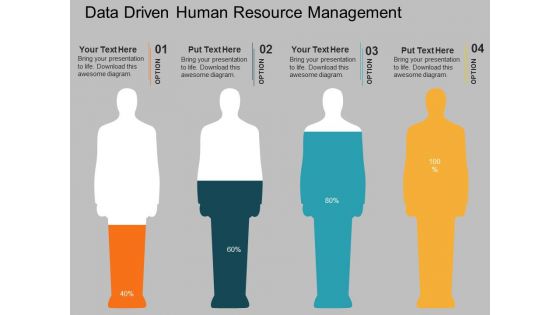
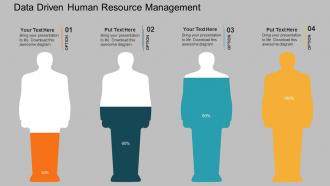
To develop a strategic plan for business operations plus the related and attainable goals, one need to look deep into the fats and thus it becomes important to manage all the same information on a PPT design. It’s important to have effective engagement of the available human resources to channelize the resources in the right direction using a pre designed creative and professional PowerPoint slide which supports data driven human resource management. Organizations which to achieve efficiency in the goals thus functional objectives should be set so in evolved manner in presentation slide show so that they add to no extra cost and render more benefit. You can put your points in a single PPT slide loaded with enough art graphics that supports your idea and vision statement without disturbing the professional taste of PPT layout. The best feature about PowerPoint presentation is that it helps to focus on values and fundamentals of the companies functioning, approach to maximize returns. Get the group eager to contribute with our Data Driven Human Resource Management Powerpoint Slides. Be able to effectively engage them.
People who downloaded this PowerPoint presentation also viewed the following :
Data driven human resource management powerpoint slides with all 3 slides:
Frustrations disappear with our Data Driven Human Resource Management Powerpoint Slides. They empower you to accomplish dreams.
FAQs for Data driven human resource
Okay so definitely start with employee turnover and engagement scores - those two will tell you SO much about what's broken. Time-to-hire is huge too, especially if you're constantly scrambling to fill roles. Performance ratings and absenteeism rates give you the full picture of workforce health. Cost-per-hire matters for budgeting, obviously. Training ROI too if you're spending big on development. There's honestly like 50+ metrics you could track but that's overkill. Pick maybe 5-7 that actually align with your goals. Don't try to measure everything or you'll drown in data and miss what really matters.
So HR analytics basically lets you catch people before they bail. Look for patterns in your data - engagement dropping, performance slipping, weird changes in how someone's working. Way better than scrambling after they've already given notice! Pull your exit interview stuff first and see what keeps coming up. Maybe it's bad managers, people getting passed over for promotions, or everyone hits a wall at like 3 years. Once you know the pattern, you can actually do something about it - fix the manager situation, create better career paths, whatever. It's honestly pretty satisfying when it works.
Dude, big data completely changes recruiting - you're getting real insights instead of just guessing. Look at job boards, social media, employee data to figure out who'll actually succeed and stay. The digital footprint stuff is honestly kinda creepy but super useful. Track which job postings work, see what recruitment channels give you the best bang for your buck. You can even spot who might quit before they do (which is probably my favorite part). Don't overthink it though - just start with one thing like time-to-hire and see what patterns pop up.
So basically, you're using your existing data - turnover rates, hiring patterns, seasonal stuff - to predict what's coming. Pretty cool actually. You'll spot skill gaps months before they happen and figure out which top performers might bail soon. Way better than constantly playing catch-up with urgent hiring, right? Instead you can plan your recruitment pipeline ahead of time and catch training needs early. Honestly beats the scrambling approach most places do. Just pull up your historical turnover data first - see what jumps out. That's where I'd start anyway.
Honestly, start with privacy - get real consent and don't collect random data you won't use. Bias is the scary one though. Algorithms can discriminate like crazy if you're not testing them constantly. I've watched companies totally mess this up! Be upfront about what data affects promotions and reviews too. Set up solid governance policies now (trust me on this). Oh, and audit everything quarterly - catches problems before they blow up in your face.
Start with regular data audits - do them quarterly so stuff doesn't get completely out of hand. Train your team on consistent data entry because honestly, half the problems come from people just winging it. Set up automated validation rules to catch obvious mistakes early. Only let authorized people mess with the important records - trust me on this one. Oh, and create clear standards for how data gets entered in the first place. Most systems turn into dumpsters because nobody bothers maintaining them. You'll also want to cross-check your different data sources regularly. Having a governance policy is great, but make sure people actually use it instead of ignoring it.
Start with whatever HRIS you've got - Workday, BambooHR, whatever. Most have decent reporting built in. If you need fancier visuals, Power BI or Tableau work great. Oh, and use Google Analytics for tracking your recruitment funnel - seriously underrated trick there. Excel honestly works fine for basic turnover stats when you're just getting started. Don't go crazy buying everything at once. Culture Amp and Visier are solid for the predictive analytics stuff, but that's down the road. Pick one tool first, get good at it, then figure out what you're actually missing.
So basically it tracks how your team's really feeling day-to-day, not just what they put on those awkward annual surveys. You'll catch problems way earlier - like when one department's getting super negative or everyone's complaining about the same manager. Honestly, some of the patterns are pretty obvious once you see them mapped out. Pick one clear issue that keeps popping up and fix that first. Don't try to solve everything at once though. Could be tweaking how meetings run or dealing with that one person who makes everyone miserable. The data just makes it less guesswork.
Ugh, data quality is your biggest nightmare - nothing talks to each other properly so you're basically doing data janitor work forever before getting anywhere useful. Leadership always balks at the budget too. Most HR folks get super uncomfortable with analytics (can't really blame them tbh). Training everyone on new tools while keeping normal stuff running? Good luck with that juggling act. Oh and people will resist change hard. Honestly just pick one small thing to focus on first - like turnover tracking or something - then expand once you can show it actually works.
Honestly, data visualization is a total game-changer for HR stuff. You know how you're always drowning in those massive spreadsheets? Visual dashboards let you actually *see* what's happening - like which teams are losing people or when you need to ramp up hiring. My old boss used to love when I'd bring charts to meetings instead of just numbers. You can catch pay gaps and diversity issues way faster than scrolling through endless rows. Start small with whatever's driving you crazy right now - maybe turnover or engagement scores. Trust me, once you see your data this way, going back to spreadsheets feels like torture.
Honestly, the best thing about data-driven hiring is it cuts through all the BS gut feelings that mess with decisions. Start with blind resume screening - no names, no photos, just skills. Then dig into your actual hiring numbers because they'll probably shock you. Who's getting hired vs. who's applying? The patterns are wild when you see them laid out. Use the same interview questions for everyone with actual scoring systems. Skills tests work great too since they're totally fair game for anyone. I know it sounds boring, but auditing your current data first is clutch - you'll spot bias you didn't even know existed.
Start with your recruiting data - it's the easiest to grab and you'll see results fast. Track demographics through your whole hiring process, from who applies to interview-to-offer ratios by group. That'll show you where bias sneaks in. Also look at promotion rates, pay gaps, and who's actually staying vs. leaving. Honestly, the patterns are usually pretty eye-opening once you dig in. Don't just focus on representation numbers though - survey your people about how included they actually feel. Set real targets based on what you find, then check progress monthly. Oh, and retention data by demographics is huge - sometimes tells a better story than hiring numbers.
So basically ML can track way more stuff than your boss ever could - project deadlines, how you work with others, skills you're picking up, communication style, all that. Way better than those awkward yearly reviews where they only remember what happened last month, you know? The cool part is getting ongoing feedback instead of waiting forever for someone to tell you how you're doing. Though honestly, you still need actual humans making the final calls since algorithms miss a lot of context. Pretty wild how much data they can crunch though.
Track the obvious stuff first - turnover costs, how long hiring takes, sick days. Easy to put dollar signs on those. Productivity and satisfaction scores matter too, but they're honestly a pain to measure even though they probably matter more long-term. Soft metrics are where the real magic happens, just harder to prove to your boss. Add up what you spent on software, training, people's time - then compare that against your savings over like 12-18 months. Monthly dashboard keeps you sane so you can actually see what's working.
Honestly, AI-powered predictive analytics is going to be everywhere soon. Companies are already using it to spot who might quit before they even know it themselves - which is kind of wild if you think about it. Real-time sentiment tracking through work platforms is getting scary accurate too. The big change? We're moving from just reacting to data toward actually planning with it. Privacy laws are tightening up fast though, so you better have solid data governance. Employees also want way more transparency about how their info affects decisions. Start getting your team comfortable with AI tools now because honestly, you'll be behind if you wait.
-
Unique research projects to present in meeting.
-
Unique and attractive product design.