


Database Management Software For Healthcare Organizations Complete Deck




Try Before you Buy Download Free Sample Product
 Impress Your
 Audience
 100%
100% Editable
 Save Hours
 of Time


The hospital management system is a computer system that assists in the efficient administration of healthcare information and the work fulfilment of healthcare personnel. Check out our efficiently designed Database Management Software for Healthcare Organizations template that covers the current challenges faced by healthcare administrators and shows the companys rising costs. It also includes the components required by the company in the hospital management system, such as patient management, accounting, reporting, inventory management, etc. Further, this presentation captures healthcare managements types, users, and patient information systems. Also, the slides show a process flow for patient billing management, statistics associated with medication adherence and hospital discharge summary. Moreover, this presentation represents the strategies which include clinical workflow to optimize resources, process flow to improve healthcare quality, etc. It also shows slides to optimize hospital management functions such as drug order and delivery form, payment collection report and tracking invoices. Also, it showcases costs associated with the implementation of HMS, the impact of the hospital management system on operating expenses and metrics to measure impact, etc. Lastly, it contains dashboards to measure operational performance and metrics associated with discharges, admits, etc. Get access now.
People who downloaded this PowerPoint presentation also viewed the following :
Content of this Powerpoint Presentation
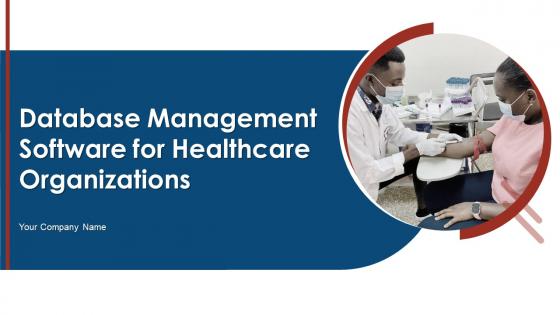
Slide 1: This slide introduces Database Management Software for Healthcare Organizations. State Your Company Name and begin.
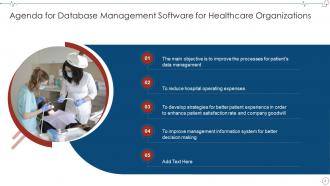
Slide 2: This slide states Agenda of the presentation.
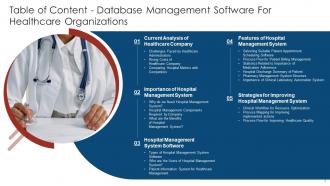
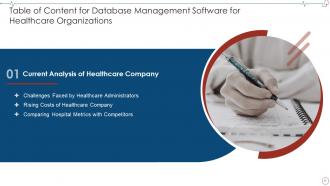
Slide 3: This slide presents Table of Content for the presentation.
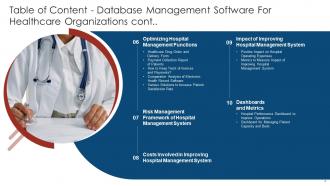
Slide 4: This is another slide continuing Table of Content for the presentation.
Slide 5: This slide shows title for topics that are to be covered next in the template.
Slide 6: This slide displays Challenges Faced by Healthcare Administrators.
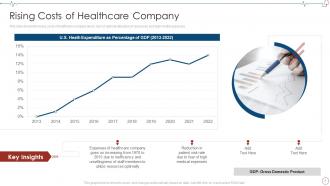
Slide 7: This slide shows the rising costs of healthcare company due to lack of optimal utilization of resources.
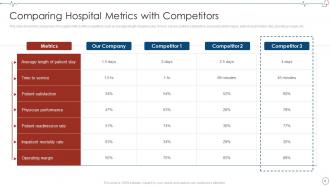
Slide 8: This slide presents the comparison of hospital metrics with competitors such as average length of patient stay, time to service, etc.
Slide 9: This slide shows title for topics that are to be covered next in the template.
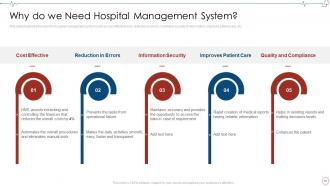
Slide 10: This slide illustrates the need for hospital management system such as cost effectiveness, reduction in errors, etc.
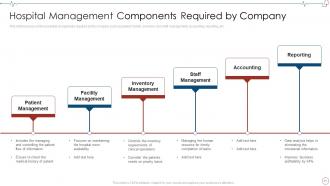
Slide 11: This slide displays Hospital Management Components Required by Company.
Slide 12: This slide showcases several benefits of hospital management system.
Slide 13: This slide shows title for topics that are to be covered next in the template.
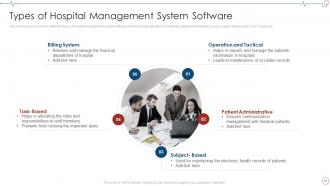
Slide 14: This slide represents Types of Hospital Management System Software.
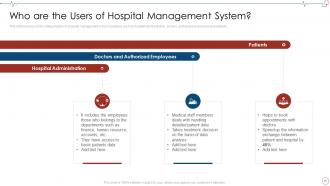
Slide 15: This slide focuses on the categorization of hospital management system audience.
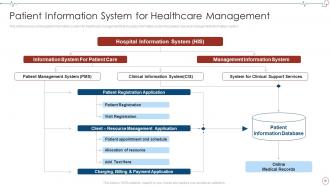
Slide 16: This slide showcases Patient Information System for Healthcare Management.
Slide 17: This slide shows title for topics that are to be covered next in the template.
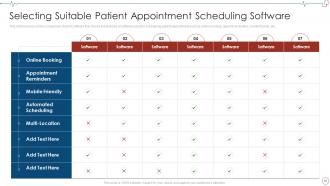
Slide 18: This slide presents Selecting Suitable Patient Appointment Scheduling Software.
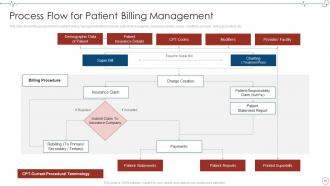
Slide 19: This slide shows the process flow for patient billing management which includes patient demographics, insurance details, etc.
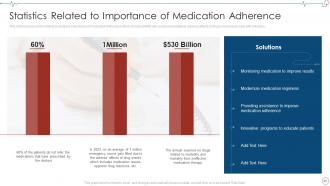
Slide 20: This slide represents Statistics Related to Importance of Medication Adherence.
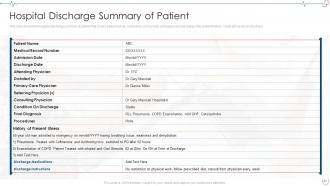
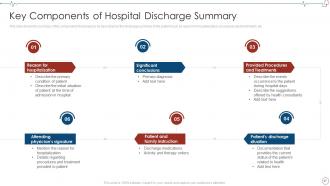
Slide 21: This slide showcases hospital discharge summary of patient that covers patient name, medical record number, etc.
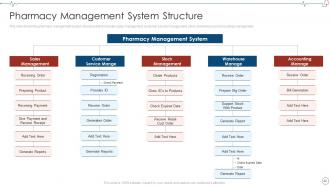
Slide 22: This slide shows the pharmacy management system structure which includes sales management, customer service management, etc.
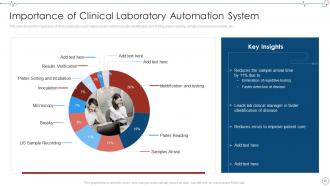
Slide 23: This slide presents Importance of Clinical Laboratory Automation System.
Slide 24: This slide shows title for topics that are to be covered next in the template.
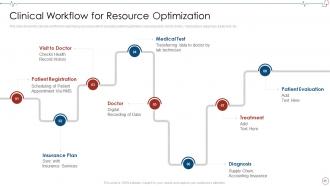
Slide 25: This slide displays clinical workflow for optimizing resources which includes patient registration, insurance plan, visit to doctor, etc.
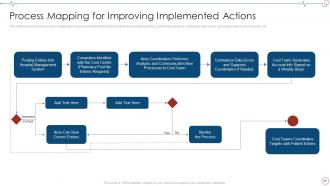
Slide 26: This slide represents Process Mapping for Improving Implemented Actions.
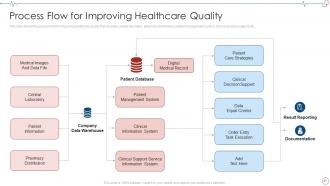
Slide 27: This slide showcases Process Flow for Improving Healthcare Quality.
Slide 28: This slide shows title for topics that are to be covered next in the template.
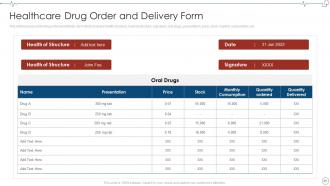
Slide 29: This slide focuses on the drug order and delivery form which includes health structure, head of structure, signature, etc.
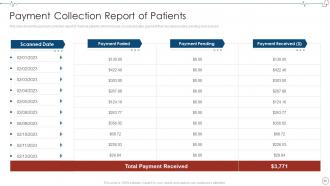
Slide 30: This slide presents payment collection report of medical patients.
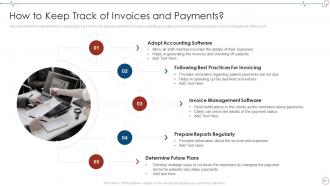
Slide 31: This slide displays How to Keep Track of Invoices and Payments.
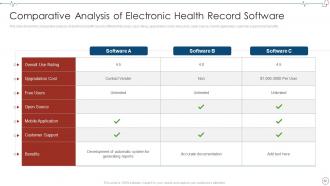
Slide 32: This slide represents Comparative Analysis of Electronic Health Record Software.
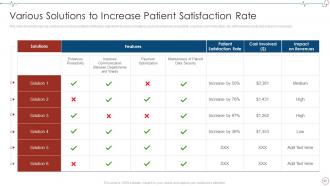
Slide 33: This slide showcases Various Solutions to Increase Patient Satisfaction Rate.
Slide 34: This slide shows title for topics that are to be covered next in the template.
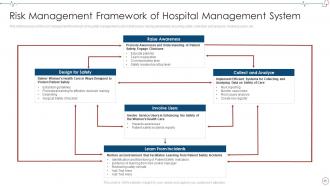
Slide 35: This slide presents Risk Management Framework of Hospital Management System.
Slide 36: This slide shows title for topics that are to be covered next in the template.
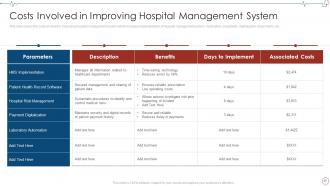
Slide 37: This slide displays Costs Involved in Improving Hospital Management System.
Slide 38: This slide shows title for topics that are to be covered next in the template.
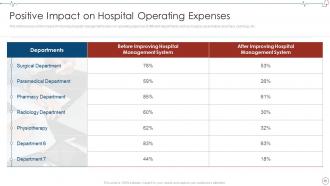
Slide 39: This slide represents Positive Impact on Hospital Operating Expenses.
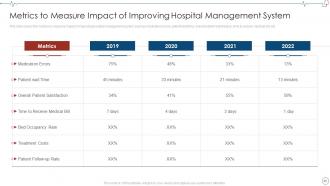
Slide 40: This slide showcases Metrics to Measure Impact of Improving Hospital Management System.
Slide 41: This slide shows title for topics that are to be covered next in the template.
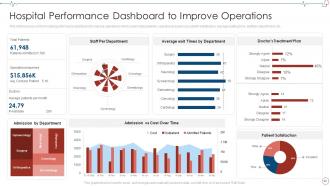
Slide 42: This slide presents Hospital Performance Dashboard to Improve Operations.
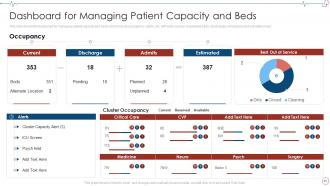
Slide 43: This slide showcases Dashboard for Managing Patient Capacity and Beds.
Slide 44: This slide displays Icons for Database Management Software for Healthcare Organizations.
Slide 45: This slide is titled as Additional Slides for moving forward.
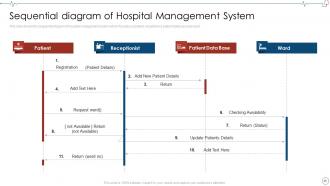
Slide 46: This slide shows Sequential diagram of Hospital Management System.
Slide 47: This slide presents Key Components of Hospital Discharge Summary.
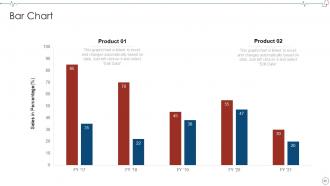
Slide 48: This slide showcases Bar chart with two products comparison.
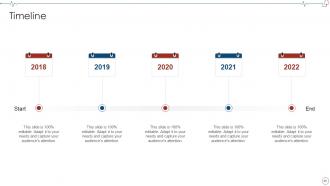
Slide 49: This is a Timeline slide. Show data related to time intervals here.
Slide 50: This is an Idea Generation slide to state a new idea or highlight information, specifications etc.
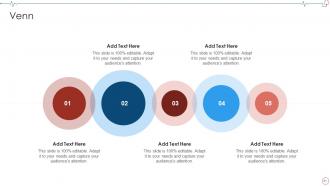
Slide 51: This slide depicts Venn diagram with text boxes.
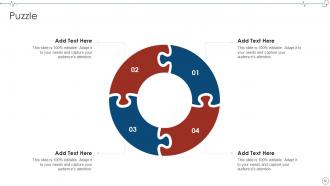
Slide 52: This slide contains Puzzle with related icons and text.
Slide 53: This is Our Goal slide. State your firm's goals here.
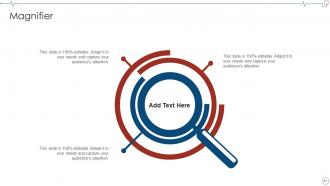
Slide 54: This slide showcases Magnifying Glass to highlight information, specifications, etc.
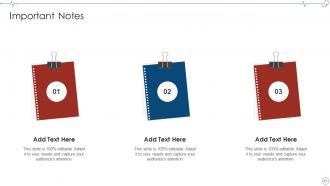
Slide 55: This slide shows Post It Notes. Post your important notes here.
Slide 56: This is a Thank You slide with address, contact numbers and email address.
Database Management Software For Healthcare Organizations Complete Deck with all 61 slides:
Use our Database Management Software For Healthcare Organizations Complete Deck to effectively help you save your valuable time. They are readymade to fit into any presentation structure.










FAQs for Database Management Software For Healthcare
Key features include user-friendly interfaces, automated backup systems, scalability options, data security protocols, and integration capabilities with existing business tools. These features streamline operations by reducing manual data entry, ensuring business continuity, and enabling seamless workflows, with many small retailers and service providers finding that strategic database selection ultimately delivers improved customer insights and operational efficiency.
Relational databases use structured tables with predefined schemas and SQL queries, while NoSQL databases employ flexible structures like document, key-value, or graph formats without fixed schemas. Relational systems excel in financial services and inventory management requiring strict consistency, whereas NoSQL databases streamline big data analytics, content management, and real-time applications, ultimately delivering greater scalability for rapidly evolving business requirements.
Scalability enables database management software to handle growing data volumes, increasing user loads, and expanding business operations without performance degradation or system failures. Organizations across sectors like e-commerce, healthcare, and financial services find that scalable databases deliver faster query responses, seamless peak-traffic management, and cost-effective resource allocation, ultimately supporting business growth while maintaining operational efficiency.
Database management software enhances data security through encryption, access controls, audit trails, backup systems, and user authentication protocols. These features enable organizations to maintain regulatory compliance across industries like healthcare, finance, and retail, while streamlining data governance, minimizing breach risks, and ultimately delivering enhanced customer trust and operational transparency.
Cloud-based database management solutions offer enhanced scalability, reduced maintenance costs, and seamless remote access, while on-premises installations provide greater control, data security, and customization capabilities. Many organizations increasingly adopt hybrid approaches, with financial services leveraging cloud solutions for customer analytics while maintaining sensitive transaction data on-premises, ultimately delivering operational flexibility and strategic cost optimization.
Database management software significantly accelerates data retrieval through optimized indexing, query processing, and caching mechanisms that minimize search times and system resource usage. These systems enable organizations to access critical information within milliseconds rather than minutes, streamline complex queries across multiple data sources, and enhance operational efficiency, with many enterprises finding faster decision-making and improved customer response times.
Organizations commonly face challenges including data migration complexities, integration with existing systems, staff training requirements, security vulnerabilities, and performance optimization issues during database management system implementation. These obstacles often require strategic planning, adequate resource allocation, and phased deployment approaches, with many enterprises finding that partnering with experienced vendors and investing in comprehensive staff development ultimately delivers smoother transitions and enhanced operational efficiency.
Data visualization tools integrate with database management software through direct API connections, SQL query interfaces, real-time data streaming, and automated report generation systems. These integrations enable organizations to transform raw database information into interactive dashboards, charts, and analytics, with companies in retail, healthcare, and finance finding that seamless connectivity ultimately delivers faster decision-making and enhanced operational insights.
User access and permission management in database management platforms operates through role-based controls, authentication protocols, and granular permission settings that define who can view, edit, or delete specific data. These systems enable administrators to assign user roles, set access levels for different database sections, and monitor user activities, while ensuring data security and regulatory compliance, ultimately delivering controlled transparency and operational efficiency across organizations.
Open-source database management systems offer significant long-term cost advantages through eliminated licensing fees, reduced vendor lock-in, and lower operational expenses. While organizations may face initial migration costs and require specialized expertise, many enterprises find that open-source solutions like PostgreSQL and MySQL ultimately deliver substantial savings and greater flexibility for scaling operations.
AI advancements significantly enhance database management software through automated query optimization, predictive analytics, intelligent data classification, and self-healing capabilities. These technologies streamline operations by reducing manual tuning, predicting system failures before they occur, and automatically optimizing performance, with many organizations finding that AI-driven databases deliver faster processing speeds and improved operational efficiency.
Database management best practices include implementing automated backup schedules, maintaining data integrity through regular validation checks, establishing disaster recovery protocols, monitoring system performance continuously, and ensuring proper user access controls. These approaches streamline operations by minimizing downtime risks, protecting against data loss, and maintaining optimal performance, with many organizations finding that strategic backup policies and proactive maintenance ultimately deliver enhanced reliability and competitive advantage.
Organizations can effectively train staff through structured programs including hands-on workshops, vendor-certified courses, mentorship systems, role-based learning paths, and practical project assignments. Through comprehensive training strategies, companies enhance user adoption, minimize operational errors, and maximize software ROI, with many finding that continuous learning initiatives ultimately deliver improved productivity and stronger database management capabilities.
Database performance metrics include response time, throughput, query execution speed, resource utilization, availability uptime, and data integrity accuracy. These measurements enable organizations to optimize operational efficiency, identify bottlenecks, and ensure reliable service delivery, with many financial institutions and healthcare systems finding that consistent monitoring ultimately delivers faster customer experiences and competitive advantage.
Database management software significantly affects collaboration by enabling real-time data access, version control, user permission management, and simultaneous multi-user editing capabilities. Through centralized platforms, teams streamline workflows, reduce data silos, and enhance communication across departments, with many organizations finding that strategic database selection ultimately delivers improved project coordination and faster decision-making processes.
-
SlideTeam, Please don’t stop sharing discount coupons! I love your occasional discounts and tend to buy your products around that corner.
-
The templates you provide are great! They have saved me tons of time and made my presentations come alive. Thank you for this awesome product. Keep up the good work!