


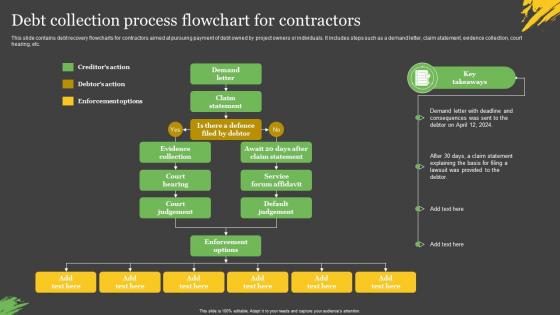
Debt Collection Process Flowchart For Contractors




Try Before you Buy Download Free Sample Product
 Impress Your
 Audience
 100%
100% Editable
 Save Hours
 of Time


This slide contains debt recovery flowcharts for contractors aimed at pursuing payment of debt owned by project owners or individuals. It includes steps such as a demand letter, claim statement, evidence collection, court hearing, etc.
People who downloaded this PowerPoint presentation also viewed the following :
Debt Collection Process Flowchart For Contractors with all 6 slides:
Use our Debt Collection Process Flowchart For Contractors to effectively help you save your valuable time. They are readymade to fit into any presentation structure.





FAQs for Debt Collection Process
So there's basically four stages to this whole thing. You start with pre-collection - just sending reminders and making those initial calls. Early-stage collection comes next with formal demand letters and more serious phone calls. Most debts actually get paid during this phase if they're gonna get paid at all. After that you're looking at late-stage collection with third-party agencies or lawyers getting involved. Last resort is litigation if nothing else works. Honestly though? Catch payment issues early because your success rate drops off a cliff later on. I learned this the hard way - don't sleep on those first two stages.
So basically the FDCPA controls how debt collectors can bug people. No calls before 8am or after 9pm. Can't harass with constant calling either. If someone tells them to stop in writing, they have to back off. Also they can't lie about how much is owed or make fake legal threats - though honestly, some still push boundaries. Here's the thing though: if you're hiring outside collection agencies, their screwups can land on you too. Really annoying but true. So definitely check out any collection company before working with them.
So demand letters are your first real move - basically telling the debtor "hey, you owe us this money, pay up." Include the debt amount, who they originally owed, and their FDCPA rights. Honestly, it's like giving them one final heads-up before things get messy. This starts your paper trail too, which you'll definitely need later. Oh, and keep copies of everything you send plus delivery confirmations. Trust me on that one - if this ends up in court, you'll want proof you actually sent the thing. It sets the whole tone for what comes next.
Stay professional but don't be a pushover - be clear about what you expect and what happens if they don't pay. Listen to their situation first though, maybe work out a payment plan if it makes sense. Document literally everything (trust me on this one, you'll need it later). Mix up how you contact them - calls, emails, letters - but don't go overboard and harass them. Try solving the problem together before you get all formal about collections. Set deadlines and actually stick to them. Oh, and make sure whatever you're doing is legal in your area first.
Dude, automated systems are a game changer for debt collection. Set up auto-dialing, email sequences, and text campaigns so your team isn't stuck making calls all day. AI can actually figure out which accounts are most likely to pay and bump those to the top of your list. Digital payment portals make it stupid easy for people to just pay online too - honestly wish more companies did this. Start with automated outreach for the basic stuff, then let your actual humans handle the messy cases that need real conversations. Saves tons of time.
Ugh, debt collections are brutal for your credit. You're looking at a 50-100+ point drop that stays there for 7 years - doesn't matter if it's $50 or $5000, which is honestly ridiculous. The second it hits collections, boom, red flag for every lender. Paying it off later won't erase the damage, though it helps a tiny bit. Here's the thing though - before you pay anything, try negotiating a pay-for-delete deal first. That's literally your only shot at getting it completely removed. Most people don't know about this and just pay, then wonder why their score still sucks.
Just be straight with people about what they owe and don't be a jerk about it. Respect when they say they can't talk during work - that's totally fair. Never shame them in front of family or anything, that's just cruel. Most folks dealing with debt collectors are going through real stuff like medical bills or lost jobs. Document everything so you're covered legally, and honestly? Offer payment plans when you can. I mean, getting some money is better than nothing, right? Stay firm but don't forget these are actual people with real problems.
Wait about 90-120 days after trying calls, letters, and payment plans first. The amount has to make sense too - suing over like $50 is pointless. Make sure they actually have assets or a job you can go after. Are they completely ignoring you or just making empty promises over and over? That's usually when I'd say screw it and go legal. Oh, and you need solid paperwork proving the debt. Do one final asset check and send a last demand letter. Still nothing? Time to let the lawyers handle it.
Ugh, debt collectors spread SO much BS. First off, they can't arrest you or instantly garnish your paycheck - that's straight up illegal. When someone dies, their debt doesn't magically transfer to you either (unless you co-signed something). They also can't blow up your phone at midnight or start harassing your relatives. Here's what really bugs me - people think ignoring debt makes it vanish. Wrong! It just snowballs into a bigger mess. Oh, and you can totally demand proof of what you actually owe. Don't let them intimidate you with fake urgency. Look up the Fair Debt Collection Practices Act so you'll know when they're trying to pull one over on you.
Honestly, empathy is everything here. Don't go in guns blazing - that's just shooting yourself in the foot. Ask them what's going on and how you can work something out together. Payment plans are your friend, and being upfront about any fees saves headaches later. I swear, some companies think being jerks will magically make money appear. Spoiler alert: it doesn't. Just keeps good customers from coming back. Stay respectful but persistent - document everything so you're covered. The whole point is getting your money without burning bridges, you know?
Dude, harassment in debt collection will absolutely wreck your business. FDCPA violations hit you with $1,000 per incident - that adds up crazy fast when people start complaining. Your reputation gets destroyed too, which honestly might hurt worse than the fines since everyone talks in this industry. You could face lawsuits or even lose your collection license entirely. Some companies get slapped with cease and desist orders that basically kill their whole operation. Train your staff constantly on what counts as harassment and keep detailed records of everything. Oh, and document literally every interaction - trust me on this one.
Ugh, international debt collection is such a mess. Every country has different rules - what's legal here might be totally banned there. GDPR in Europe will completely flip how you handle people's data, and that's just one example. You've got consumer protection laws, privacy stuff, collection restrictions - it's like playing whack-a-mole with regulations. Then there's the fun part of actually enforcing anything you win in court across borders. Treaties and agreements make it possible but not easy. Honestly, just get a local lawyer before you even think about chasing money internationally.
Honestly, just lead with empathy - ask what's going on before you even mention money. People shut down the second they feel attacked. Be firm but not a dick about it (angry customers pay slower, trust me). Payment plans work way better than demanding everything upfront. Document every conversation and follow up regularly, but don't be that person calling twice a day. Oh, and build some rapport first! I know it sounds obvious, but most people skip this step. Your next call should start with "Hey, how are things?" not "Where's my money?"
Honestly, just be super proactive about it - way easier than chasing money later. Always run credit checks first and make your payment terms crystal clear upfront. I had one client I thought was solid ghost us for like 3 months, so trust me on this one. Get those invoices out fast and don't be shy about following up. Waiting 90 days to call is basically career suicide. Maybe ask for deposits on big orders? Also that early payment discount thing actually works. Oh, and document everything - every email, every call. Even with clients you love, stick to your process religiously.
Honestly, start with your credit approval process - that's where most problems begin. Tighten those credit limits and actually verify income instead of just trusting what people write down. I've seen too many businesses get burned by skipping this basic step. Set up automatic payment reminders too, and give customers multiple ways to pay. Makes their lives easier. The trick is catching issues before accounts go bad, not after. Oh, and review your current approval standards this week - like, actually sit down and go through them. Small changes here can save you major headaches later.
-
Editable, diversified, compatible with MS PPT and Google Slides, and on top of that finest graphics!! I mean in the words of the famous Ross Geller, “What more do you want!”
-
Happy to found you SlideTeam. You guys are value for money. Amazing slides.