


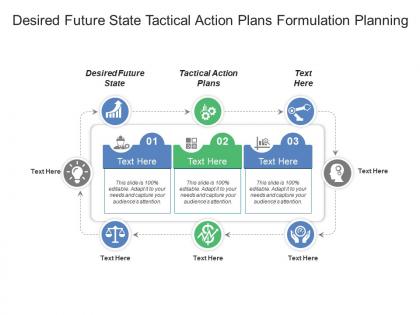
Desired future state tactical action plans formulation planning




Try Before you Buy Download Free Sample Product
 Impress Your
 Audience
 100%
100% Editable
 Save Hours
 of Time


Every angle gets complete consideration with our Desired Future State Tactical Action Plans Formulation Planning. They ensure fruitful debates.
People who downloaded this PowerPoint presentation also viewed the following :
Desired future state tactical action plans formulation planning with all 5 slides:
Dish out great enjoyment with our Desired Future State Tactical Action Plans Formulation Planning. Folks will discover them to be a complete delight.

FAQs for Desired future state tactical action
You need clear goals, realistic deadlines, and someone assigned to each task. Don't forget to set up ways to measure if it's actually working. Build in buffer time - trust me on this one. I've watched so many good plans crash because nobody planned for Murphy's Law. Map out your biggest priority first, then work backwards from your deadline. Include what resources you'll need and think through what could go wrong (with backup plans). The whole thing should be simple enough that everyone gets their role without needing a decoder ring. Honestly, if your plan's too complicated to explain quickly, it probably won't work anyway.
Honestly, just draw actual lines connecting your tactics to your big goals - sounds silly but it works. I've watched so many teams spin their wheels on stuff that feels important but doesn't actually matter. Ask yourself constantly: "does this move us closer to where we want to be?" Cut everything else, even if it stings a little. The quarterly check-ins are clutch too. You'll drift without them, trust me. Sometimes you need to completely pivot what you're doing, and that's totally normal. Better to course-correct than waste months on the wrong things.
You absolutely need people on board or your plan's going nowhere. I learned this the hard way on a project last year - involves them early and you'll get way better insights about what's actually doable. Resources, roadblocks, all that stuff becomes clearer. People also support things they helped build versus something dumped on them. Map out who actually has power over your success first. Then have real conversations with them before you lock anything down. Trust me, addressing their concerns upfront saves you tons of headaches later.
Honestly, I always just brain dump everything first then figure out what actually moves the needle. Map out which tasks hit your main goal - those are your heavy hitters. Dependencies matter too since some stuff literally can't happen until other things are done. That urgent vs important thing actually works btw, not just business school nonsense. I'm big on knocking out a few quick wins early because it keeps you motivated. Oh and deadlines obviously. Once you've got everything listed, rank it all using this stuff and you're golden.
Focus on metrics that actually connect to your goals - completion rates, staying on schedule, how you're using resources. Leading indicators are gold though, way better than just looking backwards at what went wrong. Don't forget quality stuff either because who cares if you hit deadlines with garbage work? I always mess this up and only track speed metrics at first. Big mistake! You need both the deliverables AND how smooth your process is running. Honestly, stick to maybe 3-5 metrics tops or you'll get stuck in measurement hell instead of actually getting things done.
Honestly, visual stuff just works better than walls of text. People's brains are wired for it. Try flowcharts for showing how processes connect, or Gantt charts when you need timelines laid out clearly. Color-coding different work streams is a game changer - suddenly everyone gets where they fit in. I'm probably biased since I love a good dashboard, but seeing key metrics at a glance beats digging through reports any day. Start with something basic like Miro or even PowerPoint's SmartArt. You can always get fancier later once people are sold on the approach.
Honestly? Most people either make their plans super vague or ridiculously ambitious. Don't set crazy timelines you can't hit. Make sure someone actually owns each task - otherwise stuff just falls through the cracks. Resource planning is boring but you gotta do it. I've definitely created "perfect" plans that completely ignored reality, which is... not great. Also avoid going so granular that updating becomes a nightmare. You want specific enough to actually do something, but flexible when things go sideways. Because they will.
Honestly, I'd check those plans every 2-3 weeks - monthly at the absolute minimum. Quarterly is pretty much pointless because so much shifts by then. Really depends on your industry though. Tech moves crazy fast, so maybe weekly makes sense? More stable stuff can probably get away with monthly reviews. The key is just staying on top of things before they get away from you. Oh, and actually put it in your calendar right now with a recurring reminder. I always forget this stuff otherwise. You don't need some perfect system - just something consistent that you'll actually stick to.
Honestly, I'd go tactical when you're in crisis mode or have super tight deadlines. Like when your boss drops a "need this ASAP" bomb on you - strategic planning won't save you there. Tactical works great for anything under 6 months where you need to pivot quickly. Product launches are perfect for this approach. Limited budget? Tactical lets you test stuff without committing huge resources. The flexibility is clutch when things change fast (which they always do). Strategic planning has its place for long-term vision, but tactical gets shit done when time's not on your side.
Honestly, redundancy is your best friend here. Write up a simple brief first - none of that corporate buzzword garbage. Then do a quick team meeting to walk through everything out loud. People miss stuff in emails all the time. Visual aids help too, like flowcharts or whatever so everyone sees how their part connects. I'd set up regular check-ins because things always shift. The whole point is hitting them from multiple angles - write it, say it, show it. Then actually confirm they got it instead of assuming. Trust me, you'll save yourself so many headaches later.
Honestly, start with something like Asana or Monday for tracking your projects and deadlines. Zapier is clutch for automating all those annoying repetitive tasks - seriously saves so much time. You'll want a good dashboard too so you can actually see what's happening at a glance. Slack beats email chains any day for keeping everyone in the loop. Here's the thing though - don't go crazy with tools. Pick maybe 2-3 that work well together instead of signing up for everything. I'd say grab one solid project management app first, then add other stuff as you need it.
Okay so tactical plans are like your short-term game plan - maybe a few months max. They're super flexible which is clutch because priorities change all the time. Project plans? Those are the full deal from beginning to end with budgets, timelines, all that stuff. I'd go tactical when you need to move fast on something specific. Project plans work better for those big messy initiatives with tons of people involved. Honestly, tactical feels way less overwhelming to start with. Just pick whichever matches what you're actually trying to accomplish right now.
Look at each big step and think through what could actually blow up. I make a quick chart ranking risks by likelihood vs how badly they'd screw things over - way easier than juggling it mentally. Pick your top threats and figure out specific ways to handle them. Give someone ownership of each one too, otherwise stuff just falls through cracks. The real trick is catching problems early before they snowball. Set up some warning signs you can watch for, and honestly? Always have plan B sketched out because something will probably go sideways.
Look, deadlines are what actually make things happen. People think they're just arbitrary dates, but they're not - they create that urgency that keeps everyone focused instead of wandering off to other projects. I've watched so many good plans just... die because nobody set real time constraints. Your team needs those milestones to work toward. Plus deadlines force you to make decisions and catch problems before they blow up. Just don't go crazy with them though. Too tight and everyone burns out, too loose and you lose all momentum.
Honestly, getting other departments involved early saves you so much headache later. Those silos are brutal - they'll torpedo your plans before you even know what hit you. Loop people in during planning, not after you've made all the decisions. You'll catch resource conflicts, spot dependencies, and actually understand how your stuff impacts their work. Everyone feels included instead of ambushed, which makes rollout infinitely easier. Different perspectives help you see blind spots too. Start by figuring out which teams your plan touches and grab their key people for input. Trust me on this one.
-
Colors used are bright and distinctive.
-
Illustrative design with editable content. Exceptional value for money. Highly pleased with the product.