


Develop Checklist To Review KYC And AML Policy Security Token Offerings BCT SS




Try Before you Buy Download Free Sample Product
 Impress Your
 Audience
 100%
100% Editable
 Save Hours
 of Time


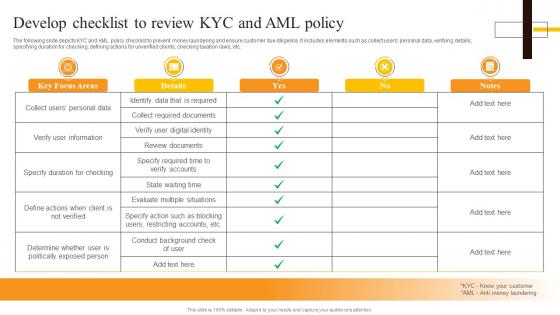
The following slide depicts KYC and AML policy checklist to prevent money laundering and ensure customer due diligence. It includes elements such as collect users personal data, verifying details, specifying duration for checking, defining actions for unverified clients, checking taxation laws, etc.
People who downloaded this PowerPoint presentation also viewed the following :
Develop Checklist To Review KYC And AML Policy Security Token Offerings BCT SS with all 9 slides:
Use our Develop Checklist To Review KYC And AML Policy Security Token Offerings BCT SS to effectively help you save your valuable time. They are readymade to fit into any presentation structure.








FAQs for Develop Checklist To Review KYC And AML Policy Security Token
Honestly, STOs are all about getting that KYC trinity down: identity verification, address confirmation, and accredited investor checks. Document verification is obvious stuff - government IDs, utility bills, the usual suspects. But you also need enhanced due diligence for sketchy investors and ongoing monitoring once tokens are live. Global compliance gets messy fast since STOs cross borders constantly. Oh, and definitely automate screening against sanctions lists and PEP databases - saves you tons of headaches later. Here's the real kicker though: build these workflows BEFORE launch. Trust me, trying to fix compliance issues after people have already invested? That's a special kind of hell you don't want.
Start with solid AML procedures right away - customer due diligence, transaction monitoring, and reporting suspicious stuff. Your KYC needs to capture beneficial ownership and screen against sanctions lists. The regulatory landscape moves so damn fast it's crazy. Document everything, train your team well, and definitely work with compliance experts who get STO requirements. Don't even think about winging this one. Get lawyers involved early. RegTech platforms can automate a lot of the monitoring work too - honestly saved my sanity when I was dealing with this stuff.
Look, tech is gonna save you so much headache with KYC/AML stuff. AI verification tools check documents instantly instead of you doing it manually for weeks. Real-time screening catches sketchy transactions automatically too. The blockchain part actually helps since it tracks everything permanently - regulators love that audit trail. Without decent tech you're basically buried in paperwork forever. I'd start with digital identity platforms that plug into what you already have. That's where you'll see the biggest time savings right away. Trust me on this one.
You'll need a government photo ID - passport or driver's license works. Also grab a recent utility bill or bank statement, needs to be within 3 months for address proof. If you're an accredited investor, that's where it gets annoying - they want tax returns, bank statements, the whole nine yards to prove your status. Most platforms make you take a selfie holding your ID too, which always feels weird but whatever. Oh and definitely check what your specific platform wants first because requirements change depending on where you are. Trust me, just get everything ready upfront so you don't have to scramble later.
Honestly, I'd do it quarterly for STOs since token prices swing around so much. Annual updates are the legal minimum, but that's kinda useless when someone's accreditation status could change or they hit new investment thresholds. Material changes are the big thing - new addresses, beneficial ownership shifts over 25%, stuff like that. Red flags during monitoring obviously trigger updates too. The quarterly thing might sound excessive, but trust me, it's way better than scrambling later when compliance issues pop up. Just automate reminders so investors don't hate the process.
Dude, skipping proper KYC and AML on your STO is asking for trouble. Regulators will slap you with massive fines or straight-up shut you down. Criminal charges aren't off the table either. Your reputation? Toast. Investors bail the second compliance issues pop up. You'll also attract every sketchy money launderer out there - honestly, it's like putting up a neon sign for criminals. These rules aren't optional anymore, btw. Just spend the money upfront on compliance. Trust me, cleaning up violations later costs 10x more than doing it right from day one.
Ugh, KYC and AML for STOs is such a headache - every country does it differently. The US is crazy strict with their FinCEN rules. Switzerland and Singapore? Way more chill about it. Europe sits in the middle with MiFID II stuff. Honestly, you can't just copy-paste compliance across borders. What flies in one place will totally screw you in another. Get local lawyers in each jurisdiction early on - I've seen too many people try the generic approach and it always bites them. Each market where you're offering tokens needs its own game plan.
Digital identity verification platforms are your best bet - find ones that handle bulk processing and connect to your STO platform. Do tiered KYC: basic stuff for small investments, enhanced checks for big money. Pre-approved investor pools will save you tons of headaches later, trust me on this one. Get automated document collection going with super clear checklists so people know what to send. Don't use generic fintech solutions though - work with KYC providers who actually get securities regulations. Oh and start building that investor database now. Keep everything updated and easy to find.
Honestly, blockchain's a mixed bag for KYC/AML stuff. You get this permanent record of everything, which is amazing for audits. Smart contracts can automate compliance checks too. But here's where it gets messy - those wallet addresses don't exactly scream "John Smith from Ohio," you know? Cross-border transactions make things even messier with different regulations everywhere. The transparency part regulators love, but you'll need good systems to connect wallets to real identities. My advice? Get a compliance platform that actually understands blockchain quirks instead of trying to force traditional solutions.
So you'll need enhanced due diligence on everyone - way more than just checking IDs. Dig into their money sources, what they actually do for work, how they normally invest. Watch for weird stuff like crazy investment amounts or sketchy ownership setups. People from high-risk countries are another red flag. The regulators are being total hardasses about STOs right now, so don't even think about cutting corners. Set up ongoing monitoring after they invest and have clear steps for when something looks fishy. Oh, and create risk scores for different types of investors and locations first.
Your KYC team needs solid training on digital identity tools and blockchain fundamentals first. Get them certified in AML basics so they can actually spot sketchy crypto activity. STO compliance is its own beast - they'll need to know token regulations inside out, plus enhanced due diligence for crypto transactions. The regulatory stuff changes constantly (seriously, it's exhausting), so quarterly refresher sessions are a must. Subscribe to updates from your financial authority too. Oh, and create clear escalation procedures - your staff should know exactly when to flag weird cases instead of just guessing.
Here's the thing - you gotta bake privacy into your process from the start, not slap it on later. Only grab the bare minimum data that regulations actually require. Encrypt everything and anonymize what you can. Give investors real choices about sharing anything beyond the mandatory stuff - they'll respect the transparency, honestly. Oh, and look into zero-knowledge proofs if you're feeling fancy. They let you verify compliance without exposing personal details. Trust me, retrofitting privacy protections is a nightmare you don't want.
Honestly, KYC/AML for STOs is getting way more streamlined lately. Regulators are finally starting to align across different countries - thank god, because that used to be a nightmare. AI verification tools are pretty much the norm now, so you can automate most of the boring screening stuff. Real-time monitoring is replacing those old batch systems too. The shift toward continuous KYC instead of one-and-done checks is huge. Zero-knowledge proofs are popping up more for handling sensitive data, which is actually pretty cool tech. My advice? Take a hard look at what you're currently using. There's probably room to automate a bunch of manual processes that'll save you serious headaches later.
Honestly, third-party KYC providers are a lifesaver for STOs. They handle all the identity verification stuff - cross-referencing databases, flagging sketchy activity, keeping audit trails that regulators actually accept. You'd go insane trying to manage global watchlists and sanctions databases yourself (trust me on this one). Best part? They take on the compliance liability while you focus on running your business. Just pick someone with solid regulatory creds and make sure they'll integrate well with whatever platform you're using.
So for KYC data during your STO, encryption is absolutely crucial - both for storage and when you're moving data around. Multi-factor authentication is a must too, and honestly, limit who can access this stuff to just the people who really need it. Set up audit trails so you can see exactly who looked at what and when (regulators eat that up). Oh, and document everything with clear procedures - then actually follow them. I'd probably go with an established KYC provider instead of trying to build your own system from scratch, way less headache.
-
I really liked their customized design services. I got my desired template made by their expert team. Thank You!
-
The visual appeal of the templates is just unparalleled! I was so worried about the design of my presentation but SlideTeam made it all so easy.