


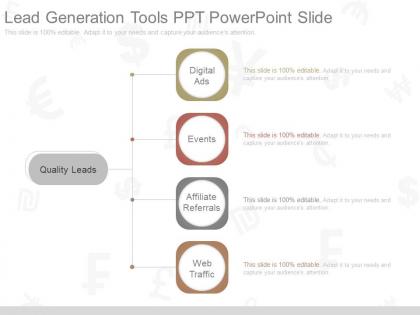
Different lead generation tools ppt powerpoint slide




Try Before you Buy Download Free Sample Product
 Impress Your
 Audience
 100%
100% Editable
 Save Hours
 of Time


Acceptance of your ideas grows with our Different Lead Generation Tools Ppt Powerpoint Slide. Folks will begin to come around.
People who downloaded this PowerPoint presentation also viewed the following :
Different lead generation tools ppt powerpoint slide with all 7 slides:
Our Different Lead Generation Tools Ppt Powerpoint Slide have an affinity for brilliance. You will feel an affiliation with them.
FAQs for Different lead generation tools
Dude, HubSpot's free CRM is honestly where I'd start - their lead tracking doesn't suck. Mailchimp handles email campaigns pretty well too. LinkedIn Sales Navigator if you're going after businesses, though it's pricey. Google and Facebook ads still work, but Facebook's being weird about targeting lately. Oh, and definitely throw up a lead magnet on your site - people love free stuff. Typeform makes it look clean. Start with HubSpot's free version and pick one paid thing where your customers actually are. Don't go crazy right away, just test what works first.
Templates are a game-changer for lead gen, trust me. Your pitch decks and demos look way more professional, which honestly just makes prospects take you seriously. I've seen conversion rates jump when everything looks polished and follows the same structure. The real win though? You're not rebuilding presentations every damn time. Save that energy for personalizing content to each prospect's specific problems. Just make sure your templates look good but aren't too rigid - you'll need to tweak them for different audiences anyway.
Definitely go for something with decent templates first - so many look like they're from 2015 honestly. You'll want interactive stuff like embedded videos or forms, plus analytics to see what people actually click on. CRM integration is clutch for capturing leads automatically. Oh, and real-time viewer data is huge because then you know exactly when to follow up instead of just guessing. I'd honestly test the templates before anything else since bad design kills your credibility instantly. Make sure you can customize slides easily too. The analytics piece really matters - you want to see which sections people spend time on versus where they bail.
Dude, CRM integration can totally make or break your lead gen setup. Without seamless sync, you're basically stuck doing manual imports all day - such a pain. Good tools automatically push qualified leads straight into your pipeline with all the context still there. I've watched teams completely fumble great prospects just because their handoff process sucked. Native integrations are way better than basic CSV exports, trust me on that. Oh and definitely test the sync during your trial period before committing to anything.
Honestly, analytics are your best friend for lead gen because they show you what's actually moving the needle. Track your conversion rates, cost per lead, and lead quality scores - plus figure out which channels bring in the good stuff. I learned this the hard way when I was basically burning money on campaigns that felt right but sucked. Set up tracking from day one so you can see the whole customer journey. Pick your top 3-5 metrics and check them weekly. Trust me, without data you're just guessing and that gets pricey real quick.
Yeah, social media works really well for leads if you're smart about it. Don't just spam people with sales stuff though - that's annoying. Share actually useful content and have real conversations first. LinkedIn's obviously the go-to for B2B, but Facebook groups can be gold mines too. Even TikTok works depending on who you're targeting (though I still don't totally get that app lol). Each platform has cool features like LinkedIn's lead forms or Facebook's lookalike audiences that make capturing leads easier. Figure out where your people actually spend time online, then show up consistently with content that actually helps them.
Focus on conversion rates and cost per lead first - those matter way more than just raw lead volume. Quality scores too, because honestly, 100 garbage leads are worse than 10 good ones. Track your lead-to-customer conversion and how long deals take to close. Source attribution is huge so you actually know what's working (I learned this the hard way). Email opens and form completions give you the engagement picture. Oh, and set up proper tracking from day one or you'll be flying blind when budget decisions roll around.
Honestly, automation is a lifesaver for all that tedious follow-up stuff. Email sequences trigger automatically when prospects take certain actions, leads get scored based on what they do on your site, and follow-ups just... happen. Without you doing anything. It's wild how much time it frees up for actually talking to qualified people instead of chasing dead ends. You can nurture like 10x more leads than doing everything manually – which, let's be real, nobody has time for anymore. I'd probably start with email sequences first since that's where you'll notice the biggest difference right away.
Honestly, it comes down to who you're selling to and how they buy stuff. B2B tools are all about company research - ZoomInfo, LinkedIn Sales Navigator, that kind of thing. You're looking at job titles, company size, industry data. B2C is more personal - demographics, interests, what makes people click "buy now" on Facebook ads. The sales cycles are totally different too. B2B takes forever because you've got like five people who need to approve everything (committee hell, basically). B2C moves way faster since it's usually just one person deciding. Pick whatever matches how your customers actually make decisions.
Dude, presentation templates are seriously worth setting up. You can create different ones for discovery calls, demos, proposals - whatever matches where your leads are in the buying process. Each template tackles the specific pain points people usually bring up at that stage. The best part? You're not rebuilding decks from zero every time. Just swap in their company info and tweak the messaging. Way faster turnaround, plus everything stays consistent (which honestly makes you look more professional). I'd start with maybe 3-4 templates for your most common scenarios and build from there.
Honestly, the worst mistake is chasing unqualified leads - you'll waste so much time on people who aren't buying anything. Most people also go crazy with too many tools and their data becomes a complete mess. Don't automate everything either. Generic outreach is obvious and annoying. Oh, and actually follow up! I see people set up these systems then expect them to run themselves. Start simple - maybe two tools tops. Set up some basic lead scoring so you know who's actually interested. Always personalize your follow-ups, even if it's just changing the subject line or first sentence.
Dude, webinars work so well for lead gen. You collect names and emails when people register, then actually deliver good content - none of that fluff stuff. The people who show up? They're already interested since they carved out time for you. I always mess up the timing on follow-ups, but you should really hit them up within 24 hours while they remember you. You can pitch your services at the end too without sounding like a total salesperson. Oh, and don't forget to offer the recording to no-shows - boom, more leads.
Dude, AI is honestly getting kinda scary good at this stuff. Lead scoring tools can basically predict who's gonna buy before they even know it themselves. Chatbots are handling qualification round the clock now, which is wild. Oh and voice search - totally different game since people talk way more casually than they type. The intent data thing is where it gets really interesting though. These tools can literally tell when someone's poking around your competitor's site or researching your industry. Predictive analytics will even ping you at the perfect moment to reach out. If you're not playing with AI lead scoring yet, honestly just pick one and start messing around with it.
Dude, definitely check reviews before you buy anything. G2 and Capterra are solid, but I actually find Reddit threads way more honest – people really let loose there. You'll catch stuff like hidden fees or integration nightmares that sales demos never show. Pay attention to complaint patterns too. Deliverability rates, how easy the interface actually is, support quality – all that real-world stuff comes out in reviews. Oh, and see how companies handle negative feedback. If they get defensive or ignore complaints, that's your red flag right there.
Honestly, focus on three main things: can it actually target your specific audience, does it play nice with your current tools, and what's your cost per lead looking like? Those big platforms everyone talks about? Half the time they just spray and pray, which gets expensive fast. You want something with solid filtering and industry-specific data that connects to your CRM without being a nightmare to set up. Don't pick anything that'll have your team scratching their heads for weeks trying to figure it out. Oh, and definitely test it in your exact niche first - free trials are your friend here.
-
The Designed Graphic are very professional and classic.
-
Excellent work done on template design and graphics.