


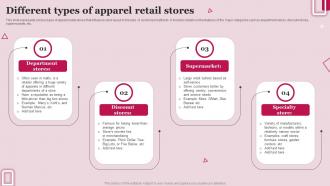
Different Types Of Apparel Retail Stores





Try Before you Buy Download Free Sample Product
 Impress Your
 Audience
 100%
100% Editable
 Save Hours
 of Time


This slide represents various types of apparel retail stores that influence store layout to the type of customers it attracts. It includes details on the features of the major categories such as department stores, discount stores, supermarkets, etc.
People who downloaded this PowerPoint presentation also viewed the following :
Different Types Of Apparel Retail Stores with all 6 slides:
Use our Different Types Of Apparel Retail Stores to effectively help you save your valuable time. They are readymade to fit into any presentation structure.





FAQs for Different Types Of
Current apparel retail trends include sustainable fashion, personalized shopping experiences, social commerce integration, augmented reality try-ons, and subscription-based models. These innovations enhance customer engagement by delivering eco-conscious options, seamless omnichannel experiences, and interactive technologies, with many retailers finding that combining sustainability messaging with AR fitting tools ultimately drives higher conversion rates and customer loyalty.
Small apparel retailers compete by leveraging personalized customer service, curated local selections, and unique in-store experiences that e-commerce giants cannot replicate. Through strategic social media marketing, community engagement, and flexible inventory management, these retailers deliver intimate shopping experiences, faster local fulfillment, and specialized styling services, ultimately building loyal customer relationships while maintaining competitive agility.
Sustainable fashion drives consumer loyalty, brand differentiation, and regulatory compliance through eco-friendly materials, ethical manufacturing, and circular business models like clothing rentals and recycling programs. While implementation requires upfront investment, many apparel retailers find that sustainable practices ultimately deliver cost savings, enhanced brand reputation, and competitive advantage in an increasingly environmentally conscious marketplace.
Technology enhances in-store apparel shopping through smart mirrors, mobile apps with inventory access, virtual fitting rooms, and personalized recommendation systems. These innovations streamline the shopping process by reducing wait times, enabling virtual try-ons, and providing instant product information, ultimately delivering more engaging customer experiences and increased sales conversion rates for retailers.
**INPUT**: What are the most effective strategies for visual merchandising in apparel stores? **OUTPUT**: Effective visual merchandising strategies include strategic color blocking, seasonal window displays, cross-merchandising complementary items, optimized lighting systems, and dynamic mannequin styling. These approaches enhance customer engagement by creating compelling brand narratives, guiding purchase decisions, and maximizing product visibility, with many retailers finding that strategic visual presentation ultimately drives higher conversion rates and increased average transaction values.
Apparel retailers can leverage social media through location-based promotions, influencer partnerships, user-generated content campaigns, exclusive in-store events, and real-time inventory showcases. By combining Instagram Stories with geo-targeting, TikTok challenges featuring store visits, and Facebook events for fashion shows, retailers create compelling reasons for digital followers to visit physical locations, ultimately driving foot traffic while building community engagement and brand loyalty.
Fast fashion significantly impacts traditional apparel retailers by accelerating trend cycles, intensifying price competition, and reshaping consumer expectations for constant newness and affordability. While this presents challenges for established retailers with longer production cycles, it also creates opportunities for differentiation through quality, sustainability, and personalized experiences, with many traditional brands finding success by emphasizing craftsmanship and ethical sourcing.
Apparel retail inventory optimization involves demand forecasting, automated replenishment systems, real-time tracking technology, seasonal planning algorithms, and data-driven analytics. These technologies streamline stock levels by predicting fashion trends, minimizing overstock situations, and ensuring popular sizes remain available, with many fashion retailers finding significantly reduced markdowns and improved cash flow through strategic inventory automation.
Omnichannel retail strategies deliver seamless customer experiences across online, mobile, and physical touchpoints while streamlining inventory management, enhancing personalization, and increasing sales conversions. While implementation requires significant technology investments and staff training, apparel retailers like Nordstrom and Zara find that integrated systems ultimately reduce operational costs, improve customer loyalty, and provide competitive advantage in an increasingly digital marketplace.
Consumer demographic shifts significantly influence apparel design and marketing through changing size requirements, style preferences, cultural considerations, and shopping behaviors across age groups and ethnicities. Retailers like Target and H&M adapt by expanding size ranges, incorporating diverse cultural elements, and shifting marketing channels, with many brands finding that personalized, inclusive approaches ultimately enhance customer loyalty and market reach.
Key performance indicators for apparel retailers include sales per square foot, inventory turnover ratio, average transaction value, conversion rates, and gross margin percentage. These metrics enable retailers to optimize store layouts, streamline inventory management, and enhance customer experiences, with many fashion chains finding that tracking these KPIs simultaneously delivers improved profitability and competitive advantage.
Personalized marketing enhances customer loyalty in apparel retail by delivering targeted product recommendations, customized promotions based on purchase history, and tailored content across digital touchpoints. Through data analytics and AI-driven insights, retailers create individualized shopping experiences that increase engagement, drive repeat purchases, and build emotional connections, with many fashion brands finding that personalized campaigns significantly boost customer lifetime value.
Essential training for apparel retail employees includes product knowledge, visual merchandising, size fitting expertise, trend awareness, and customer communication skills. These competencies enable staff to provide personalized styling advice, handle inventory efficiently, and create engaging shopping experiences, with many retailers finding that well-trained employees significantly boost sales conversion rates and customer loyalty.
Mobile technology revolutionizes apparel retail through mobile payments, virtual try-on apps, inventory management systems, personalized shopping experiences, and omnichannel integration. These technologies streamline operations by enabling seamless checkout processes, reducing fitting room bottlenecks, and delivering real-time inventory updates, with many retailers finding that mobile-first strategies significantly enhance customer engagement and drive competitive advantage.
Data analytics predicts fashion trends through social media sentiment analysis, search pattern monitoring, sales data examination, consumer behavior tracking, and seasonal purchase analysis. Through machine learning algorithms, fashion retailers analyze runway shows, influencer content, and demographic preferences, enabling brands to anticipate demand shifts, optimize inventory planning, and reduce markdowns, ultimately delivering faster trend adoption and competitive market positioning.
-
I was never satisfied with my own presentation design but SlideTeam has solved that problem for me. Thank you SlideTeam!
-
Professionally designed slides with color coordinated themes and icons. Perfect for enhancing the style of the presentations.