


Digital customer engagement powerpoint presentation slides




Try Before you Buy Download Free Sample Product
 Impress Your
 Audience
 100%
100% Editable
 Save Hours
 of Time


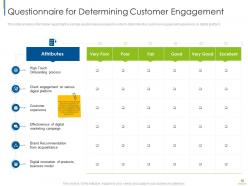
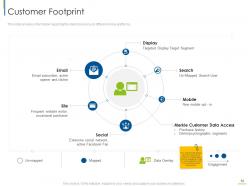
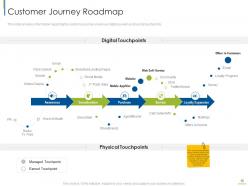
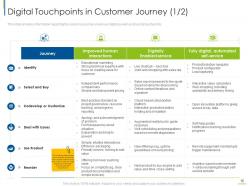
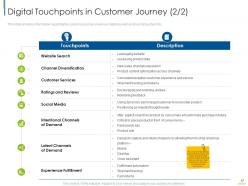
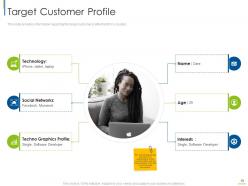
Engaging customers with the brand is necessary for every company as it shows them that you are loyal to them and respect their choices. Digital engagement allows customers to communicate with your brand that helps in filling gaps in their journey and navigating to a better experience. Check out our professionally designed Digital Customer Engagement template that will drive your revenue, customers loyalty towards you, their knowledge, and more. With our proposals usage, one can present the recommendation and requirement of digital engagement in businesses, also the characteristics of its success. There is a massive impact of engaged customers on the companys goodwill and position in the market, which are reflected in the future trends of digital action. Our template offers a questionnaire for determining customer feedback and its graphical presentation on the analysis for better understanding. You can exhibit client presence on different online platforms and a roadmap for their journey on several digital touchpoints. Companies can display data regarding target customers based on technology used, social networks, interests, age, name, etc. Mention each element of customer engagement to upsurge digitalization in the organization and enhance the experience of customers after the change. Customize this 100 percent editable template based on your needs and talk to our expert team for all your queries. Download the template now.
People who downloaded this PowerPoint presentation also viewed the following :
Digital customer engagement powerpoint presentation slides with all 66 slides:
Use our Digital Customer Engagement Powerpoint Presentation Slides to effectively help you save your valuable time. They are readymade to fit into any presentation structure.

























FAQs for Digital customer engagement
Key components include omnichannel communication platforms, personalized content delivery, real-time analytics, automated customer journey mapping, and integrated CRM systems. These technologies streamline customer interactions by providing consistent experiences across touchpoints, enabling predictive personalization, and delivering actionable insights, with many organizations finding that strategic integration ultimately enhances customer satisfaction while reducing operational costs.
Businesses leverage data analytics to enhance digital customer interactions by analyzing behavioral patterns, personalizing content delivery, predicting customer needs, and optimizing touchpoint experiences across channels. Through predictive modeling and real-time insights, companies in retail, banking, and healthcare streamline customer journeys, reduce response times, and deliver targeted solutions, ultimately increasing satisfaction while gaining competitive advantage in increasingly digital marketplaces.
Social media enables brands to build authentic relationships through real-time interactions, personalized content, community building, and responsive customer service. These platforms allow companies to showcase brand personality, gather customer feedback, and create viral marketing opportunities, with retail giants like Nike and Starbucks finding that consistent social engagement significantly enhances customer loyalty and drives purchase decisions.
Personalized content significantly enhances digital customer engagement by delivering relevant messaging, tailored product recommendations, customized experiences, and targeted communications based on individual preferences and behaviors. Through advanced analytics and AI-driven personalization, businesses across retail, financial services, and healthcare achieve higher click-through rates, increased dwell time, and improved conversion rates, ultimately delivering stronger customer loyalty and revenue growth.
Best practices for creating engaging multimedia content include interactive storytelling, personalized video experiences, multi-format content distribution, audience-driven narratives, and seamless cross-platform integration. These approaches streamline customer journeys by delivering targeted messaging, enhancing brand recall, and fostering deeper emotional connections, with many organizations finding that strategic multimedia campaigns ultimately drive higher conversion rates and sustained audience loyalty.
Businesses can utilize chatbots and AI to enhance customer support through 24/7 availability, instant response times, personalized recommendations, automated ticket routing, and multilingual support capabilities. These technologies streamline operations by handling routine inquiries, reducing wait times, and enabling human agents to focus on complex issues, with many retail and financial services companies finding significantly improved customer satisfaction and reduced operational costs.
Mobile optimization significantly enhances digital customer engagement by improving site speed, ensuring responsive design, and streamlining user experiences across devices. With mobile traffic accounting for over 50% of web usage, businesses with optimized platforms see higher conversion rates, increased session durations, and better customer satisfaction, ultimately delivering competitive advantage in increasingly mobile-first markets.
Companies measure digital customer engagement success through customer satisfaction scores, net promoter scores, engagement rates, conversion metrics, and customer lifetime value analytics. These measurements enable organizations to optimize their digital strategies by identifying high-performing channels, understanding customer preferences, and enhancing touchpoint effectiveness, ultimately delivering improved customer experiences and competitive advantage in an increasingly digital marketplace.
Digital community building strategies include creating interactive forums, hosting virtual events, implementing user-generated content campaigns, establishing loyalty programs, and facilitating peer-to-peer connections through social platforms. These approaches enhance customer retention by encouraging meaningful interactions, building brand advocacy, and creating shared experiences, with many organizations finding that active communities significantly increase customer lifetime value and reduce acquisition costs.
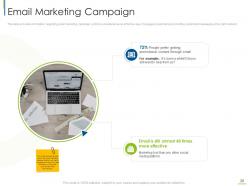
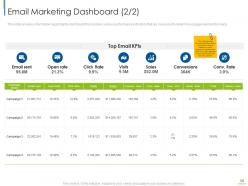
Email marketing can be optimized through personalized subject lines, segmented audience targeting, mobile-responsive designs, A/B testing of content variations, and strategic timing based on customer behavior analytics. These approaches streamline communication by delivering relevant content, increasing open rates, and driving higher conversion rates, with many retail and financial services organizations finding that personalized campaigns generate significantly better customer responses and engagement.
Emerging trends in digital customer engagement include AI-powered personalization, omnichannel integration, conversational commerce, predictive analytics, and voice-activated interfaces. These technologies streamline customer interactions by delivering tailored experiences, enabling seamless cross-platform communication, and automating responses, with many retail and financial services organizations finding that strategic implementation ultimately enhances customer satisfaction while reducing operational costs.
Businesses align digital engagement strategies with customer journey mapping by identifying touchpoints, analyzing customer behaviors at each stage, personalizing content delivery, and optimizing channel integration across awareness, consideration, and purchase phases. This strategic combination enables companies to deliver targeted experiences, reduce friction points, and increase conversion rates, with many retail and financial services organizations finding that synchronized approaches significantly enhance customer satisfaction and loyalty.
Companies should prioritize data privacy, transparent consent practices, algorithmic fairness, and responsible personalization while avoiding manipulative design patterns. These ethical frameworks help organizations build sustainable customer relationships by ensuring secure data handling, clear communication about data usage, and respectful engagement practices, ultimately delivering competitive advantage through enhanced trust and long-term customer loyalty.
Omnichannel integration is crucial for digital customer engagement because it ensures consistent, seamless experiences across all touchpoints while enabling comprehensive customer journey tracking and personalized interactions. This strategic approach allows businesses to reduce customer friction, increase conversion rates, and build stronger brand loyalty, with many retailers and financial services finding that unified channels significantly boost customer lifetime value and competitive advantage.
Common pitfalls include over-automation reducing personal touch, data privacy violations, inconsistent messaging across channels, neglecting customer feedback, and focusing on quantity over quality interactions. While digital tools enhance efficiency, businesses often struggle with integration complexity and staff training requirements, with many organizations finding that rushed implementations without proper strategy ultimately damage customer relationships and brand trust.
-
The content is very helpful from business point of view.
-
Excellent Designs.
-
Use of icon with content is very relateable, informative and appealing.