


Digital innovation in business powerpoint presentation slides




Try Before you Buy Download Free Sample Product
 Impress Your
 Audience
 100%
100% Editable
 Save Hours
 of Time


Utilize this Digital Innovation in Business PowerPoint Presentation Slides to showcase the role of technology in business. Take advantage of this disruption PPT template to show the transformation roadmap that includes assessment, opportunity scan, re-vision, business cases. This digital trend PPT deck comprises slides containing information about core elements, technological transformation, etc. Take the assistance of this digital trend PowerPoint slide to encompass various means of achieving digital change including gaining new experience, developing digital DNA, etc. Illustrate your digital budget and allocate appropriate funds to various channels such as email database, CRM, email marketing amongst others. Depict the value-added to your business through sales, higher website traffic, customer satisfaction, customer engagement, etc. using this digital business PowerPoint infographic. Ensure that a proper strategy for achieving technological goals is formulated by your organization. Download this digital transformation PPT visual to get exponential growth in your business. Elaborate on your assessment of the competition with our Digital Innovation In Business Powerpoint Presentation Slides. Be able to dish out intelligence.
People who downloaded this PowerPoint presentation also viewed the following :
Content of this Powerpoint Presentation
Slide 1: This slide introduces Digital Innovation in Business. State Your Company Name and begin.
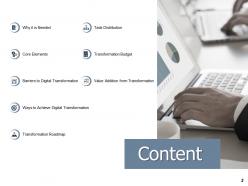
Slide 2: This slide shows Content of the presentation.
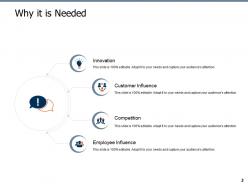
Slide 3: This slide shows Why it is Needed describing- Innovation, Customer Influence, Competition, Employee Influence.
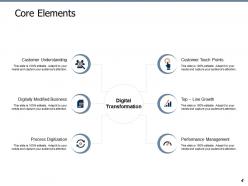
Slide 4: This slide presents Core Elements describing- Customer Understanding, Customer Touch Points, Digitally Modified Business, Performance Management, Process Digitization, Top – Line Growth.
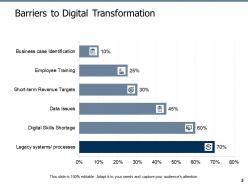
Slide 5: This slide displays Barriers to Digital Transformation in a graphical form.
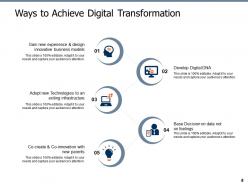
Slide 6: This slide represents Ways To Achieve Digital Transformation.
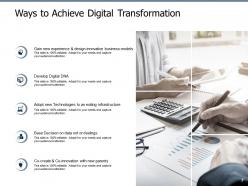
Slide 7: This is an optional slide for Ways to Achieve Digital Transformation.
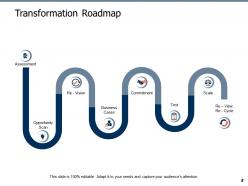
Slide 8: This slide showcases Transformation Roadmap describing- Opportunity Scan, Re - Vision, Business Cases, Commitment, Test, Scale, Re - View, Re - Cycle, Assessment.
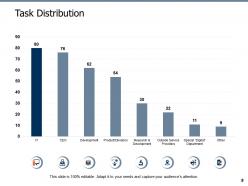
Slide 9: This slide shows Task Distribution in graphical form.
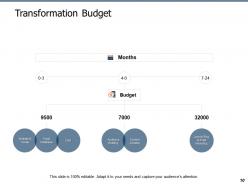
Slide 10: This slide presents Transformation Budget. You can add or edit data as per requirement.
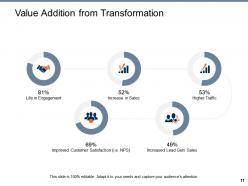
Slide 11: This slide represents Value Addition from Transformation.
Slide 12: This slide displays Digital Innovation in Business Icons.
Slide 13: This slide is titled as Additional Slides for moving forward.
Slide 14: This is Our Team slide with names and designation.
Slide 15: This is About Us slide to show company specifications etc.
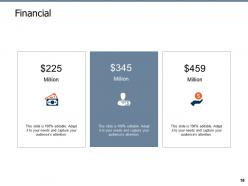
Slide 16: This is a Financial slide. Show your finance related stuff here.
Slide 17: This is a Quotes slide to convey message, beliefs etc.
Slide 18: This is a Puzzle slide with text boxes to show information.
Slide 19: This is Our Target slide. State your targets here.
Slide 20: This slide shows Mind Map for representing entities.
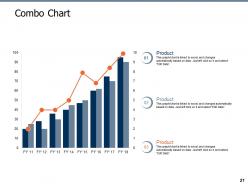
Slide 21: This slide presents Combo Chart with three products comparison.
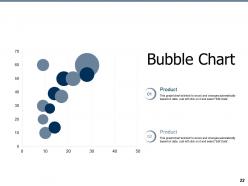
Slide 22: This slide displays Bubble Chart with two products comparison.
Slide 23: This is a Thank You slide with address, contact numbers and email address.
Digital innovation in business powerpoint presentation slides with all 23 slides:
Use our Digital Innovation In Business Powerpoint Presentation Slides to effectively help you save your valuable time. They are readymade to fit into any presentation structure.






FAQs for Digital innovation in business
Key drivers of digital innovation in modern businesses include customer demand for seamless experiences, competitive pressure, operational efficiency needs, data-driven decision making, and emerging technologies like AI and cloud computing. These drivers work together by enabling organizations to streamline processes, reduce costs, and deliver faster services, with many companies finding that strategic digital transformation ultimately delivers sustainable competitive advantage.
Companies can effectively integrate digital tools by conducting thorough needs assessments, selecting scalable solutions that align with existing workflows, and implementing phased rollouts with comprehensive employee training. This strategic approach enables organizations across manufacturing, retail, and financial services to streamline operations, enhance customer experiences, and minimize disruption, ultimately delivering improved efficiency and competitive advantage.
Data analytics serves as the foundation for digital innovation by identifying market opportunities, predicting consumer behavior, optimizing operational processes, and enabling evidence-based decision making. Through advanced analytics platforms, organizations streamline product development, enhance customer experiences, and accelerate time-to-market, with many companies finding that data-driven insights ultimately deliver competitive advantages and sustainable growth.
Organizations can measure digital innovation success through key performance indicators like revenue growth from new digital products, customer acquisition rates, operational efficiency gains, and time-to-market improvements. These metrics enable companies to track tangible outcomes such as reduced costs, enhanced customer experiences, and competitive positioning, with many enterprises finding that combining financial and operational measurements delivers comprehensive insights into innovation ROI.
Common challenges include legacy system integration, employee resistance to change, cybersecurity vulnerabilities, high implementation costs, and skills gaps in digital literacy. While these obstacles present initial hurdles, many organizations find that strategic phased approaches, comprehensive training programs, and robust security frameworks ultimately deliver enhanced operational efficiency, improved customer experiences, and sustainable competitive advantage in increasingly digital markets.
Customer expectations significantly influence digital innovation strategies by driving demand for faster services, personalized experiences, seamless omnichannel interactions, and real-time responsiveness across all touchpoints. Companies in retail, banking, and healthcare increasingly prioritize mobile-first solutions, AI-powered personalization, and automated customer service to meet these evolving demands, ultimately delivering competitive advantage through enhanced satisfaction and loyalty.
Digital innovation fundamentally transforms traditional business models by enabling new revenue streams, automating processes, and creating direct customer relationships that bypass intermediaries. Industries like retail, banking, and manufacturing increasingly leverage digital platforms, data analytics, and cloud technologies to streamline operations, reduce costs, and deliver personalized experiences, ultimately gaining competitive advantage in evolving markets.
Digital innovation enhances customer engagement through personalized recommendations, real-time chat support, mobile applications, predictive analytics, and omnichannel experiences. These technologies streamline interactions by anticipating customer needs, delivering seamless service across touchpoints, and enabling instant problem resolution, with many retail and financial services organizations finding that personalized digital experiences significantly increase customer loyalty and satisfaction.
Small businesses can leverage digital innovation by adopting cloud-based solutions, implementing automation tools, utilizing social media marketing, embracing e-commerce platforms, and deploying data analytics for customer insights. These technologies enable smaller enterprises to streamline operations, reduce overhead costs, and deliver personalized customer experiences, with many finding that strategic digital adoption levels the competitive playing field significantly.
Emerging technologies driving future digital innovations include artificial intelligence, quantum computing, edge computing, extended reality (XR), and blockchain solutions. These technologies revolutionize business operations by enhancing decision-making capabilities, accelerating processing speeds, and enabling immersive customer experiences, with many organizations finding that strategic combinations deliver unprecedented competitive advantages and operational efficiency.
Businesses can ensure workforce readiness through comprehensive training programs, leadership commitment, change management strategies, and fostering a culture of continuous learning and adaptability. By investing in upskilling initiatives, providing hands-on technology exposure, and creating support systems, organizations ultimately deliver enhanced productivity and competitive advantage, with many finding that employee engagement significantly improves.
Collaboration accelerates digital innovation by breaking down silos, pooling diverse expertise, and enabling cross-functional problem-solving that drives breakthrough solutions. Through strategic partnerships and interdisciplinary teams, organizations streamline development cycles, reduce time-to-market, and enhance innovation quality, with many companies finding that collaborative approaches ultimately deliver competitive advantages and faster digital transformation outcomes.
Companies maintain innovation-security balance by implementing security-by-design frameworks, conducting regular risk assessments, establishing cross-functional governance teams, and adopting zero-trust architectures. Through strategic partnerships with cybersecurity firms, organizations in banking, healthcare, and retail streamline secure innovation processes, ultimately delivering competitive digital solutions while protecting sensitive data and maintaining customer trust.
**INPUT**: What are the ethnic considerations surrounding digital innovation in business? **OUTPUT**: Ethical considerations surrounding digital innovation include data privacy protection, algorithmic bias prevention, job displacement management, cybersecurity responsibilities, and transparent decision-making processes. These challenges present opportunities for businesses to build trust through responsible implementation, with many organizations finding that ethical digital practices enhance customer loyalty, reduce regulatory risks, and deliver sustainable competitive advantages. **Word count: 56 words**
Businesses can harness digital innovation for sustainable practices through IoT sensors for energy optimization, AI-powered supply chain management, cloud computing for reduced infrastructure, and automated waste reduction systems. These technologies enable manufacturers to minimize resource consumption, retailers to streamline logistics, and financial institutions to digitize operations, ultimately delivering cost savings while achieving environmental goals.
-
Great quality slides in rapid time.
-
Amazing product with appealing content and design.
-
Illustrative design with editable content. Exceptional value for money. Highly pleased with the product.