Digital Marketing Strategy Proposal Powerpoint Presentation Slides
Try Before you Buy Download Free Sample Product
Audience
Editable
of Time
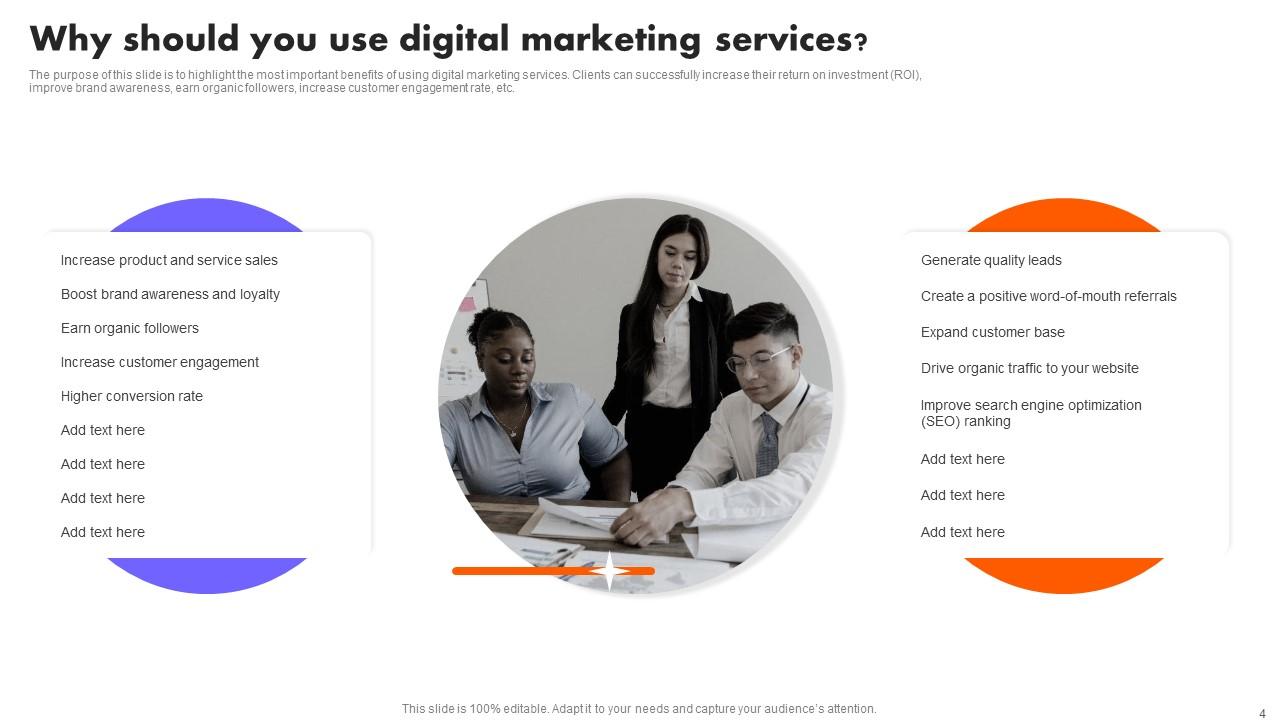
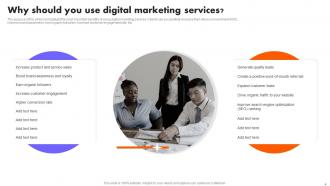
Check out our Digital Marketing Strategy Proposal, a document outlining the plan through which organizations will use the social media platform to achieve their marketing objectives. With our professionally designed proposal, businesses can reach and engage their target audience and drive sales growth. It begins with the need to use Instagram marketing services for businesses, such as increasing brand awareness, earning organic followers, higher customer engagement, better conversion rate, etc. Our Social Media Marketing deck contains some significant services businesses offer to other brands, like Instagram marketing specialists, monthly consultations, audits, and daily monitoring. It further covers the primary reasons for working with companies, such as quality, professional experience, affordable solutions, 360 degree coverage, and innovative ideas. Moreover, our Brand Promotion module includes an overview of an Instagram marketing agencys mission and vision statement. Lastly, it covers slides on marketing team members, customer testimonials, terms and conditions, and how to contact us. Download our 100 percentage editable and customizable template, compatible with Google Slides.
People who downloaded this PowerPoint presentation also viewed the following :
Content of this Powerpoint Presentation
Slide 1: This slide introduces Digital Marketing Strategy Proposal.
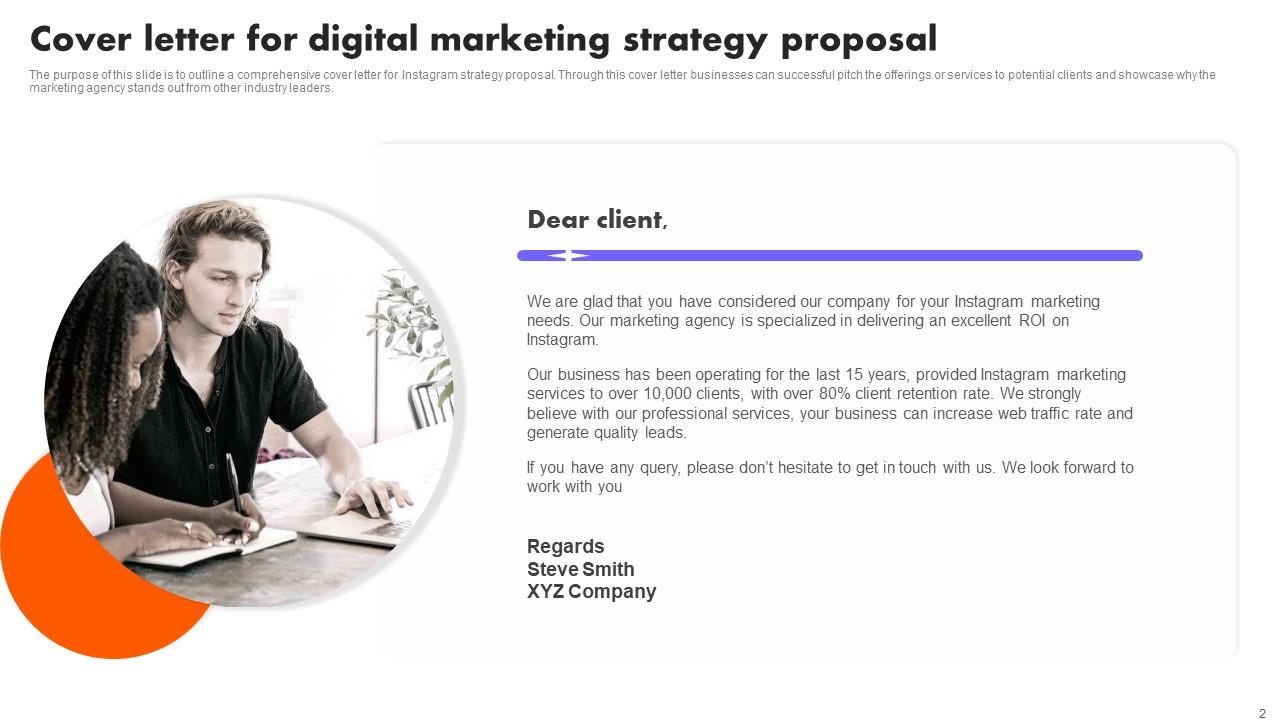
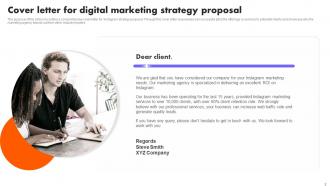
Slide 2: This slide showcases the Cover Letter for Instagram marketing strategy proposal.
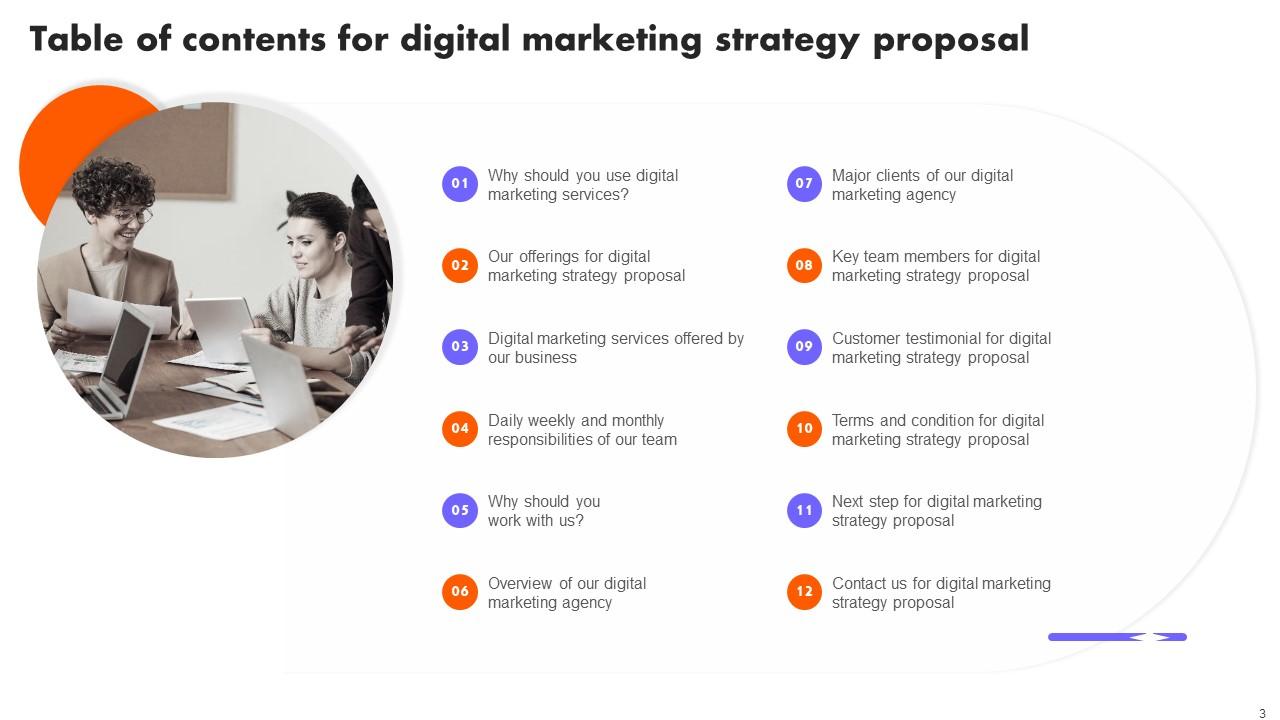
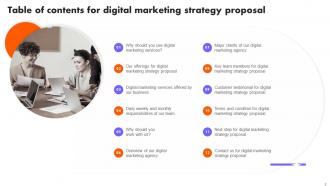
Slide 3: This slide incorporates the Table of contents.
Slide 4: This slide highlights the Title for the Topics to be covered further.
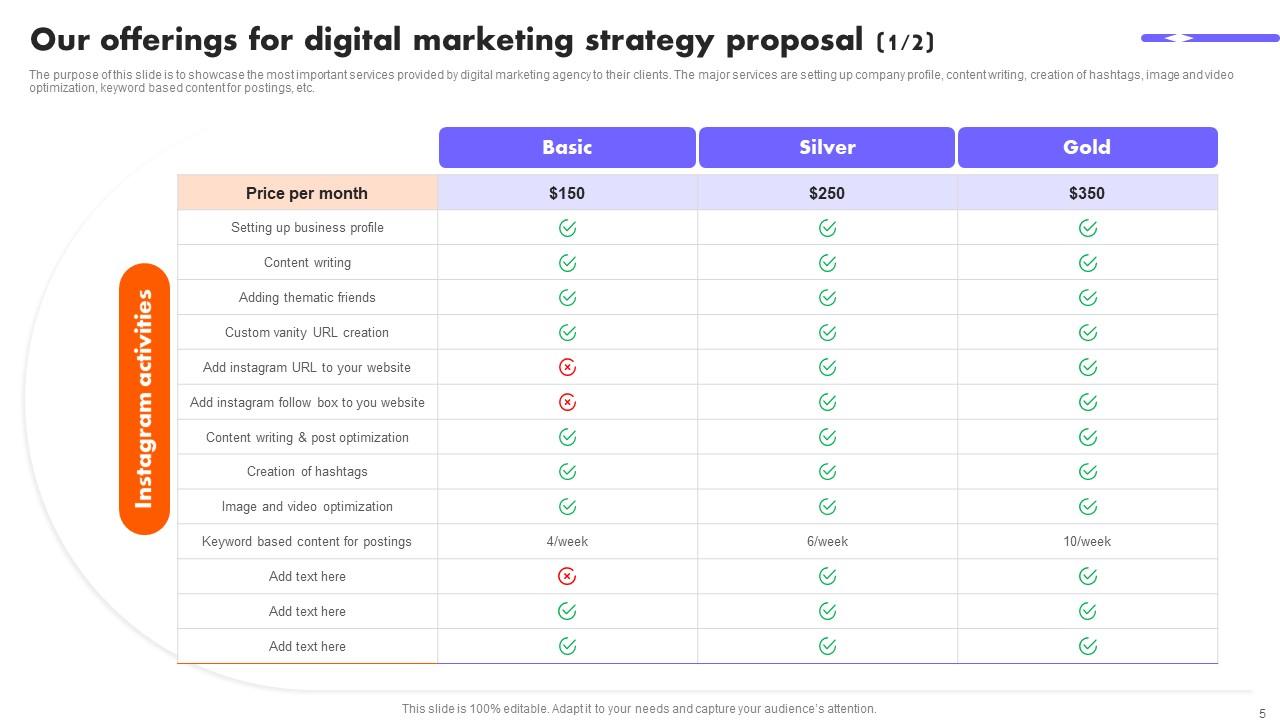
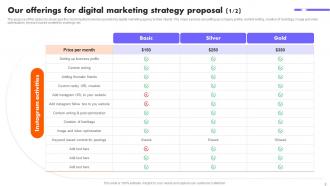
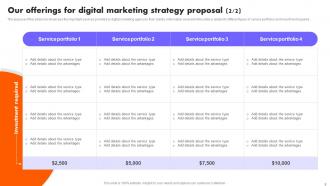
Slide 5: This slide exhibits the company's offerings for Instagram marketing strategy proposal.
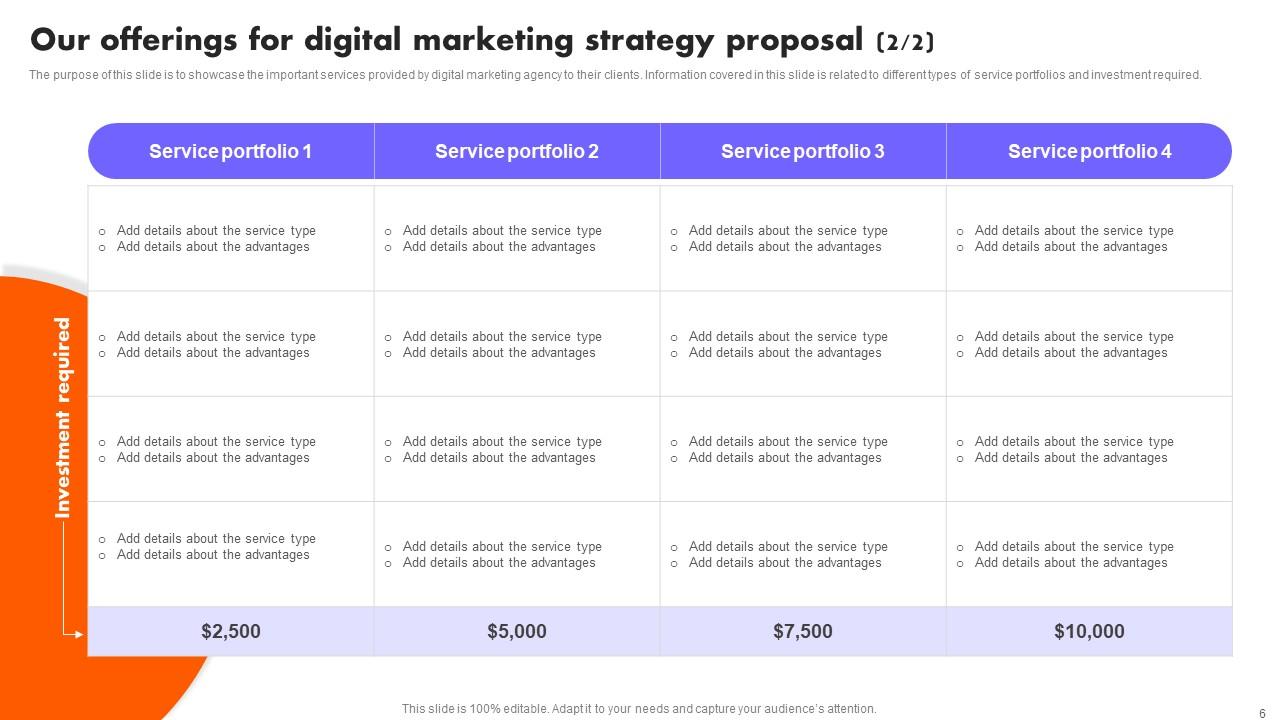
Slide 6: This slide continues the company's offerings for Instagram marketing strategy proposal.
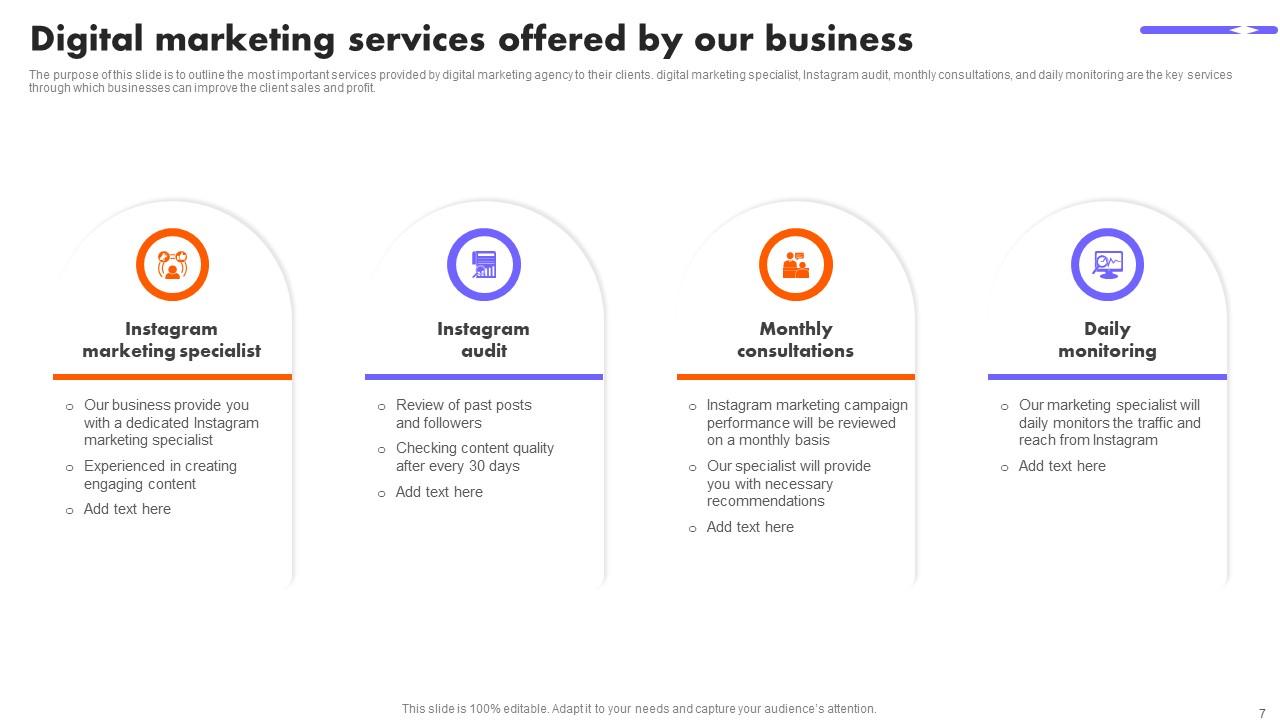
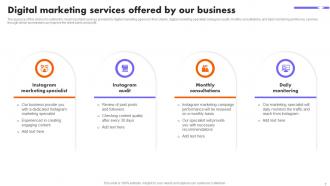
Slide 7: This slide outlines the Instagram marketing services offered by our business.
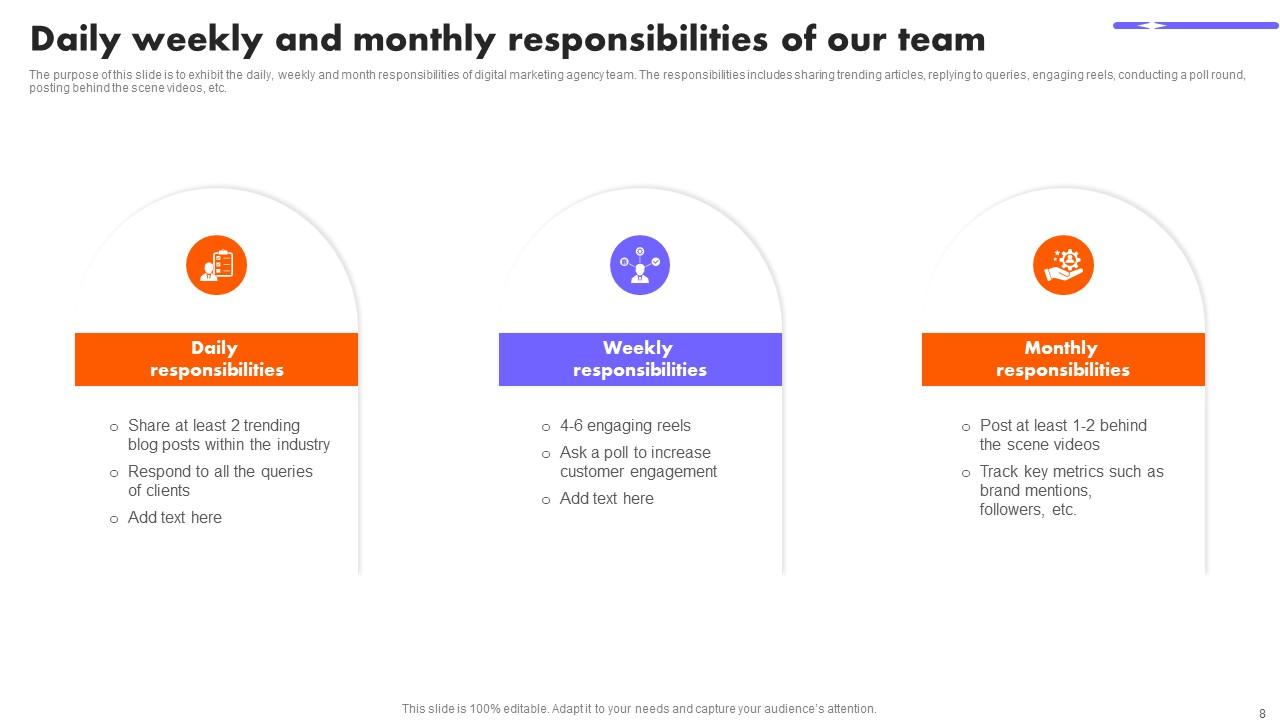
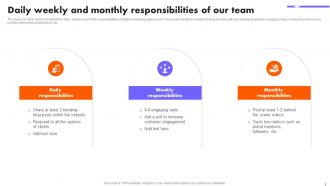
Slide 8: This slide exhibits the Daily weekly and monthly responsibilities of the team.
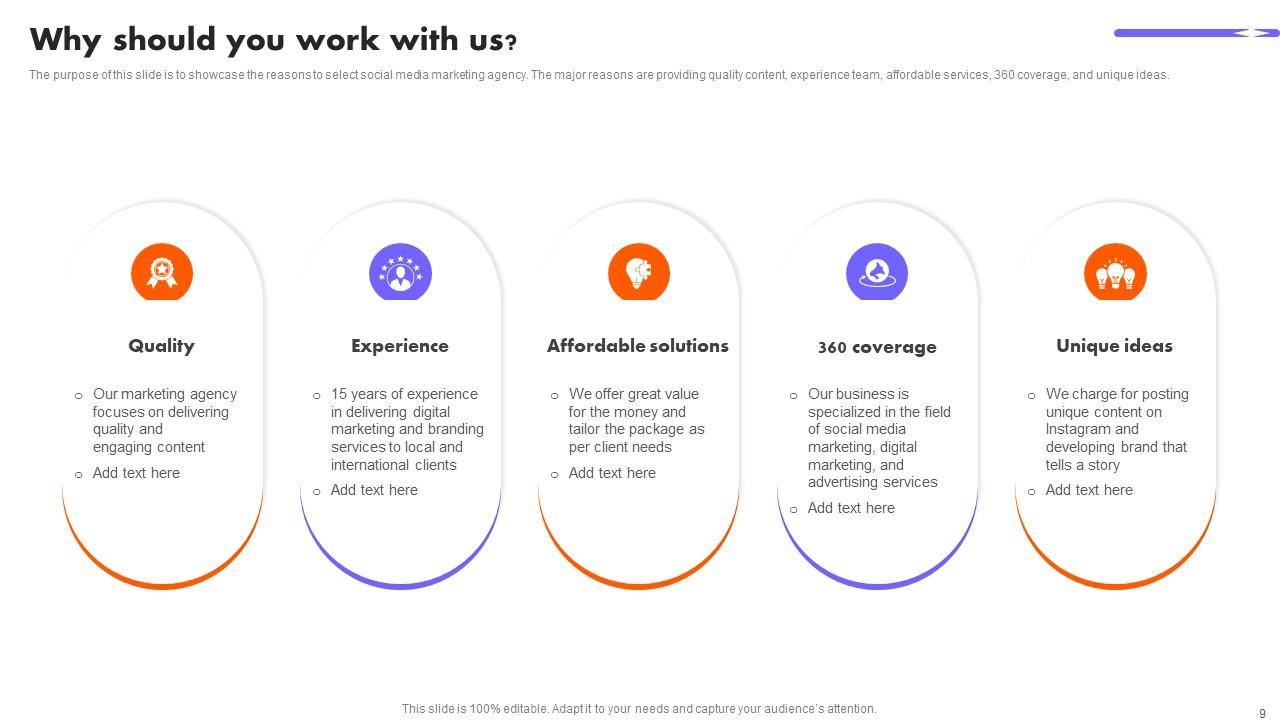
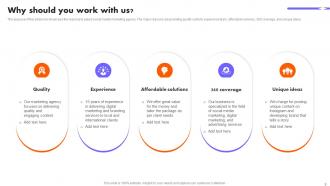
Slide 9: The purpose of this slide is to showcase the reasons to select social media marketing agency.
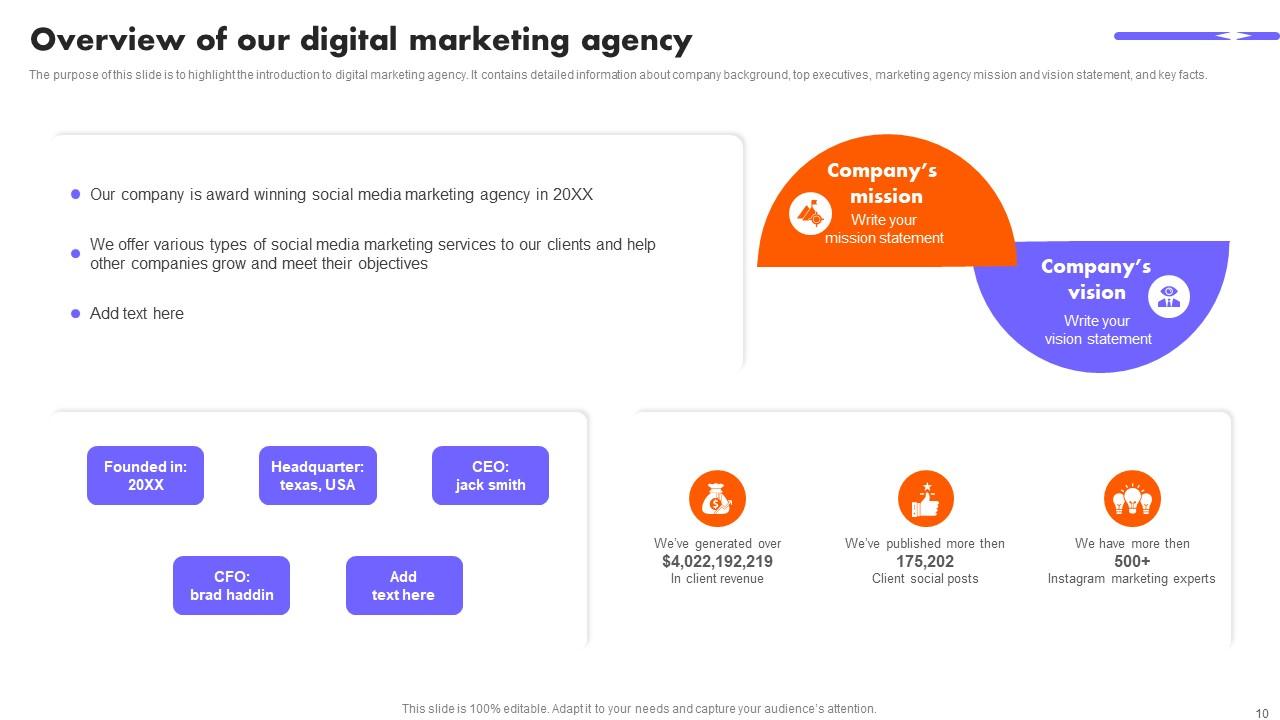
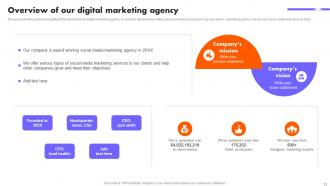
Slide 10: This slide portrays the Overview of the Instagram marketing agency.
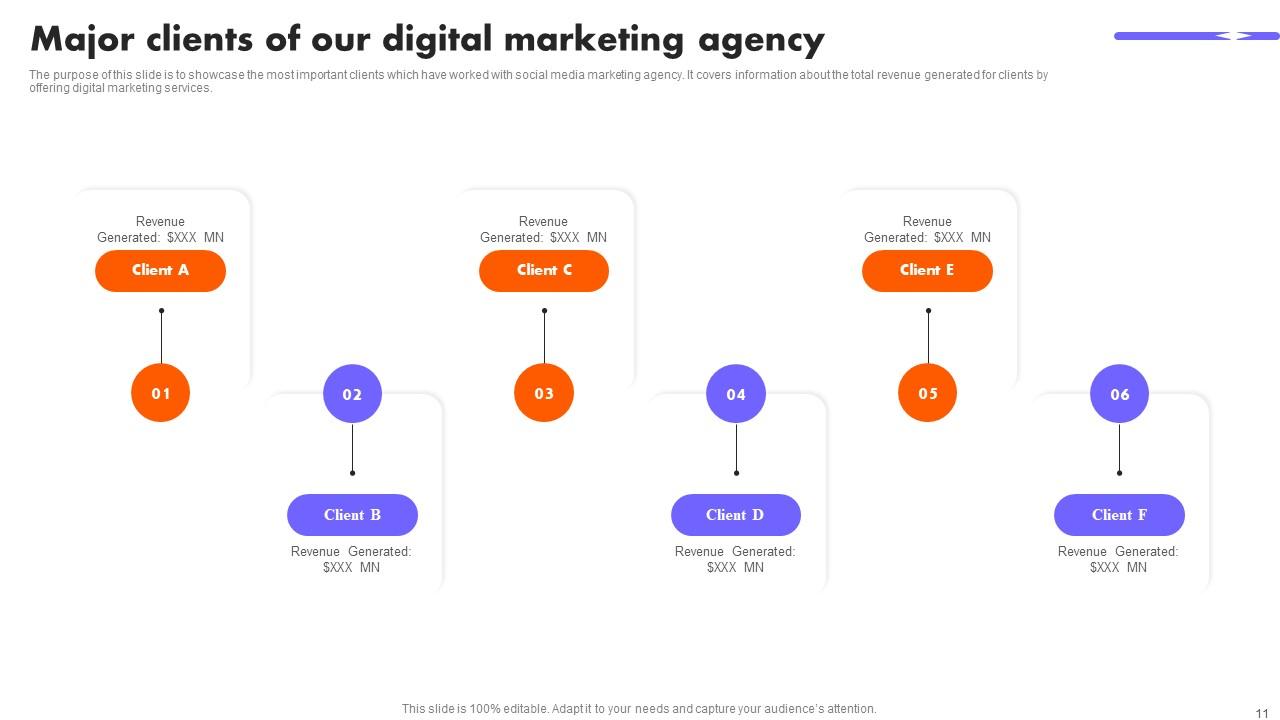
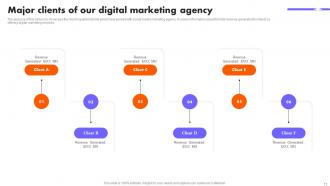
Slide 11: This slide states the Major clients of the organization.
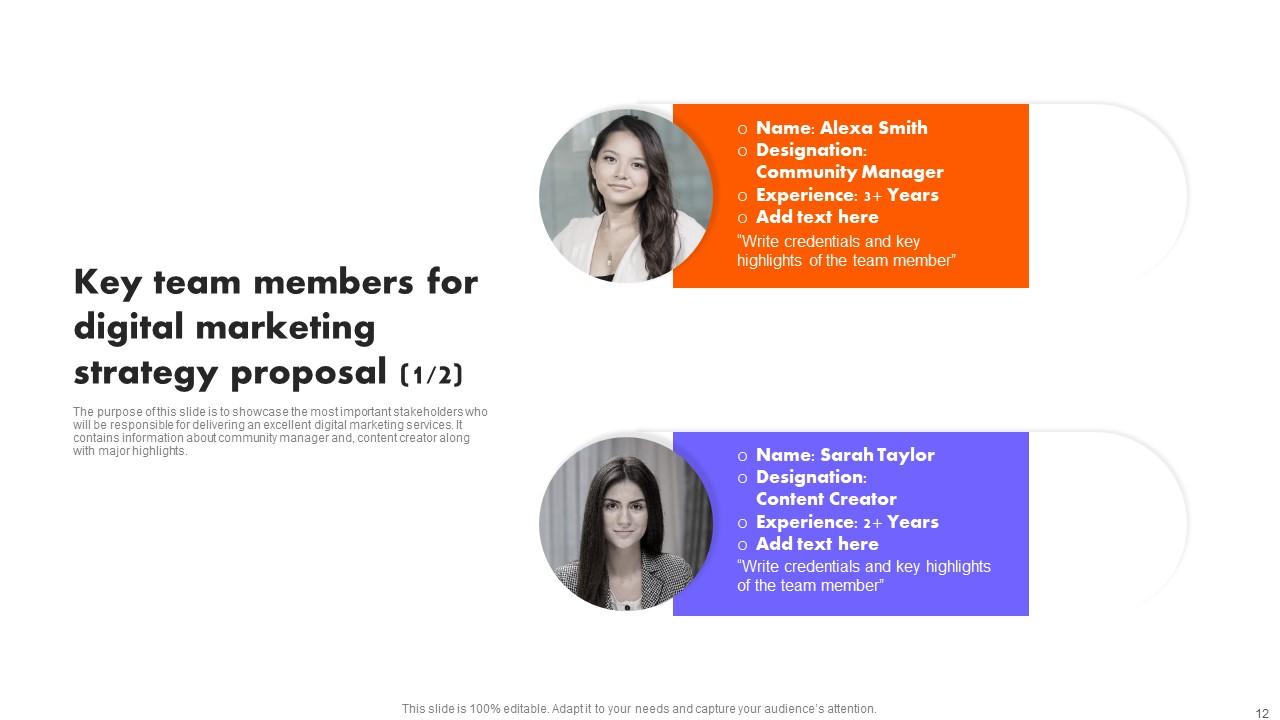
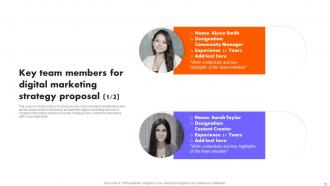
Slide 12: This slide represents the Key team members for Instagram marketing strategy proposal.
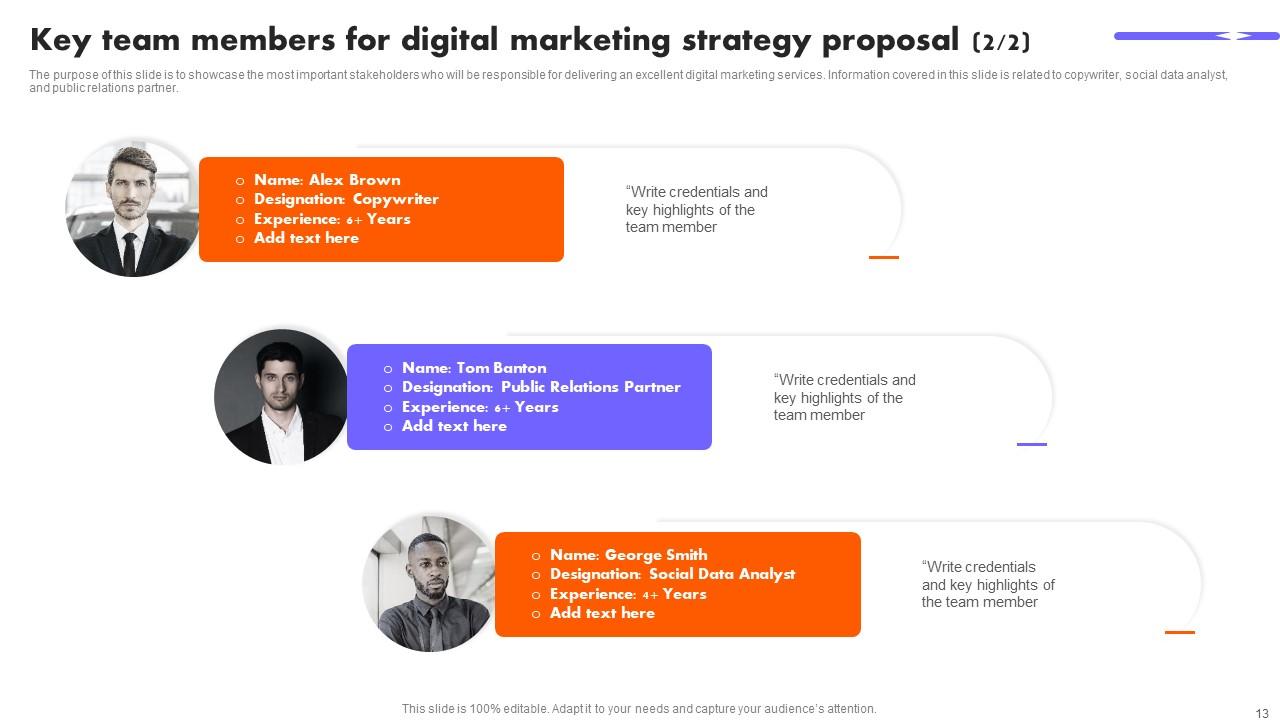
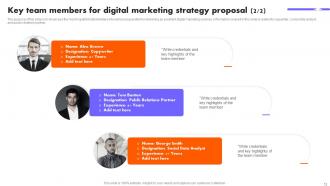
Slide 13: This slide continues the information on Key team members.
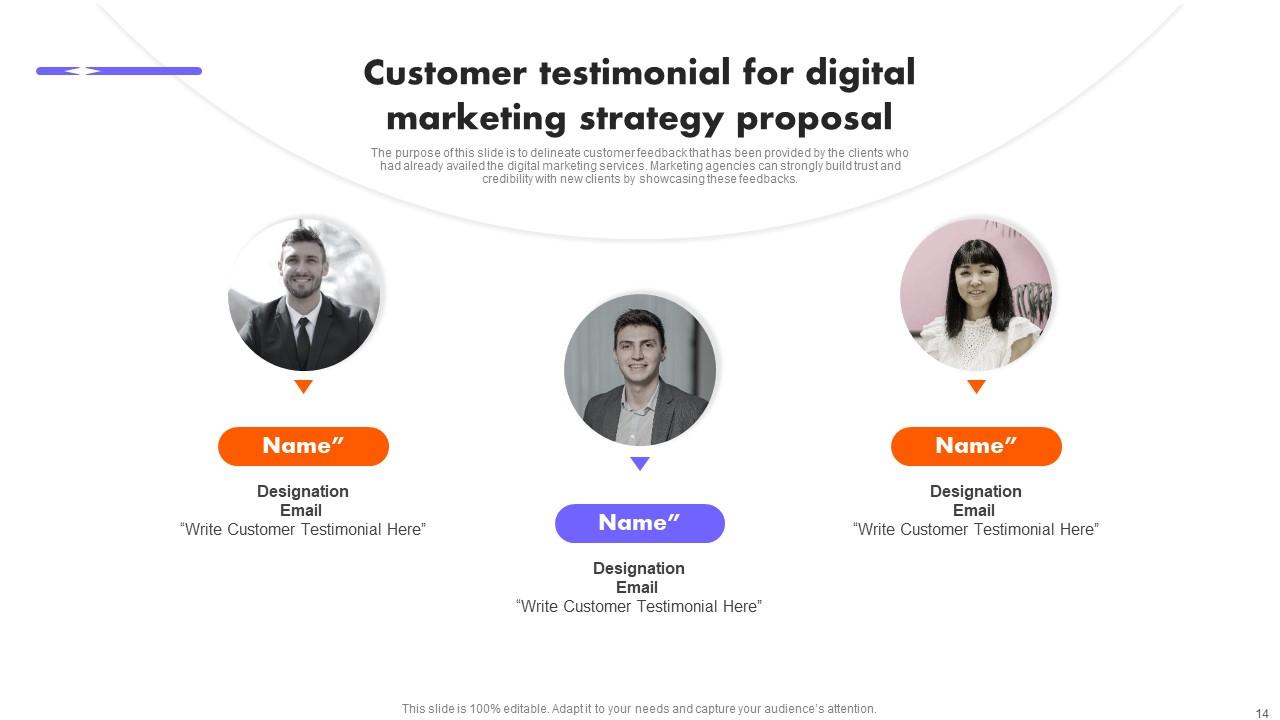
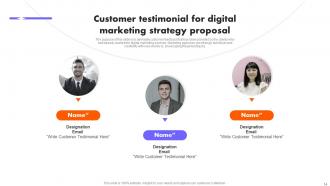
Slide 14: This slide reveals the Customer testimonial for Instagram marketing strategy proposal.
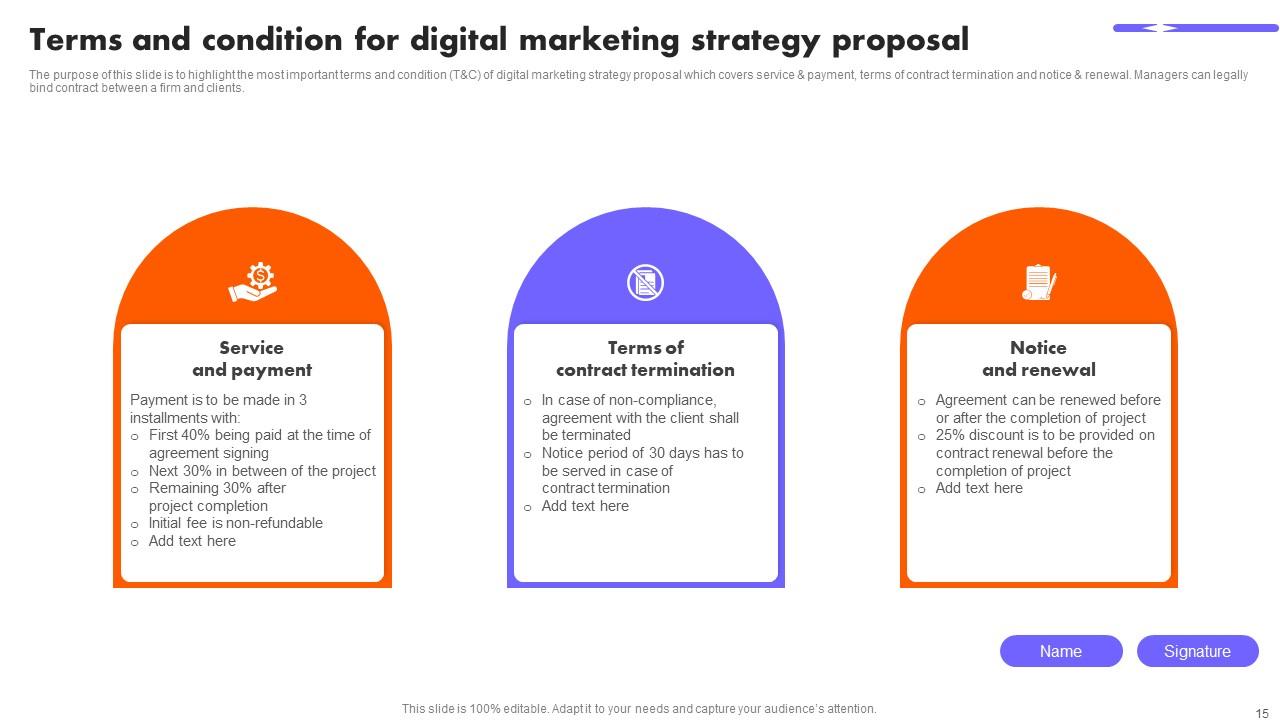
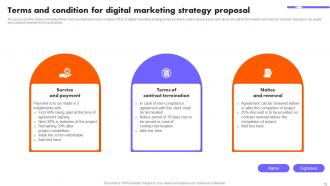
Slide 15: This slide highlights the Terms of Contract Termination.
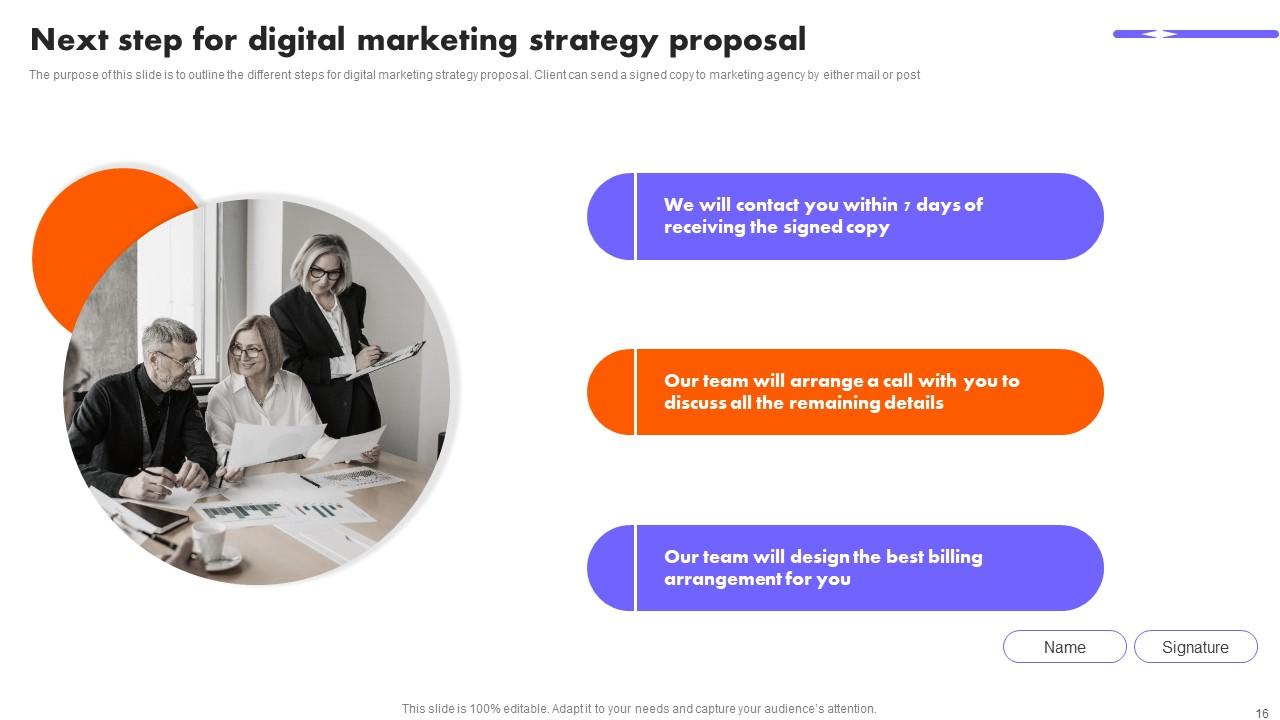
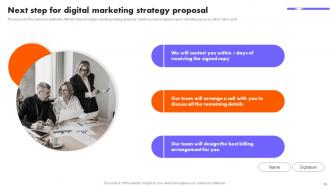
Slide 16: This slide depicts the Next step for Instagram marketing strategy proposal.
Slide 17: This slide showcases the firm-related information.
Slide 18: This is the Icons slide containing all the Icons used in the plan.
Slide 19: This slide is used for displaying some Additional information.
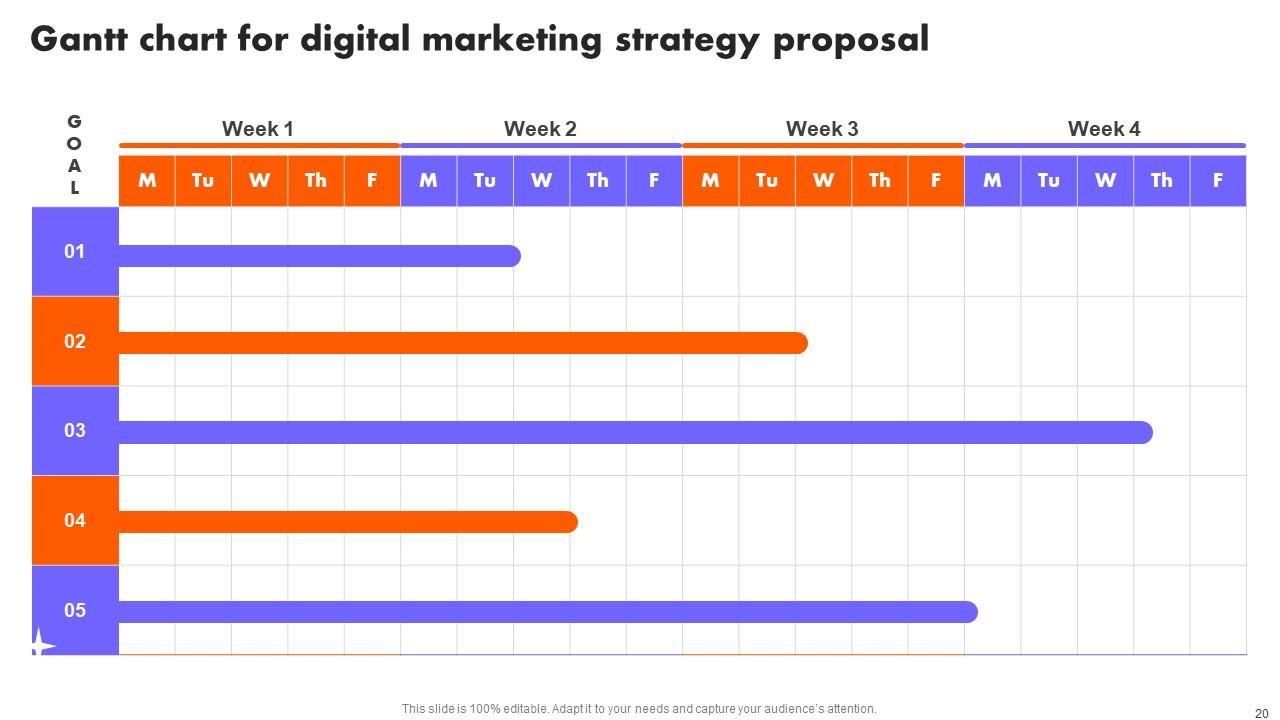
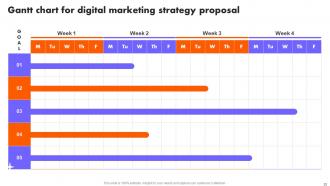
Slide 20: This slide displays the Gantt chart to boost online presence.
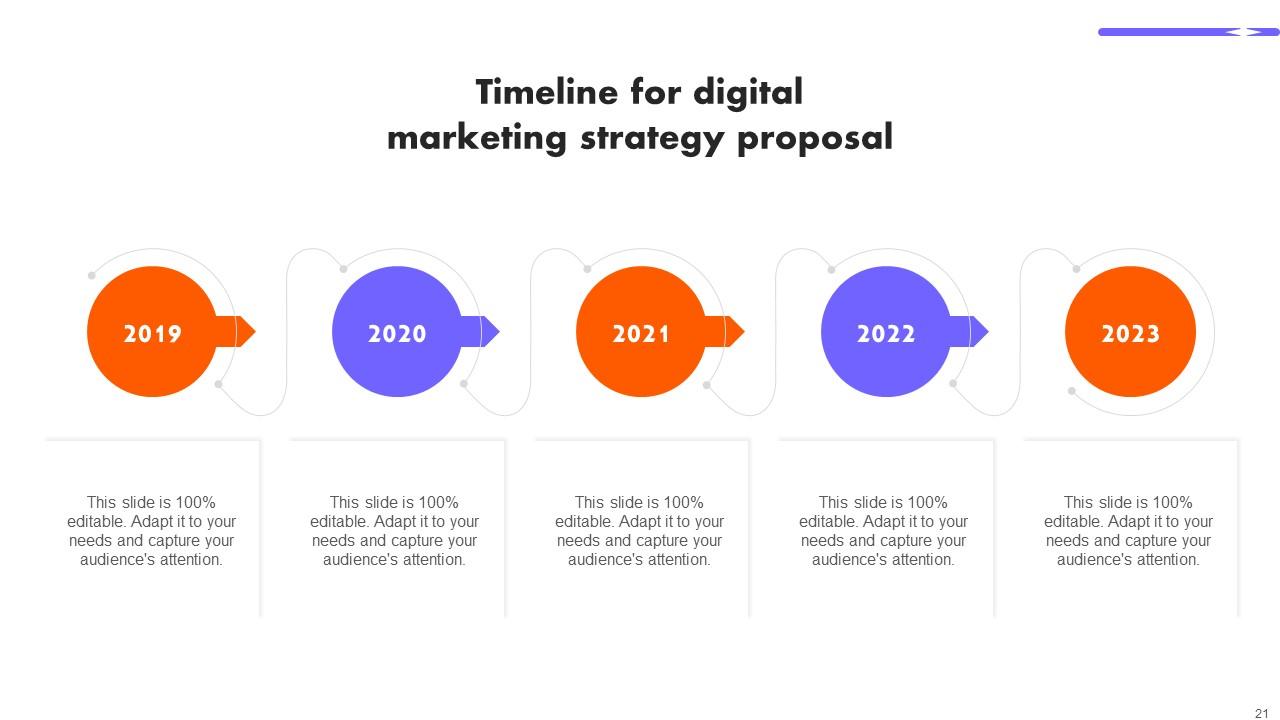
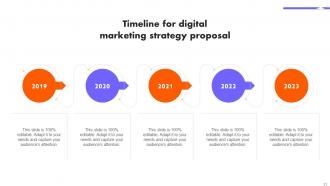
Slide 21: This slide illustrates the company Timeline.
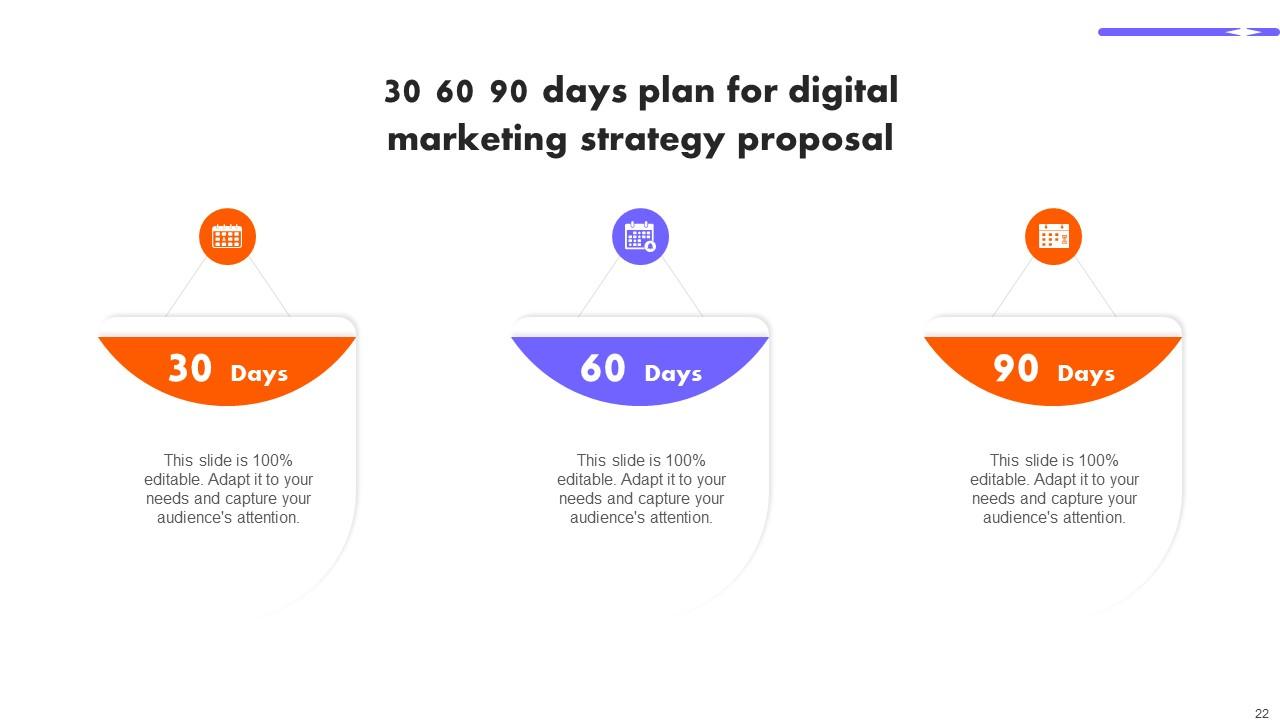
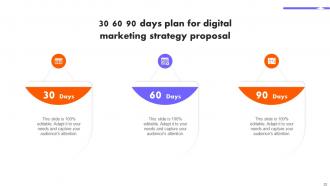
Slide 22: This is the 30 60 90 days plan slide for effective planning.
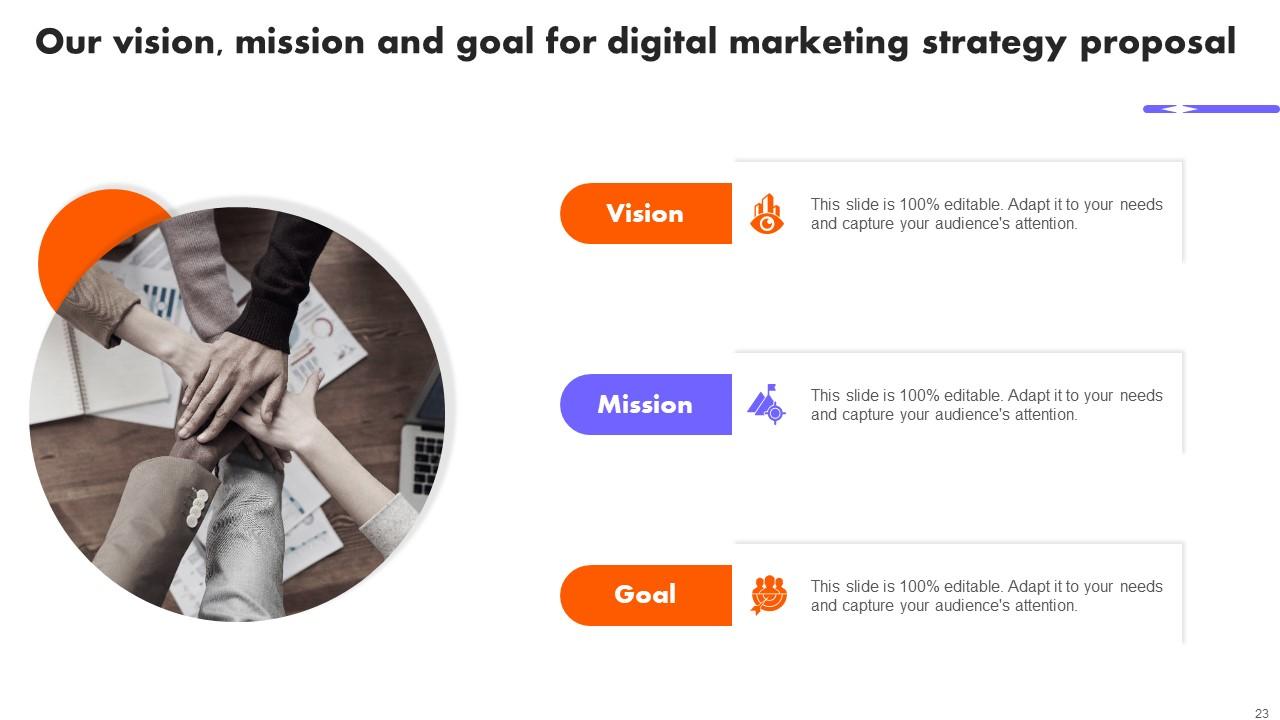
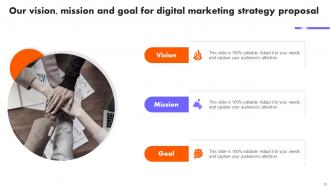
Slide 23: This slide mentions about the organization's mission, vision, and goals.
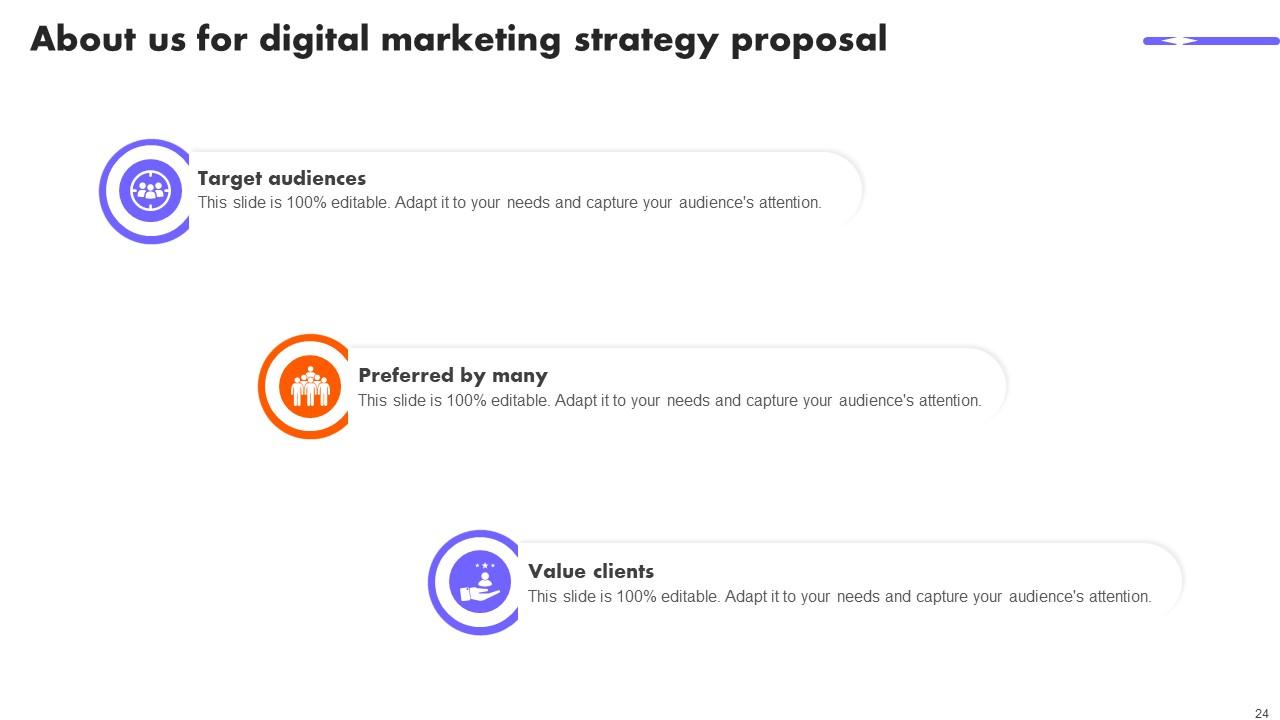
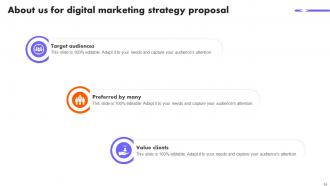
Slide 24: This is the About us slide for stating the organizaion-related information.
Digital Marketing Strategy Proposal Powerpoint Presentation Slides with all 32 slides:
Use our Digital Marketing Strategy Proposal Powerpoint Presentation Slides to effectively help you save your valuable time. They are readymade to fit into any presentation structure.
FAQs for Digital Marketing Strategy Proposal
Key components of a successful digital marketing strategy include targeted audience segmentation, content marketing, social media engagement, search engine optimization, email campaigns, and performance analytics. These elements work together by building brand awareness, driving qualified traffic, and nurturing leads through multiple touchpoints, with many organizations finding that integrated approaches deliver higher conversion rates and stronger customer relationships.
Businesses measure digital marketing ROI through conversion tracking, customer lifetime value analysis, attribution modeling, and cost-per-acquisition metrics across channels like social media, email, and paid advertising. These measurement frameworks enable organizations to optimize budget allocation, identify high-performing campaigns, and demonstrate tangible results, with many companies finding that comprehensive analytics ultimately deliver 20-30% improved marketing efficiency.
Content marketing serves as the foundation of digital marketing strategy by building brand authority, driving organic traffic, nurturing leads, and supporting SEO efforts across multiple channels. It enables businesses to engage audiences through blogs, videos, social media, and email campaigns, while organizations in retail, healthcare, and financial services find that strategic content ultimately delivers stronger customer relationships and measurable ROI.
Social media platforms enhance brand visibility through targeted advertising, content marketing, influencer partnerships, community building, and real-time customer interactions. These strategies streamline audience reach by delivering personalized messaging, fostering authentic engagement, and enabling data-driven optimization, with many retail and service businesses finding that consistent social presence ultimately delivers increased brand awareness, customer loyalty, and measurable ROI across multiple demographics.
Effective SEO techniques include keyword research and optimization, high-quality content creation, technical site optimization, mobile responsiveness, and strategic link building. These approaches enhance search visibility by improving user experience, increasing site authority, and aligning with search algorithms, with many businesses finding that consistent implementation delivers higher organic rankings, increased traffic, and ultimately greater competitive advantage.
Email marketing serves as a central hub in digital marketing strategy by nurturing leads, retaining customers, and driving conversions through personalized messaging and automated workflows. It integrates seamlessly with content marketing, social media, and SEO efforts, enabling businesses to deliver targeted campaigns that complement paid advertising while building long-term relationships, ultimately delivering higher ROI than most other digital channels.
Best practices for targeting and segmenting audiences include demographic analysis, behavioral tracking, psychographic profiling, geographic segmentation, and purchase history evaluation. These approaches enable marketers to create personalized campaigns by understanding customer preferences, optimizing ad spend, and delivering relevant content, with retail and financial services companies finding significantly higher conversion rates and enhanced customer engagement through strategic audience segmentation.
Businesses utilize analytics tools to inform marketing strategies by tracking customer behavior, measuring campaign performance, analyzing conversion funnels, and identifying high-value segments across channels. These insights enable companies to optimize ad spend, personalize messaging, and pivot strategies in real-time, with many retail and e-commerce organizations finding significantly improved ROI and customer acquisition costs.
Emerging digital marketing trends include AI-powered personalization, voice search optimization, interactive content formats, social commerce integration, and privacy-first marketing approaches. These technologies streamline customer targeting, enhance user experiences, and deliver measurable ROI, with many organizations finding that early adoption of omnichannel strategies provides significant competitive advantage in increasingly crowded digital landscapes.
A digital marketing strategy can be tailored by creating targeted content and campaigns for awareness, consideration, and decision stages through SEO, social media, email nurturing, and retargeting. Through personalized messaging and strategic channel selection, businesses streamline customer progression, enhance conversion rates, and deliver more relevant experiences, ultimately reducing acquisition costs while maximizing customer lifetime value.
Mobile optimization is crucial for digital marketing success, as over 60% of web traffic now comes from mobile devices, directly impacting search rankings, user experience, and conversion rates. With consumers increasingly shopping, browsing, and engaging through smartphones, businesses that prioritize mobile-responsive design, fast loading times, and intuitive navigation ultimately capture larger market share and deliver superior customer experiences.
PPC integrates into broader marketing strategies by aligning with content marketing goals, supporting SEO efforts through keyword insights, and amplifying social media campaigns across multiple touchpoints. Through strategic budget allocation and audience targeting, businesses streamline lead generation, enhance brand visibility, and accelerate customer acquisition, while remarketing campaigns nurture prospects from other channels, ultimately delivering measurable ROI.
Digital marketing strategies should address data privacy compliance, transparent advertising practices, honest customer communications, responsible targeting methods, and consent-based data collection. While these considerations require careful implementation across social media, email campaigns, and analytics platforms, they ultimately build consumer trust, enhance brand reputation, and deliver sustainable competitive advantage in an increasingly regulated digital landscape.
Businesses maintain brand consistency across digital channels by establishing comprehensive style guides, implementing centralized content management systems, and conducting regular brand audits. Through coordinated messaging frameworks and cross-platform templates, organizations streamline their visual identity, tone, and customer experience, while many companies find that consistent branding ultimately delivers increased recognition and trust, enhancing competitive advantage.
Integrating digital and traditional marketing presents challenges including inconsistent messaging across channels, different measurement metrics, budget allocation conflicts, varying audience demographics, and timeline misalignment. These obstacles require strategic coordination through unified brand guidelines, cross-channel analytics platforms, and integrated campaign planning, with many organizations finding that synchronized approaches ultimately deliver enhanced customer experiences and improved ROI.
-
The Designed Graphic are very professional and classic.
-
Use of different colors is good. It's simple and attractive.