


Brand Strategy Consulting Proposal Powerpoint Presentation Slides




Try Before you Buy Download Free Sample Product
 Impress Your
 Audience
 100%
100% Editable
 Save Hours
 of Time


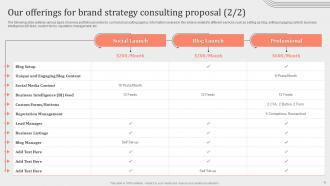
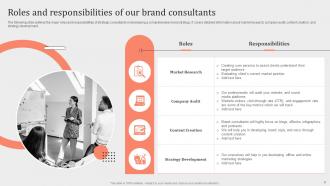
Brand strategy refers to the company planning and differentiating its products or services in the market to create a solid and consistent brand image. Grab our professionally designed Brand Strategy Consulting Proposal. It will aid companies in building a solid and differentiated brand to drive business growth. Our Brand Positioning Consultant deck begins with slides such as project context, consulting requirements, and services offered. The proposal includes roles and responsibilities of brand consultants like market research, company audit, content creation, and strategy development. Further, our Creative Consulting PPT exhibits the Company overview, significant clients, team members, and social proof. Lastly, it highlights information about terms and conditions, client testimonials, and contact details. Customize this 100 percentsge editable template with assistance from our highly skilled research or design team. Get access now.
People who downloaded this PowerPoint presentation also viewed the following :
Content of this Powerpoint Presentation
Slide 1: Brand Strategy Consulting Proposal
Slide 2: The following slide outlines a comprehensive cover letter for the presentation.
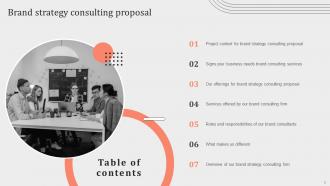
Slide 3: This slide exhibits the Table of contents.
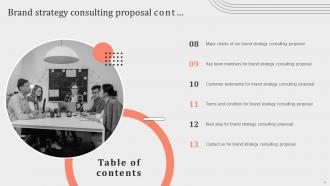
Slide 4: This is yet another slide continuing the Table of contents.
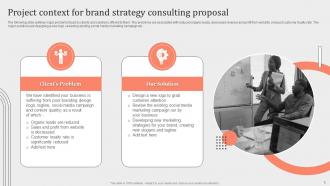
Slide 5: This slide elucidates the Project context for brand strategy consulting proposal.
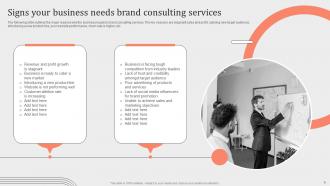
Slide 6: This slide showcases the Signs your business needs brand consulting services.
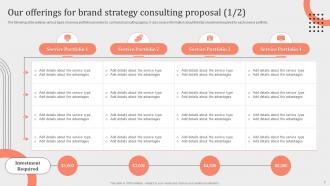
Slide 7: The following slide states the various types of service portfolios provided by the consulting agency.
Slide 8: The following slide presents the various types of service portfolios provided by the agency.
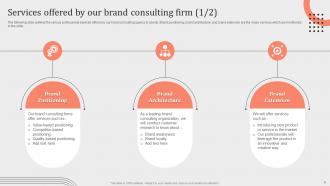
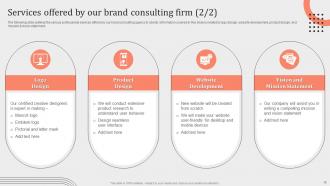
Slide 9: This slide highlights the Services offered by the consulting firm.
Slide 10: This slide continues the Services offered.
Slide 11: This slide reveals the Roles and responsibilities of the brand consultants.
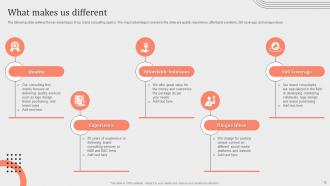
Slide 12: The following slide outlines the key advantages of the brand consulting agency.
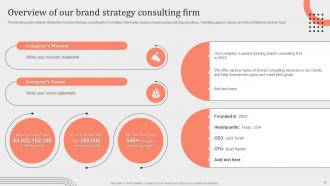
Slide 13: This slide represents the Overview of our brand strategy consulting firm.
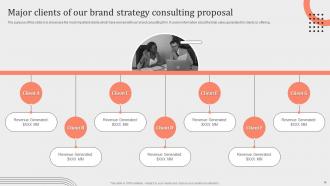
Slide 14: The purpose of this slide is to showcase the most important clients which have worked with the organization.
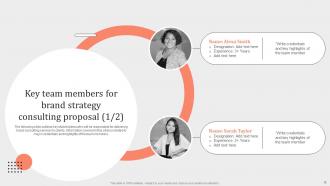
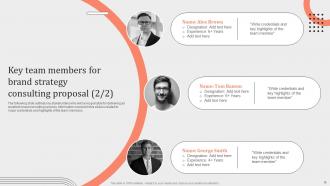
Slide 15: This slide depicts the Key team members for brand strategy.
Slide 16: This is yet another slide continuing the Key team members.
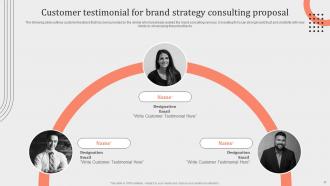
Slide 17: This slide deals with the Customer testimonial for brand strategy consulting proposal.
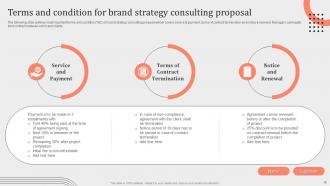
Slide 18: This slide states the Terms and condition for brand strategy consulting proposal.
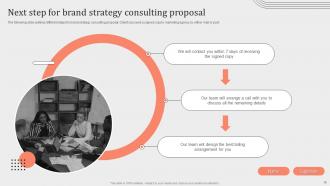
Slide 19: This slide shows the Next step for brand strategy consulting proposal.
Slide 20: The following slide mentions the contact information about brand strategy consulting firm.
Slide 21: This is the Icons slide containing all the Icons used in the plan.
Slide 22: This slide is used for showcasing Additional information.
Slide 23: This is the About us slide for stating your company information.
Slide 24: This slide incorporates the Vision, mission and goals of the firm.
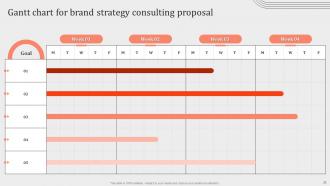
Slide 25: This slide displays the Gantt chart.
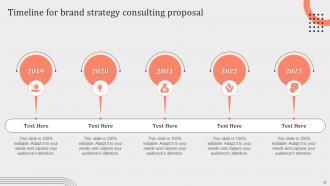
Slide 26: This slide exhibits the Timeline for brand strategy consulting proposal.
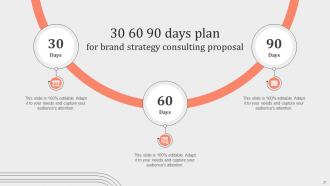
Slide 27: This is the 30 60 90 days plan slide for effective planning.
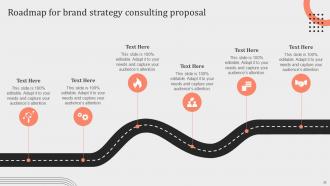
Slide 28: The following slide illustrates the Roadmap for the brand strategy consulting proposal.
Brand Strategy Consulting Proposal Powerpoint Presentation Slides with all 33 slides:
Use our Brand Strategy Consulting Proposal Powerpoint Presentation Slides to effectively help you save your valuable time. They are readymade to fit into any presentation structure.






FAQs for Brand Strategy Consulting Proposal
Okay so brand strategy breaks down into five main things: where you fit in the market, who you're actually targeting, what makes you different, your personality/voice, and how you stand apart from competitors. Positioning is where everyone gets tripped up though - it's way trickier than it looks! You've gotta figure out your ideal customer, what specific problem you solve better than anyone, and the feeling you want people to have about your brand. Honestly, I'd start by looking at what your competitors are doing first. Then work backwards from what your dream customers actually need. The voice stuff will click into place once you nail that down.
Honestly, I'd start with surveys to your current customers - quick to set up and gives you solid baseline data. Social media listening is huge too since people are way more honest when they think brands aren't paying attention (which we totally are, but whatever). Your sales team probably has amazing insights they never share with marketing, so tap into that. Focus groups help you dig deeper into the why behind the numbers. Oh, and don't skip competitive analysis - shows exactly where you stack up. Surveys first though, then build from there.
Dude, you absolutely have to do customer research first. Without it, you're basically shooting in the dark. I've watched so many companies think they know their audience and then completely bomb because they made wild assumptions. Surveys and interviews will show you what people actually think about your brand vs what you THINK they think - which is usually way off. The research also helps you find those weird little opportunities your competitors are missing. It's like... you might discover your customers see you totally differently than you see yourself. Start with both numbers and actual conversations - trust me on this one.
Okay so basically you gotta find what everyone else isn't talking about and go all-in on that. Check out what your competitors are saying - if they're all parroting the same stuff, that's where you jump in. Could be your backstory, how you actually do things, or just being stupidly honest about something they won't touch. Seriously, I've watched companies explode just by being real in markets where everyone's full of it. Just make sure it's actually true to who you are, not some random weird angle. List out their boring claims first, then figure out what's genuinely different about you that they can't steal.
Honestly, focus on like 3-5 key metrics instead of drowning in data. Brand awareness and sentiment are obvious ones - surveys work but social listening gives you the real tea. I'd definitely track share of voice vs competitors too. Customer lifetime value tells you if people actually stick around, which matters way more than vanity metrics. Oh and engagement across all your touchpoints. Revenue attribution is tricky but try to connect brand stuff to actual sales when possible. Set up a quarterly check-in so you're not obsessing over daily fluctuations. Pick what aligns with your goals though - every brand's different.
Oh totally, storytelling is huge for brands! You want people connecting emotionally, not just buying another random product. Map out your customer's whole journey first - like what problem are they dealing with? Your brand should be the thing that helps them solve it, kinda like being their sidekick. Keep your messaging consistent everywhere (social, website, whatever) and make sure your values actually feel real. Honestly the best brand stories follow that classic movie structure - there's conflict, struggle, then boom, transformation. Short sentences work. Longer ones that flow naturally work too. Don't overthink it though.
Dude, visual identity is HUGE for how people buy stuff. Like, colors and fonts make people decide about your brand in literal seconds - way before they even try your product. Look at Apple's clean look vs Coca-Cola's red everywhere, right? That stuff isn't random. Your visual choices tell people what you're about and help them figure out if you're fancy, cheap, trustworthy, whatever. Honestly, I think most people underestimate how much this matters. You'll either build trust or turn people off based on how things look. Worth investing in early because it's happening whether you plan it or not.
Okay so social media is basically where your brand's personality really shines through, you know? It's all about those real conversations with your audience instead of just shouting into the void. The engagement data you get back is honestly amazing - like, you'll see exactly what people actually care about versus what you thought they'd like. This feedback happens so fast now that your whole brand strategy has to adapt to it. I'd start by looking at where you are currently (some platforms are just dead ends tbh) and figure out which ones actually get your specific audience talking. Don't just be everywhere because you think you should.
Ok so first thing - figure out where you actually stand right now vs where you wanna be. Surveys help, or just lurk on social media to see what people are saying. Then switch up your messaging to hit different benefits or go after completely new audiences. Look at Apple - they went from boring computer company to this whole lifestyle thing. Visual refresh can work too, or try different marketing channels. Oh and maybe tweak your actual products if that makes sense. Once you commit though, don't be wishy-washy about it. Pick your new angle and stick to it everywhere.
Look, trends literally dictate how people think and spend money, so you can't ignore them. Your messaging will fall flat if you're not paying attention to what's happening culturally. Remember when every company suddenly became "authentic" overnight? Super cringe because they missed the mark completely. You've got to watch generational shifts, social movements, economic changes - all of it affects how your brand should sound. I'd set up some kind of regular check-in system to track this stuff. Also, actually listen when your customers talk. Their conversations tell you way more than any report will.
Honestly, get your leadership on board first - saves you tons of drama down the road. Map everything back to what your company's actually trying to do. Like if you're expanding into new markets, your brand messaging better support that story. Your brand values can't just be fluffy words that look good framed on the wall. They need to actually help drive whatever business goals you've got. Oh and set up regular check-ins between your brand and strategy people - those conversations are gold. Create some simple framework showing how each brand thing you do connects to a real business outcome. Makes everything way clearer.
Start by figuring out what each audience actually cares about - like Gen Z wants authenticity while executives just want numbers. Then tweak your tone and messaging for each group, but don't go crazy and sound like totally different companies (I've seen brands do this and it's messy). Map out their pain points first. Your core values stay the same no matter what. Just shift how you talk about them - maybe you're more casual on TikTok vs. formal in boardroom presentations. Oh, and definitely create those messaging guides so your team doesn't accidentally sound off-brand when switching between audiences.
Honestly? Getting everyone on the same page internally is brutal. Leadership will have totally different ideas about where the brand should go, and departments just fight each other. Rolling out new messaging and visuals takes forever too - like, way longer than anyone budgets for. Your customers might hate the change, especially if they loved the old brand. Oh, and good luck getting your team to actually talk about the company differently. That's harder than it sounds. But seriously, nail down leadership buy-in first. Trust me on this one - it'll save you so much drama down the road.
Look, I'd say every 2-3 years minimum, but it really depends on your industry. Tech moves crazy fast, so maybe annually for those folks. Consumer goods too. Big stuff happening? New product launch, different market, competitors breathing down your neck - that's when you definitely need to revisit things regardless of timeline. Honestly, the worst thing is being reactive instead of getting ahead of changes. I learned that one the hard way. Set up quarterly check-ins to see if your strategy still makes sense. Even just a quick "does this feel right?" moment helps.
So employee branding is your internal brand game - getting your team to actually live your values instead of ignoring that motivational poster by the coffee machine. Your employees need to genuinely get what your brand is about, then they become real ambassadors who give customers consistent experiences. Honestly, customers can always tell when someone's just phoning it in versus actually believing in the product. The whole thing works because internal alignment shows up in how customers see you. First step? Check if your employee experience matches what you're promising customers.
-
It makes easy work of my work presentations. I’ve never had to be nervous about my presentations for meetings.
-
Excellent work done on template design and graphics.