

Chief Strategy Officer Playbook Powerpoint Presentation Slides





Try Before you Buy Download Free Sample Product
 Impress Your
 Audience
 100%
100% Editable
 Save Hours
 of Time


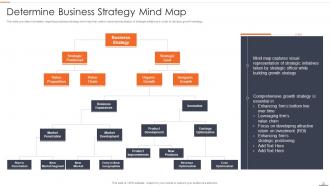
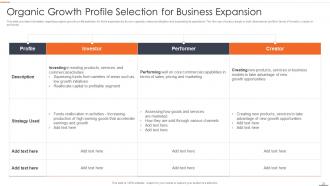
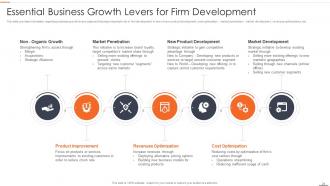
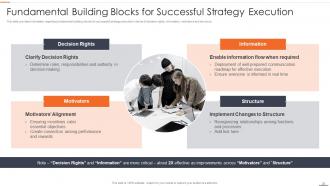
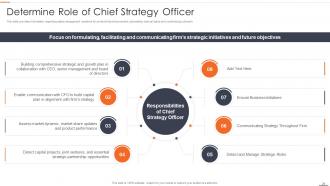
Chief Strategy Officer Playbook emerges as a guideline that showcases the best strategic thinking, planning, and execution practices. It is essential for organizational leaders to formulate effective strategies across the firm. It represents performance specific guidelines to support staff while executing strategic goals to ensure business activities are aligned with the overall strategy. The playbook caters to crucial elements associated with strategic thinking, such as key phrases in the strategic thinking process, strategic thinking tool, Porters five competitive forces assessment, and 7 S strategic analysis framework to assess organizational performance. It covers vital components of strategic planning in terms of the three step strategic planning process, redefining vision, mission and core values, strategy canvas, and product market matrix. Critical features related to strategic execution include a five step framework, strategic execution framework, business strategy mind map, organic growth profile selection for business expansion, essential business growth levers for firm development, and fundamental building blocks for strategy execution. Moreover, it describes strategic team initiatives by determining the role of the chief strategy officer, revamping the leadership and management team, and workforce training plan to upskill existing staff. Book a free demo now.
People who downloaded this PowerPoint presentation also viewed the following :
Content of this Powerpoint Presentation
Slide 1: This slide introduces Chief Strategy Officer Playbook. State Your Company Name and begin.
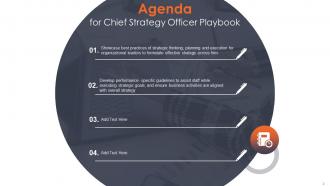
Slide 2: This is an Agenda slide. State your agendas here.
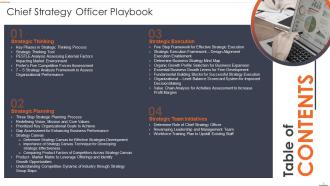
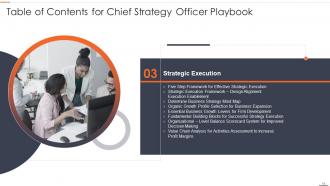
Slide 3: This slide presents Table of Content for the presentation.
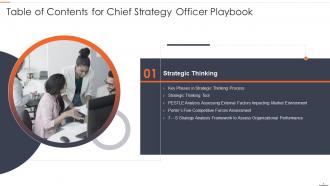
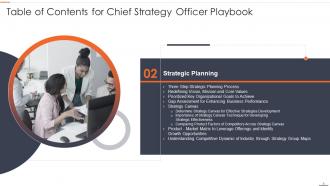
Slide 4: This slide highlights title for topics that are to be covered next in the template.
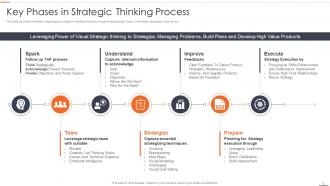
Slide 5: This slide displays key phases in strategic thinking process including spark, team, understand, etc.
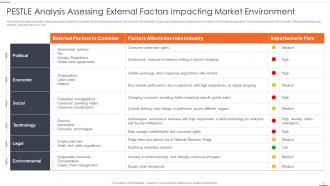
Slide 6: This slide represents PESTLE Analysis Assessing External Factors Impacting Market Environment.
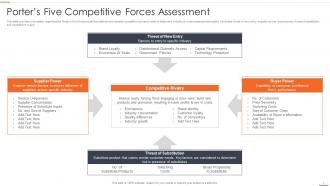
Slide 7: This slide showcases Porter’s Five Competitive Forces Assessment.
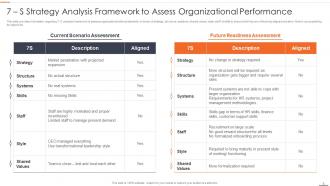
Slide 8: This slide shows 7- S analysis framework to assess organizational internal elements in terms of strategy.
Slide 9: This slide highlights title for topics that are to be covered next in the template.
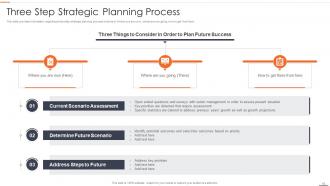
Slide 10: This slide displays three step strategic planning process in terms of where you are now.
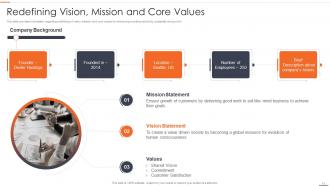
Slide 11: This slide represents redefining of vision, mission and core values for enhancing overall productivity.
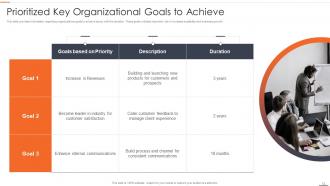
Slide 12: This slide showcases Prioritized Key Organizational Goals to Achieve.
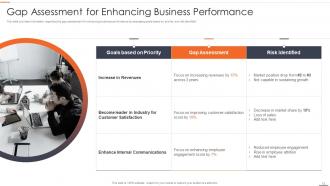
Slide 13: This slide shows Gap Assessment for Enhancing Business Performance.
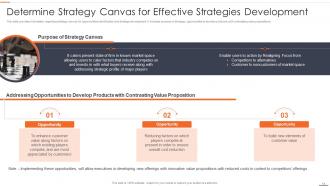
Slide 14: This slide presents Determine Strategy Canvas for Effective Strategies Development.
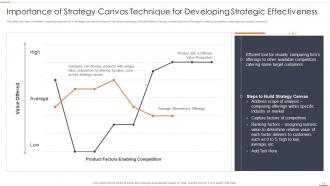
Slide 15: This slide displays Importance of Strategy Canvas Technique for Developing Strategic Effectiveness.
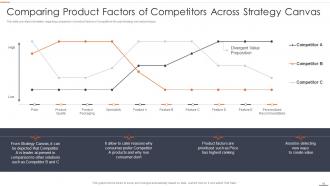
Slide 16: This slide represents Comparing Product Factors of Competitors Across Strategy Canvas.
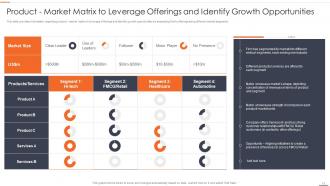
Slide 17: This slide showcases product-market matrix to leverage offerings and identify growth opportunities.
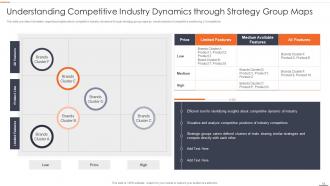
Slide 18: This slide shows Understanding Competitive Industry Dynamics through Strategy Group Maps.
Slide 19: This slide highlights title for topics that are to be covered next in the template.
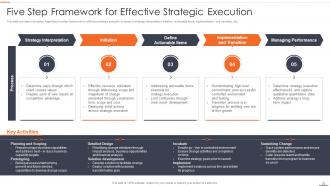
Slide 20: This slide presents Five Step Framework for Effective Strategic Execution.
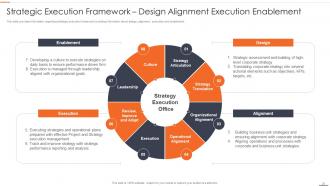
Slide 21: This slide displays Strategic Execution Framework – Design Alignment Execution Enablement.
Slide 22: This slide represents business strategy mind map that caters visual representation of strategic initiatives.
Slide 23: This slide showcases Organic Growth Profile Selection for Business Expansion.
Slide 24: This slide shows Essential Business Growth Levers for Firm Development.
Slide 25: This slide presents Fundamental Building Blocks for Successful Strategy Execution.
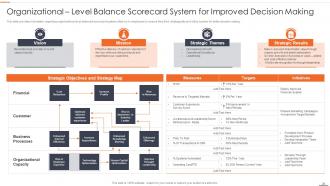
Slide 26: This slide displays organizational level balanced scorecard system rolled out to employees.
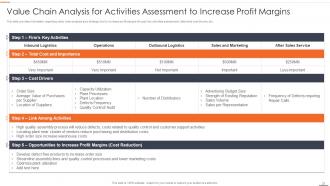
Slide 27: This slide represents Value Chain Analysis for Activities Assessment to Increase Profit Margins.
Slide 28: This slide highlights title for topics that are to be covered next in the template.
Slide 29: This slide showcases sales management systems for productivity enhancement, automating manual tasks and customizing outreach.
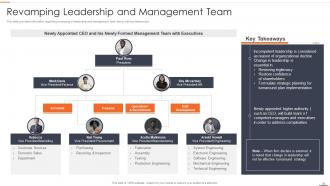
Slide 30: This slide represents revamping of leadership and management team along with key takeaways.
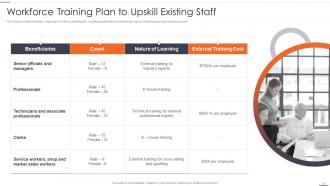
Slide 31: This slide showcases Workforce Training Plan to Upskill Existing Staff.
Slide 32: This slide displays Icons for Chief Strategy Officer Playbook.
Slide 33: This slide is titled as Additional Slides for moving forward.
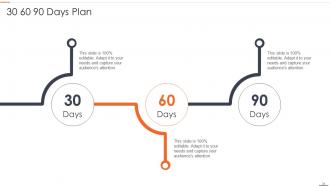
Slide 34: This slide provides 30 60 90 Days Plan with text boxes.
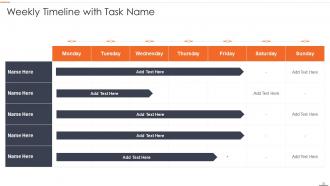
Slide 35: This slide represents Weekly Timeline with Task Name.
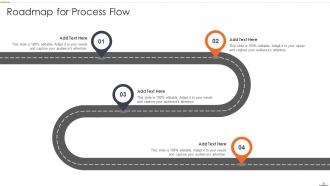
Slide 36: This slide showcases Roadmap for Process Flow.
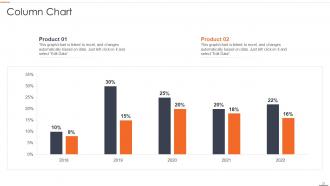
Slide 37: This slide displays Column chart with two products comparison.
Slide 38: This is About Us slide to show company specifications etc.
Slide 39: This slide shows Post It Notes. Post your important notes here.
Slide 40: This slide depicts Venn diagram with text boxes.
Slide 41: This is a Thank You slide with address, contact numbers and email address.
Chief Strategy Officer Playbook Powerpoint Presentation Slides with all 46 slides:
Use our Chief Strategy Officer Playbook Powerpoint Presentation Slides to effectively help you save your valuable time. They are readymade to fit into any presentation structure.








FAQs for Chief Strategy Officer Playbook
So a Chief Strategy Officer is basically the person mapping out where your company should be in like 3-5 years. They're always scanning for new opportunities and figuring out how to beat competitors. Honestly sounds pretty stressful to me, but whatever floats your boat! Most of their day is spent doing market analysis, strategic planning, and looking at potential mergers. Oh, and they have to translate all those big-picture ideas into actual plans that regular departments can execute. If you're serious about this path, you'll need solid analytical skills and the ability to explain complex stuff without making people's eyes glaze over.
So CSOs are basically your company's scout - they spot market opportunities and threats way before anyone else catches on. Think of them as fortune tellers but with actual data instead of crystal balls. They're always connecting random dots between industry trends, how customers are acting, and what your company can actually pull off. Then they build roadmaps to keep you competitive. Oh, and they make sure growth plans don't clash with sustainability stuff (which is huge now). If you're working with yours, feed them market intel and customer insights - that's their fuel for tweaking strategy.
Start with strategic thinking - you've gotta see patterns nobody else catches. Data analysis skills are non-negotiable for making sense of messy market info. Communication matters way more than people think since you're constantly pitching ideas up and down the chain. The political BS gets old fast, but learning to manage stakeholders will keep you sane. Get comfortable making calls without perfect info - that's like 80% of the job. Oh, and change management is critical because honestly? Beautiful strategies die ugly deaths when execution sucks.
Speed beats perfection right now - seriously. Figure out what's directly hitting your revenue or keeping customers around, that's your priority. Quick wins only, like 3-6 months tops because longer projects? Probably pointless by the time you're done. I'd make a simple scoring thing - how urgent is it vs how fast can we actually pull it off. Oh and set monthly check-ins so you can ditch stuff that isn't working. Don't get distracted by shiny objects. Focus on what actually moves your numbers today.
Honestly, data analysis is everything when you're a CSO. You're always digging through customer data and financial metrics to spot market trends and figure out if your competition is up to something. Can't just wing it with gut feelings anymore - the board wants real numbers backing up your strategic recommendations. I spend way too much time in spreadsheets, but that's how you validate whether your ideas actually work. The tricky part? Taking all those dashboards and turning them into clear insights that people will act on. Industry benchmarks become your best friend too.
People won't take risks if they're scared of getting fired, so start there with psychological safety. Give teams actual time and money to experiment - yeah, most stuff will fail but that's normal. The magic happens when different departments finally start talking to each other instead of staying in their silos. Make a big deal about celebrating failures (the smart ones anyway) just like you would wins. Ask "what if" questions yourself in meetings - seriously, if you're not curious, why should anyone else be? Oh, and pick something small to test this quarter rather than trying to revolutionize everything at once.
You're basically the hub keeping all the C-suite people on the same page. Set up regular cross-functional meetings and shared dashboards so everyone's tracking the same key metrics. Work with your CFO on budgets that actually support strategic goals, team up with the CMO so brand positioning matches your market approach, and collaborate with the CTO on tech investments that matter. Honestly? Half the job is translating between departments - they all speak different languages. Quarterly business reviews are clutch for presenting unified objectives and making sure each exec's goals connect to your bigger strategy. I'd start by mapping how each C-suite role affects your initiatives.
Honestly, there are three things you've gotta nail down. First, game out different ways your industry could get turned upside down - sounds paranoid but it's not. Diversify your revenue streams too, even if your current cash cow is still performing great. I know it's tempting to ride that wave forever. Building a more agile team is probably the most crucial part though. Cross-functional squads, faster decisions, all that stuff. The winners aren't the ones with perfect strategies - they're just better at changing course when their original plan tanks.
Startup strategy? You'll literally do everything - market research, investor decks, finding product-market fit, the works. Strategy changes every week depending on what's blowing up. Big companies are totally different though. Long-term planning, competitive analysis, working with actual departments that have real budgets. The timeline thing is huge - startups want decisions made yesterday while corporations will analyze something for months. Honestly depends if you like the scrappy chaos or prefer more structure. Both have their perks but the day-to-day is night and day different.
Honestly, the biggest pain points I see are getting everyone on the same page with strategy - way harder than you'd think. Different departments constantly fight over whose project gets priority first. Then there's measuring ROI when these investments take forever to actually show results. You're stuck juggling daily operations while trying to think years ahead. Oh, and don't get me started on keeping up with new tech without breaking what already works. My take? Run small pilots first to show it actually works before going big.
Honestly, you need both the quick wins and long-term stuff to really see what's working. Start with clear KPIs that actually matter to your goals - revenue growth, market share, cost savings, whatever makes sense. Strategic stuff takes ages to pay off though, so build in some milestone checkpoints. Track engagement and adoption rates early on. Oh, and definitely do pulse surveys with stakeholders - people's buy-in matters more than you'd think. Monthly reviews with leadership work well. Basically create a scorecard mixing financial numbers with operational metrics and the softer qualitative stuff.
Honestly, you've gotta tailor this stuff to who you're talking to. Executives just want the big picture outcomes, but middle managers need actual roadmaps they can work with. Frontline people? They're thinking "what's this mean for ME?" Don't rely on those boring all-hands meetings either - nobody pays attention anyway. Mix it up with dashboards, quick updates, whatever works. Train your leadership to stay consistent when they pass info down. Same message, different packaging. Oh and here's the thing - always connect it back to people's actual daily work or they'll tune out completely.
Look, don't treat emerging tech like collecting Pokemon cards - half these CSOs I know are just chasing whatever's trendy. Figure out what business problems you're actually trying to solve first. AI makes sense if you're drowning in data. Automation works when you've got clear efficiency gaps. Map the tech to real outcomes you need. Run small pilots before dumping money into anything big. Stay curious, hit up conferences, talk to the innovators - but honestly? If you can't tie it back to measurable results, you're just playing with expensive toys. Keep that strategic focus tight.
Your CSO basically maps out which relationships actually matter for the company's future. They're scanning for investors, partners, regulators - anyone who could shift your strategic direction. The smart ones don't just babysit current stakeholders though. They're always hunting for new game-changers you haven't thought of yet. Honestly, most people underestimate how much these folks influence where resources go. Ask yours to show you their stakeholder priority matrix - it'll blow your mind seeing who really pulls the strings behind your strategy.
Focus on digital transformation and AI integration first - they're hitting every industry hard right now. Sustainable business models are huge too, though honestly that one feels more long-term to me. Remote work is still messing with how companies are structured, and I don't think we've seen the end of that yet. Supply chains and data privacy rules matter big time if you're in a regulated space. What I'd do is pick 2-3 trends that actually affect your business and check in on them quarterly. Build some scenario planning so you're not scrambling when things shift.
-
The PPT layout is great and it has an effective design that helps in presenting corporate presentations. It's easy to edit and the stunning visuals make it an absolute steal!
-
I've been looking for a good template source for some time. I'm happy that I discovered SlideTeam. Excellent presentations must try!