Marketing Consulting Proposal Powerpoint Presentation Slides

Rating:
90%
Marketing Consulting Proposal Powerpoint Presentation Slides Marketing Consulting Proposal Powerpoint Presentation Slides
Slide 1 of 29

or

Favourites Favourites

Try Before you Buy Download Free Sample Product

Audience Impress Your
Audience
Editable 100%
Editable
Time Save Hours
of Time
The Biggest Sale is ending soon in
0
0
:
0
0
:
0
0
Rating:
90%
If your company needs to submit a Marketing Consulting Proposal Powerpoint Presentation Slides look no further. Our researchers have analyzed thousands of proposals on this topic for effectiveness and conversion. Just download our template add your company data and submit to your client for a positive response.
Content of this Powerpoint Presentation

Slide 1: This slide introduces Marketing Consulting Proposal. State your company name and begin.
Slide 2: This slide shows Cover letter for marketing consulting proposal.
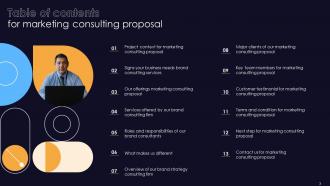
Slide 3: This slide shows Table of Content for the presentation.
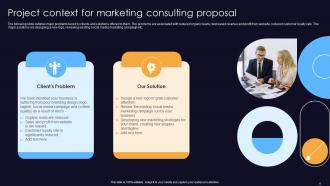
Slide 4: This slide elucidates the Project context for marketing consulting proposal.
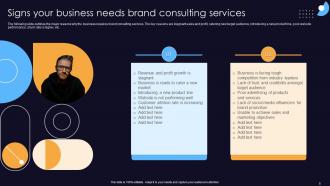
Slide 5: This slide showcases the Signs your business needs brand consulting services.
Slide 6: The following slide states the various types of service portfolios provided by the consulting agency.
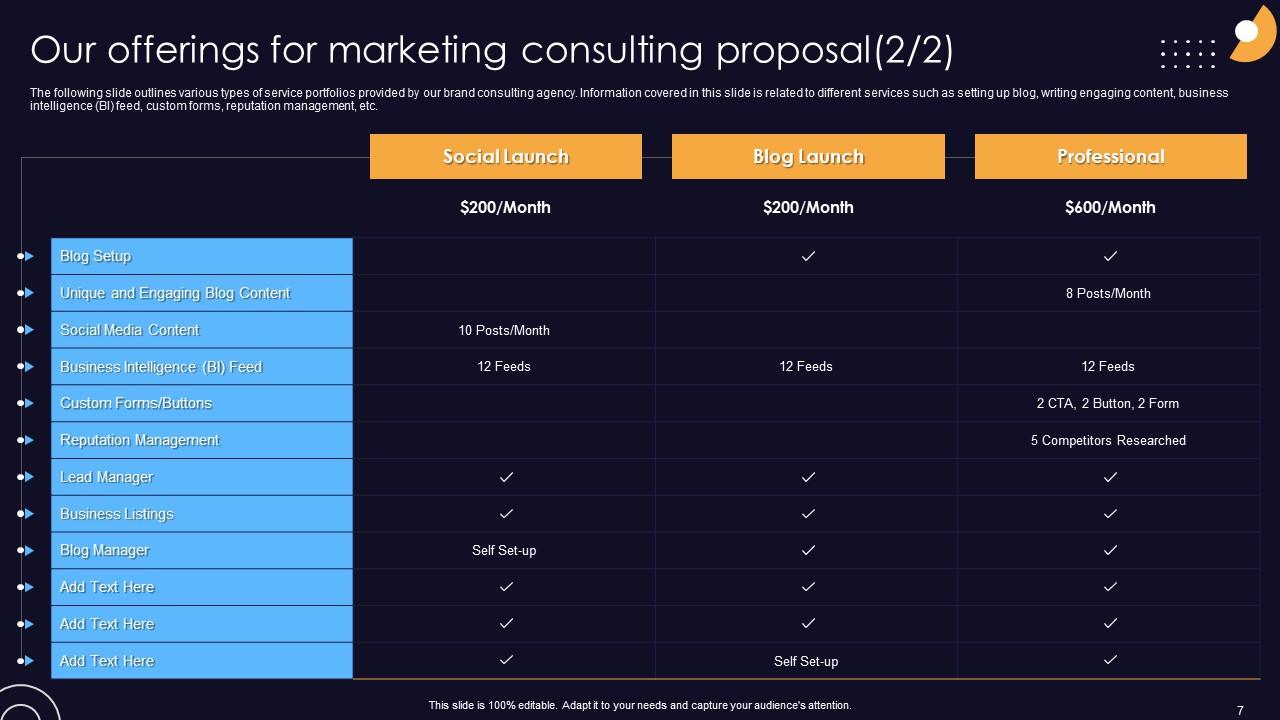
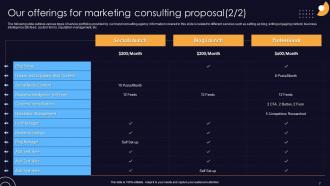
Slide 7: The following slide presents the various types of service portfolios provided by the agency.
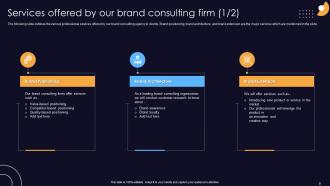
Slide 8: This slide highlights the Services offered by the consulting firm.
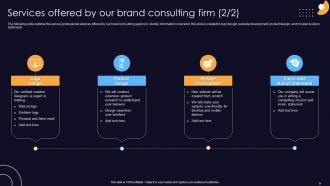
Slide 9: This slide continues the Services offered.
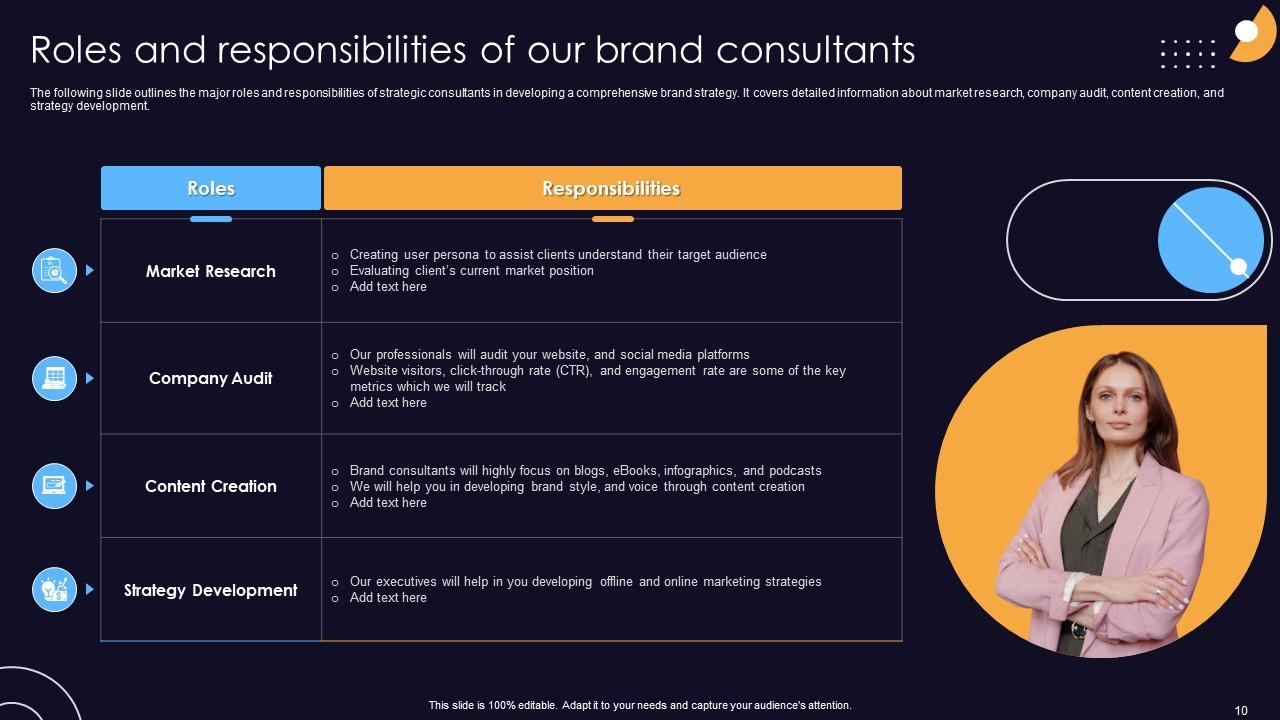
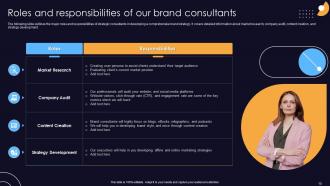
Slide 10: This slide reveals the Roles and responsibilities of the brand consultants.
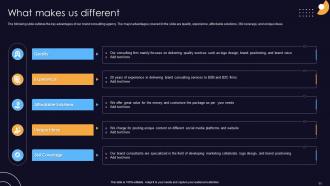
Slide 11: The following slide outlines the key advantages of the brand consulting agency.
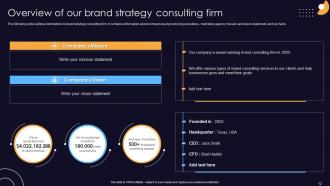
Slide 12: This slide represents the Overview of our brand strategy consulting firm.
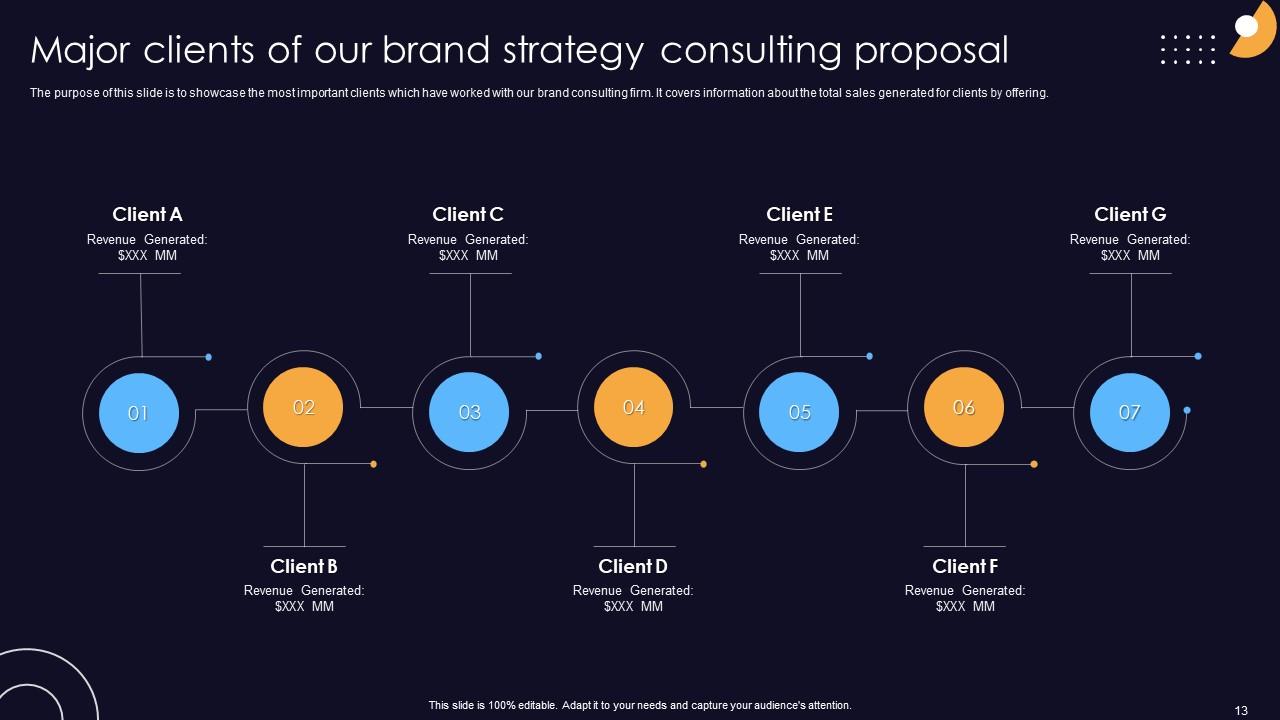
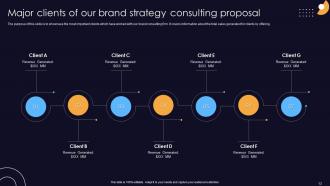
Slide 13: The purpose of this slide is to showcase the most important clients which have worked with the organization.
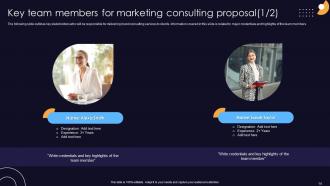
Slide 14: This slide depicts the Key team members for brand strategy.
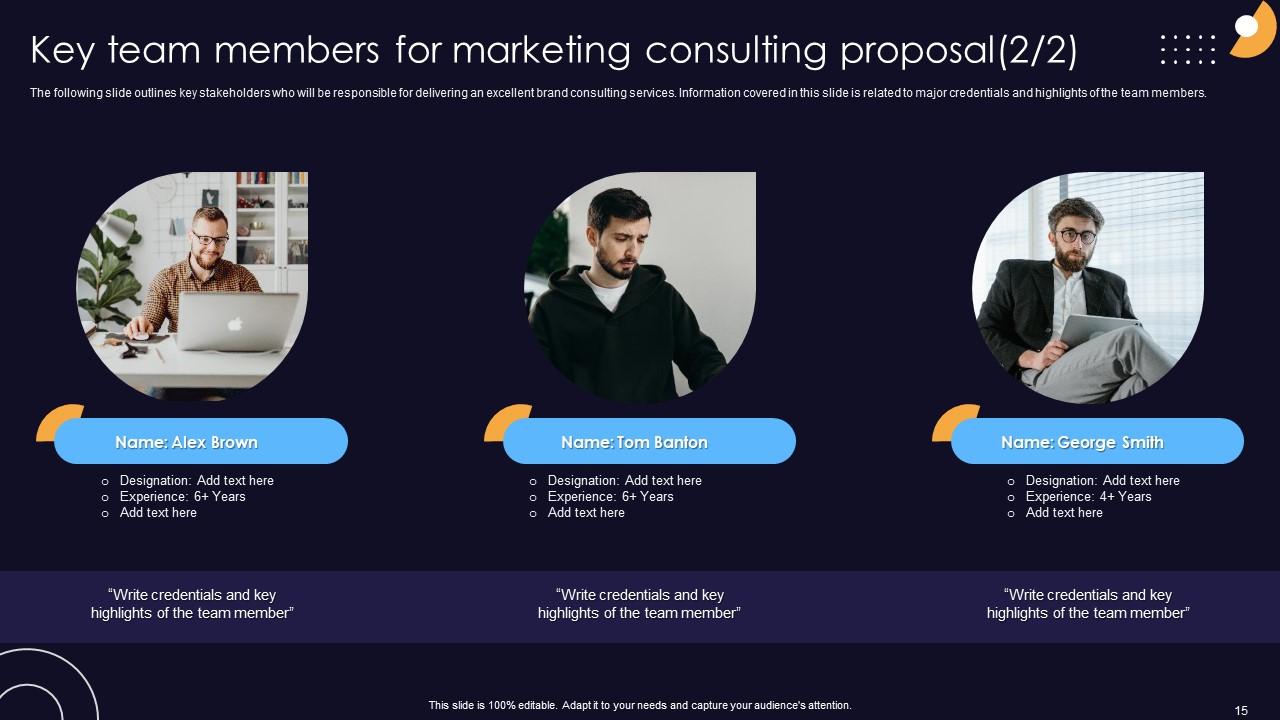
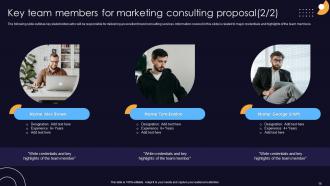
Slide 15: This is yet another slide continuing the Key team members.
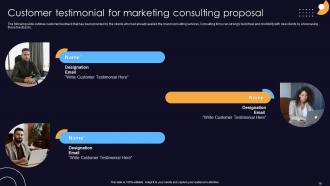
Slide 16: This slide deals with the Customer testimonial for marketing consulting proposal.
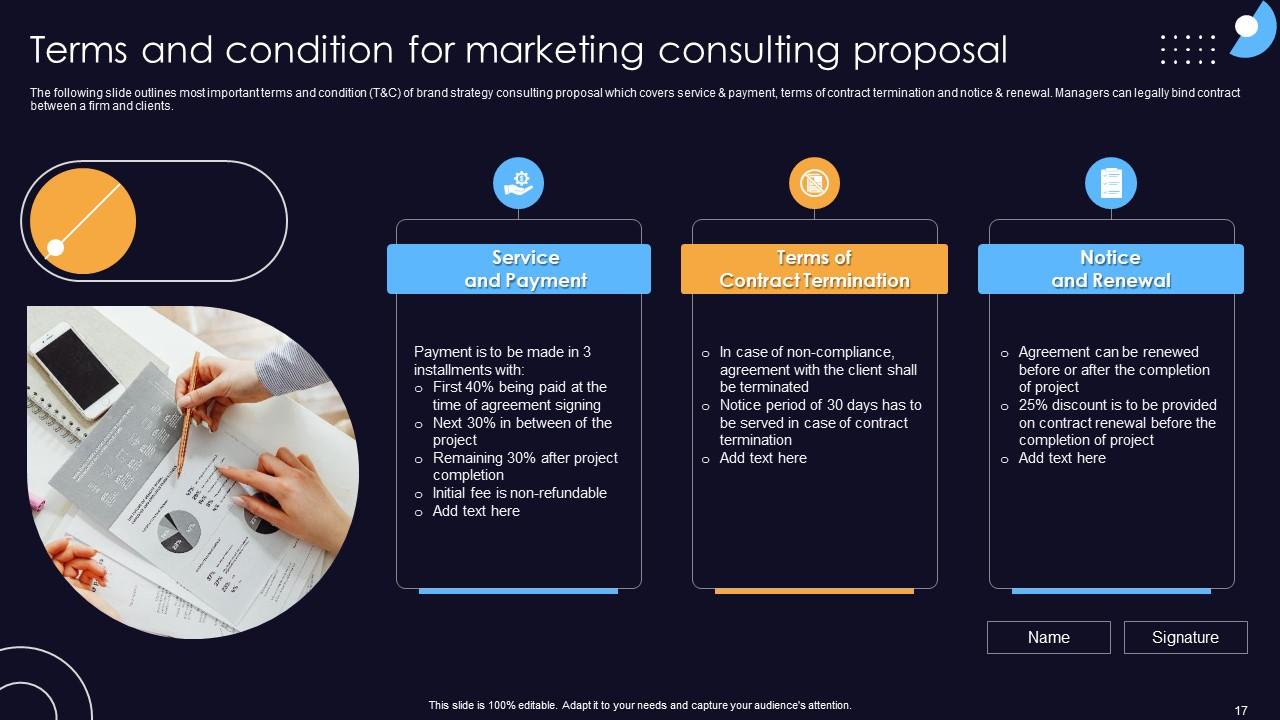
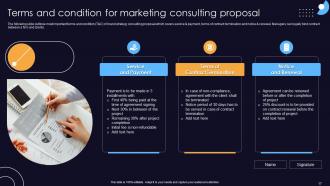
Slide 17: This slide states the Terms and condition for marketing consulting proposal.
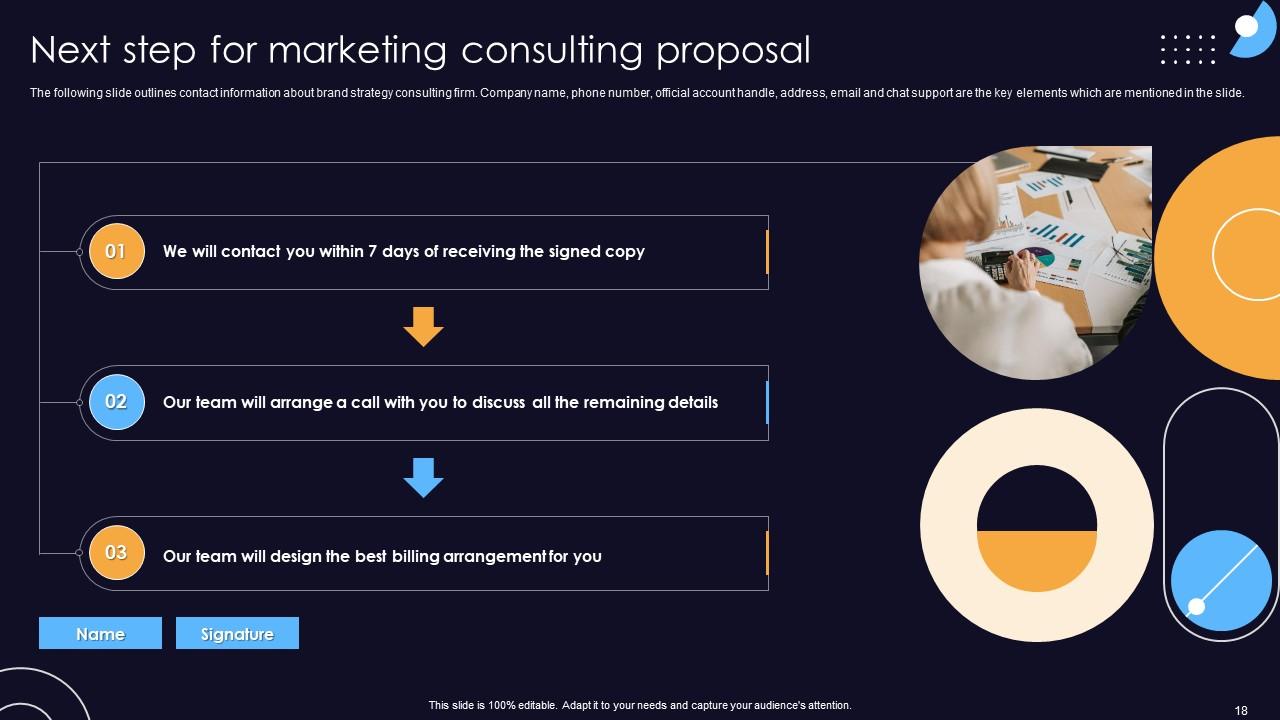
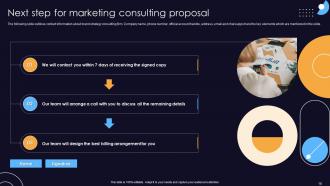
Slide 18: This slide shows the Next step for marketing consulting proposal.
Slide 19: The following slide mentions the contact information about brand strategy consulting firm.
Slide 20: This slide contains all the icons used in this presentation.
Slide 21: This slide is titled as Additional Slides for moving forward.
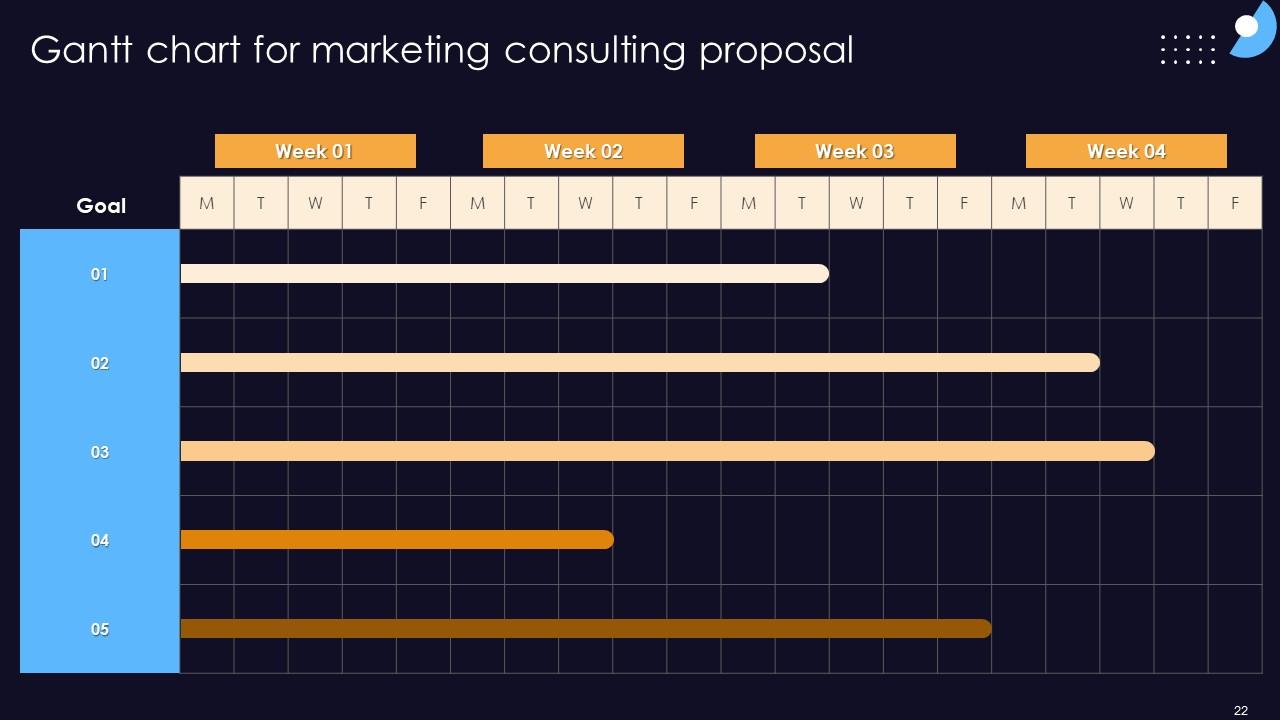
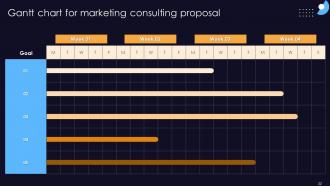
Slide 22: This slide shows Gantt chart for marketing consulting proposal.
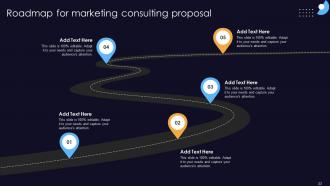
Slide 23: This slide presents Roadmap for marketing consulting proposal.
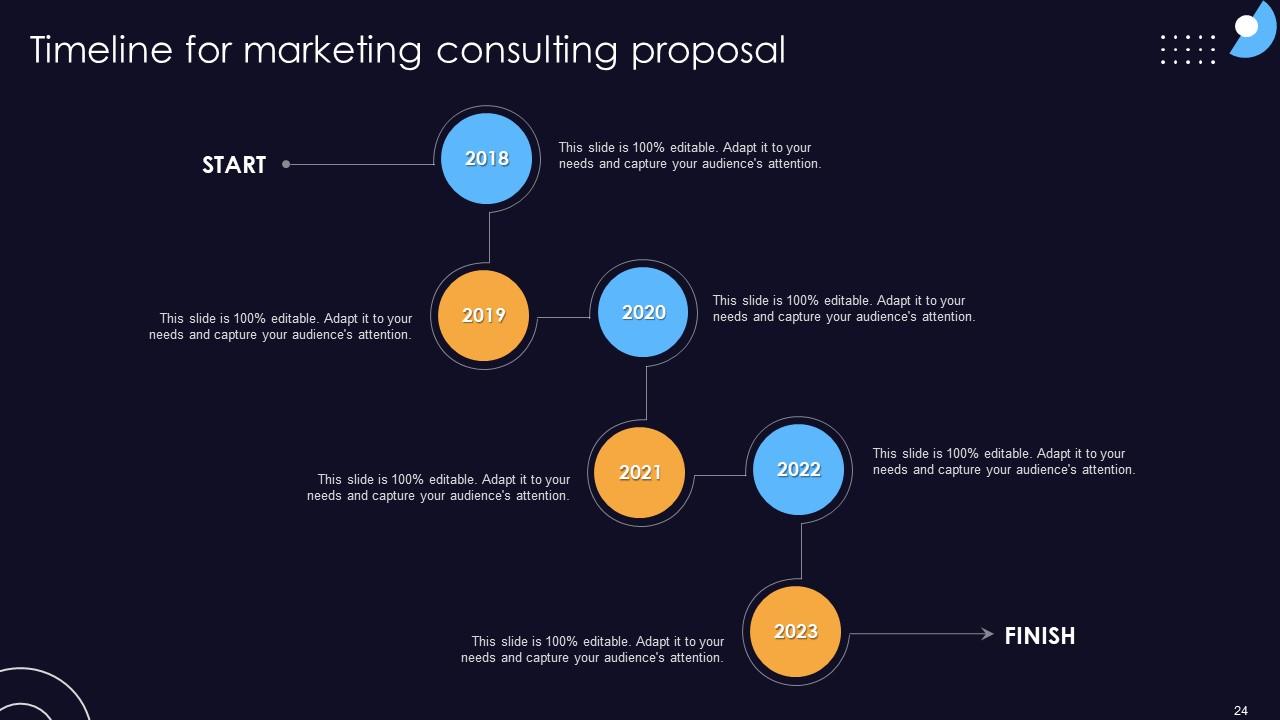
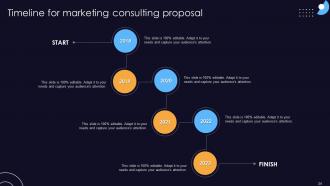
Slide 24: This slide displays Timeline for marketing consulting proposal.

FAQs for Marketing Consulting Proposal

Alright, so you'll want to nail the problem statement first - show them you actually get what's bugging them. Then lay out your solution with real tactics, not vague promises. Timeline's huge too, break it into milestones so they can see progress happening. Definitely throw in some case studies because honestly, nobody trusts you without proof you've done this before. Price breakdown should be super transparent - no surprises later. Oh, and add ROI projections if you can swing it. Everyone's obsessed with knowing their return. Keep it detailed but not like... a novel, you know? Follow up in two days max to chat through questions.

Listen super carefully during those discovery calls - like actually listen to their exact words. When they say "we're bleeding customers," write that exact phrase down and use it back in your proposal. Don't clean it up to sound professional. Ask about the real stuff that's stressing them out - revenue pressure, competition breathing down their necks, whatever's making their job hell. I always do this section called "Your Current Challenges" right up front before pitching anything. Honestly, half the battle is just proving you actually heard what they told you. Then they'll actually want your solution.

Definitely dig into what's actually killing them in their industry first. Healthcare companies are drowning in compliance stuff, retail deals with crazy seasonal swings - that kind of thing. Customize your case studies to show you've done similar work (even if you have to stretch a bit). I know it sounds cheesy, but using their exact industry buzzwords actually works. Also tweak your pricing to match how they normally budget for marketing. Skip the generic "brand awareness" pitch - they want results that matter to their specific problems. Oh, and research a few of their competitors beforehand so you don't sound clueless about their space.

Get super specific about deliverables first - say "3 blog posts weekly" instead of vague stuff like "content support." Map out your process and timeline too. Here's the thing though - most people mess this up by staying wishy-washy because they don't want to say no to anything. Big mistake. Being crystal clear saves you both headaches down the road. Don't forget to list what's NOT included either. That part's honestly just as important for avoiding scope creep later. Oh, and call out any assumptions you're making about their team or resources upfront.

Definitely start with talking to actual customers - surveys, interviews, focus groups, whatever works. Industry reports and competitor research are super helpful too. If they've got a website or social media already, dig into those analytics because honestly that data tells you so much about user behavior. Oh and don't skip the demographic stuff - you really need to know who you're actually targeting beyond just "everyone." Pick methods that fit their budget though. No point recommending expensive research if they're bootstrapping. Focus on what'll give them the most actionable insights first.

Honestly, case studies are your secret weapon for proving you're not all talk. Pick 2-3 solid examples that match your prospect's situation - like if you boosted someone's conversion rate 40% or helped launch a product that hit $2M year one. People can claim they're amazing at whatever, but hard numbers? That's different. Your prospects need to picture you solving their exact problems. I always think it's wild how many people skip this step when it's literally the easiest way to show you've done the work before.

Definitely start with their current numbers - conversion rates, what they're spending to get customers, lifetime value stuff. That gives you solid before/after comparisons later. Traffic's fine but honestly everyone gets obsessed with pageviews when revenue is what actually matters. Project realistic percentage bumps in leads, conversions, overall revenue over like 6-12 months. Give them three scenarios - conservative, realistic, optimistic - so you're not setting crazy expectations. The main thing? Connect your specific strategies to actual dollar amounts they can track. Makes it way easier to prove your worth once you're working together.

Dude, seriously - throw in some visuals or your proposal will just sit there looking boring as hell. Charts with ROI projections are gold. Before/after shots work great too. I've watched clients completely ignore text-heavy proposals that looked like someone's dissertation. Don't do that to yourself! Clean layouts with decent spacing make everything so much easier to scan through. Bullet points are your friend here. Oh, and definitely add a timeline showing your project phases - clients eat that stuff up. Even basic infographics explaining your process can seal the deal.

Split everything into clear phases with actual outcomes. Like "Phase 1: Market research done by Week 2" - and attach the real deliverable, not some vague promise. I tie payments to these milestones because honestly, it keeps everyone honest and moving. Each deliverable needs to be something concrete you can point to, not fluffy "strategic insights" nonsense. Get specific about formats and deadlines. What does done actually look like? Your client shouldn't be guessing what they're getting or when. Makes the whole thing way smoother.

Dude, just be upfront about your pricing from the start. Break it down clearly - flat fee, hourly, whatever it is. Tell them exactly what's included and what costs extra. I hate when people use that "additional fees may apply" garbage - instant trust killer. Payment terms matter too: when you want to be paid, how they can pay you, late fees if applicable. Oh, and if it's a big project? Payment plans can seal the deal. My cousin learned this the hard way after losing three clients who got sticker shock. Clear pricing just makes everything smoother for everyone.

Look, the executive summary is where you either win or lose the whole thing. Most clients are crazy busy and honestly? They'll probably just skim everything else. So you've got maybe 200 words to sell your entire project. Here's what works: Lead with their exact problem, then hit them with your solution and what results they can expect. Write this part dead last - after you know all your details inside and out. I know it sounds backwards, but trust me on this one. Those 2-3 paragraphs need to be absolutely perfect because they're doing all the heavy lifting for your proposal.

Think of it like telling a story in three parts. First, hook them with their actual problem - something like "your ideal customer scrolls right past your posts." Gets their attention every time. Then walk through how you'd fix it, but make it feel like a journey toward their success. Paint the picture of where they'll end up with real examples. I always throw in specific scenarios because honestly, generic proposals are boring. Keep the whole thing flowing naturally - problem, solution, amazing results. Finish with a call-to-action that doesn't feel pushy, just like the obvious next step they'd want to take.

Honestly, the worst thing you can do is be super vague about what you'll actually deliver and when. Clients hate that. Also, don't make it all about your amazing skills - they want to know you get their specific mess. Copy-pasting old proposals is such a rookie move too. I see people either way undercharge or throw in a million services thinking it makes them look better. Pick 2-3 things you're actually good at that'll help them. Oh, and definitely spell out how you'll measure success and what happens next. They need to picture working with you, not just hiring you.

Client feedback? Dude, it's everything. Don't be like me and wait until the end to show them stuff - I've bombed so many pitches that way lol. Get them involved from the start. Show your strategy ideas early, run budget ranges by them, whatever. Two rounds minimum works best for me. First one after you've got your concept down, then again before you submit. Trust me, catching problems early beats scrambling to fix everything at the last minute. Way less stressful too.

Give it about a week, then shoot them a quick email asking if they have any questions. After that, I'd touch base every 7-10 days or so. Maybe drop them a case study or some industry thing you saw - just to stay on their radar without being that annoying consultant who won't stop calling. Most people either disappear completely or way overdo it, so find the middle ground. Around week 3 or 4, you can ask directly about their timeline. The trick is actually helping them with each message instead of just being like "sooo... any updates?" Makes it feel less sales-y.

Ratings and Reviews

90% of 100
Review Form
Write a review
Most Relevant Reviews
  1. 100%

    by Donny Elliott

    Perfect template with attractive color combination.
  2. 80%

    by Eddie Sandoval

    SlideTeam was so customer-centric and quick service-provider that I doubted the amount I was paying and literally re-checked the transaction.

2 Item(s)

per page: