


Business Consulting Services Company Profile Powerpoint Presentation Slides





Try Before you Buy Download Free Sample Product
 Impress Your
 Audience
 100%
100% Editable
 Save Hours
 of Time


Business Consulting Services Company Profile is a professional description that aims to inform clients about service offerings, structure, resources, financial performance, etc. This profile showcases the executive summary and company introduction, which includes our core values, headquarters, number of employees, specialties, acquisitions, company type, etc. It also covers the mission, vision, shareholding structure, employee count, and consulting services offered by our company. Further, this PPT represents the business model, company history and milestones, global presence, management team, organizational structure, industries served, and strategic acquisitions. Moreover, it represents our customers and their reviews. Also, it covers management consulting procedures, research approach strategic alliance partners, and financials highlights such as revenue, net profits, operating income, EBITDA margin, revenue split by business areas, key financial ratios, R and D expenses, etc. Additionally, it captures comparisons with competitors based on financials. At last, the module focuses on business marketing strategies, SWOT analysis, CSR breakdown, and initiatives and case study approach. Get access to this powerful template now.
People who downloaded this PowerPoint presentation also viewed the following :
Content of this Powerpoint Presentation
Slide 1: This slide introduces Business Consulting Services Company Profile. State your company name and begin.
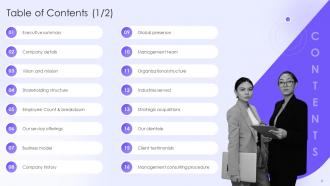
Slide 2: This slide shows Table of Content for the presentation.
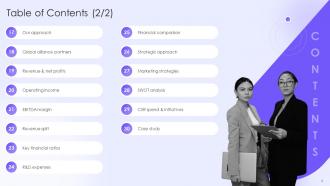
Slide 3: This is another slide continuing Table of Content for the presentation.
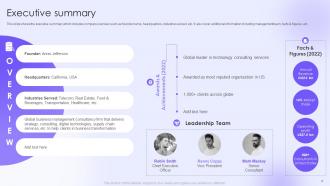
Slide 4: This slide presents executive summary which includes company overview such as founder name, headquarters, etc.
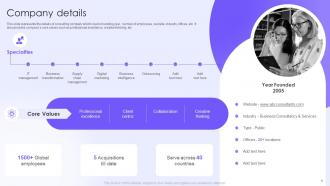
Slide 5: This slide represents the details of consulting company which covers founding year, number of employees, etc.
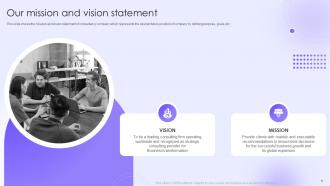
Slide 6: This slide showcases Our mission and vision statement.
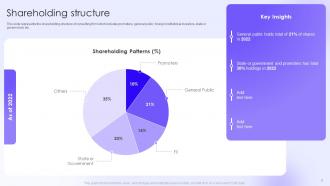
Slide 7: This slide displays shareholding structure of consulting firm.
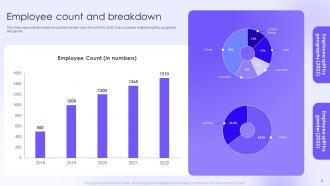
Slide 8: This slide shows employee count for last five years from 2018 to 2022.
Slide 9: This slide shows the consulting services offered by our company.
Slide 10: This slide focuses on business model of our consulting company.
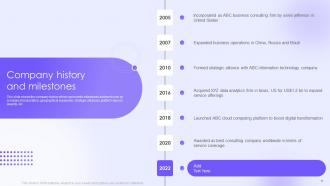
Slide 11: This slide shows the company history which represents milestones achieved.
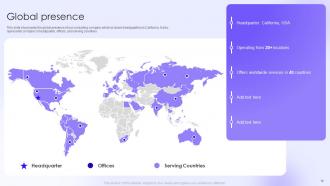
Slide 12: This slide showcases the global presence of our consulting company.
Slide 13: This slide shows Our experienced management team.
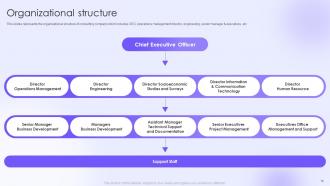
Slide 14: This slides represents the organizational structure of consulting company.
Slide 15: This slide covers the industries served by our company.
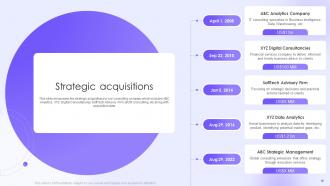
Slide 16: This slide showcases the strategic acquisitions by our consulting company.
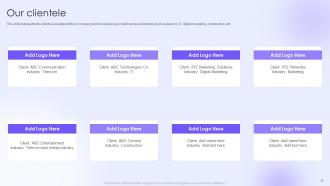
Slide 17: This slide represents the clients associated with our company.
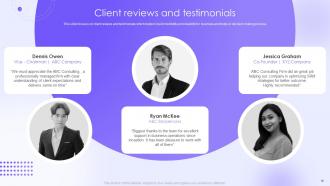
Slide 18: This slide showcases Client reviews and testimonials.
Slide 19: This slide shows Management consulting procedure.
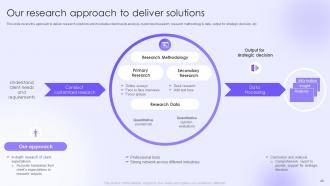
Slide 20: This slide presents Our research approach to deliver solutions.
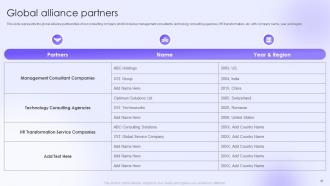
Slide 21: This slide represents the global alliance partnerships of our consulting company.
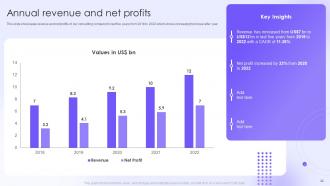
Slide 22: This slide showcases revenue and net profits of our consulting company for last five years.
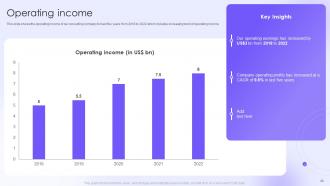
Slide 23: This slide shows the operating income of our consulting company.
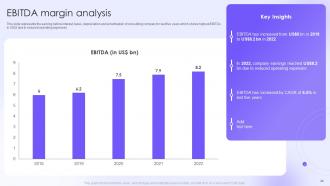
Slide 24: This slide represents the earning before interest, taxes, depreciation and amortization.
Slide 25: This slide showcases Revenue split by geography & business areas.
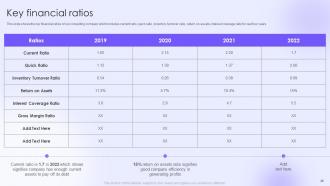
Slide 26: This slide shows the key financial ratios of our consulting company.
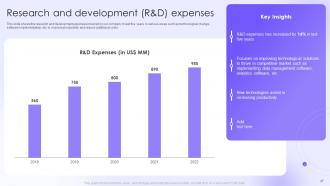
Slide 27: This slide presents Research and development (R&D) expenses.
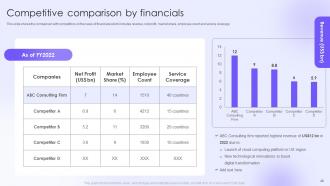
Slide 28: This slide displays Competitive comparison by financials.
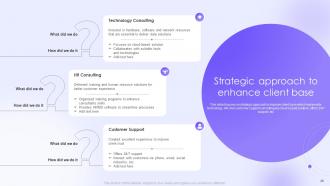
Slide 29: This slide represents Strategic approach to enhance client base.
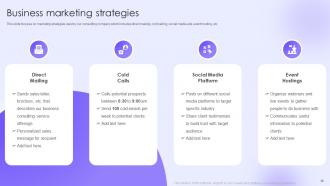
Slide 30: This slide focuses on marketing strategies used by our consulting company.
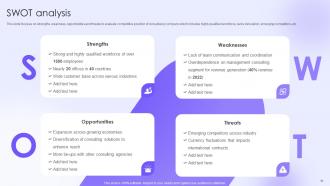
Slide 31: This slide focuses on strengths, weakness, opportunities and threats to evaluate competitive position .
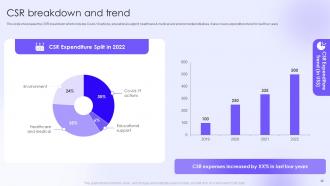
Slide 32: This slide showcases CSR breakdown and trend.
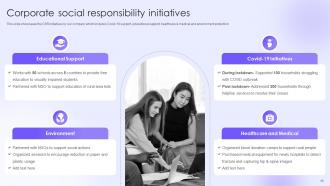
Slide 33: This slide shows Corporate social responsibility initiatives.
Slide 34: This slide represents Case study approach.
Slide 35: This slide contains all the icons used in this presentation.
Slide 36: This slide is titled as Additional Slides for moving forward.
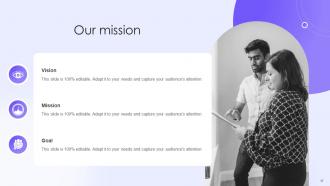
Slide 37: This is Our Mission slide with related imagery and text.
Slide 38: This is About Us slide to show company specifications etc.
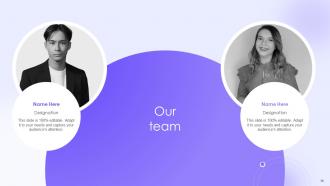
Slide 39: This is Our Team slide with names and designation.
Slide 40: This is Our Goal slide. State your firm's goals here.
Slide 41: This slide shows Post It Notes. Post your important notes here.
Slide 42: This slide depicts Venn diagram with text boxes.
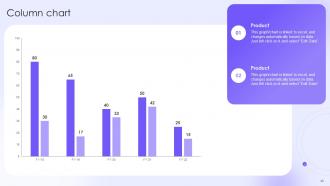
Slide 43: This slide displays Column chart with two products comparison.
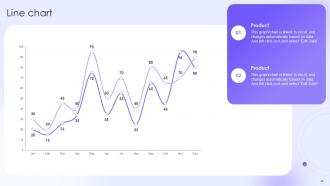
Slide 44: This slide describes Line chart with two products comparison.
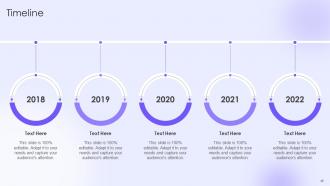
Slide 45: This is a Timeline slide. Show data related to time intervals here.
Slide 46: This is a Thank You slide with address, contact numbers and email address.
Business Consulting Services Company Profile Powerpoint Presentation Slides with all 51 slides:
Use our Business Consulting Services Company Profile Powerpoint Presentation Slides to effectively help you save your valuable time. They are readymade to fit into any presentation structure.















FAQs for Business Consulting Services Company Profile
Honestly, the main thing is you get expert advice without paying someone's full salary and benefits. Fresh eyes are huge - consultants catch stuff you're totally blind to when you're in the weeds every day. They've seen your problems before and have frameworks that actually work, so you skip all the trial and error BS. Plus they're great at helping you figure out what's actually important vs what just feels urgent. I'd say pick your biggest headache first and find someone who specializes in exactly that thing. Way cheaper than hiring full-time for specialized stuff like finance or marketing.
Honestly, most consultants mess this up by jumping straight to solutions. Spend forever in those discovery calls - I'm talking way longer than you think you need. What's actually stressing them out at 2am? Their industry might be tanking, or maybe their team culture is toxic. Don't assume anything. I used to have this cookie-cutter pitch deck and it was basically career suicide. Now I build frameworks I can twist for each client - one needs operational help, another's scrambling for new revenue streams. Ask weirder questions upfront. That's how you build something that fits their mess, not your template.
Honestly, you'll want to watch both the obvious numbers and the fuzzy stuff that's harder to pin down. ROI and cost savings are no-brainers to track. But some of the real value - like when your team starts making smarter decisions or actually working together better - that's tougher to measure but super important. Are they hitting deadlines? More importantly, is anyone actually using their recommendations or just filing them away? The worst is paying big bucks for a fancy report that collects dust. My biggest tip: nail down what success looks like before you even start. Trust me, you don't want to be backwards-engineering metrics later when your boss asks if it was worth it.
Yeah, you basically can't cookie-cutter this stuff across industries. Healthcare has totally different rules than some random tech startup, right? Financial services is a nightmare with compliance - they need every recommendation vetted against like fifty regulations. Retail? Way more chill. I always dig into the industry's weird quirks first - what's actually keeping these people up at night? Then build some templates so I'm not reinventing the wheel each time. Honestly saved me tons of headaches once I started doing frameworks by sector instead of wing-it consulting.
So consultants are basically all about tech now - way different from when they'd just roll up with slide decks. Most firms I've seen use AI to crunch data way faster than humans ever could. Cloud platforms help teams work together remotely. Automation handles the boring stuff that used to eat up weeks. Real-time dashboards and predictive analytics are pretty standard now, which is honestly kind of cool. It frees up consultants to actually think strategically instead of getting buried in spreadsheets. Before you hire anyone, definitely ask to see what tools they're actually using.
So basically these consultants are like your regulatory watchdogs. They track all the rule changes so you don't have to - because honestly, that stuff is mind-numbing. When new regulations drop, they'll translate what it actually means for your business and map out how to comply. They can also check your current setup for any red flags before you get in trouble. The best part? They've walked other companies through the same mess, so you're not starting from scratch. Find ones who know your industry inside out - makes all the difference.
Find someone who actually knows your industry - I can't stress this enough after we got burned by this big-name firm that basically learned our business on our dime. Ask for real case studies and references you can call, not just glossy brochures. Also, figure out who you'll actually be working with. Sometimes they sell you the A-team but stick you with fresh grads. Get the scope, timeline, and costs nailed down upfront or you'll end up paying way more than expected. Oh, and don't feel bad about being picky - it's your money!
Dude, get a consultant ASAP if you're dealing with a crisis. They've probably handled this exact mess before and won't make the same rookie mistakes you might. The outside perspective is huge when you're panicking and can't think straight. They'll help you communicate with stakeholders without sounding like a complete disaster, plus they're fast at figuring out financial damage and realistic recovery plans. My buddy's company waited too long to bring one in last year - big mistake. Way better for prevention than trying to fix things after you've already screwed up royally.
So consultants basically come in and spot all the inefficient crap you're doing that you can't see anymore - you're too deep in it. They'll map out where you're wasting time and money, then redesign everything to flow better. What's cool is they've dealt with this stuff at tons of other companies, so they actually know what fixes work (not just theory). They can also bring in new tech to automate the boring repetitive stuff. Honestly, I'd start with whatever process eats up most of your day - that's where you'll see the biggest impact first.
Dude, cultural stuff will absolutely torpedo your consulting work if you're not careful. I've watched great strategies crash and burn because someone ignored local hierarchy rules or rushed past relationship-building. Different places have totally different comfort levels with change too. Your brilliant recommendations? Worthless if they go against how people actually do business there. Honestly, some cultures need way more time for decision-making than others. Always work with local people who get the nuances - it's not optional. And budget extra time upfront for building those relationships, even if it feels slow at first.
So basically, data analytics consultants take all your scattered business data and help you figure out what it actually means. They've got the tools and know-how to spot patterns and trends your team might totally miss. Think of them as data detectives - though that probably sounds way more exciting than sitting through spreadsheets all day lol. But they're genuinely useful for setting up dashboards, automating reports, and teaching your people how to read the metrics that actually matter. Just make sure you find someone who gets your industry, not just some tech wizard who doesn't understand your business. What specific decisions are you stuck on right now?
Look, people think consultants just regurgitate what you already know, but that's backwards. Yeah, sometimes they do - but you're really paying for someone who can cut through office politics and spot your blind spots. Most folks assume consulting = company's dying, when smart businesses actually use them for growth stuff. Oh and the "always expensive" thing? Not really anymore, lots of firms do flexible pricing now. Honestly, the best part is having someone challenge your thinking and bring frameworks that actually work. Way better than just spinning your wheels internally.
So sustainability consultants basically do the heavy lifting for you - they'll audit what you're doing now, spot the gaps, then build you a roadmap to actually reduce your environmental impact. The regulatory stuff changes constantly (honestly such a headache), so having experts handle ESG reporting and supply chain transparency is worth it. They can hook you up with certifications, set realistic goals, and train your people too. My advice? Find someone who knows your industry inside and out. They'll get your specific challenges way better than some generalist firm.
Analytical thinking is probably the biggest one - you're constantly breaking down messy business problems. Communication matters too since you'll be explaining your findings to C-suite people who don't have time for fluff. Problem-solving is kind of obvious but worth mentioning. What's harder is getting comfortable with uncertainty - half the time you're working with incomplete data and just have to figure it out. Oh, and project management skills are clutch because you'll have like 3-4 client projects running simultaneously. Industry knowledge helps but honestly you can build that over time. I'd start with nailing the analytical stuff first.
Dude, remote work totally flipped consulting on its head. Now you've got to think about distributed teams and all these digital tools when you're building strategies. Honestly, it's crazy how much changed so fast. Your recommendations have to work for hybrid setups and async decision-making - which is actually harder than it sounds. Clients want everything delivered virtually now, plus way more flexible engagement styles. The trick is really getting how their remote setup creates specific problems, then designing solutions that actually function whether people are in the office or working from their kitchen table.
-
The PPTs are extremely simple to modify. Thank you for providing the slides that are ready to be used. They assist me in saving a lot of time.
-
Great templates that you can use in your next keynote or conference. They are perfect for quick and visually-engaging delivery.