


IT Services Company Profile Powerpoint Presentation Slides




Try Before you Buy Download Free Sample Product
 Impress Your
 Audience
 100%
100% Editable
 Save Hours
 of Time


A company profile is a professional description that aims to inform clients about product and service offerings, their structure, resources, financial performance, etc. Check out our efficiently designed template on IT Services Company Profile. It showcases the executive summary and company introduction, including our mission, specialities, achievements, and core values. Also, it covers our global presence across different regions, key products and support services. Further, this PPT represents our management team, company history, strategic partnerships, business model, key clients, and their reviews. Moreover, it focuses on financial highlights such as revenues, net profit, ratio analysis, revenue split by geography, and R and D expenses. Also, it captures market share and comparison with competitors based on financials and services. It also focuses on a strategic approach to improving client base, marketing mix, SWOT analysis, CSR activities, and case study approach. Customize this 100 percent editable Company profile through assistance from our highly-skilled research or design team. Get access now.
People who downloaded this PowerPoint presentation also viewed the following :
Content of this Powerpoint Presentation
Slide 1: This slide introduces IT Services Company Profile. State Your Company Name and begin.
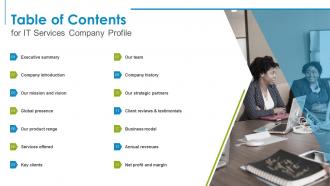
Slide 2: This slide presents Table of Content for the presentation.
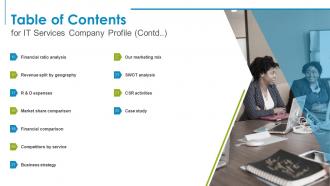
Slide 3: This is another slide continuing Table of Content for the presentation.
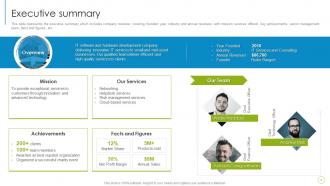
Slide 4: This slide represents the executive summary which includes company overview.
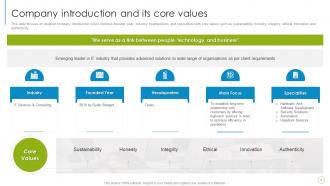
Slide 5: This slide focuses on detailed company introduction which includes founded year, industry, headquarters and specialities.
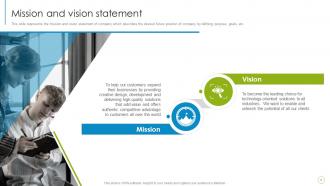
Slide 6: This slide represents the mission and vision statement of company.
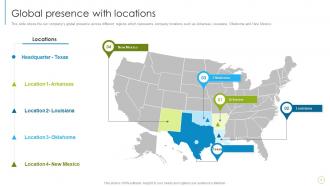
Slide 7: This slide shows the our company’s global presence across different regions.
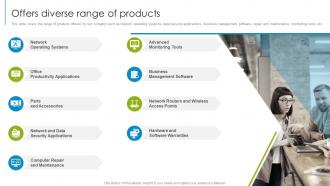
Slide 8: This slide covers the range of products offered by our company such as network operating systems, data security applications, etc.
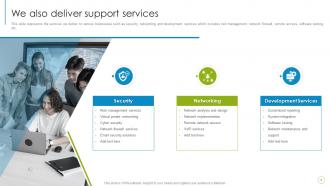
Slide 9: This slide represents the services we deliver to various businesses such as security, networking and development services.
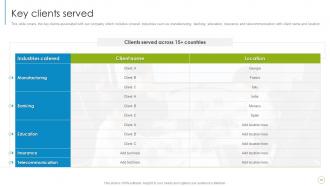
Slide 10: This slide covers the key clients associated with our company which includes covered industries.
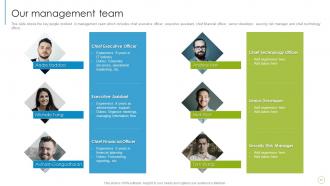
Slide 11: This slide shows the key people involved in management team.
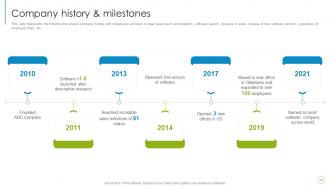
Slide 12: This slide represents the timeline that shows company history with milestones achieved.
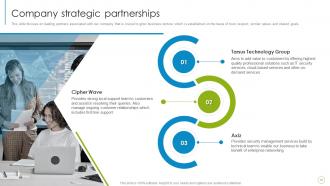
Slide 13: This slide focuses on leading partners associated with our company.
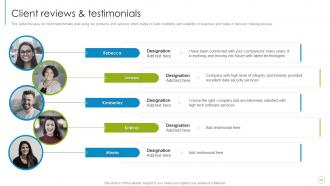
Slide 14: This slides focuses on client testimonials post using our products and services.
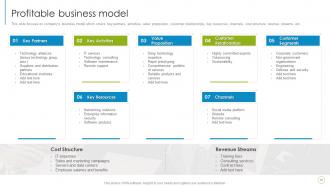
Slide 15: This slide focuses on company’s business model which covers key partners, activities, value proposition, etc.
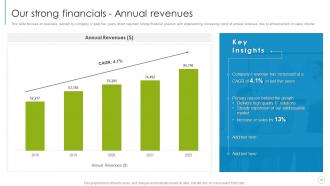
Slide 16: This slide focuses on revenues earned by company in past five years which reported strong financial position.
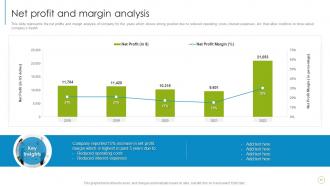
Slide 17: This slide represents the net profits and margin analysis of company for five years.
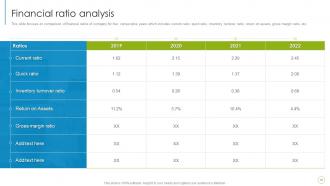
Slide 18: This slide focuses on comparison of financial ratios of company for four consecutive years.
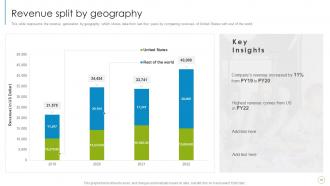
Slide 19: This slide represents the revenue generation by geography which shows data from last four years.
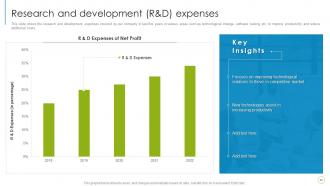
Slide 20: This slide shows the research and development expenses incurred by our company.
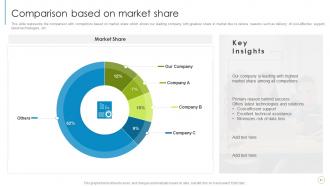
Slide 21: This slide represents the comparison with competitors based on market share.
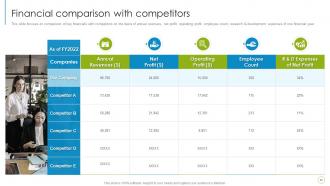
Slide 22: This slide showcases Financial comparison with competitors.
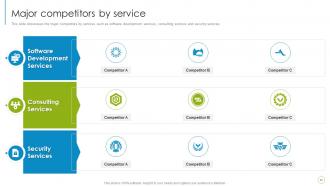
Slide 23: This slide presents the major competitors by services such as software development services, consulting services and security services.
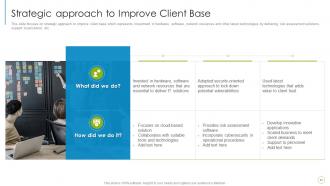
Slide 24: This slide displays Strategic approach to improve client base.
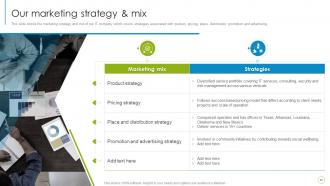
Slide 25: This slide shows the marketing strategy and mix of our IT company.
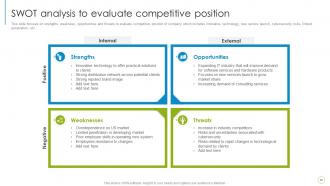
Slide 26: This slide presents SWOT analysis to evaluate competitive position.
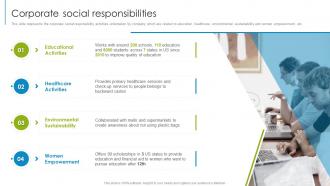
Slide 27: This slide represents the corporate social responsibility activities undertaken by company.
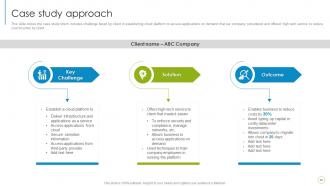
Slide 28: This slide shows the case study which includes challenge faced by client in establishing cloud platform.
Slide 29: This slide displays Icons for IT Services Company Profile.
Slide 30: This slide is titled as Additional Slides for moving forward.
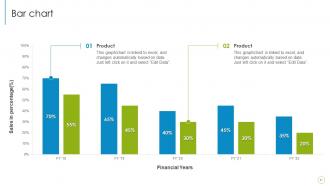
Slide 31: This slide presents Bar chart with two products comparison.
Slide 32: This slide provides 30 60 90 Days Plan with text boxes.
Slide 33: This is Our Target slide. State your targets here.
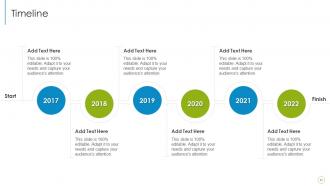
Slide 34: This is a Timeline slide. Show data related to time intervals here.
Slide 35: This slide shows Post It Notes. Post your important notes here.
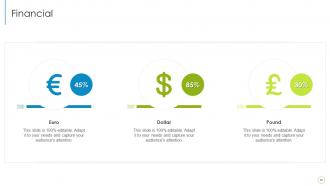
Slide 36: This is a Financial slide. Show your finance related stuff here.
Slide 37: This is an Idea Generation slide to state a new idea or highlight information, specifications etc.
Slide 38: This is a Thank You slide with address, contact numbers and email address.
IT Services Company Profile Powerpoint Presentation Slides with all 43 slides:
Use our IT Services Company Profile Powerpoint Presentation Slides to effectively help you save your valuable time. They are readymade to fit into any presentation structure.





FAQs for IT Services Company Profile
So we do three main things - cloud migration stuff (moving companies from their old servers to AWS or Azure), cybersecurity, and custom software builds. Honestly, the cloud work is our bread and butter. Most businesses have no clue how to handle that transition properly. We'll also set up your network security and monitor for threats, which is huge if you can't risk getting hacked. Custom development happens when you need something specific that normal software can't handle - like connecting weird legacy systems together. Oh, and we manage everything ongoing too, not just the initial setup. You should probably just hop on a quick call so we can figure out what's actually broken first.
Honestly, it's our weird hybrid thing that works. We've got developers who actually get business stuff - like they can look at a P&L and not panic. Meanwhile our business consultants aren't afraid of code. Most companies are either tech nerds with zero business sense or strategy people who can't execute worth a damn. We also document everything obsessively (yeah, I know that sounds boring). But here's the thing - when someone leaves your project, it doesn't implode. You get solutions that actually help your bottom line instead of just looking pretty.
Yeah, we're pretty well-rounded honestly. Cloud stuff is covered - got AWS and Azure certified people, plus solid database and security expertise. Three people just got their DevOps certs last month which was cool. Most devs know Python, Java, JavaScript, that whole stack. Networking's good too with some Cisco folks. Cloud migrations and security work is probably where we shine the most - that's our bread and butter really. Oh, and the security implementations have been going really well lately. Want me to hook you up with someone specific depending on what you need?
So we're big in three areas - healthcare, finance, and manufacturing. Healthcare clients need HIPAA stuff handled plus EHR systems that don't suck (rare, honestly). Finance is all about cybersecurity and compliance automation, which is a lifesaver during audit season. Manufacturing's different - they want IoT and predictive maintenance to avoid equipment dying at the worst times. Each industry's got totally unique problems, so we actually built separate teams for each. Oh, definitely check our case studies if you want real examples - way more useful than me just describing it.
Look, we're pretty much obsessed with keeping you updated - weekly reports, real-time dashboards, the whole thing. You'll have direct access to the actual tech leads, not just some project manager who speaks in buzzwords. Honestly, we'd rather overcommunicate than leave you wondering what's happening. Your feedback shapes everything we build, so there are review points built into each milestone. Oh, and you get one main contact person who actually gets the technical stuff. Trust me, surprises suck when you're on a deadline. Jump on a call whenever you need clarity - seriously, don't hesitate.
So we've got layers on layers - encryption everywhere, regular audits, role-based access controls. Honestly? We're kinda obsessed with security (maybe too much but whatever). SOC 2 certified, GDPR compliant if you need it. Vulnerability checks happen every quarter. Your data's never just sitting there naked, which sounds weird but you know what I mean. The cool part is we can actually show you our exact setup for your specific project rather than just talking in generics.
Look, most of our clients come to us with the same three headaches. Cyber threats are keeping them up at night, their old tech is basically held together with duct tape, and their teams are totally overwhelmed trying to manage everything. So we jump in and monitor their security around the clock - honestly, it's crazy how many businesses try to wing this part. We'll upgrade their systems so things actually run smoothly again, plus we become like their external IT department. The best part? Their people can finally work ON the business instead of constantly fixing broken stuff. Usually they feel the difference pretty fast, like within a month.
Honestly, we just try stuff constantly. Every quarter the team sets aside time to mess around with new tech - which is pretty fun since we get to test all the latest tools before anyone else. Vendors hook us up with early access, so that helps too. But here's the thing - you can't chase every shiny object that comes along. We run small pilots with a few clients first, see what actually works in real situations. Sometimes things look amazing in demos but fall flat when clients try using them. The trick is staying picky and only adopting tech that genuinely solves problems better than what we already have.
Check out the "Success Stories" page - we've got around 8-10 solid case studies up there. The healthcare one's probably your best bet since we cut their downtime by 90% and saved them $200K per year. Pretty crazy numbers, right? Also grab the manufacturing story where we overhauled their ancient legacy systems. Oh, and there's this retail client where we doubled their e-commerce speed during their busiest season - that one always impresses people. I'd definitely cherry-pick a few of these for your proposal. They've all got real ROI data instead of just fluff.
Honestly, start by figuring out what success actually looks like for your situation first. Then track the obvious stuff - cost savings, how often systems go down, response times getting better. Client feedback matters just as much as the numbers though. Set your baseline before anything kicks off, then compare against whatever targets you agree on. Regular check-ins are clutch so you can pivot if things aren't working. User satisfaction scores tell you more than most fancy dashboards anyway (even though those look pretty cool). The whole framework should build around your specific goals, not some cookie-cutter approach.
So they've got you covered with 24/7 monitoring, security patches, bug fixes - the usual stuff. Your support team will know your system crazy well (better than you, probably). Monthly reports keep you in the loop, plus they handle backups and help you scale up when things get busy. Most people go with their tiered packages - basic maintenance up to full white-glove service. Oh, and honestly? I'd just hop on a quick call with their support lead. Way easier to figure out what tier fits your budget than guessing from their website.
Oh for sure, custom work is basically our bread and butter - like 80% of what we do. Most places have their own weird systems and workflows, so cookie-cutter stuff just doesn't cut it. We had some painful lessons early on trying to force generic solutions on everyone (not fun). So we start by digging into your current setup and figuring out what's actually broken. Then build something that works with how your people already operate. Discovery phase comes first to map everything out. Honestly, if you're seriously considering this, just book a consultation. Way easier to talk through your specific mess than guess at it.
So we do this hybrid thing - mix Agile sprints with the old school milestone stuff. Works way better than picking just one, trust me. Weekly check-ins keep everything on track, catch problems early before they blow up. Our PMs actually get the technical side too, which is huge. Quality checks happen every sprint so nothing slips through. Here's the thing though - we're upfront about delays instead of panicking last minute. Definitely jump on those weekly calls if you can. Sounds boring but it'll save you so much stress down the road.
Yeah, we've got some solid certs that actually matter. Microsoft Gold Partner gets us direct access to their enterprise stuff and priority support when things go sideways. AWS Advanced Consulting Partner means complex cloud migrations don't stress us out. ISO 27001 is huge for security compliance - I can't tell you how many enterprise deals would've fallen through without that one. They need everything documented perfectly, you know? CompTIA and Cisco partnerships cover the technical side too. These aren't just wall decorations. You get vendor resources and support that smaller companies simply can't touch.
Honestly, you gotta focus on AI automation, cybersecurity mesh, and edge computing. Everyone's talking about AI right now - and yeah, it's kind of annoying in meetings - but it's actually changing everything from monitoring to predictive stuff. Remote work killed the old security models, so now it's all about distributed approaches. Edge computing is blowing up because companies want their data processed right where they need it, not in some distant cloud. Oh, and definitely pick one to dive deep into. Your clients will start asking about this stuff way sooner than you think.
-
“Easy to use. I always wanted to have a quick search for products and SlideTeam has helped me have it.”
-
I am glad to have come across Slideteam. I was searching for some unique presentations and templates for my business. There are a lot of alternatives available here.