


Business Branding Proposal Powerpoint Presentation Slides





Try Before you Buy Download Free Sample Product
 Impress Your
 Audience
 100%
100% Editable
 Save Hours
 of Time


Are you preparing to give a PPT on business branding using best graphics and diagrams? Take a sigh of relief. We have come up with a business branding proposal PowerPoint presentation slides. Our corporate promotion proposal PPT templates act as a foundation stone to give your organization a value, identity, and awareness among customers. In addition to this, our brand marketing PowerPoint visuals will help you to establish a long-term relationship with your customers. These brand equity presentation slides include all the necessary stuff such as business focus, corporate product and services, competitive analysis, trade strategy framework, brand integrity, market competitiveness and execution roadmap. Our corporate awareness plan PowerPoint presentation templates can also be used as other templates such as corporate trademark, product proposal, brand communication, product awareness, company advertising plan, brand awareness, business to business quality management, brand awareness, branding strategy, product positioning, and many more. Simply download, edit your text and present!. Our Business Branding Proposal Powerpoint Presentation Slides are a binding force. They create a cohesive environment.
People who downloaded this PowerPoint presentation also viewed the following :
Content of this Powerpoint Presentation
Slide 1: This slide introduces Business Branding Proposal. State your company name and begin.
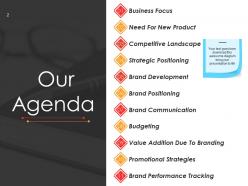
Slide 2: This slide shows Our Agenda that includes these mainly and those are- Business Focus, Brand Performance Tracking, Need For New Product, Competitive Landscape, Strategic Positioning, Brand Development, Brand Positioning, Brand Communication, Budgeting, Value Addition Due To Branding, Promotional Strategies.
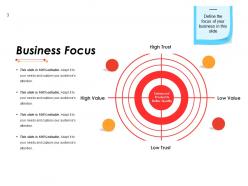
Slide 3: This slide shows Business Focus . You can measure your business strength by using this slide.
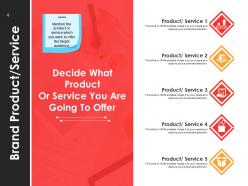
Slide 4: This slide shows brand product/ service . You can add your product and services in this and make best use of it.
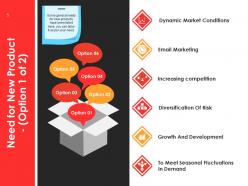
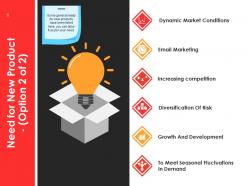
Slide 5: This slide presents Need for New Product and that also includes variations like- Dynamic Market Conditions, Diversification Of Risk, To Meet Seasonal Fluctuations In Demand, Increasing competition, Email Marketing, Growth And Development.
Slide 6: This slide is continution for the Need for New Product which have the same parameters stated above.
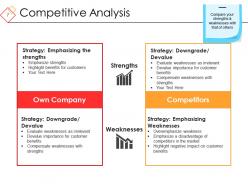
Slide 7: This slide showcases Competitive Analysis which also show various objectives that are- Strengths, Weaknesses, Strategy- Emphasizing the strengths, Strategy- Downgrade/ Devalue, Strategy- Downgrade/ Devalue, Strategy- Emphasizing Weaknesses Compare your strengths & weaknesses with that of others using this slide.
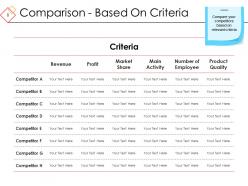
Slide 8: This slide comprises of Comparison - Based On Criteria. By this you can Compare your competitors based on relevant criteria.
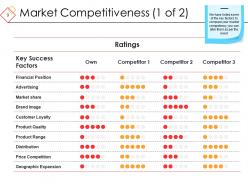
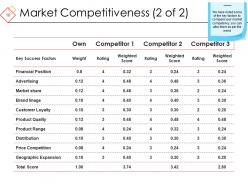
Slide 9: This slide presents Market Competitiveness. We have listed some of the key factors to compare your market competency, you can alter them as per the need.
Slide 10: This slide is continuing the above Market Competitiveness. We have listed some of the key factors to compare your market competency, you can alter them as per the need .
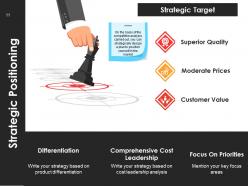
Slide 11: This slide diplays Strategic Positioning with strategic target and those are- Superior Quality, Customer Value, Moderate Prices, Differentiation, Comprehensive Cost Leadership, Focus On Priorities.
Slide 12: Mention the Brand mission statement in this slide indicating the Brand’s purpose. This is a representative image, and should be replaced by your own image.
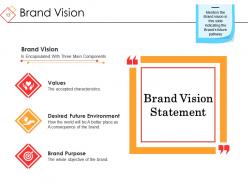
Slide 13: This is Brand Vision slide. You can add your values, Desired future enviorment, bramd purpose.
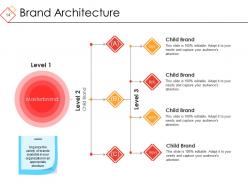
Slide 14: This slide showcase Brand Architecture with three levels and sub categories. You can add your brand architecture with child brand branches.
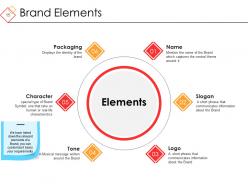
Slide 15: This is a Brand Elements slide.We have listed down the relevant elements of a Brand, you can customize it basis your requirements and those are- Packaging, Character, Tone, Logo, Slogan, Name, Elements.
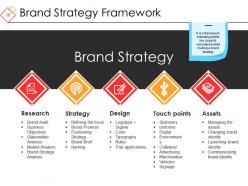
Slide 16: This is a Brand Strategy Framework showin various brand strategy as follows- Research, Strategy, Positioning Strategy, Assets, Touch points, designs.
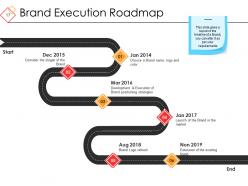
Slide 17: This slide presents Brand Execution Roadmap and gives a layout of the timeline of a Brand, you can alter it as per your requirements
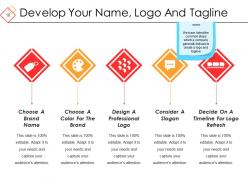
Slide 18: This slide showcase Develop Your Name, Logo And Tagline. We have listed the common steps which a company generally follows to create a logo and these are- Choose A Brand Name, Choose A Color For The Brand, Design A Professional Logo, Consider A Slogan, Decide On A Timeline For Logo Refresh.
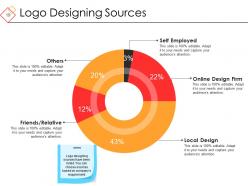
Slide 19: This slide shows Logo Designing Sources. Logo designing sources have been listed. You can choose sources based on company’s requirement that are as follows- Self Employed, Online Design Firm, Local Design, Friends/Relative, Others.
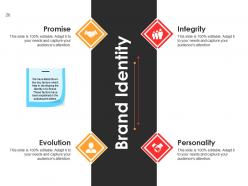
Slide 20: This slide displays Brand Identity. We have listed down the key factors which help in developing the identity of a Brand and those are as follows- Integrity, Personality, Evolution.
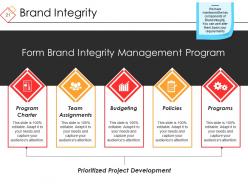
Slide 21: This slide is showing Brand Integrity which further explains about Form Brand Integrity Management Program. We have mentioned the key components of Brand integrity. You can use/ alter them basis your requirements Program Charter, Team Assignments, Budgeting, Policies, Programs, Prioritized Project Development.
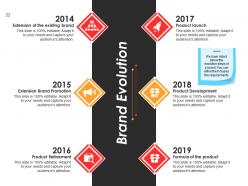
Slide 22: This slide displays about Brand Evolution.We have listed below the evolution steps of a brand. You can refine them bases the requirements.
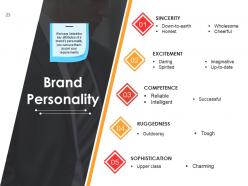
Slide 23: This slide presents Brand personality. We have listed the key attributes of a brand’s personality, you can use them as per your requirements.
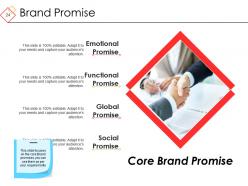
Slide 24: This slide displays Brand Promise.This slide focuses on the core Brand promises, you can use them as per your requirement as few of them are- Functional Promise, Global Promise, Social Promise, Core Brand Promise.
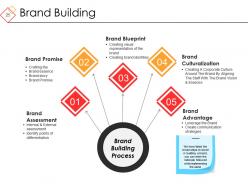
Slide 25: This slide presents Brand Building Process. We have listed the broad steps involved in building a brand, you can enter the brand building process by using these- Brand Assessment, Brand Advantage, Brand Blueprint, Brand Promise, Brand Culturalization.
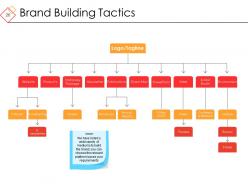
Slide 26: This slide shows Brand Building Tactics. We have listed a wide variety of mediums to build the brand, you can choose the relevant platform bases your requirements.
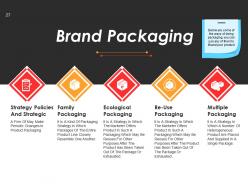
Slide 27: This slide showcases Brand Packaging.Below are some of the ways of doing packaging, you can use any of them to Brand your product and those are as follows- Strategy Policies And Strategic, Family Packagingy, Ecological Packaging, Re-Use Packaging, Multiple Packaging.
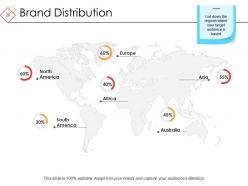
Slide 28: This slide showcases Brand Distribution. List down the regions where your target audience is based.
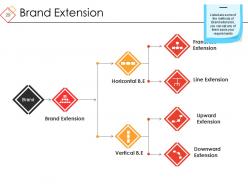
Slide 29: This slide shows Brand Extension.Listed are some of the methods of Brand extension, you can opt any of them basis your requirement- Brand, Brand Extension, Horizontal B.E, Vertical B.E, Franchise Extension, Line Extension, Upward Extension, Downward Extension.
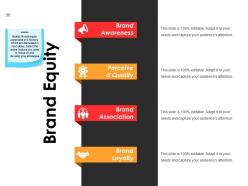
Slide 30: This slide presents Brand Equity. Ideally, Brand equity comprises of 4 factors; which are discussed in next slides. Select the prime factors you want to focus on and develop your strategies Brand Association, Perceived Quality, Brand Awareness, Brand Loyalty.
Slide 31: This slide is showing Brand Value. Ideally, Brand value comprises of 4 factors; which are discussed in next slides. Select the prime factors you want to focus on and develop your strategies
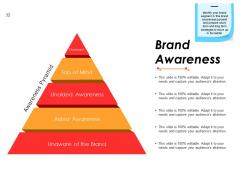
Slide 32: This slide presents Brand Awareness. Identify your brand segment in this brand awareness pyramid and prepare short term and long term strategies to move up in the ladder Awareness Pyramid, Dominant, Unaware of the Brand, Aided Awareness, Unaided Awareness, Top of Mind.
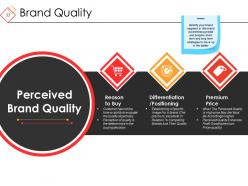
Slide 33: This slide shows Brand Quality.Identify your brand segment in this brand awareness pyramid and prepare short term and long term strategies to move up in the ladder.
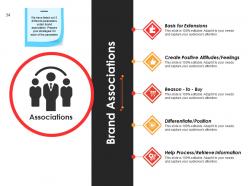
Slide 34: This slide showcases Brand Associations. We have listed out 5 different parameters under brand association. Prepare your strategies as use these that we mentioned are- Create Positive Attitudes/Feelings, Reason - to - Buy, Differentiate/Position, Help Process/Retrieve Information, Basis for Extensions.
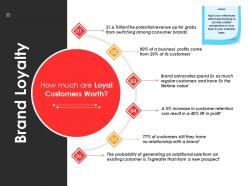
Slide 35: Create your Brand Loyalty slide. Input your inferences after brand tracking to provide a better perspective on how loyal is your customer base.
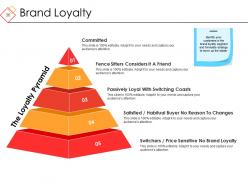
Slide 36: This slide presents Brand Loyalty. Identify your customers in the brand loyalty segment and formulate strategy to move up and use this for your reference that are- Committed, Fence Sitters Considers It A Friend, Passively Loyal With Switching Coasts, Satisfied / Habitual Buyer No Reason To Changes, Switchers / Price Sensitive No Brand Loyalty.
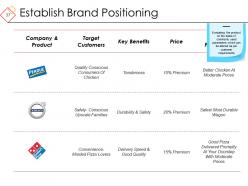
Slide 37: This slide presents Establish Brand Positioning. Evaluating the product on the basis of commonly used parameters which can be altered as per customer requirements.
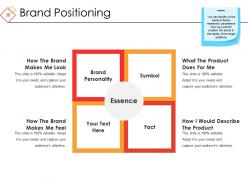
Slide 38: This slide presents Brand Positioning. You can decide on the basis of below mentioned parameters how you want to position the brand in the minds of the target audience. These are few that for reference we are listing- Symbol, Fact, Brand Personality, Essence,
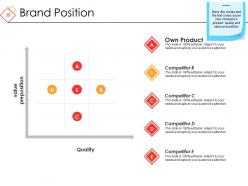
Slide 39: This slide shows Brand Position. You can compare your own product wih others using this.
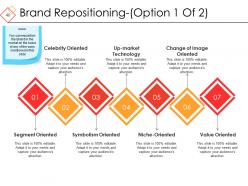
Slide 40: This slide presents Brand Repositioning. You can reposition the Brand in the market on the basis of any of the ways mentioned in this slide by using these characterstics- Celebrity Oriented, Up-market Technology, Change of Image Oriented, Segment Oriented, Symbolism Oriented, Niche-Oriented.
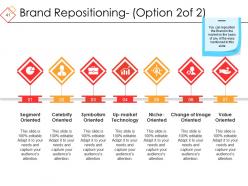
Slide 41: Brand Repositioning.You can reposition the Brand in the market on the basis of any of the ways mentioned in this slide and those are- Segment Oriented, Celebrity Oriented, Symbolism Oriented, Up-market Technology, Niche-Oriented, Change of Image Oriented, Value Oriented.
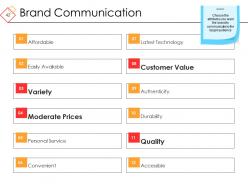
Slide 42: This slide is for Brand Communication. Choose the attributes you want the brand to communicate to the target audience. And these attributes are- Affordable, Easily Available, Variety, Moderate Prices, Personal Service, Convenient, Latest Technology, Customer Value, Authenticity, Durability, Quality, Accessible.
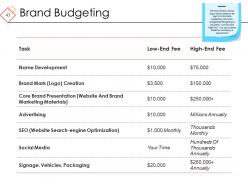
Slide 43: This slide is about Brand Budgeting. We have listed various ways which needs to be kept in mind while budgeting. We have categorized Budgeting in two parts: Low end and High End. You can choose based on company’s requirement
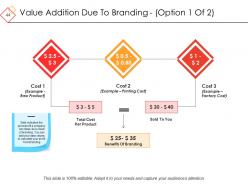
Slide 44: This slide Value Addition Due To Branding. Slide indicates the price/profit a company can make as a result of branding. You can add your data values to calculate your profit from Branding.
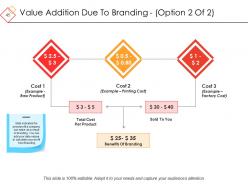
Slide 45: This slide Value Addition Due To Branding is continuation of previous one. Slide indicates the price/profit a company can make as a result of branding. You can add your data values to calculate your profit from Branding.
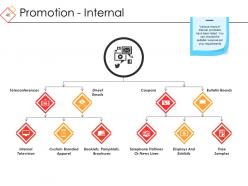
Slide 46: This slides presents Promotion - Internal. Various ways of Internal promotion have been listed. You can choose the suitable ways as per your requirements Internal Television, Custom Branded Apparel, Booklets, Pamphlets, Brochures, Direct Emails, Coupons, Teleconferences, Bulletin Boards, Telephone Hotlines Or News Lines, Displays And Exhibits, Free Samples.
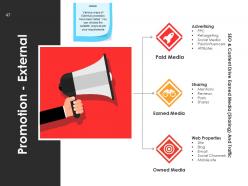
Slide 47: This slide showcases Promotion - External. Various ways of External promotion have been listed. You can choose the suitable ways as per your requirements.
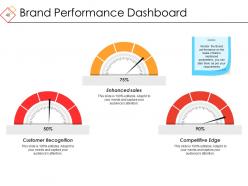
Slide 48: This slide presents Brand Performance Dashboard. Monitor the Brand performance on the basis of below mentioned parameters, you can alter them as per your requirements
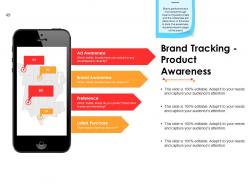
Slide 49: This slide shows about Brand Tracking - Product Awareness. Use this for Brand performance is monitored through means of questionnaire and the inferences are listed down in this slide to track the awareness, experience and usage of the brand with these- Ad Awareness, Brand Awareness, Preference, Latest Purchase.
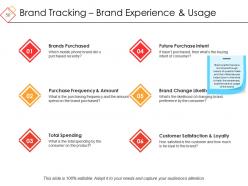
Slide 50: This slide gives you complete information about Brand Tracking – Brand Experience & Usage. Brand performance is monitored through means of questionnaire and the inferences are listed down in this slide to track the awareness and those are- Brands Purchased, Purchase Frequency & Amount, Total Spending, Customer Satisfaction & Loyalty, Brand Change Likelihood, Future Purchase Intent.
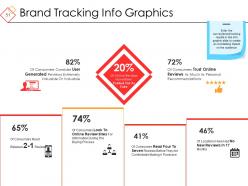
Slide 51: This slide gives you an overview for Brand Tracking Info Graphics. Enter the survey/brand tracking results in this info graphic slide to create an everlasting impact on the audience.
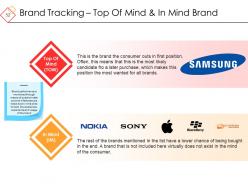
Slide 52: This slide shows Brand Tracking – Top Of Mind & In Mind Brand. With this Brand performance is monitored through means of questionnaire and the inferences are listed down in this slide to track the awareness.
Slide 53: This slide is on Business Branding Proposal Icon Slides. You can use as per requirement.
Slide 54: Business Branding Proposal Icon Slides. You can use according to your business requirement.
Slide 55: This slide shows a Coffee break image.
Slide 56: This slide is titled Graphs and Charts to proceed forward.
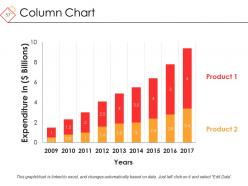
Slide 57: This slide shows a Column Chart for product comparison.
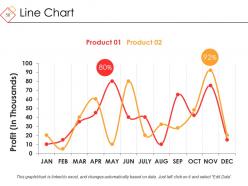
Slide 58: his slide shows a Line Chart for two product comparison.
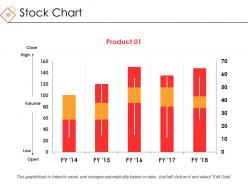
Slide 59: This slide displays a Stock Chart with volume as parameter in terms of high and low, open and close.
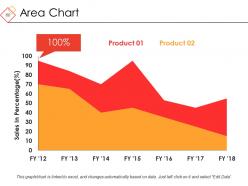
Slide 60: This slide shows an Area Chart for product comparison.
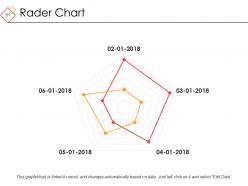
Slide 61: This slide presents a Radar Chart graph/chart. Compare Product 01, Product 02 and use as per required.
Slide 62: This slide is titled Additional Slides to proceed forward.
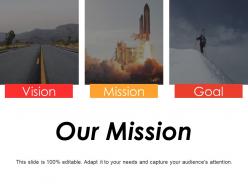
Slide 63: This is an Our Mission slide. State your mission here.
Slide 64: This is Meet Our Team slide with name and designation.
Slide 65: This is a About Us slide to state specification, company information etc.
Slide 66: This slide shows Our Goal with imagery. State your goals here.
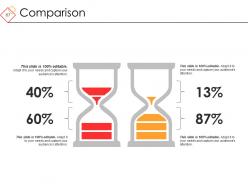
Slide 67: This slide presents Comparison between male/female entities. You can compare anything specific here.
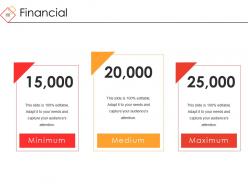
Slide 68: This slide shows Financial score to display.
Slide 69: This is a Quotes slide. The following quote has been shown as an example. Imagination Is More Important Than Knowledge.
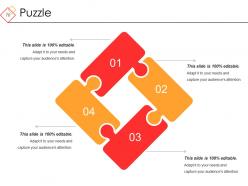
Slide 70: This slide presents a PUZZLE slide with the following subheadings- Integrity and Judgment, Critical and Decision Making, Leadership, Agility.
Slide 71: This is a Target slide. State your targets here. .
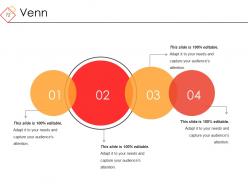
Slide 72: This is a Venn diagram to showcase information etc.
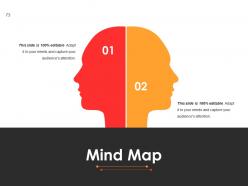
Slide 73: This slide shows a Mind map for representing entities
Slide 74: This is an Idea/Bulb image slide to show creative, innovative aspects etc.
Slide 75: This is a Thank You slide with Address# street number, city, state, Contact Numbers, Email Address.
Business Branding Proposal Powerpoint Presentation Slides with all 75 slides:
Our Business Branding Proposal Powerpoint Presentation Slides can make a crucial difference. Ensure your approach gets fully endorsed.




FAQs for Business Branding Proposal
Start with strategy first - positioning, audience, messaging. Most people screw this up by jumping straight to logos and colors. Include your visual identity stuff obviously (logo, typography, brand colors), plus a solid guidelines doc. Competitor analysis is huge, don't skip it. Break your pricing down clearly and show realistic timelines - these projects drag on forever, trust me. Case studies upfront are essential since clients want proof you've actually done this before. Oh, and define success metrics so you're not arguing about results later. Scope creep kills profits on branding work.
Focus on three things: personality, visuals, and how you talk to people. Figure out if you're the trustworthy expert type or more of a rebel shaking things up. Colors, fonts, logo rules - get specific about all that stuff. Your voice matters way more than people think though. Conversational? Serious? Kinda playful? Pick what works for your crowd. I can't tell you how many proposals I've seen that just phone this part in with boring template nonsense. Show actual examples of your brand in action - website, social, emails, whatever. Then write guidelines that don't suck so your team can actually use them.
Market research is what separates legit branding from pretty guesswork, honestly. You get real data on your audience, competitors, and market gaps - then use that to back up every creative choice. Color palettes, messaging, all of it. I've seen too many proposals fail because they skipped this step and just winged it. The research tells you what actually clicks with people, what competitors are doing wrong, and where you can stand out. Oh, and always put those insights first in your proposal, then show how your concepts solve what you found. Makes everything way more convincing.
Put your USP right at the top - don't hide it somewhere in the middle. What actually makes you different? Skip the generic "quality service" stuff that every company claims. Be specific about the problem you solve better than others. Numbers work great here - like "we cut onboarding time by 60%" instead of just saying you're "efficient." Here's what I learned the hard way: your USP has to connect to what clients genuinely care about, not what you think sounds impressive. Try explaining it to someone who doesn't work in your field. If they look confused or don't see why it matters, you've got more work to do.
Think about what actually sets you apart - your backstory, how you solve problems differently, or your team's specific skills. Customer testimonials are gold because they're authentic. What's your vibe? Scrappy startup or premium expert? That personality stuff really matters. Back everything up with real examples though - people see through fluff instantly. A simple chart comparing you vs competitors on the stuff that actually matters works well. Also, if you have any proprietary tools or processes, definitely highlight those since competitors can't just copy them.
Dude, visuals are everything for branding proposals. Clients need to *see* their brand, not just imagine it. Mock up logos on business cards, websites, storefronts - whatever makes sense. Mood boards are clutch for showing personality, and honestly? I've watched terrible concepts win purely because they looked amazing. Color psychology explanations help too, though that might be getting into the weeds. Charts comparing competitors or showing brand positioning work great. The whole point is making it feel real. Don't just describe the rebrand - show them what it'll actually look like out there.
Honestly, you gotta measure two things - the fuzzy brand stuff AND the actual money impact. Track brand recognition surveys and social mentions, plus website traffic to your brand pages. But here's what really counts: lead quality, customer acquisition costs, conversion rates. Don't sleep on employee engagement either - if your own team isn't bought in, you're screwed. Quick tip though - set your baseline numbers BEFORE launching anything. Then check quarterly. I learned that one the hard way. Makes reporting ROI way cleaner when you've got solid before/after data.
Tell some real stories about your company - like how you started, major obstacles you pushed through, or specific wins with past clients. COVID pivot stories work great too, honestly everyone connects with those. Share 2-3 short examples max, but make them actual stories with details and feelings, not boring corporate fluff. People need to picture themselves getting similar results. Your proposal should read like you're telling a friend about your successes, not reciting a manual. Then connect each story back to what you'll do for them specifically.
Break everything down clearly - logo, brand guidelines, website, marketing stuff. Always build in revision rounds because trust me, they'll want changes. Set up milestone payments so they know when money's due. Stock photos and font licenses can pop up unexpectedly, so factor those in too. I always add like 10-15% buffer for scope creep because it's inevitable. Be super upfront about what's included vs. what costs extra. The whole point is avoiding those weird money conversations later when they assume something was "free."
Don't just stick your brand values in some boring section at the end. Work them into the actual content instead. Like if you're all about innovation, show them a creative solution rather than just saying "we're super innovative!" Your writing voice should stay consistent throughout - oh, and definitely include case studies that actually prove your values work. Visual design matters too. Most proposals are painfully robotic to read, which is perfect for you because standing out isn't hard. What really counts is making your values feel genuine and tied to solving their specific problem.
Don't go generic - that's the death kiss. Clients spot cookie-cutter proposals instantly. Actually dig into their specific problems instead of just switching out company names. I've seen too many people promise crazy timelines or offer champagne services for beer budgets (guilty of this myself honestly). Be realistic about what you can deliver and when. Skip the corporate fluff and focus on actual measurable results. Throw in mockups or examples - way better than paragraphs of text nobody reads. Oh, and write a super detailed scope upfront. Trust me, you'll thank yourself later when they can't claim everything was "obviously included."
Don't make social media some separate thing tacked on at the end. Work it right into your main brand strategy. Figure out where your audience actually hangs out, then show how your brand's gonna look and sound different on each platform. Instagram's obviously more visual - think those clean product shots. LinkedIn? More like industry insights and that kind of stuff. Honestly, clients eat up the nitty-gritty details, so include posting schedules and specific metrics you'll track. Oh, and definitely scope out what competitors are doing first. Present it as one cohesive brand experience, then back everything up with a solid content calendar.
Break your branding proposal into 3-4 phases with deadlines. Discovery/research takes 2-3 weeks, concept development needs 3-4 weeks, then design execution is 4-6 weeks. Implementation's usually 2-4 weeks but honestly depends on how much stuff you're doing. Clients always want everything done yesterday - super annoying but whatever. Realistic timelines stop scope creep and prevent you from doing garbage work when you're rushed. Build in buffer time for revisions because there's ALWAYS revisions. Set up milestone checkpoints so everyone's on the same page throughout. Oh, and tie specific deliverables to each phase so your client actually knows what they're paying for.
Here's what works: Send your draft to key people with specific questions - like "does this brand positioning feel right?" instead of just "thoughts?" Trust me, vague questions get you nowhere. Gather everything in one doc and look for patterns. What keeps coming up? Focus on changes that'll actually move the needle business-wise and won't be a nightmare to implement. Oh, and definitely track what you changed and why - saves you later when someone asks. Do one final check with your most important stakeholders before you call it done.
Honestly, partnerships can make your brand proposal way stronger. You're basically tapping into their credibility and audience, which stakeholders love to see. Shows you can work with others too - always looks good in business. Other companies willing to associate with you? That's solid market validation right there. Pick partners that actually align with your values and fill gaps in what you offer. Quality over quantity here. I'd stick to highlighting maybe 2-3 really strategic partnerships instead of throwing in every collaboration you've ever done. Makes it cleaner and more impactful that way.
-
Good research work and creative work done on every template.
-
Qualitative and comprehensive slides.