Marketing Strategy Proposal Powerpoint Presentation Slides

Rating:
88%
Slide 1 of 39
Favourites Favourites

Try Before you Buy Download Free Sample Product

Audience Impress Your
Audience
Editable 100%
Editable
Time Save Hours
of Time
The Biggest Sale is ending soon in
0
0
:
0
0
:
0
0
Rating:
88%
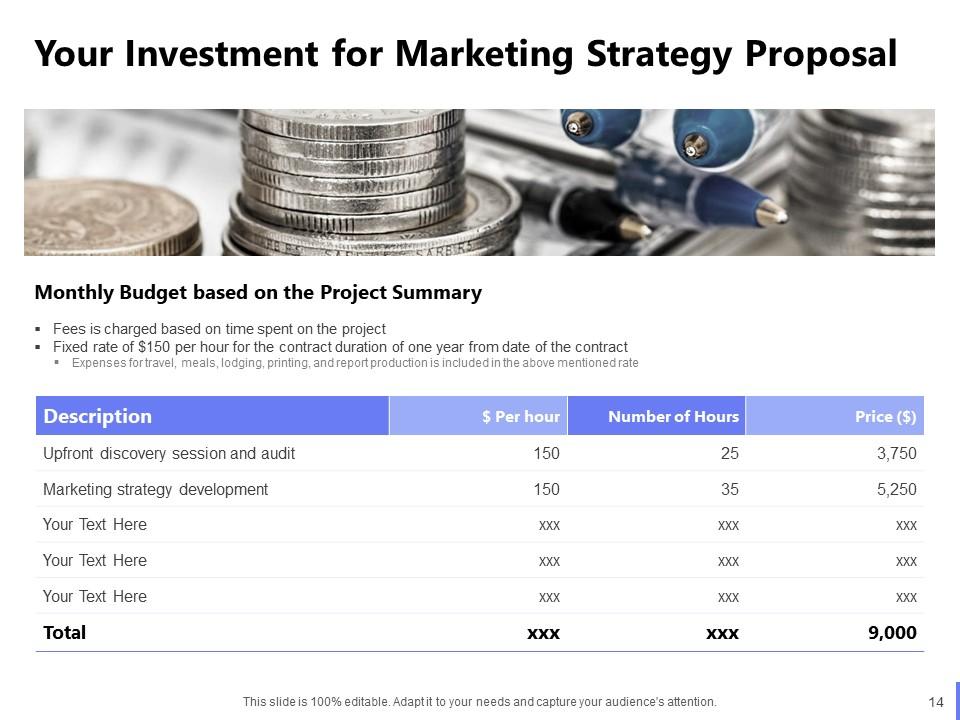
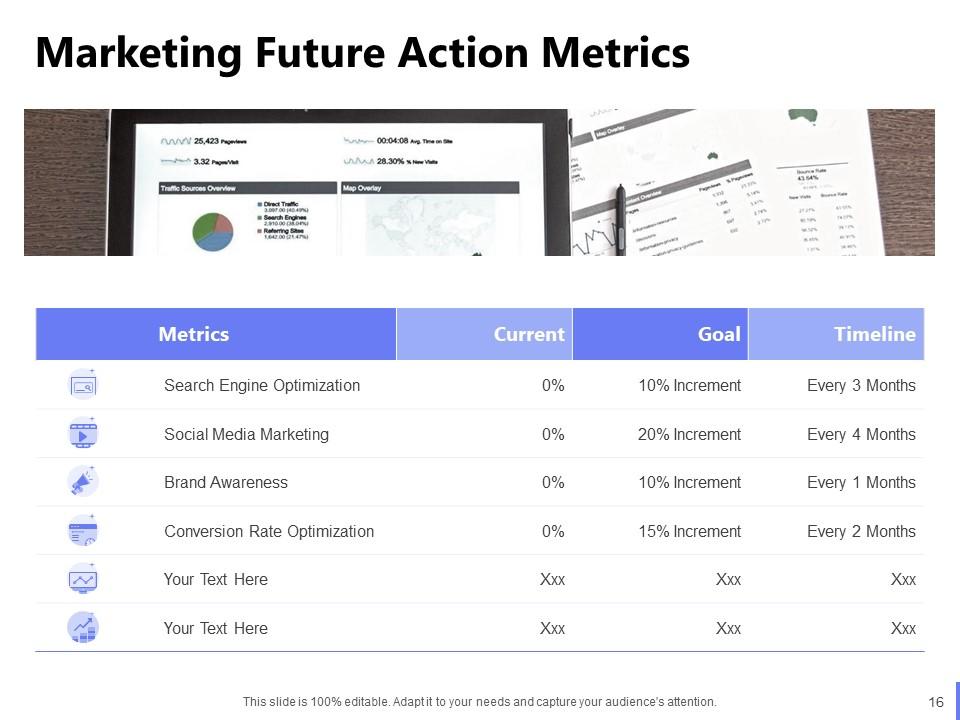
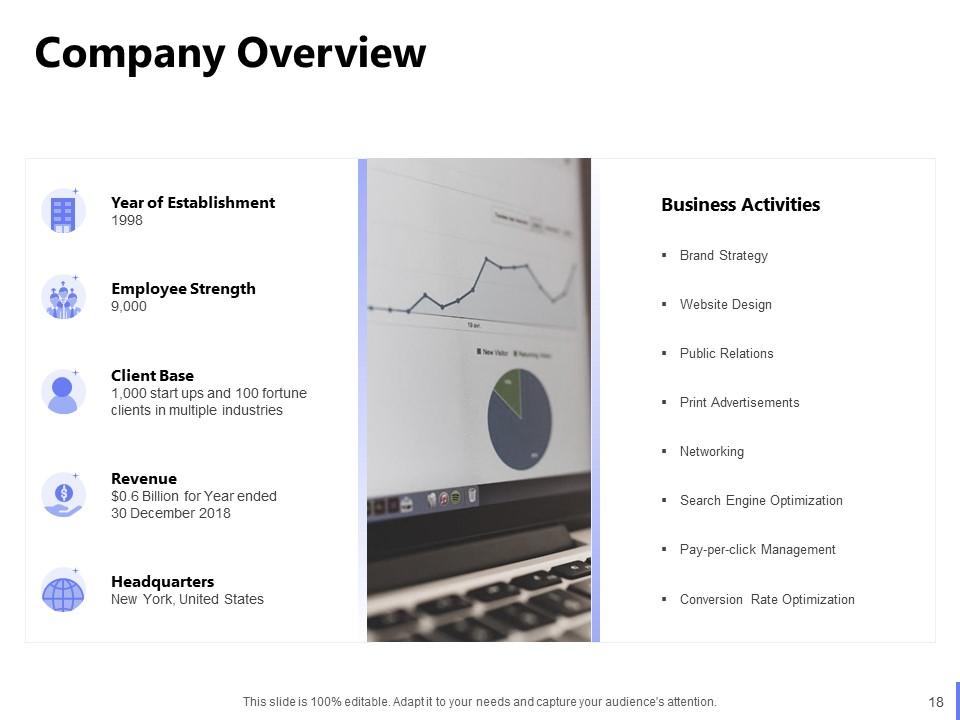
Presenting Marketing Strategy Proposal PowerPoint Presentation Slides which is completely editable. You can modify the colors, fonts, font types, and font size of the proposal as per your needs. The template is adaptable with Google Slides which makes it easily accessible at once. It can be changed into various file formats like PNG, PDF, and JPG. It is readily available in both 4:3 and 16:9 aspect ratio.

FAQs for Marketing Strategy Proposal

Okay so marketing strategy really comes down to five things. First, figure out exactly who you're targeting - and I mean really dig into this because most people half-ass the research then wonder why nothing works. Get your positioning right so you stand out from competitors. Set specific goals you can actually measure. Pick the channels where your audience hangs out, not just where you think is trendy. Budget realistically too. The messaging part is huge though - it's gotta hit what they actually care about, not what sounds clever to you. Everything honestly starts with understanding your audience first. That foundation makes everything else way easier.

Stop guessing and start tracking what actually works. Customer behavior data shows you which campaigns are worth your money - conversion rates don't lie. I used to wing it based on gut feelings... terrible idea, honestly. Now I segment audiences by looking at real patterns instead of assumptions. Focus your ad budget on channels that perform, then personalize content for different groups. Super simple starting point: pick whatever metric matters most to your business and just dive deep into that data first. You'll be shocked at what you find.

Honestly, audience segmentation is huge - it's what separates campaigns that actually work from the ones that fall flat. When you try talking to everyone, your messaging just becomes this boring, one-size-fits-all mess that nobody connects with. Break your audience into 3-4 groups based on who they are or what they need. Then craft different messages for each segment. It's like... you wouldn't explain something the same way to your mom versus your coworker, right? Same concept here. Look at your current customers first - they'll show you the natural segments pretty quickly.

Honestly, social media isn't just posting anymore - it's become the center of everything marketing-wise. The feedback you get is instant and way better than those awkward focus groups companies used to do. Your brand voice? Gets tested every single day through comments and messages, so you figure out what works super quickly. All that data feeds back into your other campaigns too. I've seen brands discover whole new audiences they never thought about just from social insights. Oh, and treat your accounts like little experiments, not just places to push your stuff. That's where the magic happens.

Honestly, the biggest pain points are usually people just hating change and not knowing digital stuff. Your team's probably working with ancient tech that can't even handle basic marketing tools. Leadership gets skeptical too because digital results feel way more abstract than the old-school metrics they actually understand. Plus asking for budget means you're basically saying "hey, let's take money from stuff that works and gamble on new things" - which sounds terrible when you put it like that! Start with just one channel though. Get some quick wins, show them real data, then slowly expand once everyone's on board.

Okay so competitive analysis and market research are basically how you stop making dumb assumptions about what people want. Look at what your competitors are doing - sometimes they're crushing it with something you never thought of, or they're totally missing something obvious you could jump on. Market research shows you what customers actually care about, not just what sounds good in your head (learned that one the hard way lol). You'll position better, pick smarter channels, find messaging that hits. Honestly though, start small - grab like 3-5 direct competitors and just stalk their strategies for a week. Way better than flying blind.

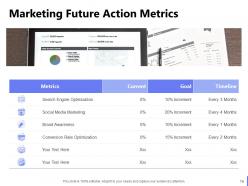
Look, honestly I'd focus on conversion rates, customer acquisition cost, and lifetime value first - those actually tell you if you're making money. Traffic and social engagement are nice to see but don't get obsessed with them. The real game-changer is figuring out which channels bring in actual sales, not just likes and clicks. Revenue attribution will save you from throwing money at stuff that doesn't work. Keep it simple though - maybe 5 or 6 key things you check weekly. More than that and you'll drive yourself crazy trying to track everything.

Honestly, storytelling just hits different than boring feature lists. People connect with real stories - they see themselves in your customer wins or think "yeah, I've been there too." Plus stories spread naturally. Your audience actually wants to share them. I've watched brands completely transform by ditching the whole "here's what we do" pitch for "here's how we helped someone exactly like you." It's wild how much more memorable they become. My advice? Start collecting real customer stories - even the messy ones work great. Build your next campaign around one story instead of ten bullet points.

Honestly, you've gotta watch your data like a hawk and be ready to switch things up fast. Check your social media engagement, website stuff, buying patterns - consumer behavior changes overnight now. During COVID our email campaigns just died and I had to scramble lol. Test small tweaks before you commit to anything major. Different channels, new messaging, whatever content formats seem promising. Your customers are literally telling you what they want through their feedback and complaints - actually listen to them! Oh and do monthly check-ins on your strategy so you're not using approaches that worked two years ago.

Honestly, I'd start with content marketing and social media - you'll get the most out of your time investment there. Blog posts and social content cost basically nothing except hours. Networking is where it's at though, I've literally watched startups get massive clients from random coffee meetings lol. Set up a referral program too since people actually trust their friends' recommendations. Oh and partner with other small businesses for cross-promotion stuff. Pick one thing first and nail it before moving on - otherwise you'll just burn yourself out trying to do everything.

Dude, branding is everything. Without it, you're just throwing money at random marketing stuff that doesn't connect. People pick brands they feel something for, especially when products are basically the same. I learned this the hard way watching companies blow their budgets on campaigns that felt totally off-brand. Your voice and values should drive every decision - ads, customer service, all of it. Trust me, get that foundation right first. Then your marketing actually works together instead of against itself. It's like... why would someone pay more for your thing if they can't tell what makes you different?

Look, personas are everything in marketing - they stop you from basically screaming at nobody. Once you actually understand what bugs your customers and how they think, your messages hit different. I'll be real, I thought this stuff was total BS until our conversion rates jumped when we finally did it right. Your personas tell you which channels to use, what content works, how to talk to people, even when to reach out. Oh and definitely interview actual customers instead of guessing - that's where most people mess up.

Dude, AI is about to flip marketing on its head. You can already see tools predicting what customers want way better than guesswork. Content creation's getting automated, plus you get those crazy personalized experiences happening instantly. The coolest part? All that tedious data stuff your team spends forever on gets handled automatically. Frees you up for the actual fun strategy work. I'd honestly start messing around with some AI tools now - even just the basic ones. Trust me, you don't want to be that person playing catchup when everyone else is already running with it.

Look, it really comes down to making real connections with people. Most loyalty programs are total garbage, but when done right they actually give customers something worthwhile beyond basic discounts. You'll want to nail the customer service part first - that's where emotions get built. Personalized communication helps too, though don't go overboard with it. Keep improving your products but don't lose what makes your brand... well, your brand. Oh, and actually listen when customers complain or praise something. They're basically giving you a roadmap. Start by checking where you currently interact with customers and see which spots need work.
Start with a one-page breakdown - goals, who you're targeting, main tactics. Present it at the all-hands first, then do smaller department sessions after. Those Q&As are honestly where people actually get it. Skip the marketing speak that confuses everyone. Get your team leads on board early since they'll be selling it for you. Oh, and don't forget regular check-ins to catch any confusion before it spirals. You'll want consistent messaging across everything too. The department meetings let people ask how this actually affects their daily work, which is what they really care about anyway.
Ratings and Reviews

88% of 100
Review Form
Write a review
Most Relevant Reviews
  1. 100%

    by Liam Perez

    Top Quality presentations that are easily editable.
  2. 100%

    by Walsh Turner

    The Designed Graphic are very professional and classic.
  3. 80%

    by Chris Watson

    Out of the box and creative design.
  4. 100%

    by Clement Patel

    Content of slide is easy to understand and edit.
  5. 80%

    by Colton Fisher

    Best way of representation of the topic.
  6. 80%

    by Rhys Moore

    The Designed Graphic are very professional and classic.
  7. 80%

    by O'Ryan Edwards

    Awesome use of colors and designs in product templates.
  8. 80%

    by Doug Carroll

    Very unique and reliable designs.

8 Item(s)

per page: