

Sales strategy plan powerpoint presentation slides





Try Before you Buy Download Free Sample Product
 Impress Your
 Audience
 100%
100% Editable
 Save Hours
 of Time


Our Sales Strategy Plan Powerpoint Presentation Slides are topically designed to provide an attractive backdrop to any subject. Use them to look like a presentation pro.
People who downloaded this PowerPoint presentation also viewed the following :
Content of this Powerpoint Presentation
Slide 1: This slide introduces Sales Strategy Plan. State your Company name and begin.
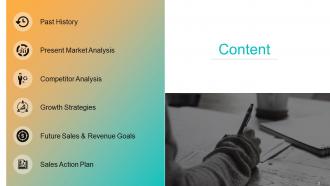
Slide 2: This slide displays the Content of the presentation.
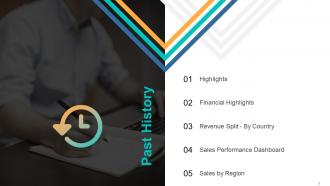
Slide 3: This slide showcases Highlights such as- Financial Highlights, Revenue Split - By Country, Sales Performance Dashboard, Sales by Region, Past History.
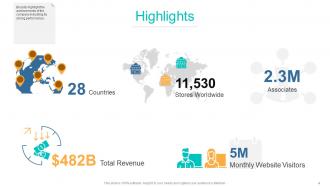
Slide 4: This slide also represents Highlights. Broadly highlight the achievements of the company indicating its strong performance.
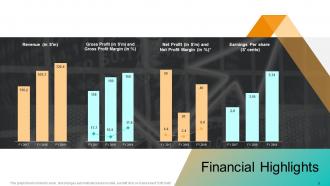
Slide 5: This slide showcases the Financial Highlights.
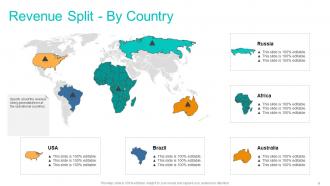
Slide 6: This slide depicts the Revenue Split - By Country. Specify about the revenue being generated from al the operational countries.
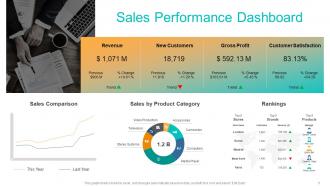
Slide 7: This slide showcases the Sales Performance Dashboard.
Slide 8: This slide showcases 2018 Sales by Region.
Slide 9: This slide showcases the Market Opportunity Analysis
Slide 10: This slide represents the Target Market.
Slide 11: This slide presents Market Opportunity Analysis.
Slide 12: This slide showcases Market Sizing.
Slide 13: This slide depicts Identification displaying- Comparison - Based on Criteria, Competitor Revenue & Profit, Competitor Analysis.
Slide 14: This slide also showcases the Identification.
Slide 15: This slide displays the Criteria. Showcase the Comparison - Based on Criteria.
Slide 16: This slide depicts Competitor Revenue & Profit.
Slide 17: This slide displays the Growth Strategy.
Slide 18: This slide presents the Growth Strategy.
Slide 19: This slide presents the Future Sales & Revenue Goals with Sales Goals and Sales plan Checklist.
Slide 20: This slide presents the Sales Goals.
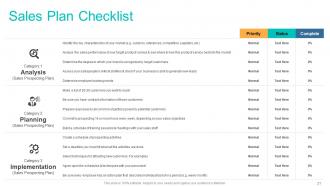
Slide 21: This slide showcases the Sales Plan Checklist.
Slide 22: This slide depicts Business Process Roadmap.
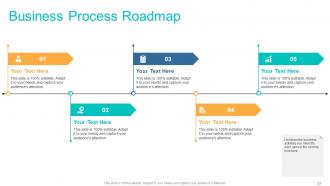
Slide 23: This slide displays the Business Process Roadmap. List down the business activities you intend to work upon in the coming time here.
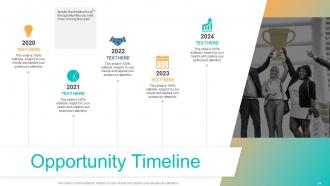
Slide 24: This slide displays the Opportunity Timeline. Specify the timeline for all the opportunities you seek in the coming few years.
Slide 25: This slide is titled as Additional Slides.
Slide 26: This is Sales Strategy Plan Icons Slide.
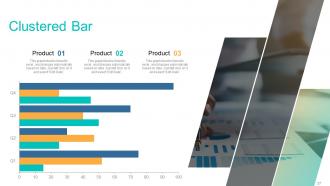
Slide 27: This is Clustered Bar chart slide with product comparison.
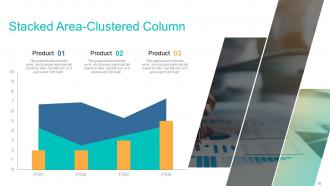
Slide 28: This slide showcases the Stacked Area-Clustered Column.
Slide 29: This is Financial slide. Showcase finance related stuff here.
Slide 30: This is About us slide to showcase company specifications.
Slide 31: This slide displays the Magnifying Glass to highlight the important content.
Slide 32: This is Venn slide.
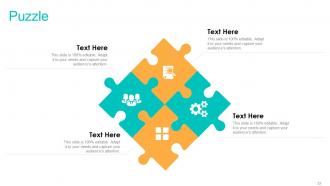
Slide 33: This is Puzzle slide with icons and text boxes.
Slide 34: This is Idea Generation slide to highlight ideas, information and facts.
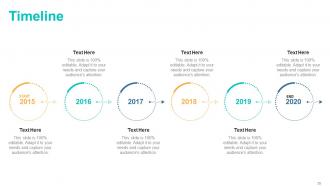
Slide 35: This is six years Timeline slide.
Slide 36: This is Thank you slide with address, email address and contact number.
Sales strategy plan powerpoint presentation slides with all 36 slides:
Use our Sales Strategy Plan Powerpoint Presentation Slides to effectively help you save your valuable time. They are readymade to fit into any presentation structure.
-
Sales Strategy Plan
-
Content Slide
-
Past History
-
Highlights
-
Financial Highlights
-
Revenue Split By Country
-
Sales Performance Dashboard
-
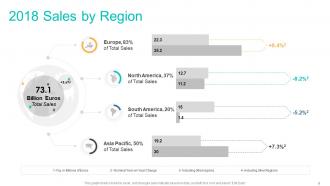
2018 Sales by Region
-
Present Market Analysis
-
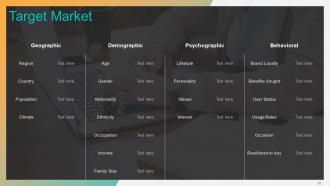
Target Market
-
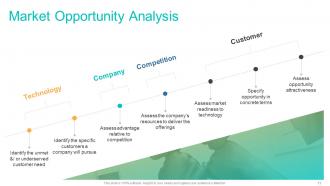
Market Opportunity Analysis
-
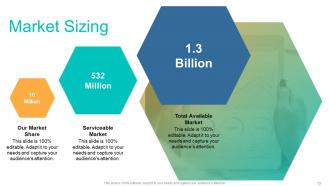
Market Sizing
-
Competitor Analysis
-
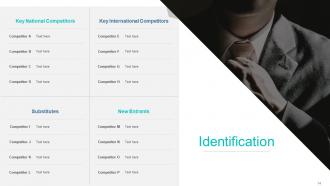
Identification
-
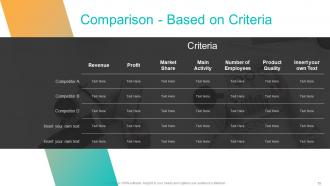
Comparison Based on Criteria
-
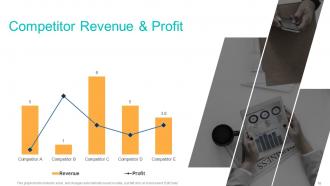
Competitor Revenue Profit
-

Growth Strategy
-
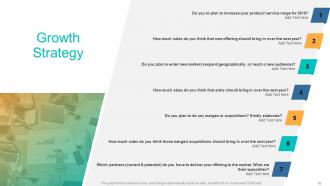
Growth Strategy
-
Set Goals Future Sales Revenue Goals
-
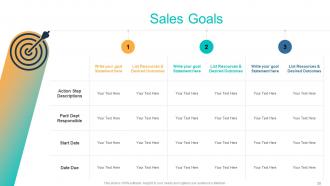
Sales Goals
-
Sales Plan Checklist
-
Sales Action Plan
-
Business Process Roadmap
-
Opportunity Timeline
-
Additional Slides
-
Sales Strategy Plan Icons Slide
-
Clustered Bar
-
Stacked Area Clustered Column
-
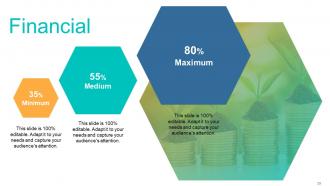
Financial
-
About us
-
Magnifying Glass
-
Venn
-
Puzzle
-
Idea Generation
-
Timeline
-
Sales Strategy Plan
 Click here to view PDF
FAQs for Sales strategy plan
Start with defining your target market - everything else flows from that decision. You'll need a solid value proposition, lead gen strategy, and documented sales process too. Don't forget competitor analysis (most people totally skip this but it's gold for positioning), pricing strategy, and revenue goals with actual timelines. Oh, and map out team roles so everyone knows what they're doing. The sales process part is huge - sketch out every stage from first contact to closing the deal. Track your metrics religiously or you'll be flying blind.
So instead of treating every customer the same, you break them into groups and adjust your pitch accordingly. Budget buyers? Hit them with cost savings. Premium folks want the fancy features. Honestly took me way too long to figure this out when I started. Your conversion rates will actually improve because you're hitting their specific pain points. Short sentences work better sometimes. Look at your current customers and pick out maybe 2-3 types, then try different approaches with each group. It's pretty straightforward once you start doing it.
Customer feedback is literally your best friend when it comes to fixing your sales approach. You'll get the real scoop on what's working and what totally bombs with prospects. Way better than shooting in the dark, honestly. I always tell people to actually use it for tweaking their pitch, adjusting prices, spotting new problems to solve - even finding those sneaky upsell chances you missed. The trick is collecting feedback through surveys, calls, whatever works. Then don't be like most companies and just file it away somewhere. Actually do something with it.
Honestly, you've gotta stay on top of your numbers - check conversion rates, deal sizes, cycle times every week. Those metrics will show you what's coming before it hits. I found this out the hard way in 2020, trust me! Also keep talking to your customers about their budgets and what they actually care about right now. Once you see patterns emerging, don't wait around for some quarterly meeting to make changes. Adjust your messaging or pricing fast. Build those check-ins into your routine so you're not scrambling when things go sideways.
Conversion rates at each funnel stage are huge - that's where you'll spot the real problems. Track your average deal size and how long sales cycles actually take. Customer acquisition cost is obvious but super important. Lead quality gets overlooked a lot, so definitely watch those lead-to-opportunity conversions. Revenue per rep tells you about team performance. Customer lifetime value is honestly make-or-break for long-term strategy. Oh, and if you're doing subscriptions, monthly recurring revenue growth obviously. Start with these basics first - you can always add more specific stuff once you see what's missing. Don't overcomplicate it initially.
Dude, CRM automation will save your sanity - it tracks leads and sets follow-up reminders automatically. Analytics tools show you what's actually working (not just what you think is working). Email sequences handle the nurturing part so you're not constantly thinking about who to contact next. Honestly? The setup can be annoying at first, but it's worth it. Just pick one thing to start with - maybe lead tracking or email stuff. I tried doing everything at once and it was a mess. Master one tool before jumping into the next shiny thing.
Honestly, just get your sales and marketing people talking regularly - like, actually in the same room. They need to agree on what a "qualified lead" even means because I've seen so many deals die when marketing thinks they're sending over hot prospects and sales gets... garbage. Super frustrating. Set up shared goals and metrics so everyone's rowing in the same direction. Your messaging has to match across both teams too. Oh, and create some kind of feedback system where sales can tell marketing what's actually working with real prospects. Weekly meetings are a good start, plus plan campaigns together.
Make it continuous, not just a one-time thing. Start with solid onboarding covering strategy basics, then quarterly refreshers. Role-playing feels super awkward initially but works great once people get comfortable. Quick reference stuff helps - cheat sheets, short videos they can pull up anytime. Your managers should coach during actual calls and give real feedback. I'd set up buddy pairings with experienced reps mentoring newer ones. Track if they're actually using what they learned through call reviews and pipeline checks. Oh, and honestly? The real-time coaching makes way more difference than formal training sessions.
Dude, the worst mistake is thinking you know your customers when you actually don't. Like, who's really buying your stuff vs who you assume should be? Also don't just copy what competitors do - their approach might be totally wrong for you. Your sales team talks to people all day, so actually listen to them instead of ignoring their feedback. Oh and realistic targets are huge. Nothing kills morale faster than impossible goals. I'd keep it simple too - maybe 2-3 main focuses max because overcomplicating kills momentum. Actually talk to real customers before you finalize anything though.
So B2B is basically like dating - you're in it for the long haul, dealing with committees and 6-month sales cycles. B2C? Total opposite. Quick hits, emotional triggers, get them to buy NOW. With B2B you need all that ROI data and business case stuff because Karen from accounting will tear apart your proposal anyway. B2C customers just want to know how it'll make their life better or what their friends will think. The biggest thing is figuring out who's actually making the decision. Sometimes it's not who you'd expect.
Honestly, start with whatever CRM you're already using - Salesforce, HubSpot, whatever. That data's pure gold for seeing what actually converts. Gong and Chorus are sick for analyzing your sales calls (seriously, they'll blow your mind with insights). For finding prospects, ZoomInfo and LinkedIn Sales Navigator work great. Google Analytics helps with web stuff too. Oh, and don't sleep on basic Excel forecasting - sometimes simple works best. I'd dig into your existing pipeline data first though. Most people overlook what's right in front of them.
Oh dude, you absolutely need to do this - it's like top 3 most important things for your sales strategy. Map out your main 3-5 competitors first. Figure out their pricing, how they talk about their product, what customers actually say about them vs you. Honestly, your prospects are gonna compare you to everyone else anyway, so you might as well be prepared for it. This way you can handle their objections before they even bring stuff up. Plus you'll spot gaps in the market you didn't know existed. Don't go into sales calls blind - that's just painful for everyone involved.
Stories are absolute game changers for sales - way better than boring feature lists. People remember narratives, not bullet points. When you share how another customer solved the exact problem your prospect is facing, they can actually picture themselves succeeding with your solution. Trust me, this stuff works because stories feel real and relatable. Plus they build credibility since you're showing actual results. Keep them short and super relevant to what your prospect cares about. I'd start building a collection of maybe 3-4 solid customer stories that cover different scenarios you can drop into conversations.
Okay so first thing - figure out where your prospects actually hang out online, then map your marketing to each stage of the funnel. Content and SEO work great for getting on their radar. After that, hit them with retargeting ads to push conversions. LinkedIn's honestly become huge for social selling - I've watched reps literally close deals from smart comments on posts. Between sales calls, your email sequences should keep nurturing those leads. Oh and definitely set up marketing automation to tag people based on what they click/download, so your sales team knows exactly what sparked their interest. Everything should flow straight into your CRM.
Honestly, social selling is where it's at right now - you build relationships on LinkedIn before you even think about calling someone. Account-based marketing works great too if you've got high-value targets worth the effort. Everyone's doing video prospecting now (most of it's pretty cringe though). Oh, and the AI stuff for predicting leads? Actually works better than I expected. My buddy in tech says their conversion rates went up like 40%. Don't try everything at once though - pick maybe two things that make sense for your industry and get good at those first.
-
Easy to edit slides with easy to understand instructions.
-
nice