


Sales Training Powerpoint Presentation Slides
Improve sales skills using content-ready Sales Training PowerPoint Presentation Slides. Hone sales team knowledge and techniques with sales training PPT presentation templates. Outline an effective sales training plan to educate and enhance sales team knowledge about various products and services. This deck comprises of sales training PowerPoint designs such as training process, training timeline, about the product, product list, product rating, product roadmap, product comparison, product pricing, sales by region, competitor analysis, training evaluation, and more. Execute a complete professional sales training program. Implement innovative sales training techniques using ready-made sales training PPT presentation slideshow. Involve your team with various sales training ideas and aim towards making a sale. Educate your team and develop a professional sales force. Incorporate sales training PPT presentation complete deck to help your sales team learn and intensify their selling technique, skills, and processes. Grab professionally designed sales training PowerPoint presentation deck and improve the sales results. Brilliance is called an adjective, Our Sales Training Powerpoint Presentation Slides exemplify in every way.
Improve sales skills using content-ready Sales Training PowerPoint Presentation Slides. Hone sales team knowledge and techn..




























-

- Google Slides is a new FREE Presentation software from Google.
- All our content is 100% compatible with Google Slides.
- Just download our designs, and upload them to Google Slides and they will work automatically.
- Amaze your audience with SlideTeam and Google Slides.
-

Want Changes to This PPT Slide? Check out our Presentation Design Services
-

- WideScreen Aspect ratio is becoming a very popular format. When you download this product, the downloaded ZIP will contain this product in both standard and widescreen format.
-

- Some older products that we have may only be in standard format, but they can easily be converted to widescreen.
- To do this, please open the SlideTeam product in Powerpoint, and go to
- Design ( On the top bar) -> Page Setup -> and select "On-screen Show (16:9)” in the drop down for "Slides Sized for".
- The slide or theme will change to widescreen, and all graphics will adjust automatically. You can similarly convert our content to any other desired screen aspect ratio.
Compatible With Google Slides

Get This In WideScreen
You must be logged in to download this presentation.


Do you want to remove this product from your favourites?
PowerPoint presentation slides
Presenting sales training PowerPoint presentation slides. This deck covers all the aspects of sales training. This complete presentation comprises of amazing visuals, icons, graphs, and templates. These slides are easily customizable. You can add or delete the content as per your requirement. Compatible with all screen types and monitors. Supports Google Slides. Premium Customer Support available. You can get access to this readymade professionally designed perquisite presentation with just one click. Download it now.

People who downloaded this PowerPoint presentation also viewed the following :
Content of this Powerpoint Presentation
Slide 1: This slide introduces Sales Training. State your company name and get started.
Slide 2: This slide presents Product Training Outline with the following content- Training Process, Training Timeline, About The Product, Product List, Product Rating, Product Roadmap, Product Compar-ison, Product Pricing, Sales By Region, Competitor, Analysis, Competitive, Advantage, Training Evalution.
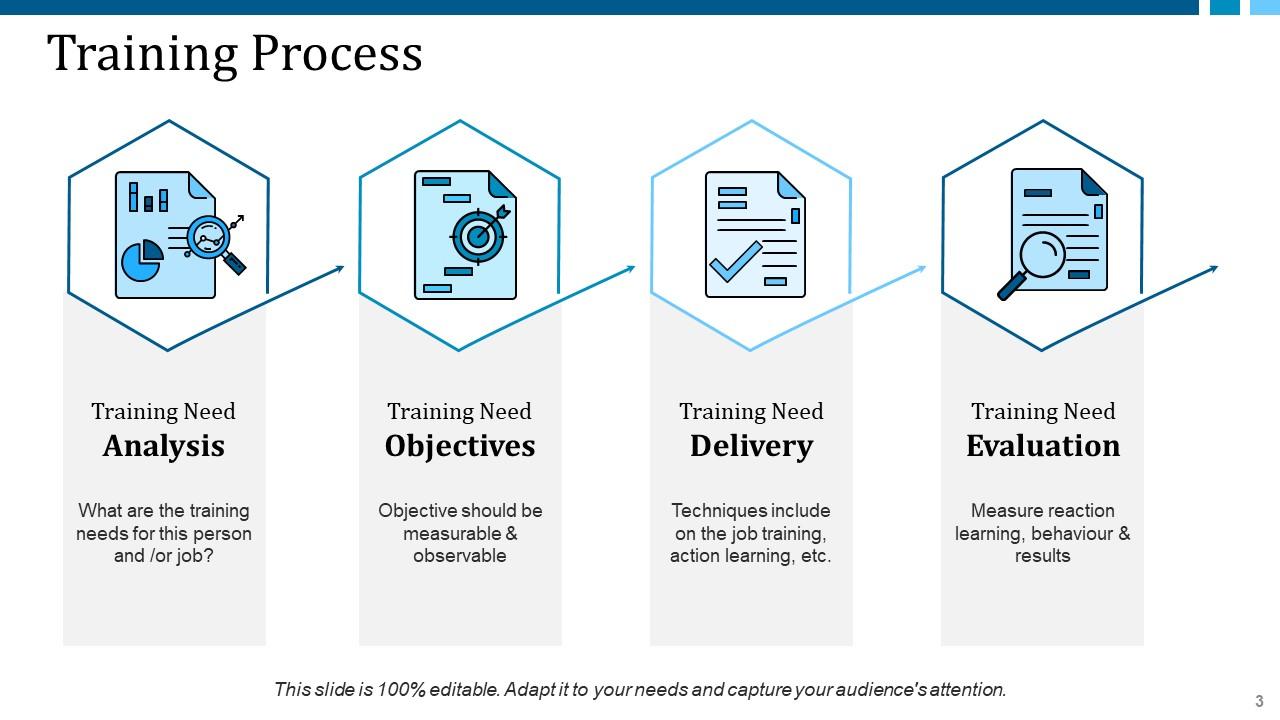
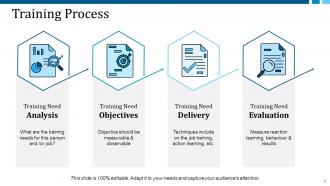
Slide 3: This slide shows the Training Process which consits of the following points with icons- Training Need Analysis, Training Need Delivery, Training Need Evaluation, Training Need Objectives.
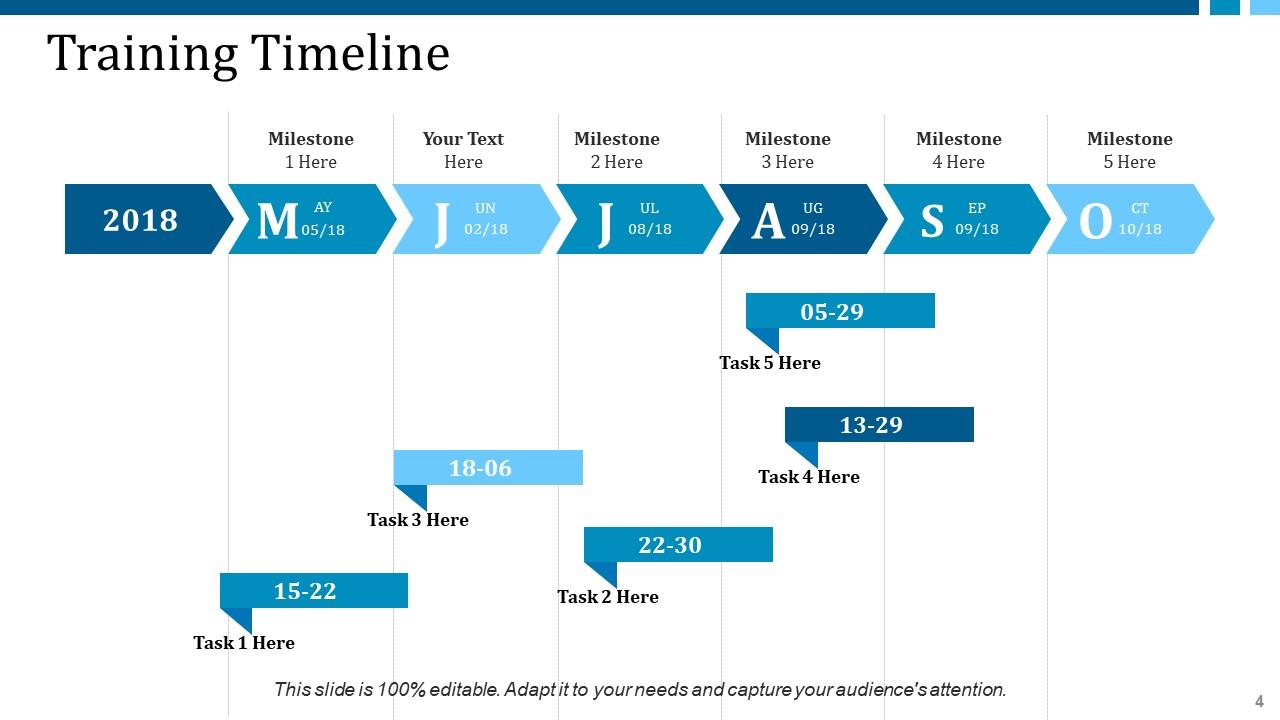
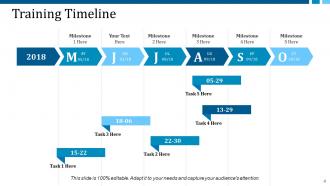
Slide 4: This slide shows a Training Timeline to present your milestones in terms of years.
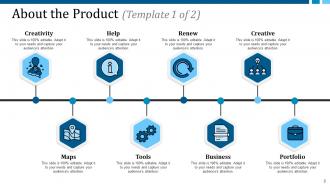
Slide 5: This slide presents a brief introduction About the Product which contains the following points- Maps, Tools, Business, Portfolio, Creativity, Help, Renew, Creative.
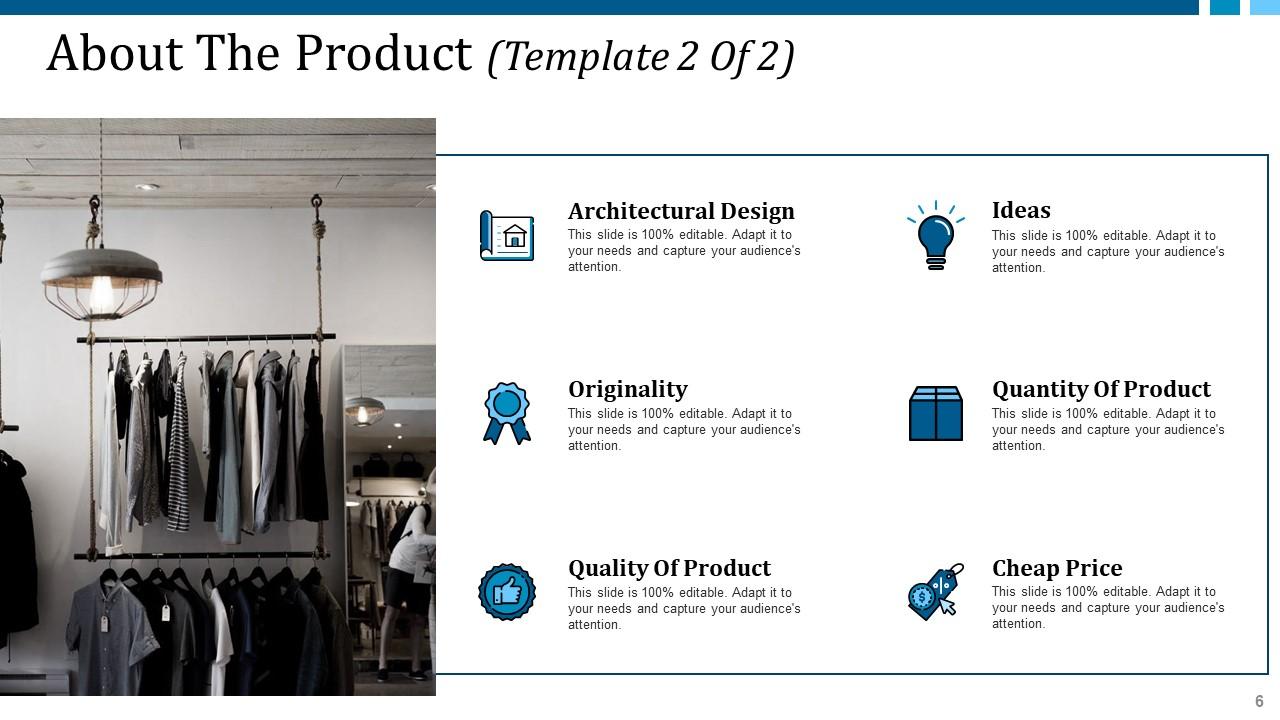
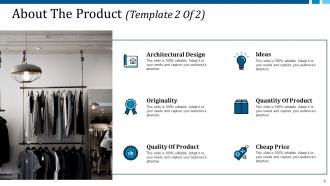
Slide 6: This is also About The Product slide showing- Architectural Design, Originality, Quality Of Product, Ideas, Quantity Of Product, Cheap Price.
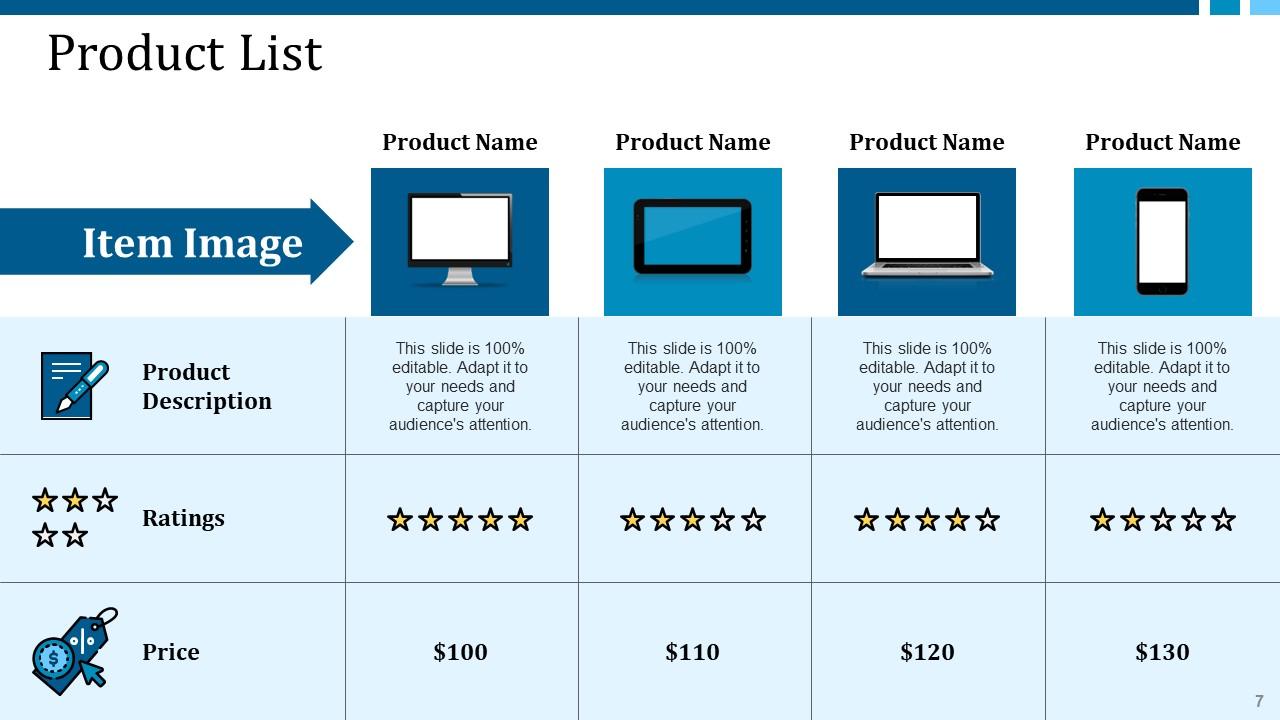
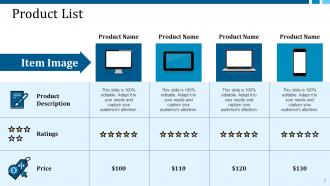
Slide 7: This slide presents Product List which should have the following content- Product Name, Item Image, Product Description, Ratings, Price.
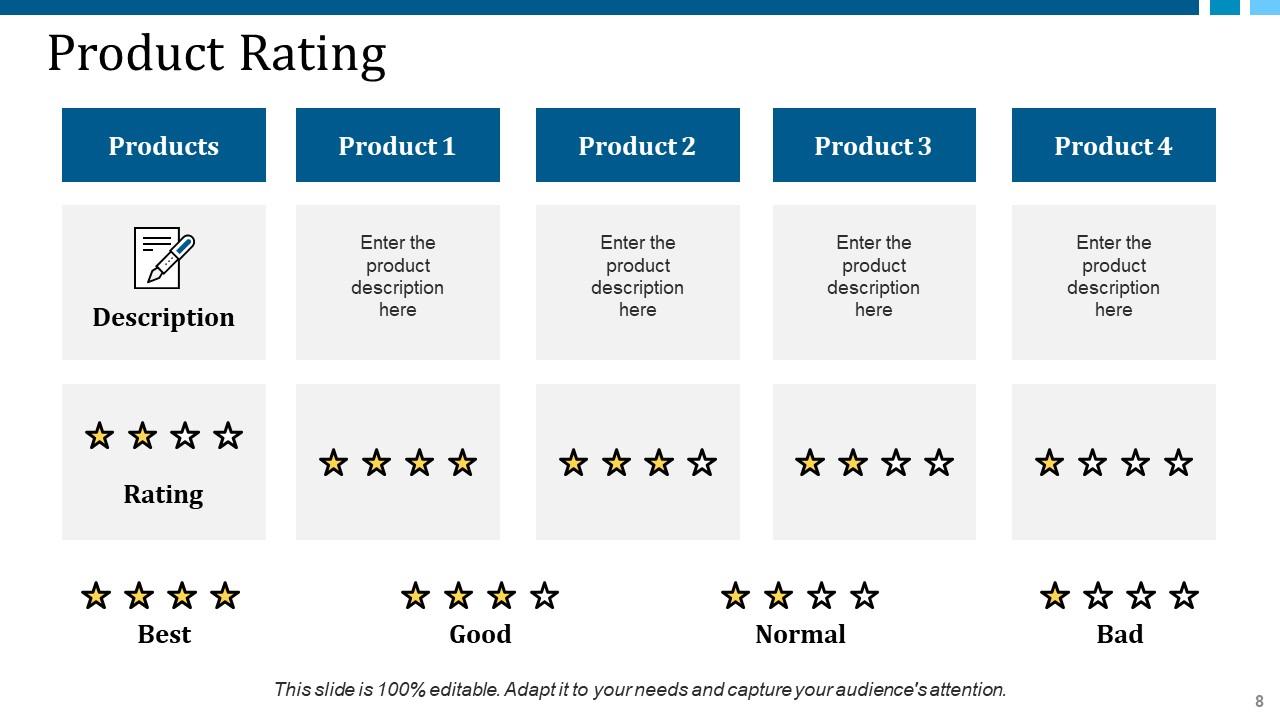
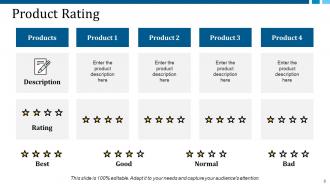
Slide 8: This slide shows Product Rating as per good, bad, normal and best parameters. Rate your product according to these parameters listed by us.
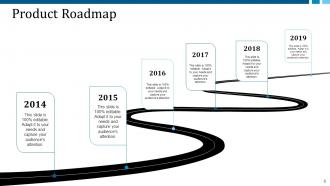
Slide 9: This slide shows Product Roadmap to present milestones, growth, evolution, journey etc. of the product.
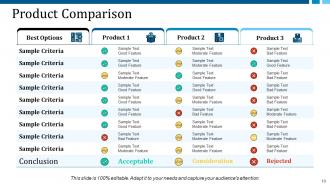
Slide 10: This is a Product Comparison slide. You can make use of this slide to compare two three, four products etc. as per your requirement.
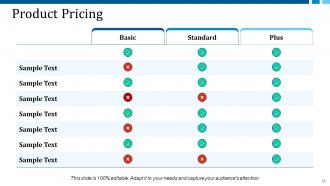
Slide 11: This slide shows Product Pricing which is analyzed on the basis of the following three parameters- Basic, Standard, Plus.
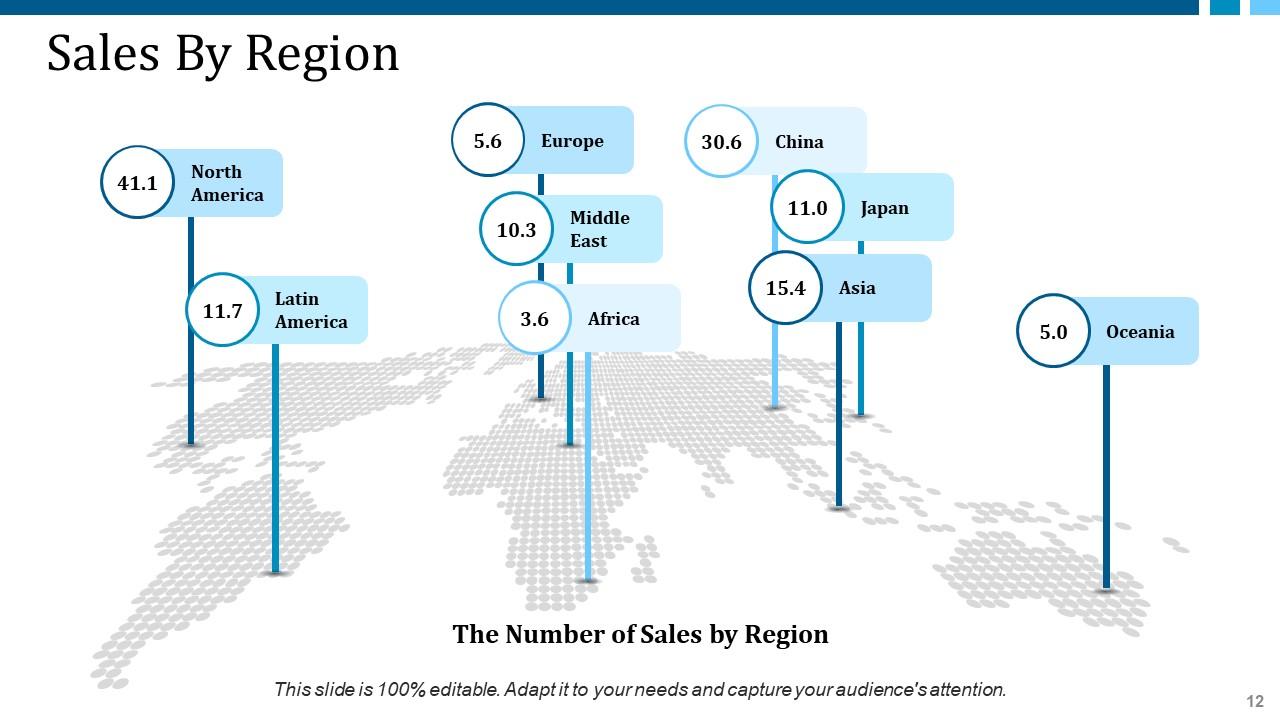
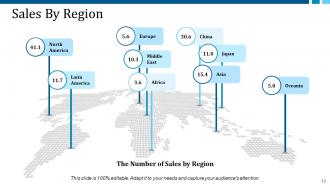
Slide 12: This slide shows Sales By Region on a world map image. You can easily mark your respective locations in this map.
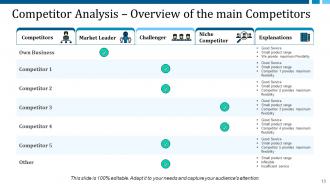
Slide 13: This slide presents an overview of Competitor Analysis showing the main competitors. It also shows- Competitors, Market Leader, Challenger, Explanations, Niche Competitor.
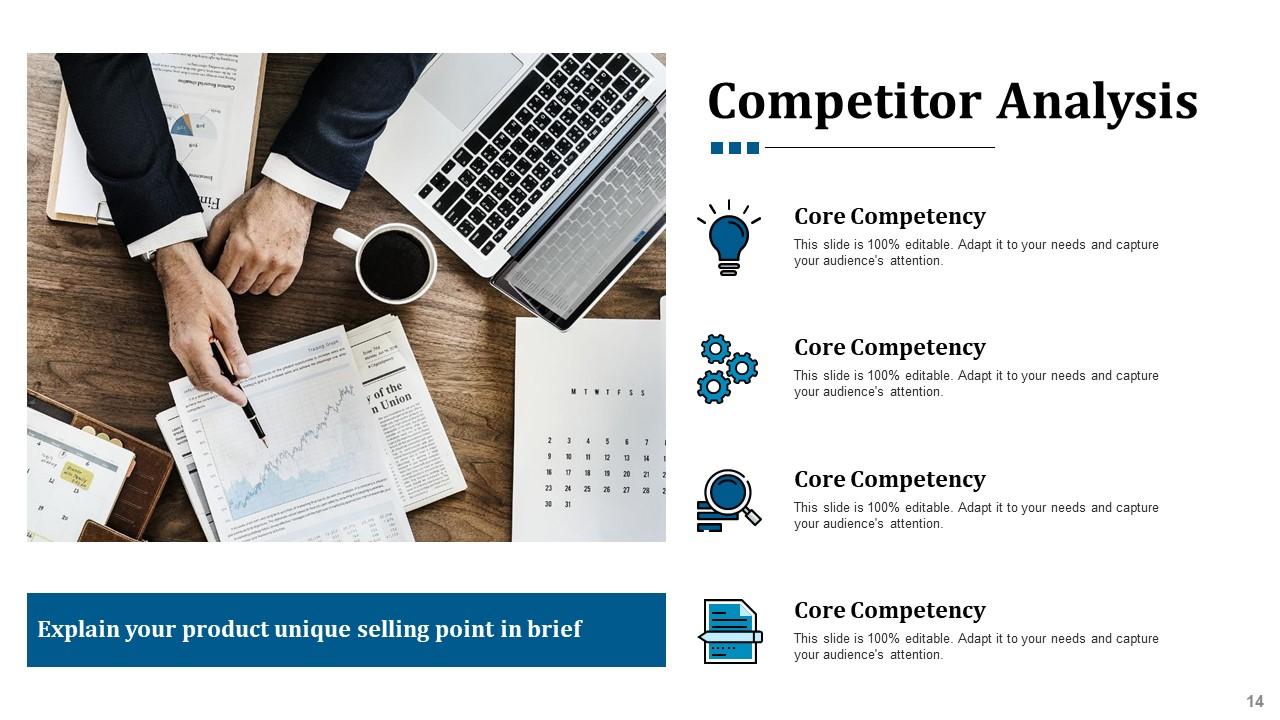
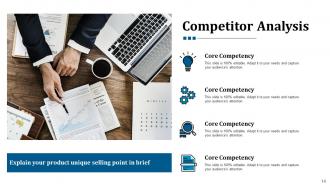
Slide 14: This slide shows Competitor Analysis to explain your product unique selling point in brief.
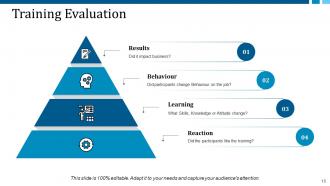
Slide 15: This slide shows Training Evaluation pyramid. We have listed four of its stages which are- Results, Behaviour, Learning, Reaction. Use as per your requirement.
Slide 16: This is Sales Training Icon Slide displaying various icons which can be altered as per need and requirement.
Slide 17: This is a Coffee Break slide to halt. You may change it as per requirement.
Slide 18: This slide is titled Charts & Graphs to move forward. You may change it as per requirement.
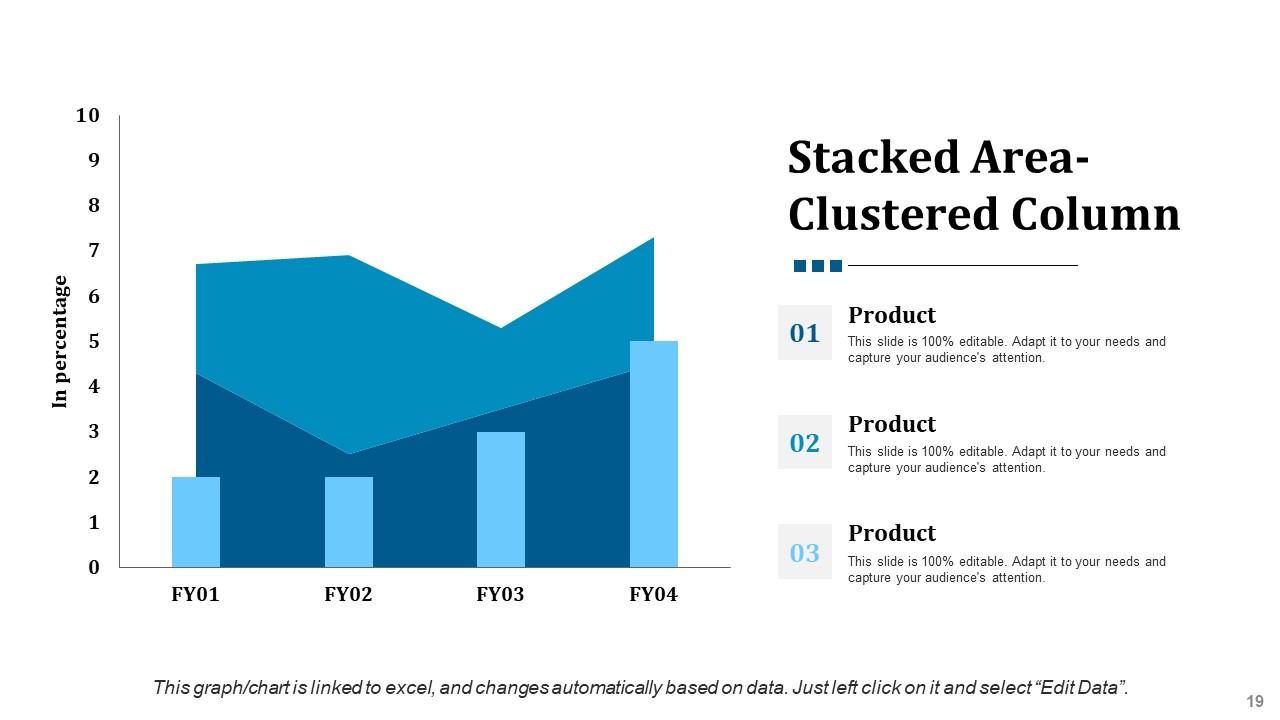
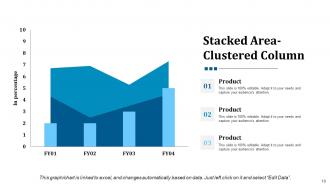
Slide 19: This is a Stacked Area-Clustered Column slide to present product/ entity comparison, specifications etc.
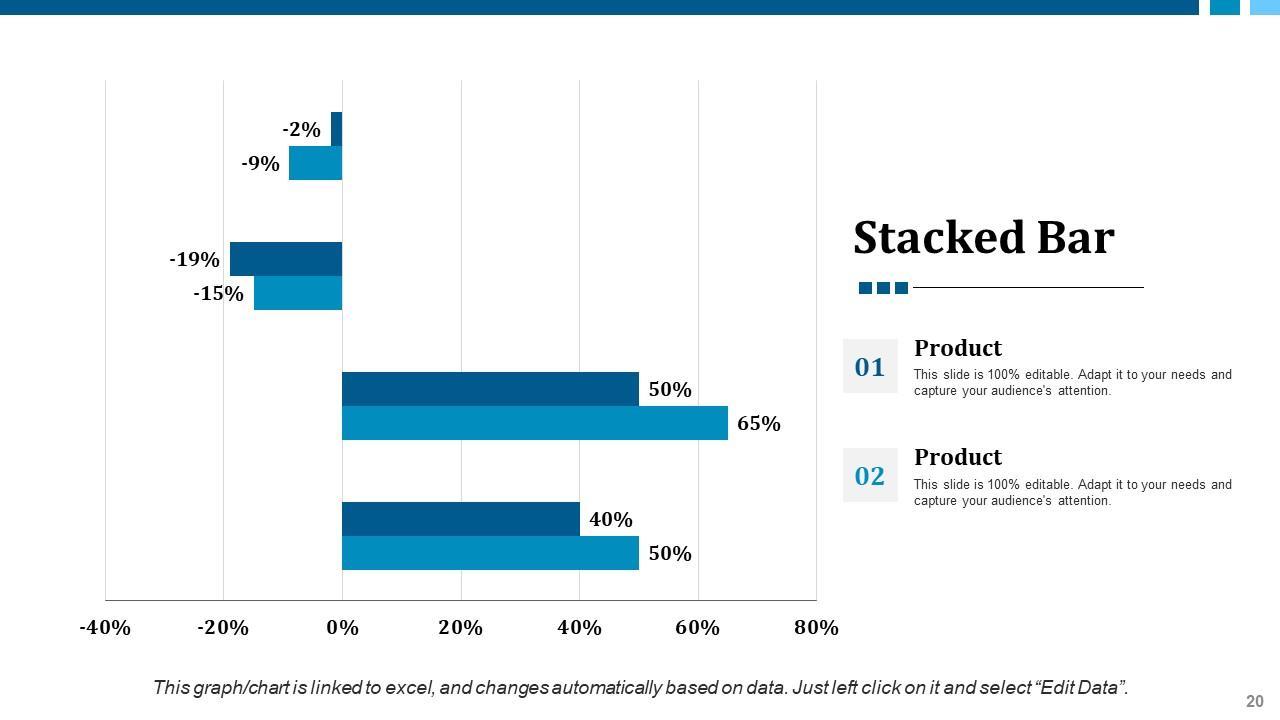
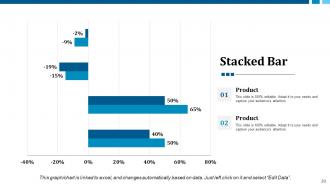
Slide 20: This is a Stacked Bar chart slide to present product/ entity comparison, specifications etc.
Slide 21: This slide is titled Additional Slides. You can change the slide content as per your needs.
Slide 22: This is Our Mission slide with Vision, Mission and Goals. State them here.
Slide 23: This slide presents Our Team with name, designation and image box.
Slide 24: This is an About Us slide. Provide a brief introduction about company/ team here.
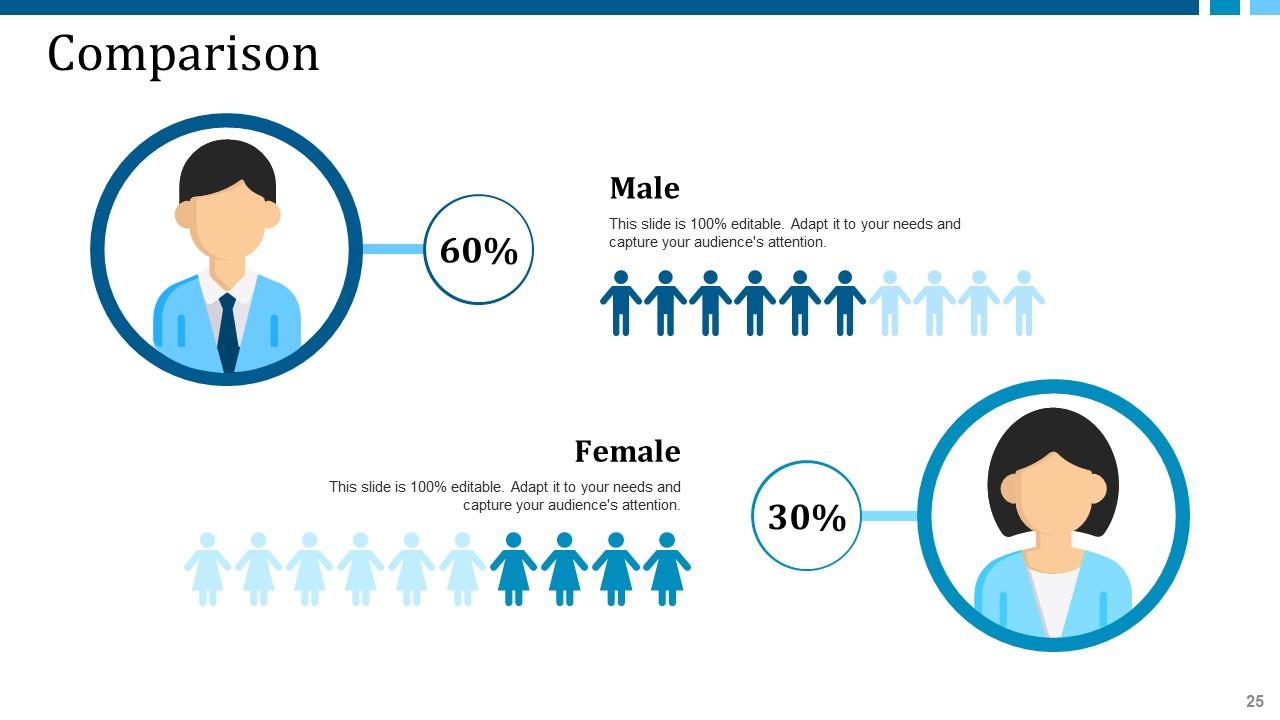
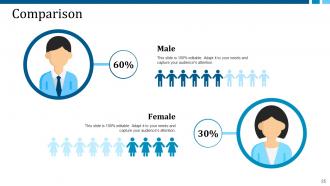
Slide 25: This is a Comparison slide to compare two products/ entities etc.
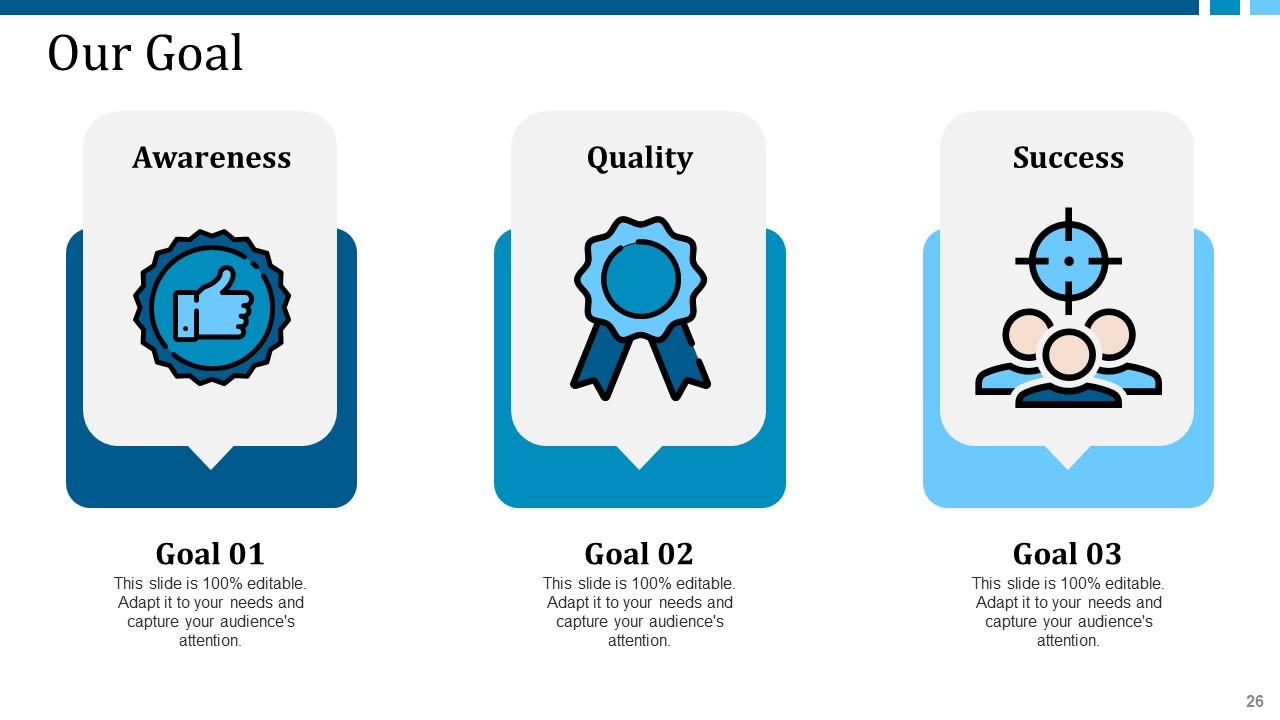
Slide 26: This slide states Our Goal.
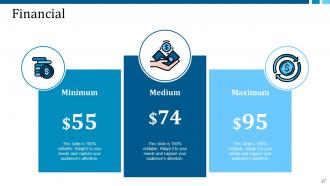
Slide 27: This is a Financial stats slide to state financial aspects etc.
Slide 28: This slide presents Quotes. State your inspirational quotes here. You may change the slide content as per need.
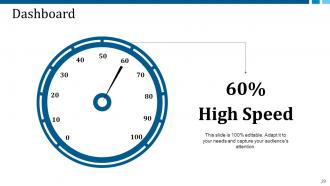
Slide 29: This is Dashboard slide to show information in percentages etc.
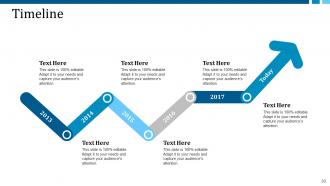
Slide 30: This slide presents a Timeline to show growth, milestones etc.
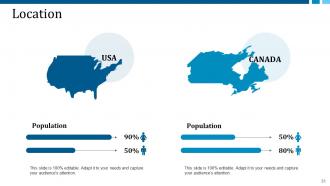
Slide 31: This slide shows Location with two map images of US and Canada respectively. Alter these maps to display your own locations instead.
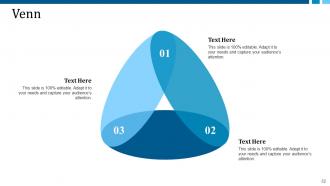
Slide 32: This is a Venn diagram image slide to show information, specifications etc.
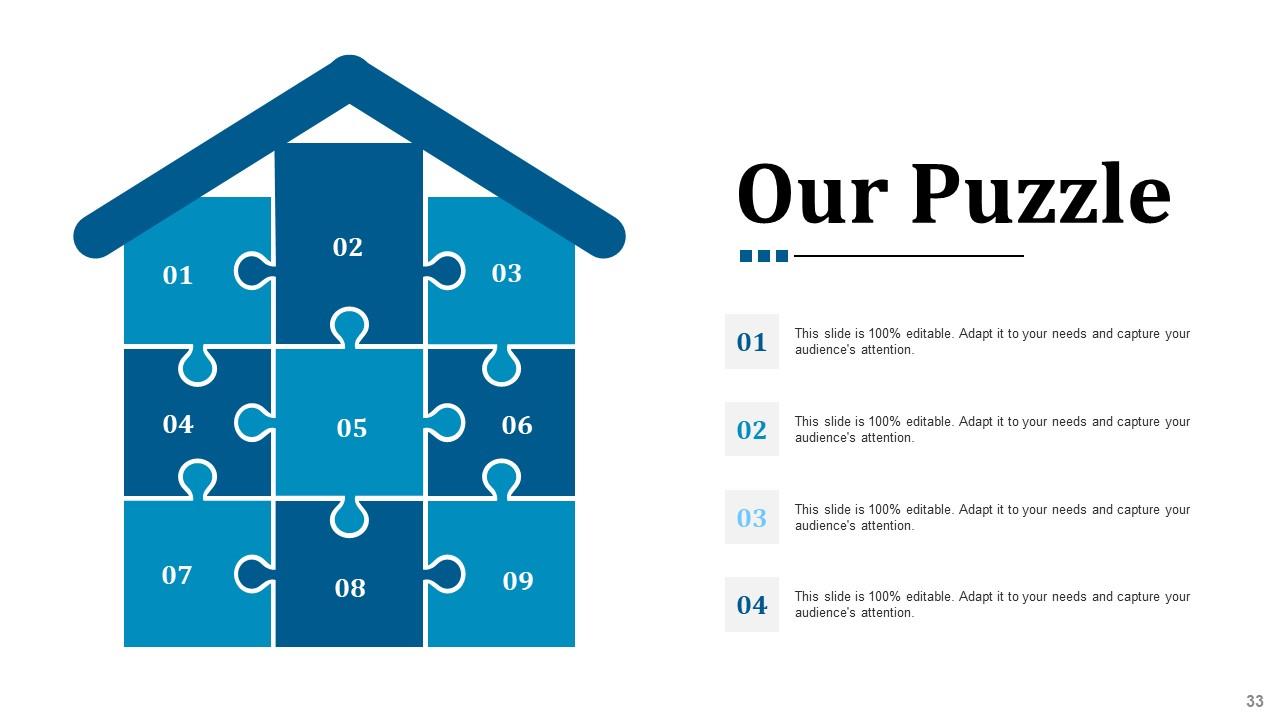
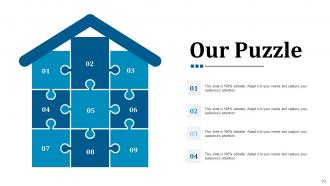
Slide 33: This is Our Puzzle slide to state in your information, specifications etc.
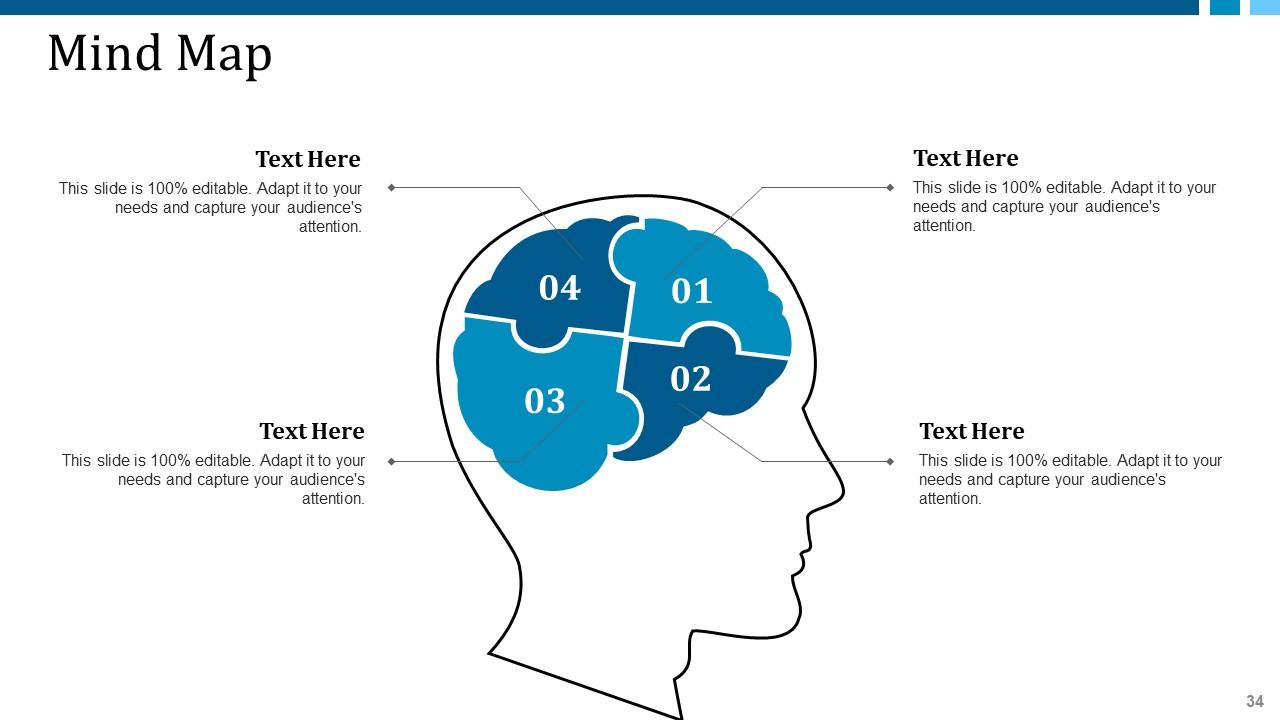
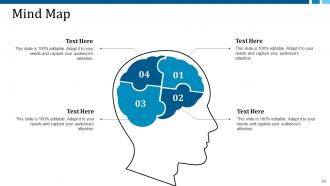
Slide 34: This is a Mind Map image slide to show information, specifications etc.
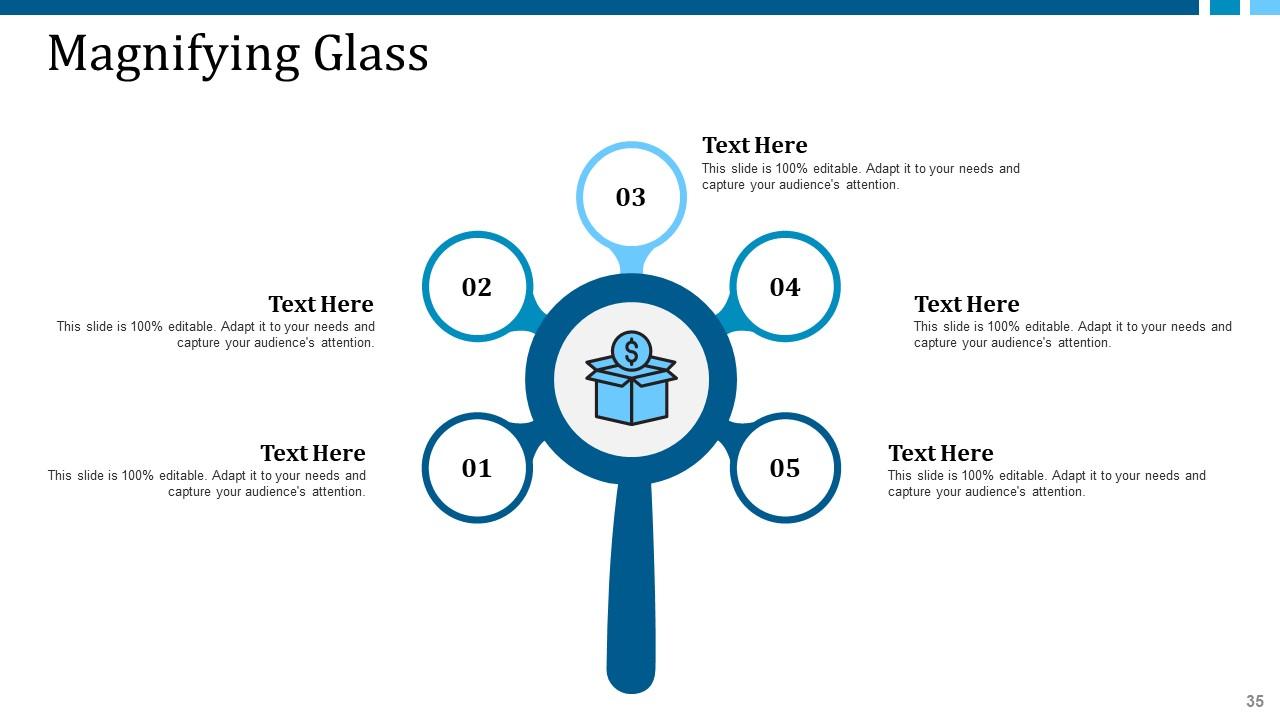
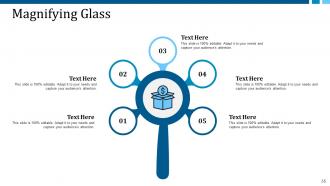
Slide 35: This is a Magnifying Glass image slide to show information, scoping aspects etc.
Slide 36: This is a Thank You slide with Address# street number, city, state, Contact Numbers and Email Address.
Sales Training Powerpoint Presentation Slides with all 36 slides:
Increase the inflow with our Sales Training Powerpoint Presentation Slides. Ensure good ideas continue to be generated.
-
Easy to edit slides with easy to understand instructions.
-
Visually stunning presentation, love the content.
-
perfect
-
perfect
