


Leadership Development Program Powerpoint Presentation Slides





Try Before you Buy Download Free Sample Product
 Impress Your
 Audience
 100%
100% Editable
 Save Hours
 of Time


Our Leadership Development Program Powerpoint Presentation Slides are topically designed to provide an attractive backdrop to any subject. Use them to look like a presentation pro.
People who downloaded this PowerPoint presentation also viewed the following :
Content of this Powerpoint Presentation
Slide 1: This slide introduces Leadership Development Program. State your company name and begin.
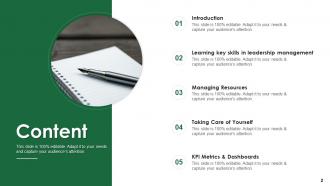
Slide 2: This slide displays the Content of the presentation.
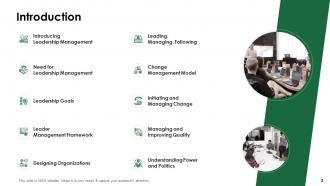
Slide 3: This slide displays the Introduction of the presentation.
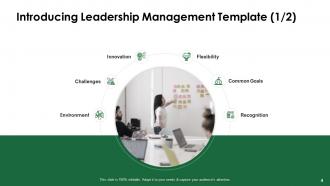
Slide 4: This slide showcases Introducing Leadership Management Template.
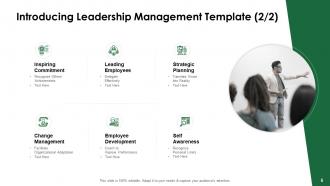
Slide 5: This slide describes Introducing Leadership Management Template with- Inspiring, Commitment, Recognize Others’ Achievements, Leading Employees, Delegate Effectively, Strategic Planning, Translate Vision Into Reality, etc.
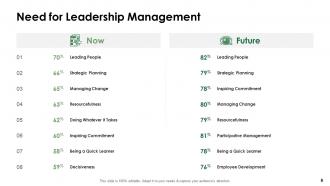
Slide 6: This slide displays Need for Leadership Management.
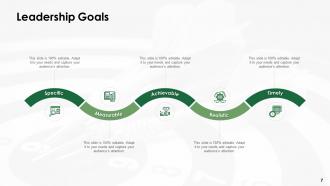
Slide 7: This slide showcases Leadership Goals with- Specific, Measurable, Achievable, Realistic, Timely.
Slide 8: This slide showcases Leadership Management Framework.
Slide 9: This slide describes Designing Organization Template.
Slide 10: This slide also describes Designing Organization Template with- Chairman & CEO, President & COO, Corporate Strategy & Development, Strategic Planning, Business Development & Innovation, Corporate Governance, Office of the corporate secretary & legal counsel, etc.
Slide 11: This slide displays Leading Managing Following Template.
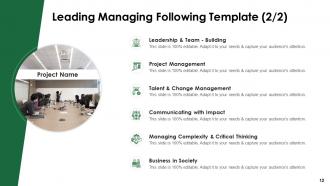
Slide 12: This slide showcases Leading Managing Following Template with- Project Name, Leadership & Team - Building, Project Management, Talent & Change Management, Communicating with Impact, Managing Complexity & Critical Thinking, Business in Society.
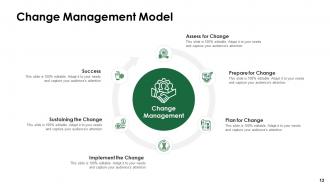
Slide 13: This slide showcases Change Management Model.
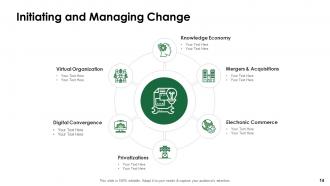
Slide 14: This slide describes Initiating and Managing Change.
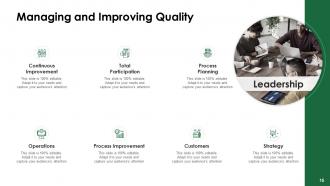
Slide 15: This slide displays Managing and Improving Quality containing- Leadership, Continuous Improvement, Total Participation, Process Planning, Strategy, Operations, Process Improvement, etc.
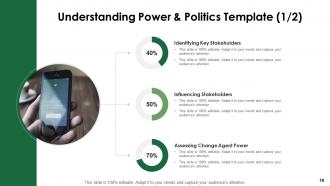
Slide 16: This slide displays Understanding Power & Politics Template.
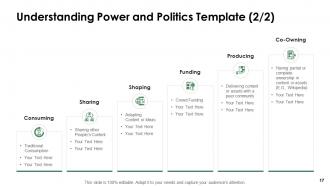
Slide 17: This slide discusses Understanding Power and Politics Template.
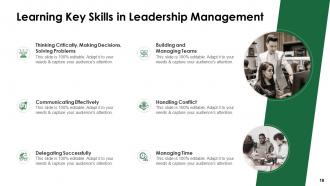
Slide 18: This slide displays Learning Key Skills in Leadership Management.
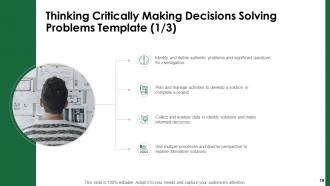
Slide 19: This slide showcases Plan and manage activities to develop a solution or complete a project.
Slide 20: This slide presents Thinking Critically Making Decisions Solving Problems Template.
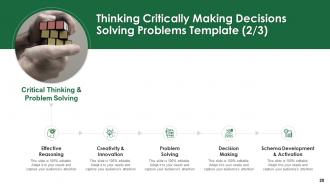
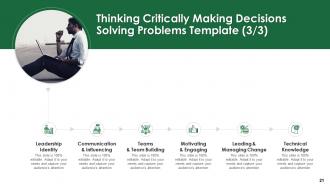
Slide 21: This slide displays Thinking Critically Making Decisions Solving Problems Template.
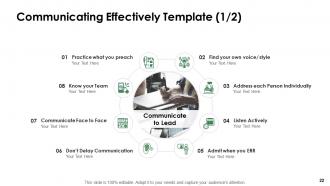
Slide 22: This slide showcases Communicating Effectively Template.
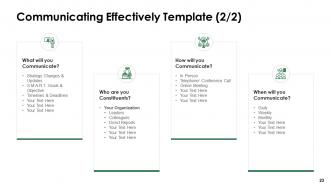
Slide 23: This slide also displays Communicating Effectively Template.
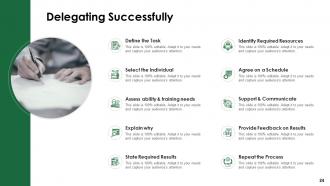
Slide 24: This slide describes Delegating Successfully containing- Define the Task, Select the Individual Assess ability & training needs, State Required Results, Identify Required Resources, etc.
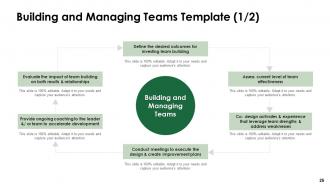
Slide 25: This slide showcases Building and Managing Teams Template.
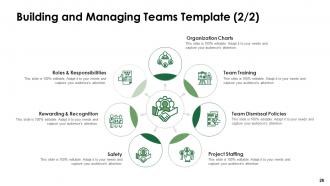
Slide 26: This slide showcases Building and Managing Teams Template with- Organization Charts, Team Training, Team Dismissal Policies, Project Staffing, Safety, Rewarding & Recognition, Roles & Responsibilities.
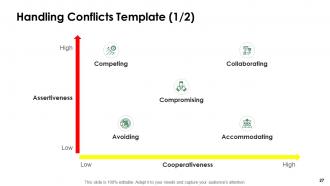
Slide 27: This slide showcases Handling Conflicts Template.
Slide 28: This slide displays Handling Conflicts Template with Conflict Resolution.
Slide 29: This slide displays Managing Time Template.
Slide 30: This slide also displays Managing Time Template.
Slide 31: This slide showcases Managing Resources.
Slide 32: This slide presents Budgeting and Managing Fiscal Resources Template.
Slide 33: This slide showcases Budgeting and Managing Fiscal Resources Template.
Slide 34: This slide describes Recruiting and Selecting Staff Template.
Slide 35: This slide displays Recruiting and Selecting Staff.
Slide 36: This slide showcases Staffing and Scheduling.
Slide 37: This slide also showcases Staffing and Scheduling in tabular form.
Slide 38: This slide showcases Employee Career Progression.
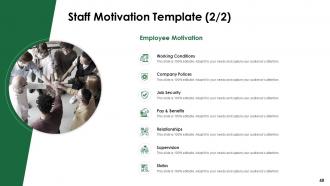
Slide 39: This slide displays Staff Motivation Template.
Slide 40: This slide showcases Staff Motivation with- Working Conditions, Company Polices, Job Security, Pay & Benefits, Relationships, Supervision, Status, Employee Motivation.
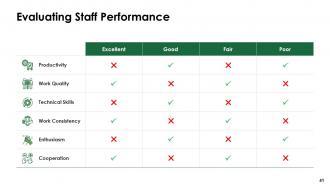
Slide 41: This slide describes Evaluating Staff Performance.
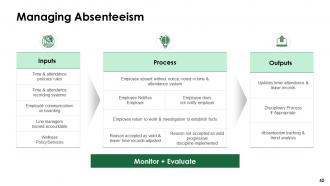
Slide 42: This slide displays Managing Absenteeism.
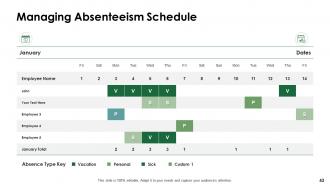
Slide 43: This slide showcases Managing Absenteeism Schedule.
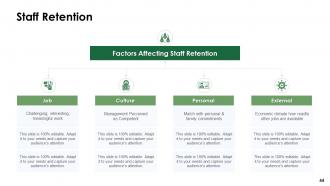
Slide 44: This slide displays Staff Retention.
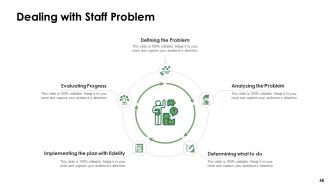
Slide 45: This slide describes about Dealing with Staff Problem.
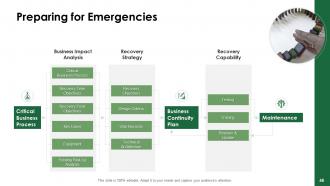
Slide 46: This slide showcases Preparing for Emergencies displaying- Critical Business Process, Business Impact Analysis, Critical Business Process, Recovery Time Objectives, Recovery Point Objectives, Key Users Equipment, etc.
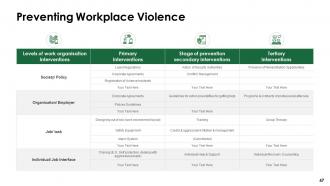
Slide 47: This slide showcases Preventing Workplace Violence.
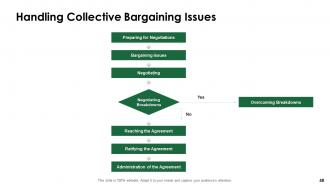
Slide 48: This slide showcases Handling Collective Bargaining Issues.
Slide 49: This slide describes Taking Care of Yourself displaying- Managing Stress and Advancing your Career.
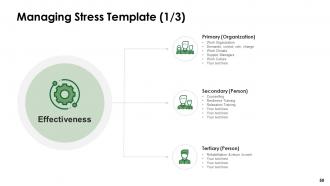
Slide 50: This slide showcases Managing Stress Template.
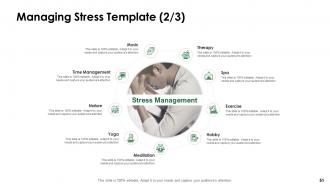
Slide 51: This slide also showcases Managing Stress with- therapy, spa, exercise, hobby, meditation, yoga, nature, time management.
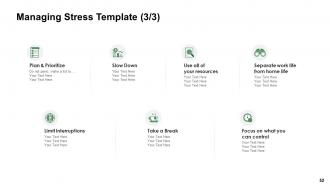
Slide 52: This slide is continued with Managing Stress Template.
Slide 53: This slide describes Advancing Your Career.
Slide 54: This slide displays KPI Metrics & Dashboards
Slide 55: This slide displays Leadership Management KPI Metrics.
Slide 56: This slide showcases Leadership Management Dashboard Showing Headcount Tenure & Span of Control.
Slide 57: This is Leadership Development Program Icons Slide.
Slide 58: This slide is titled as Additional Slides for moving forward.
Slide 59: This slide reminds about Coffee Break.
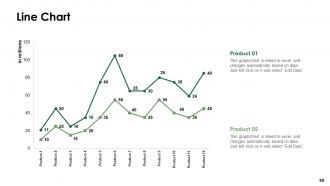
Slide 60: This slide displays Line Chart with product comparison.
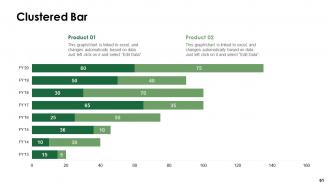
Slide 61: This slide displays Clustered Bar with product comparison.
Slide 62: This slide displays Clustered Column - Line with product comparison.
Slide 63: This slide displays Pie Chart with data in percentage.
Slide 64: This is About Us slide with company specifications.
Slide 65: This is Our Goal slide. State your company goals.
Slide 66: This is Our Team slide with names and designation.
Slide 67: This is Our Mission slide with Goal, Vision, Mission.
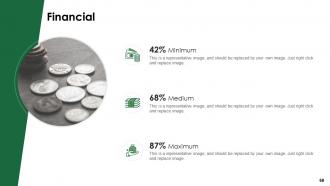
Slide 68: This is Financial slide. Showcase finance related stuff here.
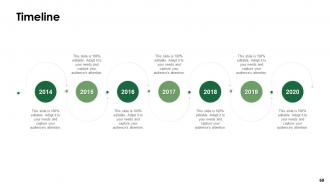
Slide 69: This is seven years Timeline slide.
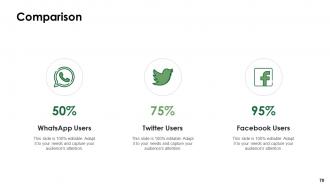
Slide 70: This is Comparison slide showcasing comparison between whatsApp users, Twitter users and facebook users.
Slide 71: This slide is titled as Post It Notes. Post your notes here.
Slide 72: This is Puzzle slide with icons and text boxes.
Slide 73: This is Idea Generation slide to highlight ideas, facts and information.
Slide 74: This is Our Target slide. Showcase your targets here.
Slide 75: This is 30 60 90 Day Plan slide.
Slide 76: This is Venn slide.
Slide 77: This is Quotes slide to convey message, beliefs, etc.
Slide 78: This is Circular slide with icons.
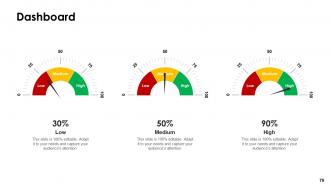
Slide 79: This is Dashboard slide.
Slide 80: This is Thanks for Watching slide with contact number, address and email address.
Leadership Development Program Powerpoint Presentation Slides with all 80 slides:
Use our Leadership Development Program Powerpoint Presentation Slides to effectively help you save your valuable time. They are readymade to fit into any presentation structure.
-
Leadership Development Program
-
Content Slide
-
Introduction to Leadership Management
-
Introducing Leadership Management Template 1 2
-
Introducing Leadership Management Template 2 2
-
Need for Leadership Management
-
Leadership Goals
-
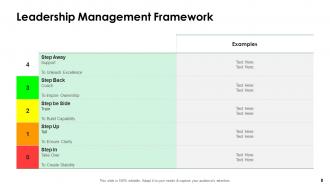
Leadership Management Framework
-
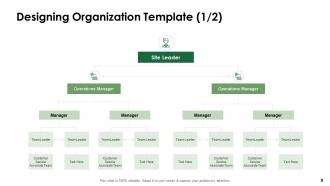
Designing Organization Template 1 2
-
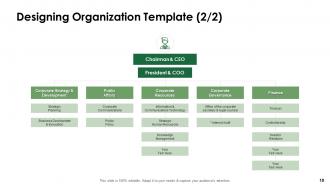
Designing Organization Template 2 2
-
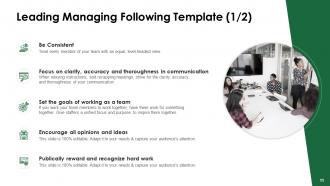
Leading Managing Following Template 1 2
-
Leading Managing Following Template 2 2
-
Change Management Model
-
Initiating and Managing Change
-
Managing and Improving Quality
-
Understanding Power Politics Template 1 2
-
Understanding Power and Politics Template 2 2
-
Learning Key Skills in Leadership Management
-
Thinking Critically Making Decisions Solving Problems Template 1 3
-
Thinking Critically Making Decisions Solving Problems Template 2 3
-
Thinking Critically Making Decisions Solving Problems Template 3 3
-
Communicating Effectively Template 1 2
-
Communicating Effectively Template 2 2
-
Delegating Successfully
-
Building and Managing Teams Template 1 2
-
Building and Managing Teams Template 2 2
-
Handling Conflicts Template 1 2
-
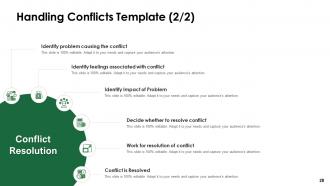
Handling Conflicts Template 2 2
-
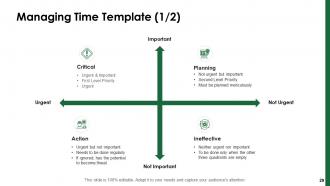
Managing Time Template 1 2
-
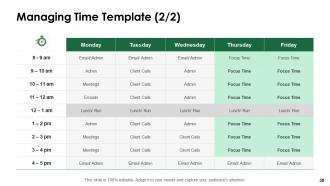
Managing Time Template 2 2
-
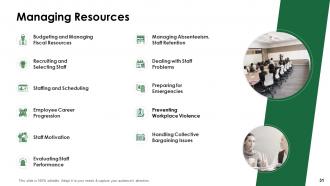
Managing Resources
-
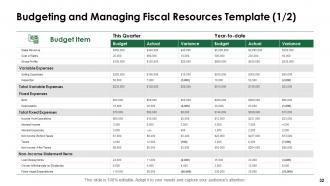
Budgeting and Managing Fiscal Resources Template 1 2
-
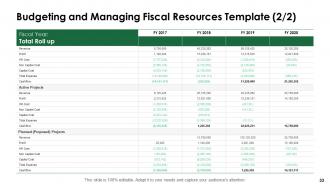
Budgeting and Managing Fiscal Resources Template 2 2
-
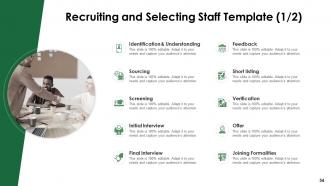
Recruiting and Selecting Staff Template 1 2
-
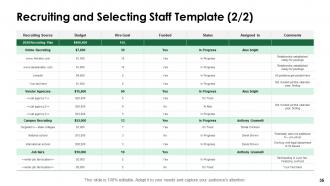
Recruiting and Selecting Staff Template 2 2
-
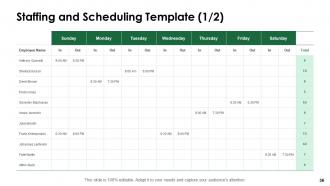
Staffing and Scheduling Template 1 2
-
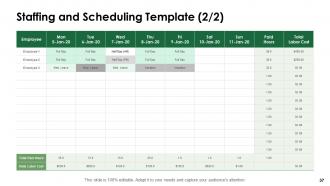
Staffing and Scheduling Template 2 2
-
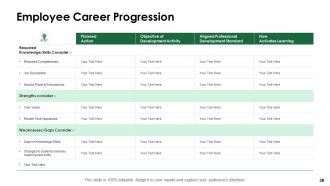
Employee Career Progression
-
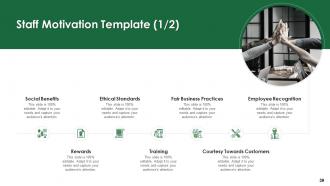
Staff Motivation Template 1 2
-
Staff Motivation Template 2 2
-
Evaluating Staff Performance
-
Managing Absenteeism
-
Managing Absenteeism Schedule
-
Staff Retention
-
Dealing with Staff Problem
-
Preparing for Emergencies
-
Preventing Workplace Violence
-
Handling Collective Bargaining Issues
-

Taking Care of Yourself
-
Managing Stress Template 1 3
-
Managing Stress Template 2 3
-
Managing Stress Template 3 3
-
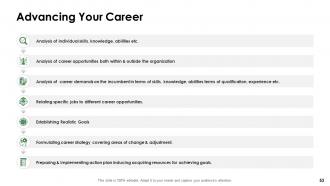
Advancing Your Career
-
KPI Metrics Dashboards
-
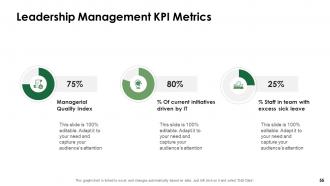
Leadership Management KPI Metrics
-
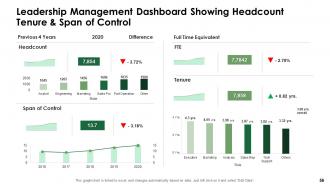
Leadership Management Dashboard Showing Headcount Tenure Span of Control
-
Leadership Development Program Icons Slide
-
Additional Slides
-

Coffee Break
-
Line Chart
-
Clustered Bar
-
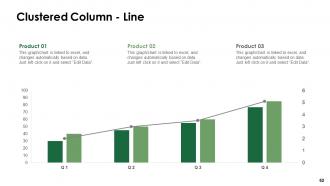
Clustered Column Line
-
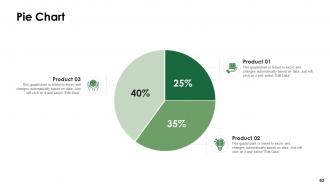
Pie Chart
-
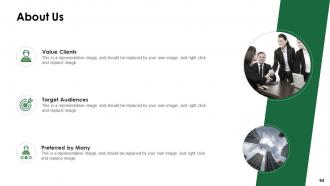
About Us
-
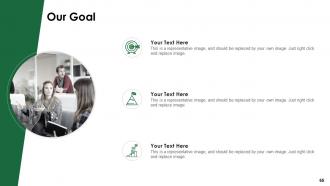
Our Goal
-

Our Team
-
Our Mission
-
Financial
-
Timeline
-
Comparison
-

Post It Notes
-
Puzzle
-
Idea Generation
-
Our Target
-
30 60 90 Day Plan
-
Venn
-

Quotes
-
Circular
-
Dashboard
-

Thanks for Watching
FAQs for Leadership Development Program
Honestly, mentorship is everything - that's your biggest must-have. Then you need real projects people can actually work on, plus solid feedback from all directions. I'd throw in some structured stuff around communication and decision-making too. Peer groups are seriously underrated though - nothing beats venting with other people dealing with the same leadership headaches you are. Oh, and make sure the executives are actually behind this thing. I've seen too many programs die because leadership just saw it as another training expense. Figure out where your biggest gaps are first, then build from there.
Honestly, 360-degree feedback is your best bet - getting input from managers, peers, and direct reports gives you the full picture. Self-assessments help too, though people are weird about rating themselves (either way too harsh or way too generous). Performance reviews capture those leadership moments, and behavioral interviews show how they actually handle sticky situations. Oh, and just watch them in meetings or during projects - you'd be surprised what you pick up. The thing is, leadership looks different in different situations. So you'll want to use a few methods before building any development program around what you find.
Look, mentorship is where you'll actually learn to lead - way more than any workshop. Having someone who's navigated all the office politics and made the mistakes already? Game changer. They'll call you out on your blind spots (which we all have, let's be real) and help you think through those messy situations that come up. I love having that safe space to bounce ideas around. Just don't show up empty-handed - bring real questions and scenarios you're dealing with. Makes the whole thing way more valuable.
Honestly, you can't just slap feedback onto the end and call it good. Start with 360 assessments to see where everyone's at, then do regular mentor check-ins and peer coaching. The real gold happens during simulations though - when people are actually doing stuff, that's when feedback sticks. Also, teach your leaders how to give decent feedback because... wow, some of them are terrible at it. Oh, and make sure it feels like growth, not like someone's grading them. People shut down fast when they think they're being judged.
Honestly, mix numbers with real feedback and you'll get the best picture. Track promotion rates and engagement surveys before/after the program. But the good stuff? Those specific stories about how people actually used what they learned back at work. Pulse surveys are clutch, plus check retention rates - do program grads stick around more than others? Peer nominations for leadership spots tell you a lot too. People vote with their feet when they see real growth. Oh, and don't go crazy at first. Pick 2-3 metrics and nail those down before adding more.
Start with a personality assessment - DISC or Myers-Briggs work great. Introverts usually do better with one-on-one coaching and written stuff. Extroverts? They love group workshops and role-playing. Data people want case studies with actual numbers. Relationship-focused folks prefer collaborative projects and peer mentoring - honestly, they're way more fun to work with. It's kinda like meal planning for picky eaters... same goals, totally different approaches. Offer multiple ways to learn the same leadership concepts. Maybe pilot 2-3 formats for your next module? See what clicks with different people.
Honestly, getting leadership to care is your biggest headache. Everyone's drowning in their day-to-day stuff, so your program gets pushed aside for whatever "crisis" pops up. Plus measuring results is a nightmare - how do you prove someone's a better leader? It takes forever to show. Participation drops off fast when people get busy. Start with just a few people who actually want to be there. Build in some accountability so they can't just ghost you. Oh, and track specific behaviors instead of trying to measure fuzzy leadership concepts. Make showing up the easier choice than bailing.
Honestly, tech can be a game-changer for leadership development if you pick the right stuff. AI platforms create personalized learning paths based on people's actual strengths and weaknesses. VR is getting surprisingly good for practicing tough conversations without the awkwardness. Your team can learn wherever through mobile apps, plus you get real analytics on progress (not just "did they finish the module"). Oh, and mobile learning is clutch for busy schedules. But here's the thing - don't let technology replace human connection. Use it to deliver better coaching and content, not as some magic fix-all solution.
Honestly, AI-powered personalized learning is everywhere right now. Remote coaching too - which makes sense since nobody wants to fly to corporate headquarters for a two-day seminar anymore. Emotional intelligence is finally getting the attention it deserves alongside regular leadership training. Companies are ditching those awful cookie-cutter programs (about time). Real-time feedback is huge now instead of waiting for annual reviews. There's way more focus on inclusive leadership since teams are so global these days. Oh, and if you're building something new? Make it flexible for different learning styles and test it virtually first.
Oh man, EQ is huge for leadership stuff. Like, I've watched brilliant people completely bomb because they couldn't handle their emotions when things got stressful. You might be the smartest person in the room, but if you can't read people or manage conflict well, you're kinda screwed. It affects everything - how your team trusts you, whether they're actually motivated, all that. My old manager was like this actually, super smart but zero people skills. Anyway, I'd start with some self-assessment thing to figure out where you're weak, then focus on those areas during training.
So first off, you've gotta cast a wider net for recruiting - hit up HBCUs, professional groups for underrepresented folks, places you wouldn't normally look. Set up mentorship programs, but here's the thing - sponsorship is way more powerful because mentors give advice while sponsors actually open doors. Make your advancement criteria crystal clear so people know what they're working toward. Oh, and flexible leadership development is key since not everyone can do the traditional stuff. Track everything with real metrics and hold your leaders accountable for developing diverse talent on their teams. It's honestly not rocket science, just takes commitment.
Honestly, skip the boring classroom stuff and throw people into real situations. Role-play those awkward conversations, run simulations, give them stretch assignments where they're actually making decisions under pressure. I've watched people learn more from shadowing a senior leader for a week than from months of theory. Cross-functional projects work great too - forces them to navigate different personalities and priorities. Oh, and don't forget reflection time afterward! That's when everything clicks and they figure out what they actually learned. The messier it feels, the better they'll remember it.
Honestly, networking might be the best part of leadership training. You'll meet other people climbing the same ladder - future leaders, mentors, executives who've been there. They become your go-to people for advice when you're stuck or need a fresh perspective on whatever crisis you're dealing with. Don't be one of those people just collecting LinkedIn connections though. Pick maybe 2-3 people from your program and actually stay in touch. Trust me, having real relationships instead of a giant contact list makes all the difference when you need help later.
Honestly, the biggest mistake I see is treating this like a one-and-done workshop situation. Monthly check-ins are huge - that's where the real growth happens. Build in mentorship programs and peer learning circles so people actually keep developing after the initial training. Give your emerging leaders stretch assignments with actual responsibility, not just busy work. Oh, and feedback loops are critical so they can figure out what's working. I mean, I've watched so many programs just die after the first session because nobody follows up. Make it an ongoing conversation, not something you check off a list.
Look, the programs that actually work ditch the theory and focus on real problems. Tech companies are smart about this - they pair up-and-coming leaders with projects that matter to the business. Healthcare's mentorship circles blow traditional one-on-one setups out of the water. Military training uses pressure scenarios where people make decisions under stress (minus the physical torture, obviously). Retail's peer networks are genius because they keep going after the official program ends. Honestly, just pick whatever fits your company culture and test it with a small group first. Don't overthink it.
-
Nice and innovative design.
-
Perfect template with attractive color combination.
-
Easily Understandable slides.
-
Awesome presentation, really professional and easy to edit.
-
Excellent design and quick turnaround.