


Sales Promotion PowerPoint Presentation Slides




Try Before you Buy Download Free Sample Product
 Impress Your
 Audience
 100%
100% Editable
 Save Hours
 of Time


Our Sales Promotion PowerPoint Presentation Slides are topically designed to provide an attractive backdrop to any subject. Use them to look like a presentation pro.
People who downloaded this PowerPoint presentation also viewed the following :
Content of this Powerpoint Presentation
Slide 1: This slide introduces Sales Promotion. State Your Company Name and begin.
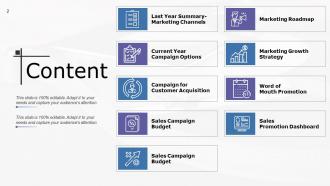
Slide 2: This slide shows Content of the presentation.
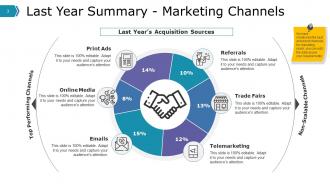
Slide 3: This slide presents Last Year Summary - Marketing Channels which includes- Emails, Referrals, Trade Fairs, Telemarketing, Online Media, Print Ads.
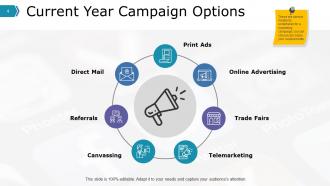
Slide 4: This slide presents Current Year Campaign Options describing- Print Ads, Telemarketing, Canvassing, Trade Fairs, Referrals, Online Advertising, Direct Mail.
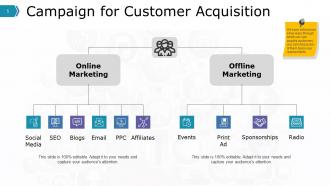
Slide 5: This slide displays Campaign for Customer Acquisition with online and offline marketing.
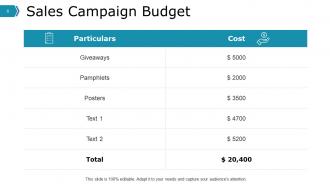
Slide 6: This slide represents Sales Campaign Budget in a table form.
Slide 7: This slide showcases Marketing Roadmap describing- Social Media, Paid/Organic Search, Content, Email Marketing.
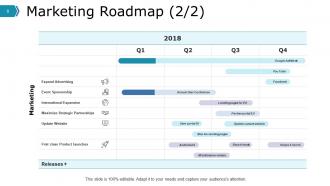
Slide 8: This is another slide on Marketing Roadmap in a table form with categories as- Expand advertising, event sponsorship, update website etc.
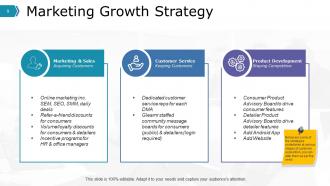
Slide 9: This slide shows Marketing Growth Strategy describing- Marketing & Sales, Customer Service, Product Development.
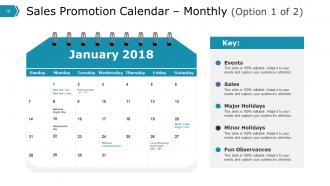
Slide 10: This slide presents Sales Promotion Calendar with- Events, Sales, Major Holidays, Minor Holidays, Fun Observances.
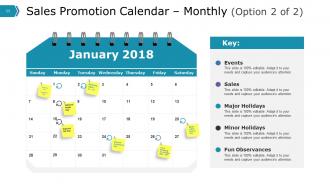
Slide 11: This is an optional slide for Sales Promotion Calendar.
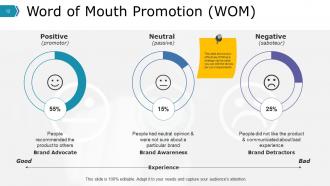
Slide 12: This slide displays Word of Mouth Promotion as positive, neutral and negative.
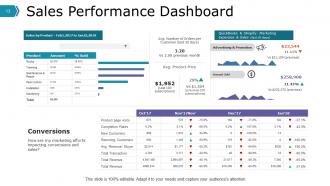
Slide 13: This slide represents Sales Performance Dashboard with graphs and tables to show related information.
Slide 14: This slide shows Sales Promotion Icons.
Slide 15: This slide is titled as Additional Slides for moving forward.
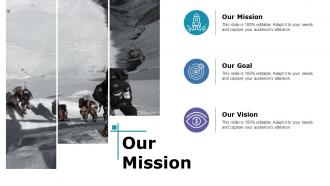
Slide 16: This is Our Mission slide with imagery and text boxes.
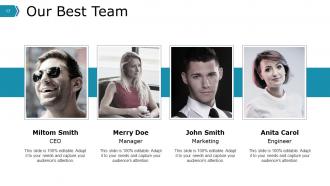
Slide 17: This is Our Best Team slide with names and designation.
Slide 18: This is About Us slide to state company specifications etc.
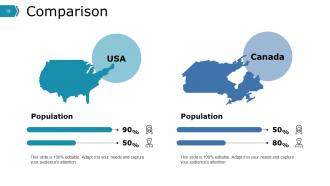
Slide 19: This is a Comparison slide to state comparison between population of countries. You can change the data as per requirements.
Slide 20: This is Our Goal slide. State your important goals here.
Slide 21: This is a Puzzle slide with text boxes.
Slide 22: This slide shows Magnifying Glass with text boxes to show information.
Slide 23: This is a Bulb Or Idea slide to state a new idea or highlight specifications, information etc.
Slide 24: This slide shows Donut Pie Chart with three products comparison.
Slide 25: This slide displays Clustered Column - Line chart with three products comparison.
Slide 26: This is a Thank You slide with address, contact numbers and email address.
Sales Promotion PowerPoint Presentation Slides with all 26 slides:
Use our Sales Promotion PowerPoint Presentation Slides to effectively help you save your valuable time. They are readymade to fit into any presentation structure.



FAQs for Sales Promotion
Limited-time discounts work great, honestly. Free trials are probably your best bet though - people can't touch digital stuff so they need to experience it first. FOMO is seriously powerful with countdown timers and all that. Bundle related products together to bump up what people spend. Tiered pricing is smart too, make that middle option super obvious. I'd probably start with like a 7-14 day trial, that seems to convert well. Oh and remove as much friction as possible during checkout - digital buyers are way more likely to bounce if there's too many steps.
Dude, seasonal promos are genius because they hit people when they're already thinking about spending. Back-to-school stuff, holiday shopping - customers are literally primed for those categories. That whole "limited time" thing? Works every time. Makes people jump faster than usual. What I love is how natural they feel compared to random sales. Nobody's gonna question why swimsuits are cheap in August, right? Plus people can rationalize bigger purchases as "seasonal necessities." Honestly, you should map out your whole year now - figure out when your customers naturally want your stuff and time everything around that.
Honestly, social media is like having a megaphone for your sales stuff. Way more people see it than old-school ads, and you can target exactly who you want. People literally expect deals on their feeds now anyway - might as well give them what they want, right? The visual thing is perfect for flash sales too. You can drop promo codes instantly and watch people actually engage with likes and shares. I'd probably just pick whatever platform your customers use most and mess around with different types of posts. See what gets people clicking. Don't overthink it at first.
Honestly, loyalty programs work because they give people a reason to stick around instead of bouncing to competitors. Points and rewards create that "might as well shop here again" mentality. The math is pretty solid too - keeping existing customers costs way less than finding new ones, like 5x less expensive. Your loyal customers will spend more over time and actually tell their friends about you. Just don't overcomplicate it at first. Start with basic points, maybe some exclusive deals, and make sure it's not a pain to use. Track how often people come back - that's your real success metric right there.
Track your revenue lift and redemption rates first - that's the bread and butter stuff. Customer acquisition costs matter too, obviously. I'd watch average order value to see if people actually spend more during promos. Conversion rates will tell you if it's working or just attracting tire-kickers (ugh, those are the worst). Don't sleep on profit margins either - you don't want to accidentally lose money. Oh, and lifetime value is huge for new customers since some bargain hunters disappear forever. Set up tracking beforehand so you're not scrambling later.
Honestly, real deadlines work way better than those fake countdown timers that reset every day - people aren't stupid, you know? I'd stick with stuff like "while supplies last" or tie it to actual events. Focus more on what they're missing out on rather than being super aggressive about it. Something like "limited quantities" feels way more natural than "ACT NOW OR DIE." Oh, and definitely A/B test different messages since every audience is different. Just be upfront about your terms and don't rush people too much. Nobody likes feeling pressured into buying something they'll regret later.
Don't bullshit people with fake discounts or phony countdown timers - that stuff always comes back to bite you. Your terms need to be super clear, not hidden in microscopic text that makes people squint. I've watched so many companies crash and burn because their fine print totally contradicted what they advertised up front. Also, maybe don't target kids or older folks who might not catch all the details? Here's my test: if you'd feel sketchy explaining exactly how your promo works to a customer's face, then you probably shouldn't run it. Trust me on this one.
Promos are tricky, honestly. Run them smart and you'll pull in new customers without hurting your brand. But those brands that discount constantly? Total mistake. Customers start thinking your regular prices are a joke and just wait for the next sale. I've seen it happen so many times. You want balance here - use sales to clear old stock or launch something new, but don't train people to expect deals every week. Track your average selling price too, because that'll show you if you're overdoing it.
Yeah, so basically you'll train people to only shop your sales - which sucks for margins. I literally do this with Gap, just wait for their 40% off emails lol. But seriously, customers start expecting discounts and won't pay full price anymore. Makes your stuff look cheap too compared to competitors who don't constantly slash prices. Think about how annoyed you'd be paying full price then seeing it 50% off next week? Space them out more and maybe do bonus stuff instead of always cutting prices. Way better for your brand long-term.
Dude, personalized promos absolutely crush generic ones. Like, everyone just deletes those boring "20% off everything" emails now - they're so overdone. But when you actually use someone's purchase history or what they've been browsing? That's when people pay attention. Higher open rates, more clicks, better sales. The whole thing works because customers feel like you get them instead of just spraying random offers everywhere. Honestly, just start by splitting your email list based on what people bought before, then send them related product deals. You'll notice the difference pretty much right away.
Honestly, B2B people eat up anything with hard numbers - case studies, ROI calculators, industry reports that actually solve their problems. But consumer brands? Totally different game. You need emotional stuff like user-generated content and behind-the-scenes posts that hit them in the feelings. Healthcare and finance are obviously super regulated, so stick with educational content and testimonials instead of flashy ads. Retail's all about FOMO though - limited offers, tons of reviews, social proof everywhere. I learned this the hard way, but you've gotta match how people in each industry actually buy things.
Honestly, working with influencers can really boost your sales promos. Their followers actually trust what they recommend - way more than regular ads anyway. It's like getting a friend's opinion instead of some random company trying to sell you stuff. You'll also reach people who probably wouldn't find you otherwise, which is huge. Just don't get caught up in follower counts though - I've seen brands waste money on that. Find someone whose audience actually matches who you're trying to reach. That's what matters.
Honestly, start by digging into your last few promotions to see what actually moved the needle. Data analytics will show you if people are buying more or just timing their regular purchases differently. Customer segments matter too - what works for one group totally flops with another. A/B testing is your best friend here, saves you from those "why did we think this would work" moments. Track redemption rates and incremental sales, not just total revenue. Oh, and don't forget lifetime value - sometimes a promotion brings in customers who stick around. Test small first, then scale what's actually working.
Honestly, the secret is making everything feel connected instead of like random separate campaigns. Your emails need to match what people see when they walk into your store - same messaging, same timing, all that stuff. QR codes are actually pretty clutch for this (I know, I know, but they work). Drive people online to pick stuff up in-store, or grab shoppers' info while they're browsing physically. Staff training matters too - they've gotta know about both your digital and in-store deals so they can help anyone. Oh, and use different promo codes to track what's actually driving results across channels.
Honestly, your customer demographics are everything when it comes to promotions that actually work. Young people go crazy for social media contests and flash sales, but older customers? They want their traditional coupons and loyalty points. Income matters big time too - rich customers might skip a 20% off deal but lose their minds over exclusive early access. Geography's weirdly important - rural folks still love getting coupons in the mail while city people want everything on their phones. I learned this the hard way at my last job. Don't try to please everyone with the same promotion because you'll end up connecting with nobody.
-
Best Representation of topics, really appreciable.
-
Colors used are bright and distinctive.
-
Wonderful templates design to use in business meetings.