


Product marketing powerpoint presentation slides






Try Before you Buy Download Free Sample Product
 Impress Your
 Audience
 100%
100% Editable
 Save Hours
 of Time


If you are looking for a strategy to expand your business, then we have content-ready product marketing PowerPoint presentation slides for you. The strategies mentioned in these brand marketing PPT templates will let you manage online traffic through social media marketing, brand positioning, brand communication, go-to-market plan, as well as deliver marketing communications. Many companies build new and innovative products, but fail badly when brought to market. That’s where the role of an efficient product marketing strategy comes into play. If you are a product marketing manager, you need to focus on areas including brand awareness and brand positioning of your product. This product management presentation will also cover related topics such as product development and marketing, brand marketing, brand promotion, business branding, advertising strategy. All you need to do is simply click and download product marketing PowerPoint visuals. Highlight your cultural heritage with our Product Marketing Powerpoint Presentation Slides. Elaborate on the achievements of your forefathers.
People who downloaded this PowerPoint presentation also viewed the following :
Content of this Powerpoint Presentation
Slide 1: This slide introduces Product Marketing. State Your Logo and get started.
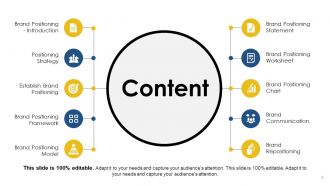
Slide 2: This slide presents Content with these following points- Brand Positioning - Introduction, Positioning Strategy, Establish Brand Positioning, Brand Positioning Framework, Brand Positioning Model, Brand Positioning Statement, Brand Positioning Worksheet, Brand Positioning Chart, Brand Communication, Brand Repositioning.
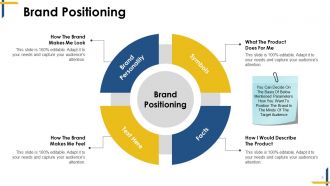
Slide 3: This slide showcases Brand Positioning with these four main points- Brand Personality, Symbols, Facts, Brand Positioning, You Can Decide On The Basis Of Below Mentioned Parameters How You Want To Position The Brand In The Minds Of The Target Audience
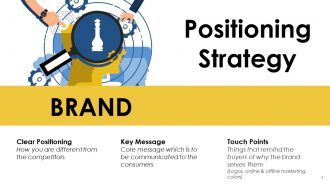
Slide 4: This slide presents Positioning Strategy further shows BRAND are- Clear Positioning, Key Message, Touch Points.
Slide 5: This slide shows Establish Brand Positioning (Option 1 of 2). Evaluating the product on the basis of commonly used parameters which can be altered as per customer requirements
Slide 6: This slide showcases Establish Brand Positioning (Option 2 of 2) with these parameters- Target Customers, Key Benefits, Price, Value Proposition, Company & Product, Evaluating the product on the basis of commonly used parameters which can be altered as per customer requirements
Slide 7: This slide presents Brand Positioning Framework which further shows Risky What Competition has to give, What Customers Want, What You have to offer, Ideal Positioning, Don’t even think about this, Competitor positioning.
Slide 8: This slide showcases Brand Positioning Model. You can add the information as per your requirement.
Slide 9: This slide presents Create a Brand Positioning Statement with these four points- Target Customer, Market Definition, Brand Promise, Reasons to Believe.
Slide 10: This slide shows Brand Positioning Worksheet. You can add the data and use it.
Slide 11: This slide presents Brand Positioning Chart. Add the information and use it accordingly.
Slide 12: This slide showcases Brand Communication with these few categories- Quality, Accessible, Variety, Authenticity, Convenient, Personal Service, Moderate Prices, Durability, Customer Value, Latest Technology, Affordable, Easily Available, Choose the attributes you want the brand to communicate to the target audience
Slide 13: This slide presents Brand Repositioning (Option 1 of 2) with these few types we have listed- Segment Oriented, Celebrity Oriented, Symbolism Oriented, Up-market Technology, Niche-oriented, Change Of Image Oriented, Value Oriented, You can reposition the Brand in the market on the basis of any of the ways mentioned in this slide.
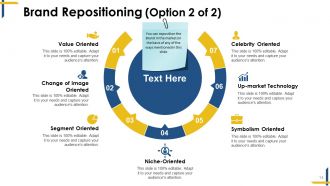
Slide 14: This slide shows Brand Repositioning (Option 2 of 2) which further shows Niche-Oriented, Value Oriented, Change of Image Oriented, Segment Oriented, Symbolism Oriented, Up-market Technology, Celebrity Oriented, You can reposition the Brand in the market on the basis of any of the ways mentioned in this slide
Slide 15: This slide shows Product Marketing Icon Slide. You can use as per your requirement.
Slide 16: This slide is a Coffee Break image for a halt.
Slide 17: This slide forwards to Charts & Graphs.
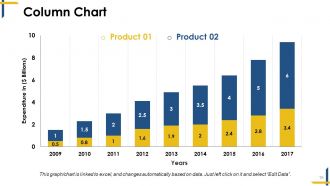
Slide 18: This slide presents a coloumn Chart graph/chart. Compare Product 01, Product 02 and use as per required.
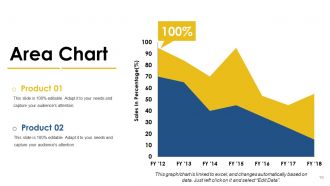
Slide 19: This slide shows a Area Chart for two product comparison.
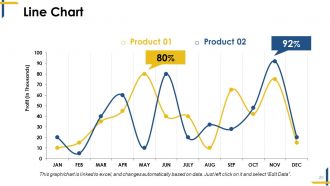
Slide 20: This slide shows a Line Chart for two product comparison.
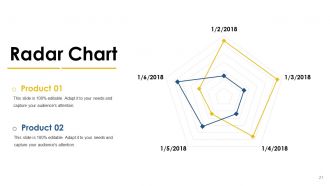
Slide 21: This slide presents a Radar Chart graph/chart. Compare Product 01, Product 02 and use as per required.
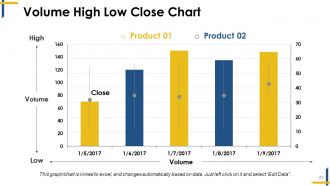
Slide 22: This slide displays a Stock Chart with volume as parameter in terms of high and low, open and close.
Slide 23: This slide is titled Additional slides.
Slide 24: This is a Target slide with the following subheadings- Current Situation, Competitive Analysis, Target Segments, Vision, Positioning.
Slide 25: This slide helps depict Our Team with text boxes.
Slide 26: This slide helps show- About Our Company. The sub headings include- Creative Design, Customer Care, Expand Company
Slide 27: This slide shows Our Goals for your company
Slide 28: This slide shows Comparison of Positive Factors v/s Negative Factors with thumbsup and thumb down imagery.
Slide 29: This slide shows Comparison of Positive Factors v/s Negative Factors with thumbsup and thumb down imagery.
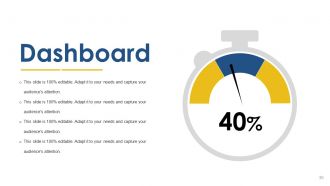
Slide 30: This is a Dashboard slide to show- Strategic System, Success, Goal Process, Sales Review, Communication Study.
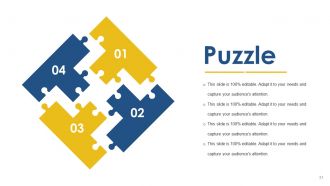
Slide 31: This slide showcases a Puzzle with imagery.
Slide 32: This slide shows Target image with text boxes.
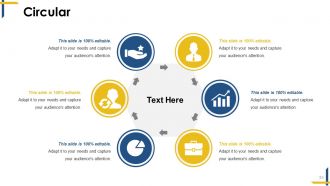
Slide 33: This is a Circular image slide to show information, specifications etc.
Slide 34: This is a Venn diagram image slide to show information, specifications etc.
Slide 35: This is a Timelines slide to show- Plan, Budget, Schedule, Review.
Slide 36: This is a Thank You slide for acknowledgement.
Product marketing powerpoint presentation slides with all 36 slides:
Handle irrational fears with our Product Marketing Powerpoint Presentation Slides. Enable folks to intelligently assess their apprehensions.
-
Product Marketing
-
Brand Positioning Framework
-
Brand Positioning
-
Positioning Strategy
-
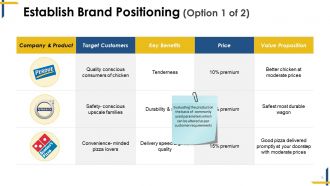
Establish Brand Positioning Option 1 of 2
-
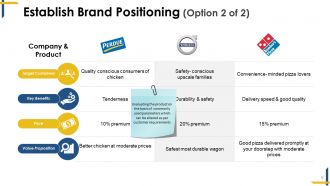
Establish Brand Positioning Option 2 of 2
-
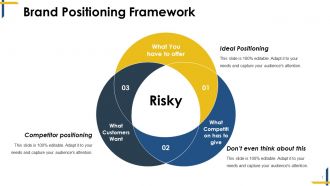
Brand Positioning Framework
-
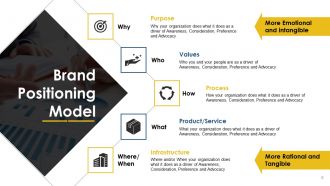
Brand Positioning Model
-
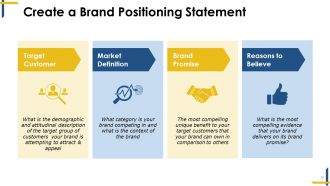
Create a Brand Positioning Statement
-
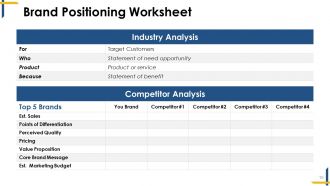
Brand Positioning Worksheet
-
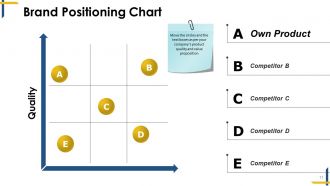
Brand Positioning Chart
-

Brand Communication
-
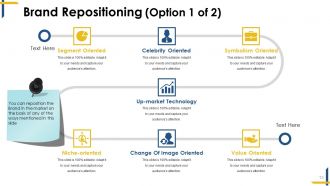
Brand Repositioning Option 1 of 2
-
Brand Repositioning Option 2 of 2
-
Product Marketing Icon Slide
-

Coffee Break
-

Graph And Charts
-
Column Chart
-
Area Chart
-
Line Chart
-
Radar Chart
-
Volume High Low Close Chart
-
Additional Slides
-
Our Mission
-
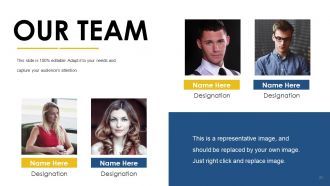
Our Team
-

About Us
-
Our Goal
-
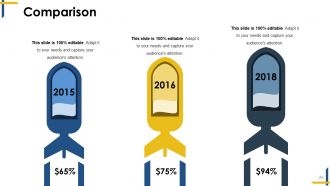
Comparison
-
Quotes
-
Dashboard
-
Puzzle
-

Target
-
Circular
-
Venn
-

Time line
-

Thank You Slide
FAQs for Product marketing
Honestly, start with really digging into who your customers are and what's driving them crazy. That's your foundation right there. Then nail down your positioning - like, what makes you different and why should people care? Your messaging has to actually connect with real humans, not just sound impressive to your boss. Figure out where these people actually hang out so you can reach them. Pricing's tricky but super important - has to match what you're promising and what they'll actually shell out for. Competitive research too, obviously. I probably should've mentioned that earlier but whatever - you need to know what you're up against.
Honestly, stories beat feature lists every single time. People zone out when you're just rattling off specs, but they'll actually listen if you tell them about someone like them who had the same problem. It's weird how our brains work that way. Your customers start picturing themselves in that success story instead of just comparing your product to ten others. Plus everyone's getting hit with sales pitches constantly these days – you need something that sticks. Figure out what's really frustrating your customers, then show them the journey from that mess to where they want to be.
Honestly, you can't skip market research if you want your product marketing to actually work. Start with customer interviews and check out what competitors are doing - even basic stuff beats guessing. I've watched so many campaigns crash because teams just assumed they knew their audience. Research helps you figure out who you're targeting, what problems they have, and how to position yourself. Plus you'll catch market gaps and threats before they bite you. It sounds boring but trust me, flying blind is way worse. Even spending a few hours on this makes a huge difference.
Look at who's already buying from you first - dig through your sales data and spot the patterns. Build detailed buyer personas around demographics, what keeps them up at night, how they behave. Fair warning: this takes forever but pays off. Survey them, do interviews, stalk their social media (kidding... sort of). Check out your competitors' customers too for extra intel. You want to be specific enough to actually speak their language, but not so narrow that your audience becomes like 12 people. The whole point is tailoring your message to people who'll actually care.
Honestly, most people try to appeal to everyone and end up appealing to nobody. Classic mistake. Others just copy what competitors are doing or get obsessed with listing features instead of solving actual problems. Here's what works: Pick one specific audience and really understand their headaches. I mean actually talk to these people, not just guess. Then position yourself around fixing those exact issues - outcomes, not features. Oh and test your messaging early! You'd be surprised how often what sounds brilliant in your head falls flat with real customers. Better to find out sooner than later.
Look, digital marketing just helps you find your actual customers instead of shouting into the void. SEO gets you discovered naturally. Social ads let you target super specific groups - honestly way better than old-school advertising where you're basically throwing darts blindfolded. Email automation does the heavy lifting while you're doing other stuff, and retargeting grabs people who almost bought but didn't. Here's the thing though - don't try to be everywhere at once. Pick like 2-3 platforms where your people actually spend time and focus there. You'll see way better results.
Look for gaps your competitors are ignoring - that's your goldmine right there. Maybe it's better customer service, hitting an underserved audience, or honestly just clearer pricing (you'd be shocked how many companies mess this up). Think about the *feeling* you want people to have when they think of your brand vs theirs. I always tell people to survey their current customers first - find out what actually made them choose you, not what you assume they care about. Sometimes the answer surprises you. Could be something as random as your packaging or how you explain things.
Honestly, pricing is everything for your product - it's what makes or breaks how people see your value. Go too high and you'll scare everyone off. Too low? People think you're cheap (and you're basically throwing away profit). You want that sweet spot where customers feel good about what they're getting while you hit your numbers. I always think competitor research is clutch here - see what everyone else is doing first. Then maybe test a few different price points with smaller groups before going all in. The whole thing needs to match whatever story you're telling about your product's worth, you know?
Look, you basically need to watch three things: awareness, engagement, and conversions. Reach and impressions show how many people see your stuff. Click-through rates and time on product pages tell you if they actually care. I'd skip the vanity metrics though - they're honestly just distracting. What really matters? Sign-ups, trial-to-paid rates, and whether your customer acquisition cost makes sense. Oh, and don't forget churn rate after the campaign ends. That one bites people all the time. Pick maybe 3-5 metrics max that actually tie to your goals. Otherwise you'll just get lost in spreadsheets.
Honestly, just steal their exact words for your messaging - customers say things way better than we do half the time. Set up surveys and dig through your support tickets regularly. I'm always blown away by how customers describe benefits I totally missed! Their pain points will help you nail your positioning better. Success stories become your case studies and testimonials obviously. Make collecting feedback automatic, not random. Oh and definitely check what's already sitting in your CRM first - you'll probably find tons of good stuff you forgot about. That's where I'd start anyway.
Honestly, influencer marketing just hits different than regular ads. When someone you follow recommends something, it feels like your friend telling you about a cool product they found. Way more trustworthy than some random banner ad, you know? The targeting is insane too - you can find creators whose followers are exactly your ideal customers. Micro-influencers are where I'd start though. They're cheaper and their audiences actually engage with content instead of just scrolling past. Plus their conversion rates are usually way better than the mega-famous ones. Test it out small first and see what happens.
So content marketing is basically how you get people to trust you before they're ready to buy anything. Your regular product marketing talks features and positioning, but content lets you actually own those conversations happening in your space. Blog posts about customer problems, case studies showing real wins, even those weird LinkedIn posts that somehow work - it all helps move people from "never heard of you" to "take my money." Honestly, the best approach is just matching your current product messaging to different content types and testing what actually gets results. Don't overthink it.
Honestly, branding is everything in product marketing. It's what makes people pick you before they even look at specs or features. I've watched decent products crush it just because their branding was on point, while better products totally bombed without it. Strong branding builds trust fast. Your campaigns convert better, you can charge more because people see the value, and customers actually remember you. When it's consistent across channels, everything starts working together - like each touchpoint backs up the others. My advice? Get your brand positioning sorted first. Then build your product marketing around that. Trust me on this one.
Honestly, just focus on content that doesn't feel like you're trying to sell something every second. Behind-the-scenes stuff works great - people love seeing how things actually get made. User posts are gold too since they're way more trustworthy than anything you'll say about your own product. For platforms, Instagram and TikTok are obvious choices if your stuff is visual. LinkedIn's better for business products, and Twitter's decent for quick customer questions. Here's the thing though - don't try to be on every platform at once. Pick one or two where your people actually spend time, get good at those first, then maybe branch out later.
Make people feel like they're part of something special, not just being sold to. AR filters are huge right now, or do those gamified teaser campaigns. I'd start planning maybe 6-8 weeks out? User-generated content is gold - get them creating with your stuff before it even launches. Partner with smaller influencers who actually get your brand (forget the follower count obsession). The launches that don't feel like marketing usually work best. Oh, and exclusive previews for your community always kill it. You want insiders, not targets.
-
Very well designed and informative templates.
-
Great designs, really helpful.
-
Awesome ppt