

Product Market Mapping Powerpoint Presentation Slides




Try Before you Buy Download Free Sample Product
 Impress Your
 Audience
 100%
100% Editable
 Save Hours
 of Time


Regulate the efficiency of your business products with our exclusively designed product market mapping PowerPoint presentation slides which help in describing the significance of product value for your business. This presentation design will result in explaining the importance of product mapping for business such as it helps in describing your products developments in the market, the customers view regarding your product, its future growth prospective and many more. Further, you can also use this PPT image to represent the significant uses of this product mapping as it helps in taking the effective business decisions, helps in preparing the result-oriented business plans and business budgets to take precautionary measures for the organizational growth parameters and for other business products also. Therefore start initializing this PPT layout which will help you in managing business products. You will find our Product Market Mapping Powerpoint Presentation Slides fully equipped. Be assured of getting good facilities.
People who downloaded this PowerPoint presentation also viewed the following :
Content of this Powerpoint Presentation
Slide 1: This slide introduces Product Market Mapping template. Write your company name and begin.
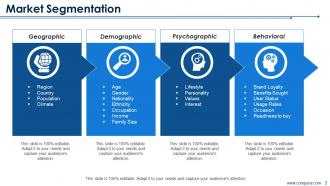
Slide 2: This slide dislays Market Segmentation listing as Geographic, Demographic, Psychographic, Behavioural.
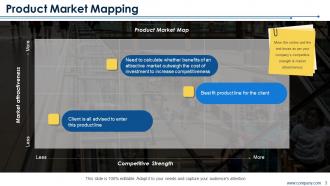
Slide 3: This slide shows Product Market Mapping.You can analyse your product and modify it according to your requirement.
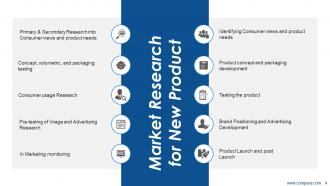
Slide 4: This slide showcases Market Research for New Product with various parameters stated. You can make the best use by editing your own.
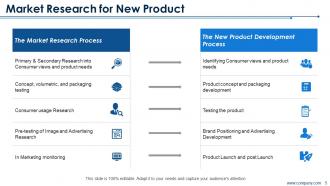
Slide 5: This slide presents Market Research for New Product. Describe about market research process and new product development.
Slide 6: This slide explain Market Research for New Product with a relevant background image.
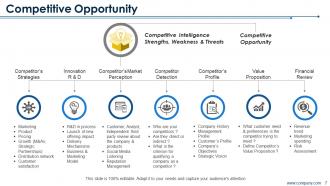
Slide 7: This slide shows Competitive Opportunity.Evaluate your Competitive Intelligence Strengths, Weakness & Threats, Competitor’s Market Perception, Competitor’s Strategies, Financial Review, Revenue trend, Marketing spending, Risk Assessment, Value Proposition. with help of this slide content.
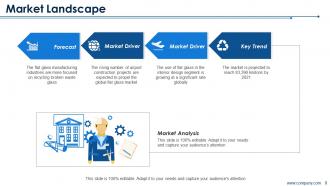
Slide 8: This slide describe Market Landscape.With this you can understand Market Analysis showing Key Trend, Market Driver, Market Driver, Forecast.
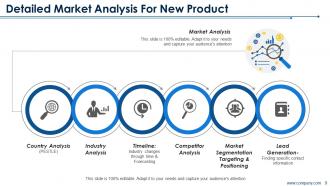
Slide 9: This slide explains you about Detailed Market Analysis For New Product showing various steps like Country Analysis (PESTLE), Industry Analysis Competitor Analysis Market Segmentation Targeting & Positioning Lead Generation-
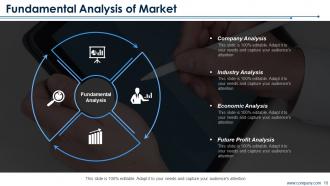
Slide 10: This slide shows Fundamental Analysis of Market.This is also showing fundamental analysis sub categories such as- Company Analysis, Industry Analysis, Economic Analysis, Future Profit Analysis.
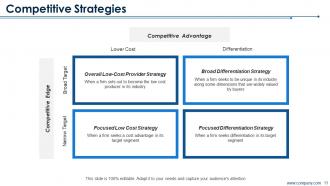
Slide 11: This slide showcases the Competitive Strategies and based on this divided into four sub strategy.
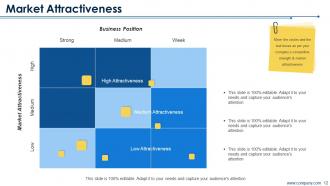
Slide 12: This Slide presents Market Attractiveness with comparison of market attractiveness and business position parameter.
Slide 13: This slide shows Product Market Mapping Icon.You can use these icons as per your requirement.
Slide 14: This slide shows Break time.
Slide 15: This slide showcases Charts & Graphs to proceed.
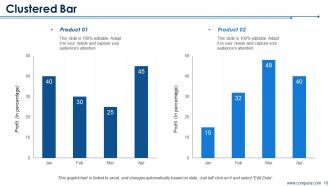
Slide 16: This slide displays Clustered Bar which helps you to compare two products profit.
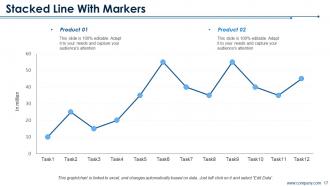
Slide 17: This slide presents Stacked Line With Markers.With this you can compare your product with other company product.
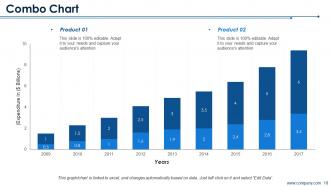
Slide 18: This slide displays Combo Chart with several years and expenditure on both the lines of chart.
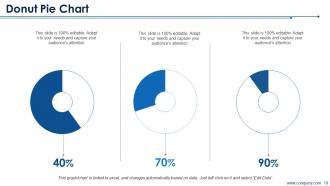
Slide 19: This slide showcase Donut Pie Chart. With these three donut chart you can analyse your growth of business.
Slide 20: This Additional slide is to proceed further.
Slide 21: This slides showcases Our Mission. With this you can add your own vision, mission and goal.
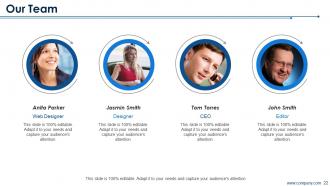
Slide 22: This slide displays Our Team.You can modify your team member name as per your requirement.
Slide 23: This slide showcases About Us.Add about your company description with a relevant images.
Slide 24: This slide is about Post It notes.You can add your own as per your business requirement.
Slide 25: This is a Thank You slide with Address# street number, city, state, Contact Numbers, Email Address.
Product Market Mapping Powerpoint Presentation Slides with all 25 slides:
Be the star of the show with our Product Market Mapping Powerpoint Presentation Slides. Rock the stage with your ideas.






FAQs for Product Market Mapping
Start with your customer segments - way easier to build around who you're serving. Map out competitors by features, pricing, market share. Include substitute products too since they can steal customers. Your product's unique value prop and market size matter obviously, but honestly the real gold is finding those white spaces where nobody's competing well. Oh and don't trust your gut on this - validate with actual customer data. I've seen too many founders fall in love with gaps that don't actually exist.
Honestly, just map out where you sit compared to your competitors on stuff that actually matters to customers - price vs quality, features vs simplicity, whatever. Plot everyone on these axes and look for gaps or where people cluster up. Gaps might be underserved customers, clusters show who you're really fighting against (and it's probably not who you think). Once you see the whole picture, you can figure out your ideal customer based on what they care about most. Oh and definitely survey your current customers about what made them pick you in the first place.
Miro's honestly my go-to for this - the sticky notes thing is weirdly addictive and perfect for mapping out segments. Lucidchart works too if you want something a bit more polished. For the data side, Tableau or Power BI are solid choices to spot patterns you might miss otherwise. I've been using Airtable lately to keep all my research organized, though Google Sheets does the job if you're not trying to get fancy. Main thing is making sure everyone can jump in and edit stuff together. Start with whatever your team's already comfortable with - no point fighting over tools when you should be focusing on the actual strategy, you know?
Hey! So product market mapping is basically like having a bird's eye view of where your stuff actually sits compared to everyone else. You can spot which areas you're crushing it in and where competitors are totally schooling you. The cool part? You'll see gaps that nobody's really targeting yet. When you're stuck deciding whether to go all-in on what's already working or try something completely different, this map makes it super obvious. Honestly, I've seen people waste months debating strategy until someone pulls up one of these things. Then suddenly everyone's on the same page about what to do next.
Honestly, competitive analysis is like your secret weapon for finding where you actually fit in the market. Map out your top competitors' strengths, weaknesses, and who they're targeting. Pricing too - that's huge. Look for those empty spots where nobody's really playing yet. Most people totally skip this step which is wild to me because it literally shows you where to position yourself. Plot maybe 5-7 competitors on a simple map and see what gaps pop out. You'll spot threats early and maybe even find partnership opportunities you hadn't thought of.
So basically you plot out where all your competitors sit across different customer groups and what they're offering. The empty spots? That's where you can jump in. I usually make a simple grid - customer segments on one side, key features or price points on the other. Then you just fill in who's doing what. Super obvious when you see it laid out like that. Maybe there's a price range nobody's hitting, or some combo of features that doesn't exist yet. It's honestly pretty satisfying when you spot a gap that seems almost too good to be true.
So there's a bunch of ways to slice this up. Demographics are the obvious ones - age, income, where people live. But honestly? Behavioral stuff usually works better since it shows how people actually use your product. Psychographics get into lifestyle and values, which can be gold depending on what you're selling. Geographic works if your product varies by region (which reminds me, my cousin's startup totally ignored this and bombed in the South). Needs-based is clutch too - what problem are they solving? Don't just pick one method though. Mix 2-3 approaches and look for patterns in your customer data.
So here's the thing - consumer behavior analysis is basically your roadmap for product positioning. You figure out how people actually buy stuff, what makes them tick, and what they value. Then you can place your product smart against competitors and spot real gaps in the market. Honestly, skipping this step is like driving blindfolded. Your customers' decision patterns tell you everything about where to position and which segments make sense. I always tell people to dig into the behavioral stuff first before they lock down any positioning strategy. Makes such a difference.
Honestly, the worst thing you can do is assume you know your market without actually talking to real customers. Markets are way messier than they look on spreadsheets - trust me on that one. Your team probably has blind spots about how people actually see your product compared to competitors. Don't just sit at your desk analyzing either. Get out there and validate with actual prospects, not just existing customers. Oh, and update the thing regularly because markets move faster than you think they will.
Product market maps are great for finding gaps where your new product could fit. Plot your 8-10 main competitors by price, features, or who they're targeting. Look for the white spaces - that's where opportunity lives. Honestly, it's like finding a good parking spot that isn't too crowded but customers can still reach you easily. Once you map everything out, you'll spot underserved segments pretty quickly. Use those empty corners to validate your positioning and figure out how you're different from everyone else. The visual really helps - way better than just making a list.
Netflix totally nailed this - they went from mailing DVDs to streaming to making their own shows by watching where customers were going before anyone else figured it out. Airbnb realized people didn't just want cheap rooms, they wanted that whole "local experience" thing. Tesla's approach was wild though - they started with expensive cars and worked their way down instead of trying to be the cheapest option right away. What's smart about all these companies? They paid attention to how people's habits were changing, not just boring demographic stuff. That's where you'll spot the real opportunities.
I'd say every 3-6 months, but it really depends on your industry speed. Tech moves crazy fast, so quarterly makes sense to catch new players and shifting customer stuff. Slower markets? Maybe twice a year is fine. Honestly, the best trigger is when your sales team starts mentioning competitors you've never heard of or customer needs that don't match what you've mapped out. That's when you know you're behind. Just set a calendar reminder and treat it like any other strategy check-in - otherwise you'll forget and your map becomes useless pretty quickly.
Product market mapping totally depends on your industry and how customers actually behave. B2B tech means you're dealing with complex buyer journeys and tons of stakeholders. Consumer goods? More about demographics and retail channels. Healthcare has all that regulatory stuff to map out (honestly such a pain), while fashion is all seasonal trends and lifestyle positioning. Financial services map around risk tolerance and life stages. SaaS focuses on user personas and how people adopt features. Don't just steal templates from other industries - adapt your framework to what actually drives decisions in your specific market.
Colors are your best friend here - use different ones for competitor groups and make your bubbles bigger/smaller based on market share. Icons help too for different product types. Arrows show where the market's heading, which is honestly pretty crucial info. Your own stuff should pop with contrasting colors vs competitors. Short sentences work. Longer ones keep people reading without getting bored by the visual chaos. Don't make your legend complicated though - stick it somewhere obvious so people aren't squinting around trying to figure out what everything means. Way better than boring spreadsheets for sure.
Track the numbers that actually matter - market share shifts, how much you're spending to get customers in each segment, conversion rates. Revenue growth by area too. Customer satisfaction and retention rates? Super telling if your positioning is working or just looks good on paper. I'd also dig into the softer stuff - ask people if your messaging clicks, how they see your brand now vs before. Competitive positioning feedback is gold. Maybe I'm overthinking this, but start with 3-4 metrics that tie to your main goals. Check them monthly and you'll know pretty quick if it's working.
-
Great designs, Easily Editable.
-
Easy to edit slides with easy to understand instructions.