

Online Digital Marketing Proposal Powerpoint Presentation Slides





Try Before you Buy Download Free Sample Product
 Impress Your
 Audience
 100%
100% Editable
 Save Hours
 of Time


Digital marketing has eclipsed traditional marketing methods. This is because of numerous obvious advantages such as global reach, and cost-effectiveness. Also known as internet marketing, digital marketing comprises a wide range of approaches. These may include search engine marketing, email direct marketing, search engine optimization, and influencer marketing amongst many others. SlideTeam presents the all-new Online Digital Marketing Proposal PowerPoint Presentation Slides. Online marketing providers can pique the interest of their clients using the professional tone of our business proposal templates. Kick-off with a crisp cover letter to familiarize your clientele with your approach. This may include positioning your client in the minds of the target, or other solutions. Our digital marketing ppt proposal deck is brimming with data visualizations and cutting-edge graphics. Educate your clients about how to magnetize and retain customers through large-scale social media advertising. Showcase your services like page optimization, and advertising for different social media like Facebook, and Instagram, using a tabular format. Break your action plan into phases including timeline details through our professionally-built internet marketing business proposal PowerPoint slideshow. You can present your electronic marketing pricing packages using our comprehensive PPT business proposal theme. Acquaint your target audience with your organization by showcasing your company background, and details through this PowerPoint layout. Offer a glimpse of your major web marketing projects by the means of our PPT business proposal template. You can also make your proposal compelling by adding client testimonials as featured in this intuitive presentation. Put forth an amiable approach by introducing key personnel involved in the project. You can include a high-definition image and role of the individual. With the help of this PowerPoint presentation deck, you can include the vital terms and conditions. Smash the download icon to close more deals and unlock new business opportunities.
People who downloaded this PowerPoint presentation also viewed the following :
Content of this Powerpoint Presentation
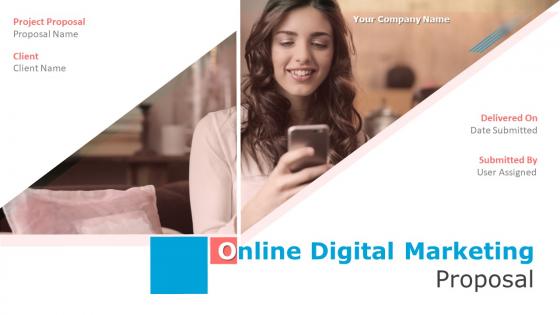
Slide 1: This slide introduces Online Digital Marketing Proposal. State Client name, Delivered date, User assigned.
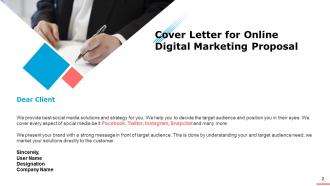
Slide 2: This slide displays Cover Letter.
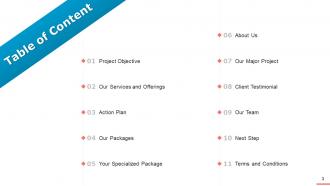
Slide 3: This slide displays Table of Content of the presentation.
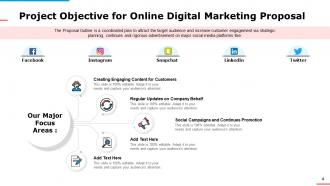
Slide 4: This slide describes Project Objective for Online Digital Marketing Proposal.
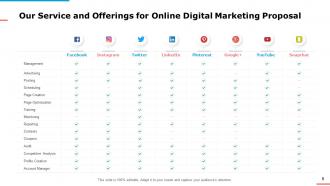
Slide 5: This slide describes Our Service and Offerings for Online Digital Marketing Proposal.
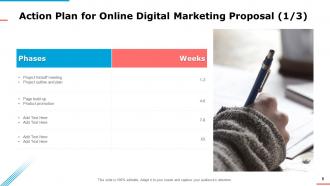
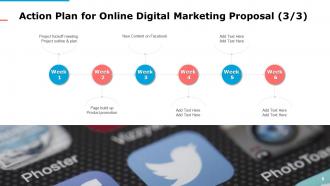
Slide 6: This slide showcases Action Plan for Online Digital Marketing Proposal.
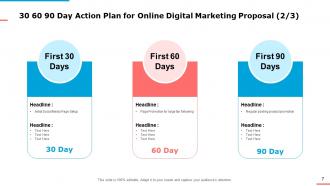
Slide 7: This is 30 60 90 Day Action Plan slide.
Slide 8: This slide showcases Action Plan for Online Digital Marketing Proposal.
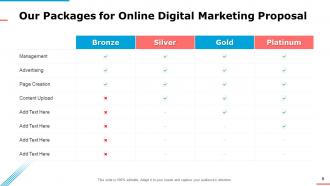
Slide 9: This slide showcases Our Packages for Online Digital Marketing Proposal.
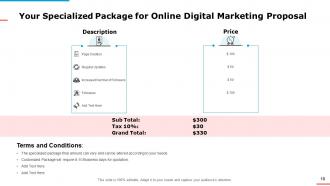
Slide 10: This slide showcases Specialized Package for Online Digital Marketing Proposal
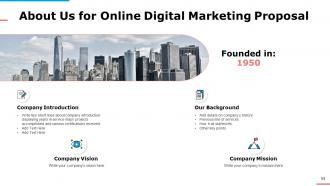
Slide 11: This is About Us slide to showcase Company specifications. Write few short lines about company introduction displaying years in service major projects accomplished and various certifications received
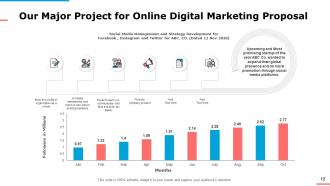
Slide 12: This slide shows Our Major Project for Online Digital Marketing Proposal.
Slide 13: This slide displays Client Testimonial. Write Client Testimonial Here.
Slide 14: This is Our Team slide.Write key credentials and major highlights of the team member.
Slide 15: This is Our Team slide.Write key credentials and major highlights of the team member.
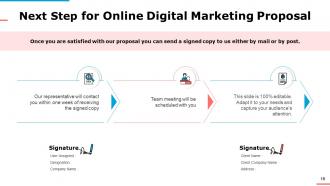
Slide 16: This is Next Step slide. Once you are satisfied with our proposal you can send a signed copy to us either by mail or by post.
Slide 17: This slide showcases Terms and Condition for Online Digital Marketing Proposal.
Slide 18: This is Contact Us slide with Company Name, Company Address and Website
Slide 19: This is Icons Slide for Online Digital Marketing Proposal.
Slide 20: This slide is titled as Additional Slides for moving forward.
Slide 21: This is Our Mission slide with Vision, Mission and Goal.
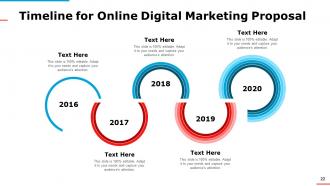
Slide 22: This is Timeline slide process.
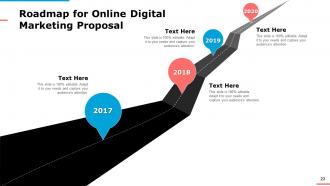
Slide 23: This slide depicts Roadmap process.
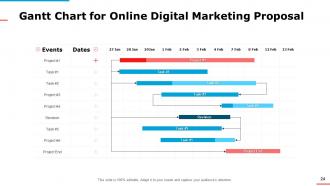
Slide 24: This is Gantt Chart slide.
Online Digital Marketing Proposal Powerpoint Presentation Slides with all 24 slides:
Use our Online Digital Marketing Proposal Powerpoint Presentation Slides to effectively help you save your valuable time. They are readymade to fit into any presentation structure.

FAQs for Online Digital Marketing Proposal
So for your proposal, hit the basics first - objectives, target audience breakdown, which channels you'll use (social, email, PPC, whatever makes sense). Timeline and budget are obvious musts. ROI projections too, though honestly those always feel like educated guesses to me. Definitely throw in some case studies or examples from past work - builds trust. Be super specific about deliverables so there's no confusion later. Oh, and don't skip the competitive analysis part. People love seeing what their competitors are doing wrong. End with clear next steps and when you can actually start. Transparency on costs while showing real value is the sweet spot.
First thing - repeat their goals back to them but in your own words. Shows you were actually paying attention. Then connect every single strategy you pitch directly to what they said they want. Skip the vague "brand awareness" BS and get specific about how each tactic hits their actual targets. I make these little charts mapping goals to tactics because clients eat that stuff up. Oh and pro tip - half of winning them over is just proving you get their business, not drowning them in marketing jargon. Most agencies totally miss this.
Honestly, just stick to the stuff that actually matters for your bottom line. Conversion rates and cost per acquisition are huge - those tell you if you're making money or bleeding it. Return on ad spend too, obviously. Click-through rates and time on site are decent for seeing if people care about your content. Social engagement can be useful depending on your audience. But seriously, ignore vanity metrics like total impressions - they're basically meaningless. I learned that the hard way lol. If you can track lead quality and customer lifetime value, even better. Just don't go overboard - maybe 6 metrics max? Oh, and double-check you can actually measure everything before you launch.
Don't just slap all your market research into one boring section - spread it throughout the whole proposal. Open with audience insights to back up who you're targeting. Then hit them with competitor analysis showing why your approach beats everyone else's. Every big recommendation needs data behind it - industry trends, consumer behavior, whatever supports your point. Clients love seeing you actually did the work, trust me. Throw in specific numbers about market size and growth rates when you're explaining channel picks and budget stuff. Oh and make sure each research bit actually connects to something you're proposing, not just random stats.
Honestly, it all comes down to where your people actually spend their time. Gen Z? TikTok and Instagram are no-brainers. But if you're going after B2B folks, LinkedIn and email are way better bets. Google Ads can work for pretty much anyone since people are literally searching for stuff - though man, the competition gets expensive fast in some industries. Facebook's still decent for millennials and up. What I'd do is figure out your audience's age, income, what bugs them, then just match that to where they hang out online. Start with maybe 2-3 channels tops though.
Honestly, competitor analysis is huge for proposals. You've got to show clients you actually get their market - otherwise they'll think you just sent them some template everyone else gets. I always include 3-5 direct competitors and dig into their digital stuff specifically. It's perfect for spotting gaps in what they're currently doing and backing up why your tactics make sense. Without it, you're pretty much guessing what'll work. Plus benchmarking their performance against competitors is solid gold for justifying your strategy. Trust me, clients notice when you've actually done the research.
Dude, just split everything into buckets - ad spend, content creation, tools, and labor. Ad spend is gonna eat most of your budget anyway, so call that out first. Give them like 2-3 different scenarios so they can choose what fits their wallet. One thing that always bites people - those damn monthly subscriptions for tools add up fast, so separate those from one-time costs. Oh and definitely pad it with some testing money because you'll need to tweak stuff. Honestly, the clearer you are about where money goes, the fewer headaches you'll have later when they start asking questions.
Definitely add a case studies section - maybe 2-3 solid examples with real numbers. Clients love seeing "150% traffic increase" or "conversion jumped from 2% to 5.8%" type stuff. Screenshots of analytics work great too, honestly way better than just text. One page per case study max though, otherwise people zone out. Oh, and grab testimonials if you can get permission. The key thing is picking examples that match their industry or problems - makes it way easier for them to picture getting those same results for themselves.
Okay so content strategy is literally the foundation of your whole proposal. Show them exactly what you'll create, where it's going, and how it connects to their audience. Don't be vague here - clients hate that generic fluff. Map out your editorial calendar, content pillars, the works. Here's the thing though: your content can't just exist in a vacuum. It needs to play nice with everything else you're proposing. Like your blog posts should feed into social media, email campaigns, whatever. And obviously you'll need solid metrics to prove it's working. Most agencies totally phone this part in, so being specific will make you stand out.
Dude, visual timelines are a game changer - way better than those useless "Month 1, Month 2" things everyone does. I always break mine into actual phases: strategy, creative, launch, optimization. Then get specific with the milestones. Like "Week 3: Creative assets ready for your review" instead of vague nonsense. Clients eat this stuff up because they can actually see what's happening when. Oh, and definitely build in buffer time for revisions - trust me on this one. There's always feedback rounds you didn't see coming. Makes you look super organized plus they know exactly when they'll start seeing results.
Honestly, just stick to the basics that actually work. Google Analytics and Google Ads are must-haves - no way around it. For social stuff, Hootsuite or Buffer will save your sanity when managing multiple accounts. Mailchimp's pretty decent for email campaigns without costing a fortune. Oh, and grab HubSpot for your CRM needs. I learned this the hard way but seriously don't go crazy proposing tons of tools. Three or four max, otherwise you'll blow their budget and confuse everyone.
Okay so first thing - stalk their social media like you're investigating an ex. I'm serious, spend hours on their feeds studying everything. Grab their style guides, check out their fonts and colors, figure out their whole vibe. When you write the proposal, make it look like something they'd actually post, not some boring template. Use their exact words when talking about goals and audiences - don't make up your own terms. Mock up some campaign ideas that fit their brand perfectly. Oh and definitely include a section about keeping everything consistent across platforms. That stuff matters way more than people think.
Show them stuff they haven't seen before - interactive content is money. Do a quick audit video of their current campaigns, or mock up exactly how you'd fix their funnel. Honestly, I've watched people close deals just by using Loom instead of sending another boring PDF (though don't get too fancy with it). Grab screenshots of what their competitors are doing and point out what they're missing. Or throw in a small pilot campaign as part of your pitch. The whole thing is about proving your value upfront instead of just talking about it.
Honestly, figure out who's doing what from the start or you'll hate each other later. I'd assign clear owners for content, ads, analytics, client stuff - the whole deal. Don't just say "Sarah handles content" though. Spell out who gets final say and how approvals work. Three of us once edited the same campaign at once and it was a disaster lol. Deadlines and quality standards matter too. You could do a fancy RACI chart but honestly? Just throw names next to tasks in a Google doc. Whatever works. Just make sure everyone actually agrees upfront instead of assuming.
Definitely shoot them a thank you email within 24 hours - mention the stuff you talked about and answer any questions that came up. Wait 3-5 days then follow up again if they're quiet. People are swamped, you know? I literally have to set phone reminders or I'll completely space on it. After that, touch base every week or two with something actually useful, not just those annoying "circling back" emails. Once you hit the one month mark with zero response, send a final note saying you'll check back in a few months. Stay persistent but don't be that person who won't take a hint.
-
Good research work and creative work done on every template.
-
Thanks for all your great templates they have saved me lots of time and accelerate my presentations. Great product, keep them up!
-
Content of slide is easy to understand and edit.
-
Great experience, I would definitely use your services further.