


Digital transformation in business powerpoint presentation slides





Try Before you Buy Download Free Sample Product
 Impress Your
 Audience
 100%
100% Editable
 Save Hours
 of Time


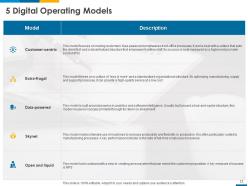
Talk about the needs of technology change with the help of this professionally designed Digital Transformation In Business PowerPoint Presentation Slides. Take advantage of the content ready technology change in business PowerPoint slideshow to list down the digital megatrends with their impact on consumers and clients. Take the assistance of the technology transition process Presentation templates to mention the customer-centric approaches such as business strategy and redesign, competency build-up, implementation, and transition, etc. Specify the various channels your company intends to undertake along with business strategy and capabilities by using the ready to use digital revolution PPT slides. Utilize the business change strategy PPT graphics to showcase the steps of a digital transformation roadmap. Furthermore, you may also use the technology transformation in business PowerPoint complete deck to mention the five digital operating models with their descriptions. Thus, download the technology solutions for business PowerPoint complete deck to engage your viewers. Encourage your associates with our Digital Transformation PPT Powerpoint Presentation Slides. Delve on the importance of their contribution.
People who downloaded this PowerPoint presentation also viewed the following :
Content of this Powerpoint Presentation
Slide 1: This slide introduces Digital Transformation in Business. State your Company name and begin.
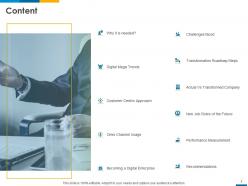
Slide 2: This slide displays the Content of the presentation.
Slide 3: This slide also displays the Content of the presentation.
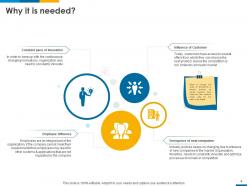
Slide 4: This slide describes the need of disgital transformation.
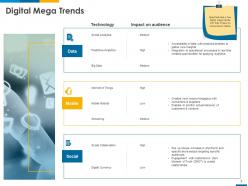
Slide 5: This slide depicts Digital Mega Trends. Specified here a few digital mega trends with their impact on consumes & clients.
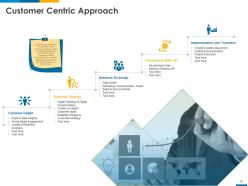
Slide 6: This slide showcases Customer Centric Approach displaying an approach regarding the same. You can edit this as per your requirements
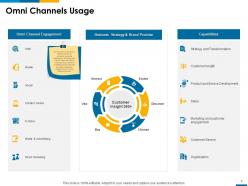
Slide 7: This slide discusses Omni Channels Usage. Company can specify here the various channels they intend to undertake along with their business strategy & capabilities for using these channels
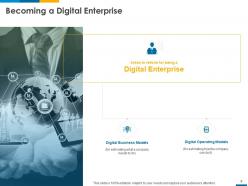
Slide 8: This slide describes becoming a Digital Enterprise with Digital business models, Digital Enterprise, Digital Operating models.
Slide 9: This slide depicts Digital Business Models.
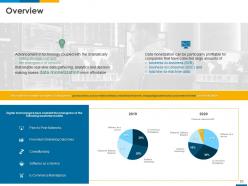
Slide 10: This slide displays an Overview with pie charts and business models
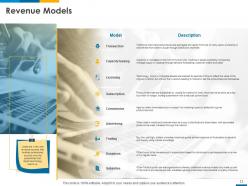
Slide 11: This slide showcases the Revenue Models. Listed are a few new revenue sources that enables enterprises to profit from the possibilities that digital technology opens up.
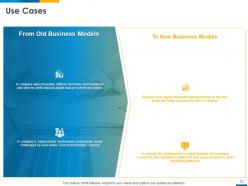
Slide 12: This slide showcases Use Cases from old business models to new business models.
Slide 13: This slide showcases Digital Operating Models.
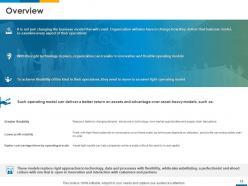
Slide 14: This slide displays Overview.
Slide 15: This slide depicts 5 Digital Operating Models.
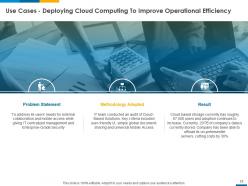
Slide 16: This slide describes Use Cases - Deploying Cloud Computing To Improve Operational Efficiency.
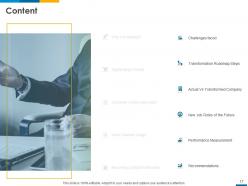
Slide 17: This slide displays the Content with-17 Performance Measurement, Transformation Roadmap Steps, Challenges faced, New Job Roles of the Future, Recommendations, Actual Vs Transformed Company, etc.
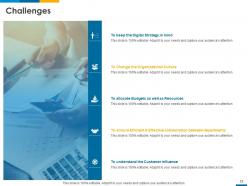
Slide 18: This slide displays the Challenges
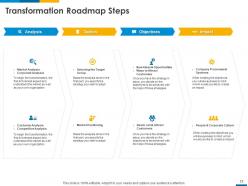
Slide 19: This slide showcase Transformation Roadmap Steps.
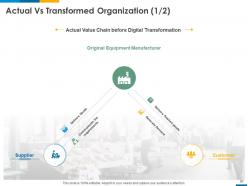
Slide 20: This slide describes Actual Vs Transformed Organization.
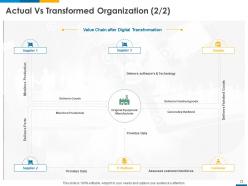
Slide 21: This slide depicts Actual Vs Transformed Organization.
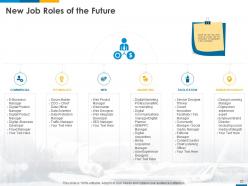
Slide 22: This slide showcases New Job Roles of the Future. Specify the job roles which would be created with the introduction of digitalization in the organization.
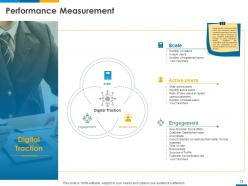
Slide 23: This slide displays the Performance Measurement with- Digital Traction, Scale, Engagement.
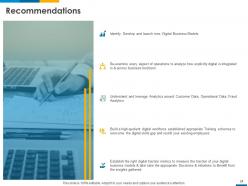
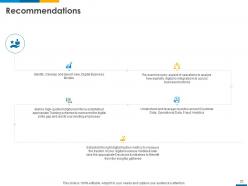
Slide 24: This slide depicts the Recommendations.
Slide 25: This slide also depicts the Recommendations to Identify, Develop and launch new, Digital Business Models.
Slide 26: This is Digital Transformation in Business Icons Slide.
Slide 27: This slide reminds about Coffee Break.
Slide 28: This slide is titled as Additional Slides for moving forward.
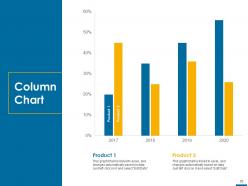
Slide 29: This slide displays the Column Chart with product comparison.
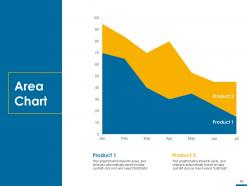
Slide 30: This slide displays Area Chart with product comparison.
Slide 31: This is About Us slide to showcase company specifications.
Slide 32: This is Venn slide to showcase information.
Slide 33: This slide displays Magnifying Glass to highlight the content.
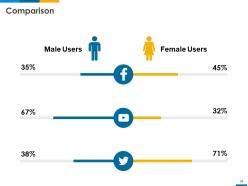
Slide 34: This slide showcase Comparison between male and female users.
Slide 35: This is Our Mission slide with Vision, Goal and Mission.
Slide 36: This is Target slide. Showcase your targets.
Slide 37: This is Our Team slide with names and designations.
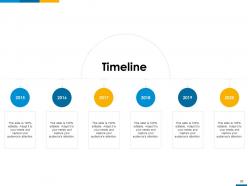
Slide 38: This is five years Timeline slide.
Slide 39: This is Thank You slide with Address, Email address and address.
Digital transformation in business powerpoint presentation slides with all 39 slides:
Use our Digital Transformation In Business Powerpoint Presentation Slides to effectively help you save your valuable time. They are readymade to fit into any presentation structure.




FAQs for Digital transformation in business
Key components include cloud infrastructure, data analytics platforms, automation technologies, cybersecurity frameworks, and employee digital skills training. These elements work synergistically by streamlining operations, enhancing decision-making capabilities, and improving customer experiences, with many organizations finding that strategic integration of these components delivers measurable competitive advantages and operational efficiency gains.
Businesses can assess digital maturity through technology audits, process evaluations, employee skill assessments, customer experience reviews, and data analytics capabilities analysis. These comprehensive evaluations help organizations identify gaps in automation, integration, and digital workflows, with many companies finding that systematic assessments reveal opportunities to streamline operations, enhance customer interactions, and ultimately accelerate their competitive positioning in increasingly digital markets.
Leadership drives digital transformation by establishing clear vision, allocating resources strategically, fostering innovation culture, and championing change management across all organizational levels. Effective leaders in sectors like retail and manufacturing streamline adoption by communicating benefits, removing implementation barriers, and ensuring teams embrace new technologies, ultimately delivering enhanced operational efficiency and competitive advantage.
Businesses can leverage data analytics during digital transformation by implementing predictive modeling, real-time dashboards, customer behavior analysis, and operational performance metrics. These tools enable organizations to identify market trends, optimize resource allocation, and anticipate customer needs, with companies in retail and financial services finding that data-driven insights accelerate transformation outcomes and deliver competitive advantages.
Common digital transformation challenges include resistance to change, legacy system integration complexities, skills gaps, budget constraints, and unclear strategic vision. Organizations overcome these by fostering change management cultures, implementing phased technology migrations, investing in employee training programs, and establishing clear ROI metrics, with many companies finding that strategic leadership commitment and cross-departmental collaboration ultimately deliver sustainable transformation success.
Organizations ensure data security and privacy during digital transformation by implementing zero-trust architecture, end-to-end encryption, multi-factor authentication, regular security audits, and comprehensive employee training programs. These strategic measures enable businesses across healthcare, finance, and retail to maintain regulatory compliance while accelerating digitization, ultimately delivering enhanced customer trust and competitive advantage in an increasingly connected marketplace.
Digital transformation revolutionizes customer experience by enabling personalized interactions, omnichannel engagement, real-time support, and data-driven insights across all touchpoints. Through AI-powered chatbots, predictive analytics, and seamless mobile platforms, organizations streamline customer journeys, reduce response times, and deliver targeted experiences, ultimately enhancing satisfaction while building stronger, more profitable customer relationships.
Companies measure digital transformation ROI through key performance indicators like operational efficiency gains, customer satisfaction scores, revenue growth, cost reduction percentages, and employee productivity metrics. These measurements help organizations track progress across departments, with many businesses finding that combining quantitative data with qualitative feedback delivers comprehensive insights, ultimately enabling strategic adjustments and sustained competitive advantage.
Cloud computing, artificial intelligence, Internet of Things (IoT), robotic process automation, and advanced analytics are currently driving digital transformation across industries. These technologies streamline operations by automating routine tasks, enhancing data-driven decision making, and enabling real-time insights, with many organizations finding that strategic combinations of these tools deliver significant competitive advantages and improved customer experiences.
Businesses cultivate innovation culture through encouraging experimentation, rewarding creative problem-solving, providing continuous learning opportunities, fostering cross-functional collaboration, and establishing safe-to-fail environments. Organizations in manufacturing, healthcare, and financial services find that empowering employees to propose digital solutions, investing in upskilling programs, and celebrating both successes and learning from failures ultimately accelerates transformation initiatives.
Organizations should consider data privacy protection, algorithmic bias prevention, employee displacement management, cybersecurity responsibilities, and transparent AI decision-making during digital transformation. These ethical frameworks help companies build stakeholder trust while implementing new technologies, with many financial services and healthcare organizations finding that proactive ethical policies enhance customer loyalty, reduce regulatory risks, and ultimately deliver sustainable competitive advantage in increasingly regulated digital markets.
SMEs can effectively implement digital transformation through strategic prioritization, cloud-based solutions, automation tools, phased rollouts, and partnerships with technology providers. These approaches enable resource-conscious businesses to streamline operations, enhance customer experiences, and improve data accessibility without massive upfront investments, with many small businesses finding that targeted digital initiatives deliver measurable efficiency gains and competitive advantages.
Employee training and development serves as the foundation for successful digital transformation, encompassing skills development, change management, technology adoption, leadership alignment, and continuous learning programs. These initiatives streamline workforce adaptation by building digital competencies, reducing resistance to new processes, and fostering innovation cultures, with many organizations finding that comprehensive training programs ultimately deliver faster implementation timelines and sustained competitive advantage.
Cloud computing accelerates digital transformation by providing scalable infrastructure, reducing IT costs, and enabling rapid deployment of new technologies and applications. Through cloud platforms, businesses streamline operations, enhance collaboration, and access advanced analytics tools, with many organizations finding that cloud adoption delivers improved agility, faster innovation cycles, and significant competitive advantages.
AI and IoT fundamentally reshape traditional business models by enabling predictive analytics, automated decision-making, real-time data collection, and seamless connectivity across operations. These technologies streamline resource allocation, enhance customer experiences, and create new revenue streams, with many organizations finding that strategic integration delivers significant competitive advantages while requiring careful change management and workforce adaptation.
-
Great product with highly impressive and engaging designs.
-
Designs have enough space to add content.
-
Easily Understandable slides.
-
The content is very helpful from business point of view.
-
Use of different colors is good. It's simple and attractive.