


DIGITAL Workplace Checklist Powerpoint Presentation Slides




Try Before you Buy Download Free Sample Product
 Impress Your
 Audience
 100%
100% Editable
 Save Hours
 of Time


Streamline your digital transformation journey with our comprehensive Digital Workplace Checklist template. Designed to enhance your firms digital posture, this resource empowers you to optimize internal processes, operations, and workforce through the effective utilization of digital technologies and applications. Our digital transformation deck evaluates your firms current digital maturity, addressing concerns such as infrastructure costs and service delays. It also includes a comparative analysis to assess the extent of your existing digital enablement. Furthermore, our digitalized business PPT highlights emerging trends in digital enablement and explores various dimensions where your organization can drive digital advancement, encompassing operations, processes, workflows, and applications. Our digitization framework module assesses staff performance, capabilities, and training needs to enhance their skill sets and drive successful digital transformation. Additionally, it emphasizes the significance of appointing a Chief Digital Officer and offers a 30 day action plan to guide their role. Lastly, our template provides insights into the impact of successful digital enablement implementation and offers guidance on budget allocation across functional areas. Dont miss the opportunity to embark on a transformative digital journey. Access our template now and propel your digital enablement efforts forward.
People who downloaded this PowerPoint presentation also viewed the following :
Content of this Powerpoint Presentation
Slide 1: This slide introduces Digital Workplace Checklist. State your company name and begin.
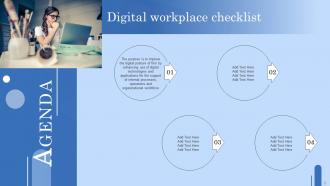
Slide 2: This slide depicts the Agenda of the presentation.
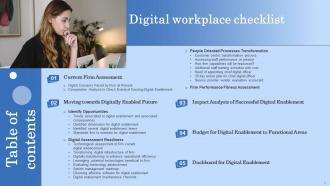
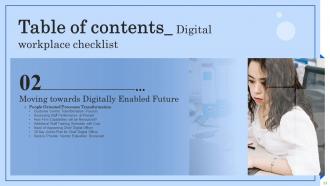
Slide 3: This slide shows Table of Content for the presentation.
Slide 4: This slide highlights title for topics that are to be covered next in the template.
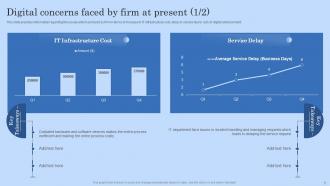
Slide 5: This slide provides information regarding the issues faced by the firm.
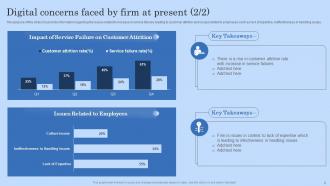
Slide 6: This slide continues the Digital concerns faced by firm at present.
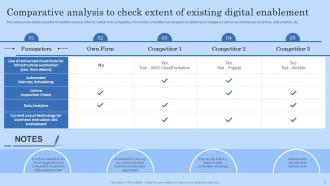
Slide 7: This slide reveals the Comparative analysis to check extent of existing digital enablement.
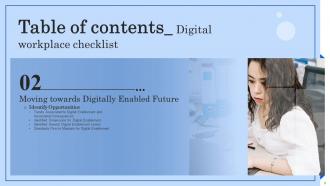
Slide 8: This slide talks about Moving towards Digitally Enabled Future.
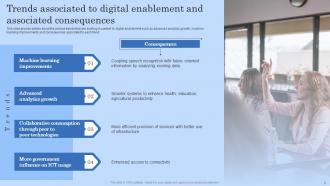
Slide 9: This slide states the Trends associated to digital enablement and associated consequences.
Slide 10: This slide deals with Identified dimensions for digital enablement.
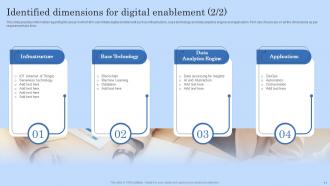
Slide 11: This is yet another slide continuing the Identified dimensions for digital enablement.
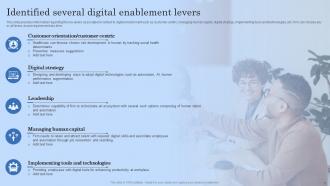
Slide 12: This slide provides information regarding the key levers associated in context to digital enablement.
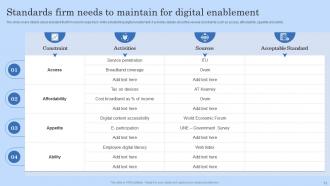
Slide 13: The slide covers details about standard that firm need to keep track while establishing digital enablement.
Slide 14: This slide highlights the Title for the Topics to be discussed further.
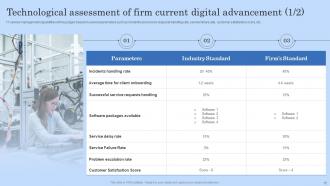
Slide 15: This slide talks about the Technological assessment of firm current digital advancement.
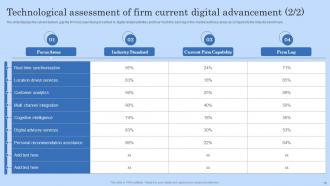
Slide 16: The slide continues the Technological assessment of firm current digital advancement.
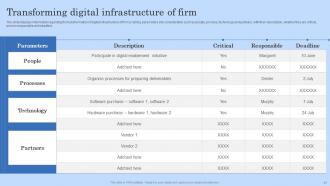
Slide 17: The slide displays information regarding the transformation of digital infrastructure of firm.
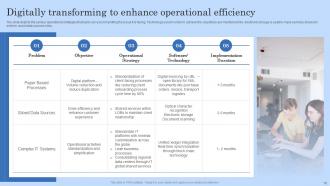
Slide 18: This slide deals with Digital transformation to enhance operational efficiency.
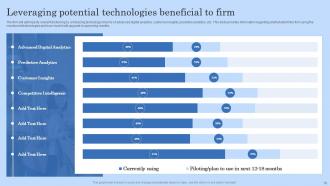
Slide 19: This slide focuses on Leveraging potential technologies beneficial to firm.
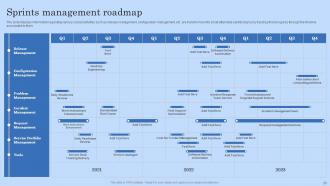
Slide 20: This slide reveals the Sprints management roadmap.
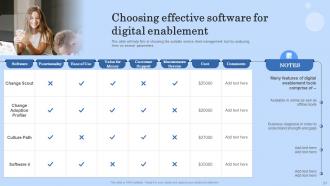
Slide 21: This slide emphasizes on Choosing effective software for digital enablement.
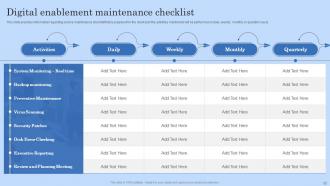
Slide 22: This slide illustrates the Digital enablement maintenance checklist.
Slide 23: This slide states the Heading for the Components to be covered next.
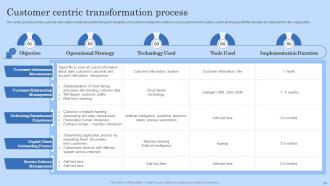
Slide 24: This slide presents the Customer centric transformation process.
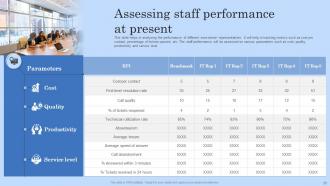
Slide 25: This slide helps in analyzing the performance of different executives/ representatives.
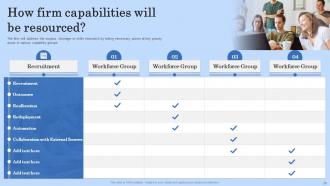
Slide 26: The firm will address the surplus, shortage or skills mismatch by taking necessary action.
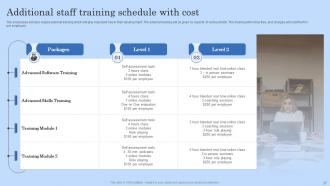
Slide 27: This slide displays the Additional staff training schedule with cost.
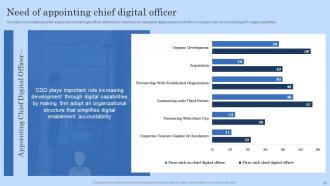
Slide 28: This slide exhibits the Need of appointing chief digital officer.
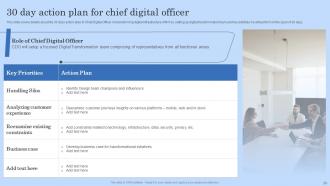
Slide 29: This slide covers the 30 days action plan of Chief Digital Officer.
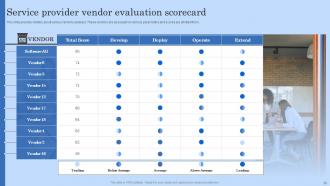
Slide 30: This slide provides details about various vendors analysis.
Slide 31: This slide elucidates the Title for the Ideas to be discussed next.
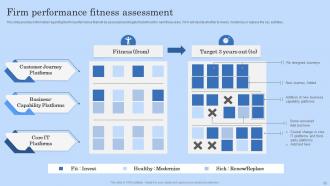
Slide 32: This sldie emphasizes on the Firm performance fitness assessment.
Slide 33: This slide presents the Impact Analysis of Successful Digital Enablement.
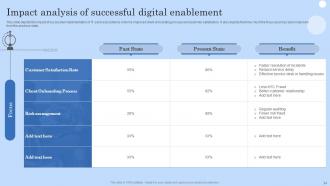
Slide 34: This slide depicts the Impact analysis of successful digital enablement.
Slide 35: This slide elucidates the Budget for Digital Enablement to Functional Areas.
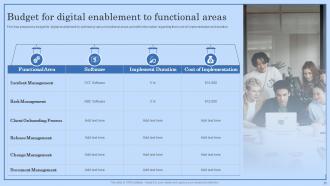
Slide 36: This slide shows the Budget for digital enablement to functional areas.
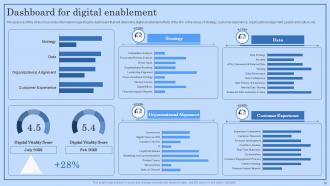
Slide 37: This slide displays the Dashboard for Digital Enablement.
Slide 38: This slide reveals the Dashboard for digital enablement.
Slide 39: This slide contains all the icons used in this presentation.
Slide 40: This slide is titled as Additional Slides for moving forward.
Slide 41: This slide provides 30 60 90 Days Plan with text boxes.
Slide 42: This slide shows Weekly timeline with task name.
Slide 43: This slide presents Roadmap for process flow.
Slide 44: This is Our Team slide with names and designation.
Slide 45: This is a Timeline slide. Show data related to time intervals here.
Slide 46: This is a Quotes slide to convey message, beliefs etc.
Slide 47: This slide contains Puzzle with related icons and text.
Slide 48: This is an Idea Generation slide to state a new idea or highlight information, specifications etc.
Slide 49: This is a Thank You slide with address, contact numbers and email address.
DIGITAL Workplace Checklist Powerpoint Presentation Slides with all 54 slides:
Use our DIGITAL Workplace Checklist Powerpoint Presentation Slides to effectively help you save your valuable time. They are readymade to fit into any presentation structure.








FAQs for DIGITAL Workplace Checklist
Essential digital workplace tools include cloud storage platforms, communication software, project management systems, cybersecurity solutions, and collaboration applications. These technologies streamline operations by enabling remote access, facilitating team coordination, and maintaining data security, with many organizations finding that strategic tool integration ultimately delivers enhanced productivity and competitive advantage in increasingly distributed work environments.
Remote collaboration platforms enhance productivity by centralizing communication, streamlining project management, and enabling real-time document sharing across distributed teams. These technologies deliver seamless integration between messaging, video conferencing, and file management, with many organizations finding that unified platforms reduce context switching, accelerate decision-making, and ultimately improve project delivery times while maintaining team cohesion.
Cybersecurity serves as the foundation for digital workplace safety by protecting sensitive data, preventing unauthorized access, securing communication channels, and maintaining system integrity. Through advanced threat detection, employee training programs, and robust access controls, organizations streamline operations while minimizing security risks, ultimately delivering enhanced productivity and customer trust in an increasingly connected business environment.
Companies measure digital employee engagement through pulse surveys, collaboration platform analytics, virtual meeting participation rates, digital communication frequency, and productivity metrics tracking. These measurement tools streamline feedback collection by monitoring real-time interactions, analyzing remote work patterns, and assessing digital tool adoption, with many organizations finding that consistent digital engagement tracking ultimately delivers enhanced employee satisfaction and improved operational efficiency.
A project management tool should include real-time collaboration capabilities, cloud-based accessibility, automated workflow management, integrated communication channels, and comprehensive analytics dashboards. These features streamline remote coordination by enabling seamless file sharing, task tracking, and team visibility, with many organizations finding that integrated tools reduce project delays by up to 30% while enhancing cross-functional productivity.
Mobile access transforms digital workplace dynamics by enabling seamless remote collaboration, real-time communication, and flexible work arrangements that break traditional location constraints. Organizations across sectors like financial services, healthcare, and retail find that mobile-enabled workforces deliver enhanced productivity, faster decision-making, and improved customer responsiveness, ultimately creating competitive advantages in an increasingly distributed business environment.
Digital workplace onboarding best practices include structured virtual orientation programs, comprehensive digital resource libraries, assigned digital mentors, interactive training modules, and regular check-in schedules. These approaches streamline integration by providing clear technology access, fostering remote connections, and ensuring role-specific guidance, with many organizations finding that systematic digital onboarding reduces time-to-productivity while enhancing employee engagement and retention.
Companies ensure effective communication across diverse teams through unified platforms, standardized protocols, regular virtual meetings, cultural sensitivity training, and clear documentation practices. These strategies streamline collaboration by eliminating silos, accommodating different time zones and work styles, and fostering inclusivity, with many organizations finding that structured communication frameworks ultimately enhance productivity and employee engagement.
Strategies include regular virtual team-building activities, transparent communication channels, flexible work arrangements, recognition programs, and collaborative digital platforms. These approaches enhance employee engagement by maintaining personal connections, streamlining feedback processes, and supporting work-life balance, with many organizations finding that consistent virtual touchpoints and celebrating achievements ultimately deliver stronger team cohesion and productivity.
Flexible scheduling is crucial for remote work-life balance, enabling employees to align professional responsibilities with personal commitments, reduce commute stress, and optimize productivity during peak performance hours. Organizations implementing flexible schedules report higher employee satisfaction, reduced turnover rates, and improved retention, with many companies finding that this autonomy ultimately enhances both individual well-being and overall business performance.
Organizations should evaluate digital workplace tools based on user experience, integration capabilities, security features, scalability, mobile accessibility, and cost-effectiveness. These criteria enable businesses to streamline operations, enhance collaboration, and support remote work environments, with many companies finding that comprehensive evaluation ultimately delivers improved productivity, reduced IT complexity, and stronger competitive advantage.
Businesses can support continuous learning through online training platforms, microlearning modules, virtual mentorship programs, skills assessment tools, and collaborative learning communities. These digital approaches enable employees to access personalized development content, participate in cross-functional knowledge sharing, and track progress seamlessly, with many organizations finding that integrated learning ecosystems ultimately enhance employee engagement and competitive advantage.
Key components include clear technology usage guidelines, data security protocols, remote work standards, communication expectations, and digital collaboration frameworks. These policies streamline operations by establishing consistent procedures, minimizing security risks, and enhancing productivity across distributed teams, with many organizations finding that comprehensive policies ultimately deliver improved employee satisfaction and operational efficiency.
Data analytics improves decision-making in digital work environments by providing real-time insights, identifying performance patterns, and enabling predictive forecasting across operations. Through advanced dashboard systems and automated reporting, organizations streamline resource allocation, enhance employee productivity, and optimize workflow processes, with many companies finding that data-driven decisions ultimately deliver faster responses and competitive advantage.
Managing hybrid workforce challenges include communication gaps, maintaining company culture, ensuring equitable opportunities, coordinating across time zones, and tracking productivity effectively. These obstacles can be addressed through robust digital collaboration platforms, regular virtual team-building activities, and flexible performance metrics, with many organizations finding that strategic technology investments and clear remote work policies ultimately deliver enhanced employee satisfaction and operational efficiency.
-
Very unique, user-friendly presentation interface.
-
I'm happy to discover your PowerPoint presentations and templates. They met my expectations precisely. Very innovative!