


PowerPoint-Präsentationsfolien für die Checkliste für den digitalen Arbeitsplatz




Try Before you Buy Download Free Sample Product
 Impress Your
 Audience
 100%
100% Editable
 Save Hours
 of Time


Optimieren Sie Ihre Reise zur digitalen Transformation mit unserer umfassenden Checklistenvorlage für den digitalen Arbeitsplatz. Diese Ressource wurde entwickelt, um die digitale Präsenz Ihres Unternehmens zu verbessern und ermöglicht es Ihnen, interne Prozesse, Abläufe und Mitarbeiter durch die effektive Nutzung digitaler Technologien und Anwendungen zu optimieren. Unser Deck zur digitalen Transformation bewertet den aktuellen digitalen Reifegrad Ihres Unternehmens und berücksichtigt dabei Bedenken wie Infrastrukturkosten und Serviceverzögerungen. Es umfasst auch eine vergleichende Analyse, um den Umfang Ihrer bestehenden digitalen Befähigung zu beurteilen. Darüber hinaus beleuchtet unser digitalisiertes Geschäfts-PPT neue Trends in der digitalen Befähigung und untersucht verschiedene Dimensionen, in denen Ihr Unternehmen den digitalen Fortschritt vorantreiben kann, einschließlich Abläufe, Prozesse, Arbeitsabläufe und Anwendungen. Unser Digitalisierungs-Framework-Modul bewertet die Leistung, Fähigkeiten und Schulungsbedürfnisse der Mitarbeiter, um ihre Fähigkeiten zu verbessern und eine erfolgreiche digitale Transformation voranzutreiben. Darüber hinaus wird die Bedeutung der Ernennung eines Chief Digital Officer hervorgehoben und ein 30-Tage-Aktionsplan als Leitfaden für seine Rolle angeboten. Schließlich bietet unsere Vorlage Einblicke in die Auswirkungen einer erfolgreichen Implementierung von Digital Enablement und bietet Hinweise zur Budgetzuweisung auf verschiedene Funktionsbereiche. Verpassen Sie nicht die Gelegenheit, sich auf eine transformative digitale Reise zu begeben. Greifen Sie jetzt auf unsere Vorlage zu und treiben Sie Ihre Bemühungen zur digitalen Aktivierung voran.
People who downloaded this PowerPoint presentation also viewed the following :
Inhalt dieser Powerpoint-Präsentation
Folie 1 : Auf dieser Folie wird die Checkliste für den digitalen Arbeitsplatz vorgestellt. Geben Sie Ihren Firmennamen an und beginnen Sie.
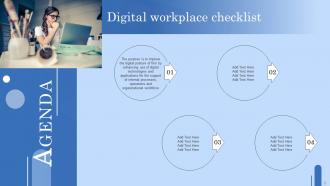
Folie 2 : Diese Folie zeigt die Agenda der Präsentation.
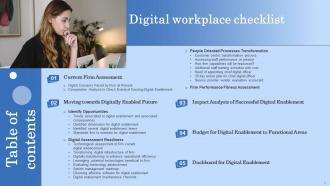
Folie 3 : Diese Folie zeigt das Inhaltsverzeichnis der Präsentation.
Folie 4 : Diese Folie hebt Titel für Themen hervor, die als nächstes in der Vorlage behandelt werden sollen.
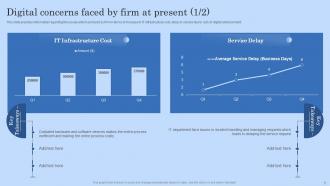
Folie 5 : Diese Folie bietet Informationen zu den Problemen, mit denen das Unternehmen konfrontiert ist.
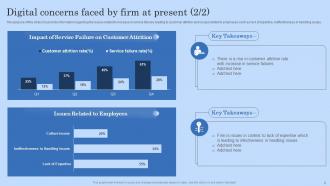
Folie 6 : Diese Folie führt die digitalen Bedenken fort, mit denen das Unternehmen derzeit konfrontiert ist.
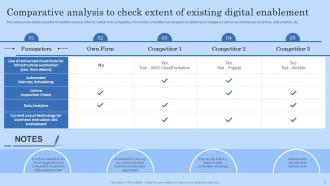
Folie 7 : Diese Folie zeigt die vergleichende Analyse, um das Ausmaß der bestehenden digitalen Befähigung zu überprüfen.
Folie 8 : Auf dieser Folie geht es um den Weg in eine digital unterstützte Zukunft.
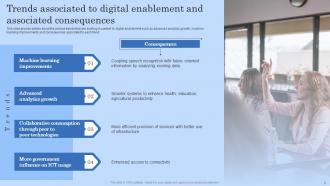
Folie 9 : Auf dieser Folie werden die mit der digitalen Befähigung verbundenen Trends und die damit verbundenen Konsequenzen aufgeführt.
Folie 10 : Diese Folie befasst sich mit den identifizierten Dimensionen für die digitale Befähigung.
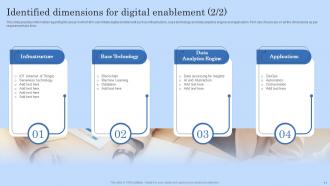
Folie 11 : Dies ist eine weitere Folie, die die identifizierten Dimensionen für die digitale Befähigung fortsetzt.
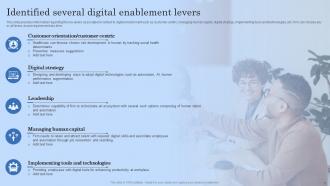
Folie 12 : Diese Folie bietet Informationen zu den wichtigsten Hebeln im Zusammenhang mit der digitalen Befähigung.
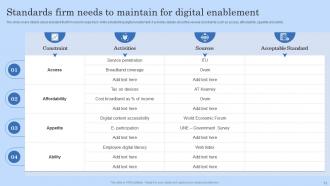
Folie 13 : Die Folie behandelt Details zu Standards, die das Unternehmen bei der Einrichtung digitaler Aktivierung im Auge behalten muss.
Folie 14 : Diese Folie hebt den Titel der Themen hervor, die weiter besprochen werden sollen.
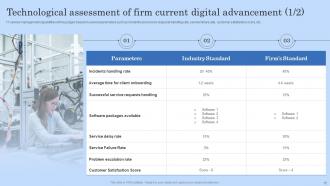
Folie 15 : Auf dieser Folie geht es um die technologische Bewertung des aktuellen digitalen Fortschritts des Unternehmens.
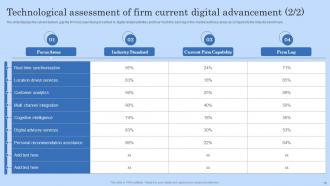
Folie 16 : Die Folie setzt die technologische Bewertung des aktuellen digitalen Fortschritts des Unternehmens fort.
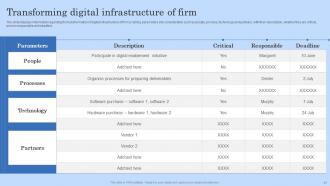
Folie 17 : Die Folie zeigt Informationen zur Transformation der digitalen Infrastruktur des Unternehmens.
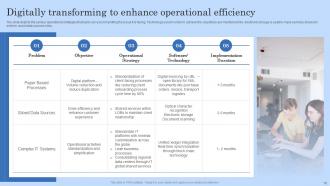
Folie 18 : Diese Folie befasst sich mit der digitalen Transformation zur Steigerung der betrieblichen Effizienz.
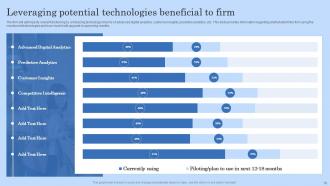
Folie 19 : Diese Folie konzentriert sich auf die Nutzung potenzieller Technologien, die für das Unternehmen von Vorteil sind.
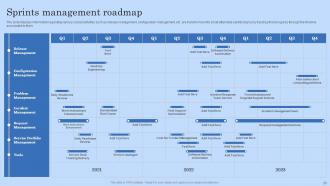
Folie 20 : Diese Folie zeigt die Sprints-Management-Roadmap.
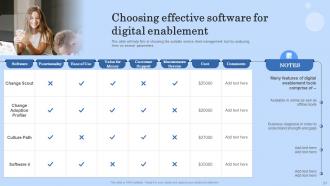
Folie 21 : Auf dieser Folie liegt der Schwerpunkt auf der Auswahl effektiver Software für die digitale Aktivierung.
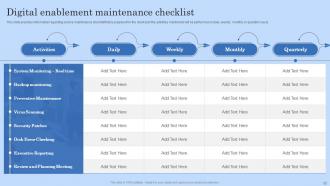
Folie 22 : Diese Folie veranschaulicht die Checkliste für die Wartung der digitalen Aktivierung.
Folie 23 : Diese Folie gibt die Überschrift für die Komponenten an, die als Nächstes behandelt werden sollen.
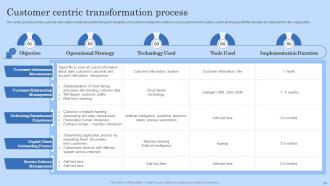
Folie 24 : Diese Folie stellt den kundenorientierten Transformationsprozess vor.
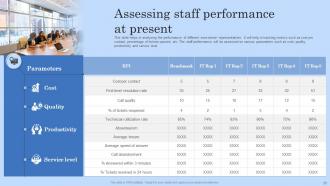
Folie 25 : Diese Folie hilft bei der Analyse der Leistung verschiedener Führungskräfte/Vertreter.
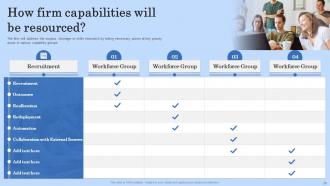
Folie 26 : Das Unternehmen wird den Überschuss, den Mangel oder das Missverhältnis zwischen Fachkräften durch die Ergreifung der erforderlichen Maßnahmen angehen.
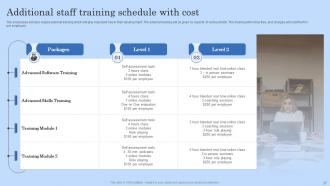
Folie 27 : Auf dieser Folie wird der Schulungsplan für zusätzliches Personal mit Kosten angezeigt.
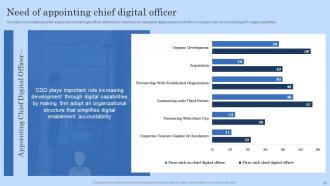
Folie 28 : Diese Folie zeigt die Notwendigkeit der Ernennung eines Chief Digital Officer.
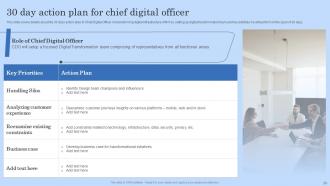
Folie 29 : Diese Folie behandelt den 30-Tage-Aktionsplan des Chief Digital Officer.
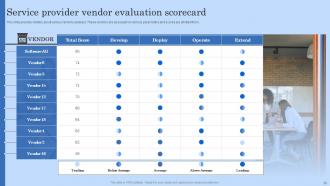
Folie 30 : Diese Folie enthält Details zur Analyse verschiedener Anbieter.
Folie 31 : Auf dieser Folie wird der Titel der als nächstes besprochenen Ideen erläutert.
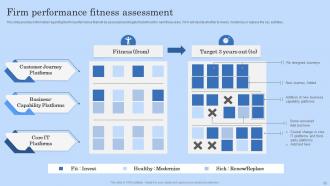
Folie 32 : In dieser Folie liegt der Schwerpunkt auf der Leistungs- und Fitnessbewertung des Unternehmens.
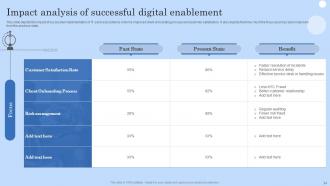
Folie 33 : Diese Folie präsentiert die Wirkungsanalyse erfolgreicher digitaler Aktivierung.
Folie 34 : Diese Folie zeigt die Wirkungsanalyse einer erfolgreichen digitalen Aktivierung.
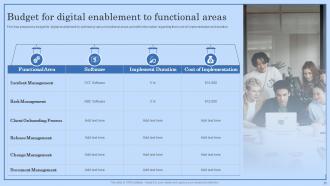
Folie 35 : Diese Folie erläutert das Budget für die digitale Befähigung von Funktionsbereichen.
Folie 36 : Diese Folie zeigt das Budget für die digitale Aktivierung von Funktionsbereichen.
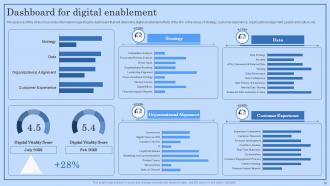
Folie 37 : Auf dieser Folie wird das Dashboard für Digital Enablement angezeigt.
Folie 38 : Diese Folie zeigt das Dashboard für die digitale Aktivierung.
Folie 39 : Diese Folie enthält alle in dieser Präsentation verwendeten Symbole.
Folie 40 : Diese Folie trägt den Titel „Zusätzliche Folien für den weiteren Weg“.
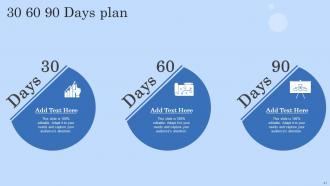
Folie 41 : Diese Folie bietet einen 30-60-90-Tagesplan mit Textfeldern.
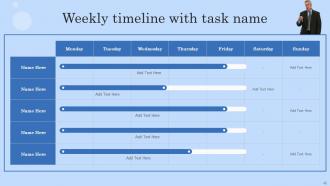
Folie 42 : Diese Folie zeigt die wöchentliche Zeitleiste mit dem Aufgabennamen.
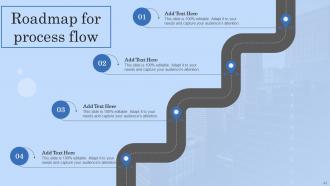
Folie 43 : Diese Folie präsentiert die Roadmap für den Prozessablauf.
Folie 44 : Dies ist die Folie „Unser Team“ mit Namen und Bezeichnung.
Folie 45 : Dies ist eine Timeline-Folie. Zeigen Sie hier Daten zu Zeitintervallen an.
Folie 46 : Dies ist eine Folie mit Zitaten, um Botschaften, Überzeugungen usw. zu vermitteln.
Folie 47 : Diese Folie enthält ein Puzzle mit zugehörigen Symbolen und Text.
Folie 48 : Dies ist eine Folie zur Ideengenerierung, auf der Sie eine neue Idee darlegen oder Informationen, Spezifikationen usw. hervorheben können.
Folie 49 : Dies ist eine Dankeschön-Folie mit Adresse, Kontaktnummern und E-Mail-Adresse.
Digital Workplace Checklist Powerpoint-Präsentationsfolien mit allen 54 Folien:
Nutzen Sie unsere Powerpoint-Präsentationsfolien für die DIGITALE Arbeitsplatz-Checkliste, um effektiv wertvolle Zeit zu sparen. Sie sind gebrauchsfertig und passen in jede Präsentationsstruktur.







FAQs for DIGITAL Workplace Checklist
Essential digital workplace tools include cloud storage platforms, communication software, project management systems, cybersecurity solutions, and collaboration applications. These technologies streamline operations by enabling remote access, facilitating team coordination, and maintaining data security, with many organizations finding that strategic tool integration ultimately delivers enhanced productivity and competitive advantage in increasingly distributed work environments.
Remote collaboration platforms enhance productivity by centralizing communication, streamlining project management, and enabling real-time document sharing across distributed teams. These technologies deliver seamless integration between messaging, video conferencing, and file management, with many organizations finding that unified platforms reduce context switching, accelerate decision-making, and ultimately improve project delivery times while maintaining team cohesion.
Cybersecurity serves as the foundation for digital workplace safety by protecting sensitive data, preventing unauthorized access, securing communication channels, and maintaining system integrity. Through advanced threat detection, employee training programs, and robust access controls, organizations streamline operations while minimizing security risks, ultimately delivering enhanced productivity and customer trust in an increasingly connected business environment.
Companies measure digital employee engagement through pulse surveys, collaboration platform analytics, virtual meeting participation rates, digital communication frequency, and productivity metrics tracking. These measurement tools streamline feedback collection by monitoring real-time interactions, analyzing remote work patterns, and assessing digital tool adoption, with many organizations finding that consistent digital engagement tracking ultimately delivers enhanced employee satisfaction and improved operational efficiency.
A project management tool should include real-time collaboration capabilities, cloud-based accessibility, automated workflow management, integrated communication channels, and comprehensive analytics dashboards. These features streamline remote coordination by enabling seamless file sharing, task tracking, and team visibility, with many organizations finding that integrated tools reduce project delays by up to 30% while enhancing cross-functional productivity.
Mobile access transforms digital workplace dynamics by enabling seamless remote collaboration, real-time communication, and flexible work arrangements that break traditional location constraints. Organizations across sectors like financial services, healthcare, and retail find that mobile-enabled workforces deliver enhanced productivity, faster decision-making, and improved customer responsiveness, ultimately creating competitive advantages in an increasingly distributed business environment.
Digital workplace onboarding best practices include structured virtual orientation programs, comprehensive digital resource libraries, assigned digital mentors, interactive training modules, and regular check-in schedules. These approaches streamline integration by providing clear technology access, fostering remote connections, and ensuring role-specific guidance, with many organizations finding that systematic digital onboarding reduces time-to-productivity while enhancing employee engagement and retention.
Companies ensure effective communication across diverse teams through unified platforms, standardized protocols, regular virtual meetings, cultural sensitivity training, and clear documentation practices. These strategies streamline collaboration by eliminating silos, accommodating different time zones and work styles, and fostering inclusivity, with many organizations finding that structured communication frameworks ultimately enhance productivity and employee engagement.
Strategies include regular virtual team-building activities, transparent communication channels, flexible work arrangements, recognition programs, and collaborative digital platforms. These approaches enhance employee engagement by maintaining personal connections, streamlining feedback processes, and supporting work-life balance, with many organizations finding that consistent virtual touchpoints and celebrating achievements ultimately deliver stronger team cohesion and productivity.
Flexible scheduling is crucial for remote work-life balance, enabling employees to align professional responsibilities with personal commitments, reduce commute stress, and optimize productivity during peak performance hours. Organizations implementing flexible schedules report higher employee satisfaction, reduced turnover rates, and improved retention, with many companies finding that this autonomy ultimately enhances both individual well-being and overall business performance.
Organizations should evaluate digital workplace tools based on user experience, integration capabilities, security features, scalability, mobile accessibility, and cost-effectiveness. These criteria enable businesses to streamline operations, enhance collaboration, and support remote work environments, with many companies finding that comprehensive evaluation ultimately delivers improved productivity, reduced IT complexity, and stronger competitive advantage.
Businesses can support continuous learning through online training platforms, microlearning modules, virtual mentorship programs, skills assessment tools, and collaborative learning communities. These digital approaches enable employees to access personalized development content, participate in cross-functional knowledge sharing, and track progress seamlessly, with many organizations finding that integrated learning ecosystems ultimately enhance employee engagement and competitive advantage.
Key components include clear technology usage guidelines, data security protocols, remote work standards, communication expectations, and digital collaboration frameworks. These policies streamline operations by establishing consistent procedures, minimizing security risks, and enhancing productivity across distributed teams, with many organizations finding that comprehensive policies ultimately deliver improved employee satisfaction and operational efficiency.
Data analytics improves decision-making in digital work environments by providing real-time insights, identifying performance patterns, and enabling predictive forecasting across operations. Through advanced dashboard systems and automated reporting, organizations streamline resource allocation, enhance employee productivity, and optimize workflow processes, with many companies finding that data-driven decisions ultimately deliver faster responses and competitive advantage.
Managing hybrid workforce challenges include communication gaps, maintaining company culture, ensuring equitable opportunities, coordinating across time zones, and tracking productivity effectively. These obstacles can be addressed through robust digital collaboration platforms, regular virtual team-building activities, and flexible performance metrics, with many organizations finding that strategic technology investments and clear remote work policies ultimately deliver enhanced employee satisfaction and operational efficiency.
-
Very unique, user-friendly presentation interface.
-
I'm happy to discover your PowerPoint presentations and templates. They met my expectations precisely. Very innovative!