


Distribution plan strategy manufactures wholesaler and retailer




Try Before you Buy Download Free Sample Product
 Impress Your
 Audience
 100%
100% Editable
 Save Hours
 of Time


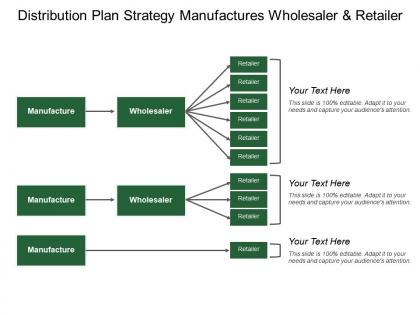
With the Distribution Plan Strategy Manufactures Wholesaler And Retailer PPT slide, you can pitch your marketing plan much more effectively. You can easily present your chain of command over the manufactured product in this flow chart PowerPoint template. This professionally designed PowerPoint payout has three different outline flow-diagrams to describe the one-level as well as the two-level marketing channel effectively. This PPT slide can be effectively used to present your distribution channel idea, specifically in the manufacturing sector. Build a solid marketing strategy while considering all the retailer avenues and wholesale opportunities with this product-chain PowerPoint theme. All the three pathways have distinct spaces marked for including specific points of consideration against them. There is enough area to include all the relevant market research within this tastefully planned PPT model. The elements of all the flow graphs included within this PPT slide are completely customizable to suit the user’s requirements. This PowerPoint slide will prove to be an essential board-room resource for all professionals.
People who downloaded this PowerPoint presentation also viewed the following :
Distribution plan strategy manufactures wholesaler and retailer with all 5 slides:
Control difficulties with our Distribution Plan Strategy Manufactures Wholesaler And Retailer. They enable you to conquer constraints.


FAQs for Distribution plan strategy manufactures
Honestly, start by figuring out your customers - like, really knowing where they actually shop and what they trust. Your product matters too though. Fragile stuff obviously needs way different handling than something basic. I'd map out that whole customer journey first, then work backwards from there. Partner evaluation is huge - their reach and reliability can totally make or break you. Don't forget geographic coverage and your budget constraints. It's kinda backwards, but I always think the timeline piece gets overlooked when people are planning this stuff out.
Honestly, tech can be a total game-changer for distribution stuff. Warehouse management systems are clutch - they'll track your inventory automatically and cut down on those annoying picking mistakes. Route optimization software is pretty sweet too, helps drivers figure out the best paths without all the guesswork. Oh, and real-time tracking? Once you get hooked on seeing exactly where everything is, you can't go back. Predictive analytics will help you actually plan ahead instead of always being in crisis mode. My advice? Pick whatever's driving you crazy right now and start there.
Look, market research is basically showing you where people actually want to buy your stuff. Don't assume everyone's shopping online just because it's 2024 - tons of people still like touching products first. Survey your current customers about how they found you and where they usually shop. Check where your competitors are selling well too. Geographic data matters more than you'd think - what works in LA might flop in Kansas. Honestly, most successful brands end up going multi-channel anyway. Start with customer surveys, then see what retail partnerships make sense for your specific audience.
First thing - figure out where your customers actually hang out and how they like to buy stuff. Check out what your competitors are doing too, see what's working for them. It's honestly like being a detective sometimes lol. Your product matters a lot here - does it need explaining or can people just buy it? Budget and margins obviously play into this. Don't go crazy right away though. Test a couple channels small-scale first, then double down on whatever actually makes you money. Way better than spreading yourself too thin from the start.
Focus on reach and engagement to see if your distribution's actually working. Check which platforms drive real traffic and your conversion rates by source. Most people get obsessed with vanity metrics like total impressions - honestly such a waste of time. Track audience growth, quality engagement (comments/shares over likes), and cost per acquisition across channels. Oh and revenue attribution too, obviously. Start with maybe 3-4 key metrics instead of drowning yourself in data. You can always add more tracking once you've got the basics down.
Honestly, you gotta ditch that old hub-and-spoke setup and go more decentralized. Put smaller distribution centers way closer to your customers - it'll cut delivery times big time. Last-mile delivery is where you're probably bleeding money right now. Don't try building everything yourself though, that's a nightmare. Partner with third-party logistics instead, way cheaper and faster to scale. The real game-changer is getting visibility across your whole network so you can ship from wherever makes sense - warehouse, store, doesn't matter. I'd start by mapping where your customers actually are and see where you're consistently late on deliveries.
Honestly, the worst part is when your distribution partners start competing against each other - total nightmare. Inventory coordination across channels sounds simple but it's not. Some distributors are incredible, others will make you question your life choices. Tech integration is a constant headache too, especially syncing data between different systems. Oh, and logistics bottlenecks will definitely happen. Cost management gets tricky fast when you're juggling multiple channels. My take? Don't spread yourself too thin early on. Better to absolutely crush it with three channels than half-ass seven of them.
Look, where you sell your stuff matters way more than people think. Pick the wrong channels and you're literally making it harder for customers to buy from you - which is just dumb business, honestly. You want to go where your customers already hang out and shop. Match your delivery speed and return policies to what they actually care about. Like, if your audience values super fast shipping, don't partner with slowpoke distributors. Start by figuring out how your customers prefer to buy things, then work backwards from there. It's basically about not fighting against their natural shopping habits.
Honestly, geography is way more important than most people realize. Your shipping costs and delivery times depend totally on where customers are vs where you're shipping from. Mountains, rivers, even crazy traffic can screw up your whole plan - learned that one the hard way! Different areas have different buying patterns too, which is annoying but you gotta deal with it. I'd start by literally mapping out where most of your customers live and comparing that to your warehouses. You'll probably find some expensive shipping zones or places you're barely reaching.
Honestly, start by mapping where your customers actually live vs where you're shipping from. Sometimes one regional hub saves way more money than you'd think - we learned that lesson the hard way shipping everything cross-country! Hit your highest-volume routes first since that's where you'll see real impact. For the smaller stuff? Partner with third-party logistics instead of building your own network everywhere (way less headache). Pull your shipping data and find your biggest money drains. That's gold right there. Focus on speed vs cost balance, but don't overthink it.
So basically you're spreading out your bets instead of going all-in on one thing. Different people shop differently - some love clicking "buy now" at 2am, others need to touch stuff first. Makes sense to meet them where they are. If Instagram suddenly changes their algorithm (again...), you won't be completely screwed because you've got other ways to reach people. Start by figuring out where your customers actually hang out, then pick maybe 2-3 channels you can handle well rather than trying to be everywhere at once.
Dude, working with logistics partners is honestly a game changer. They've already got the warehouses, trucks, and delivery networks built out - why reinvent the wheel? You'll save yourself months of setup headaches. What's really clutch is their regional knowledge - they know all the local regulations and fastest routes that you'd spend forever figuring out. I learned this the hard way with my last startup, actually. Find partners who fill in where you're weak instead of trying to handle everything yourself. Map out your biggest distribution pain points first, then go from there.
First thing - figure out compliance and licensing for each market you're targeting. Registration requirements, labeling rules, import permits... it's all different everywhere. Antitrust stuff matters too if you're doing exclusive deals. The regulatory headache is real, honestly worse in some industries than others. Tax implications vary wildly depending on how you structure distribution. Consumer protection laws are another layer to deal with. I'd probably start by picking your top markets and just work through the compliance checklist for each one. Legal team's gonna be your best friend here.
Honestly, you've got to align where you stock stuff with how you're actually getting it to customers. Map out your customer base first - where are they and how fast do they want their orders? That'll tell you if you need one central warehouse or multiple spots. I've watched so many businesses dump everything in one location then get crushed by shipping fees (learned that one the hard way myself). Your sales forecasts should drive stock levels at each spot. Make sure your inventory system tracks everything in real-time across locations. Regular check-ins between inventory and distribution teams will save you headaches later.
Honestly, the biggest thing I'm noticing is everyone's going direct-to-consumer now. Brands don't want middlemen anymore - they want that relationship with customers themselves. Omnichannel stuff is everywhere too, plus all this sustainability pressure (which actually matters to people now). After COVID totally wrecked supply chains, companies are scrambling to diversify suppliers and bring manufacturing closer to home. Smart move, really. Last-mile delivery is getting crazy innovative with all the automation investments. I'd definitely look at your current setup and see where you can cut out unnecessary steps or improve the customer experience directly. The eco-friendly packaging thing isn't going away either.
-
Out of the box and creative design.
-
Topic best represented with attractive design.