


Diversification Strategy To Manage Business Risk And Increase Market Share Powerpoint Presentation Slides Strategy CD





Try Before you Buy Download Free Sample Product
 Impress Your
 Audience
 100%
100% Editable
 Save Hours
 of Time


Business diversification is the process of expanding a companys operations into new products and services. Check out our professionally designed Diversification strategy to manage business risk and increase market share PowerPoint presentation. Our comprehensive deck offers valuable insights to execute various diversification strategies seamlessly. The Product Line Extension PPT deck begins with an overview of business diversification and emphasizes the role of management in strategy execution. It highlights the different levels at which businesses can diversify their operations. Additionally, Product Diversification PPT slides include Vertical diversification and Horizontal diversification strategies, including concentric and conglomerate diversification. They guide companies on how to add new products or services related to their existing offerings. Furthermore, the Geographical Expansion PPT module explains methods of concentric diversification, including line extension and product differentiation strategies. Lastly, it outlines strategies for conglomerate diversification, such as greenfield investment, strategic alliances, conglomerate mergers, and joint ventures. Take advantage of this resource that can help your business navigate the world of diversification. Download the presentation now.
People who downloaded this PowerPoint presentation also viewed the following :
Content of this Powerpoint Presentation
Slide 1: This slide introduces Diversification Strategy to Manage Business Risk and Increase Market Share. State your company name and begin.
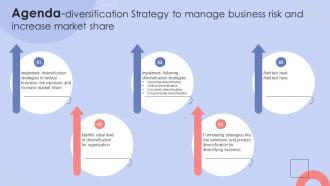
Slide 2: This is an Agenda slide. State your agendas here.
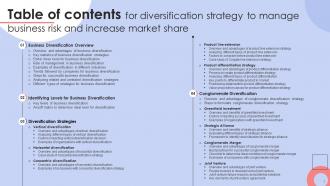
Slide 3: This slide shows Table of Content for the presentation.
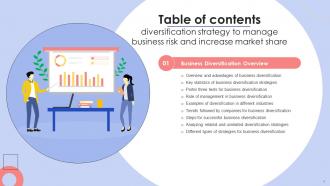
Slide 4: This slide shows title for topics that are to be covered next in the template.
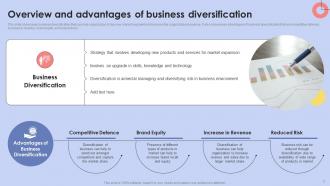
Slide 5: This slide presents business diversification that can help organization to tap new market segment and increase the organizational revenue.
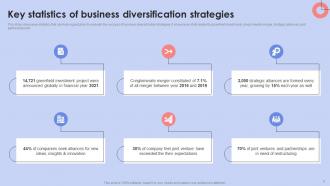
Slide 6: This slide provides statistics that can help organization to evaluate the success of business diversification strategies.
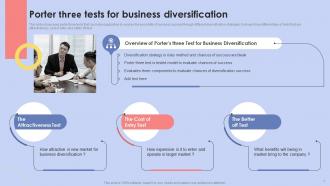
Slide 7: This slide showcases porter three tests that can help organization to analyse the possibility of business success through different diversification strategies.
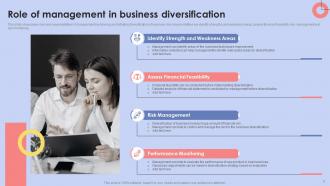
Slide 8: This slide displays roles and responsibilities of management in planning and initiating diversification of business.
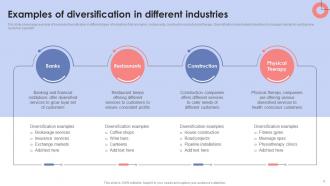
Slide 9: This slide demostrates example of business diversification in different types of industries.
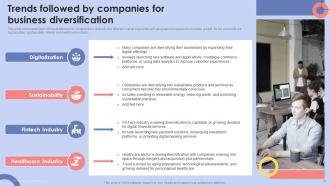
Slide 10: This slide showcases types of trends followed by companies to diversify into different market segments and geographical regions.
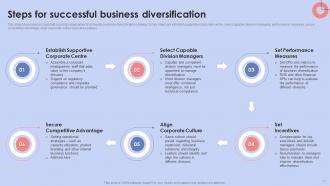
Slide 11: This slide describes the process that can help organization to formulate business diversification strategy.
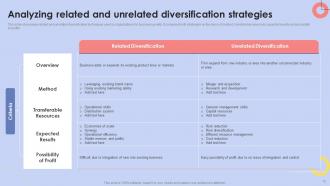
Slide 12: This slide showcases related and unrelated diversification techniques used by organizations for business growth.
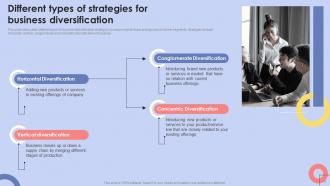
Slide 13: This slide presents different types of business diversification strategy to increase market share and tap new customer segments.
Slide 14: This slide shows title for topics that are to be covered next in the template.
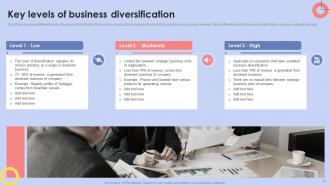
Slide 15: This slide describe different levels of business diversification that can help organization to manage the market risk and increase business revenue.
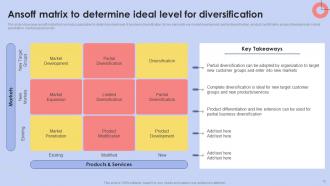
Slide 16: This slide presents ansoff matrix that can help organization to determine ideal level of business diversification.
Slide 17: This slide shows title for topics that are to be covered next in the template.
Slide 18: This slide presents overview of vertical diversification that can help organization to control different stages of supply chain and diversify risk.
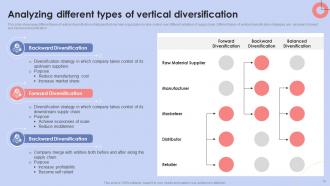
Slide 19: This slide describes different types of vertical diversification strategies that can help organization to take control over different activities of supply chain.
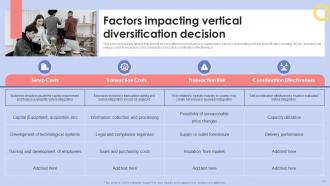
Slide 20: This slide presents factors that should be considered and evaluated by organization before implementing vertical diversification strategy.
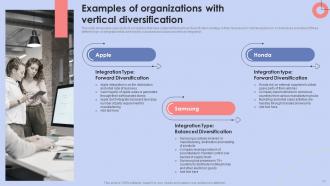
Slide 21: This slide showcases case study of companies that have implemented vertical diversification strategy in their business for market expansion.
Slide 22: This slide shows title for topics that are to be covered next in the template.
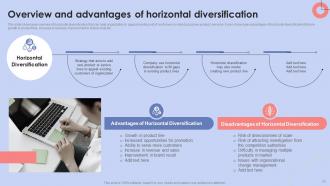
Slide 23: This slide describes horizontal diversification that can help organization to appeal existing set of customers by introducing new product, services.
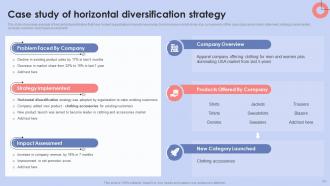
Slide 24: This slide showcases example of horizontal diversification that have helped organization to launch new product and increase market share.
Slide 25: This slide shows title for topics that are to be covered next in the template.
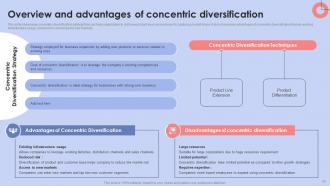
Slide 26: This slide showcases concentric diversification strategy that can help organization to add new product lines and services for capturing market share.
Slide 27: This slide presents various companies that have used concentric diversification technique to mitigate the business environment risk and increase market share.
Slide 28: This slide shows title for topics that are to be covered next in the template.
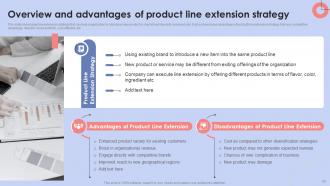
Slide 29: This slide showcases line extension strategy that can help organization to introduce new product in market and diversify business risk.
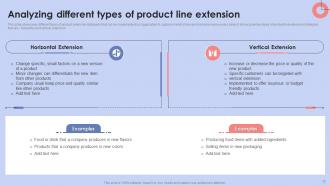
Slide 30: This slide describes different types of product extension strategies that can be implemented by organization to capture market share and increase revenue plus sales.
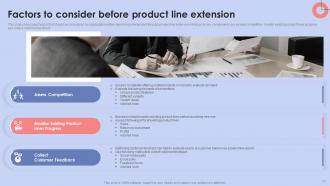
Slide 31: This slide presents factors that should be considered by organization before launching new product through product line extension strategy.
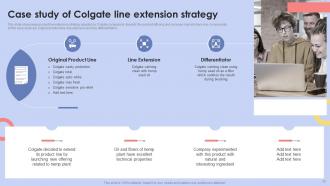
Slide 32: This slide showcases product line extension strategy adopted by Colgate company to diversify the product offering and increase market share.
Slide 33: This slide shows title for topics that are to be covered next in the template.
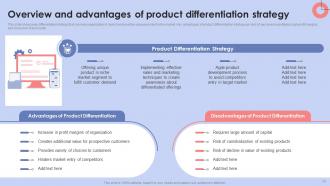
Slide 34: This slide presents differentiated strategy that can help organization to launch and position unique product in the market.
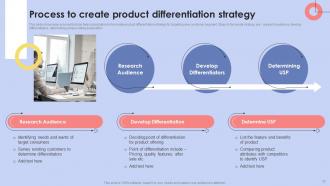
Slide 35: This slide showcases process that can help organization to formulate product differentiation strategy for targeting new customer segment.
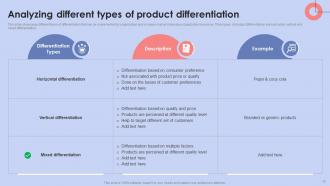
Slide 36: This slide describes different types of differentiation that can be implemented by organization and increase market share plus organizational revenue.
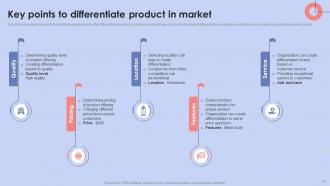
Slide 37: This slide displays key points that can help organization to offer differentiation product and increase market share.
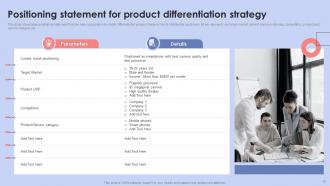
Slide 38: This slide showcases positioning statement that can help organization to create differentiated product image in minds of potential customers.
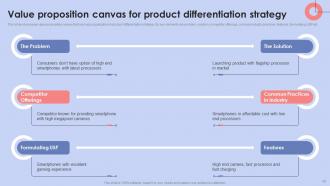
Slide 39: This slide descrbes value proposition canvas that can help organization in product differentiation strategy.
Slide 40: This slide shows title for topics that are to be covered next in the template.
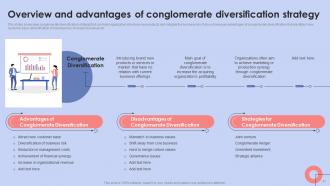
Slide 41: This slide describes conglomerate diversification strategy that can help organization introduce new products and mitigate the business risk.
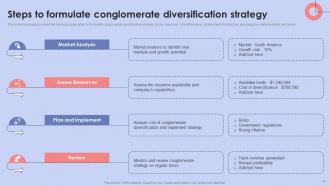
Slide 42: This slide presents process that can help organization to formulate conglomerate diversification strategy.
Slide 43: This slide shows title for topics that are to be covered next in the template.
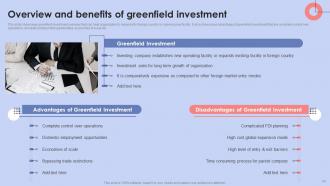
Slide 44: This slide showcases greenfield investment overview that can help organization to expand into foreign country by opening new facility.
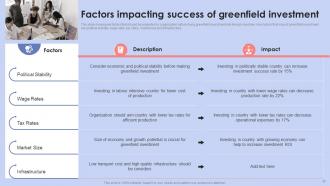
Slide 45: This slide displays factors that should be evaluated by organization before doing greenfield investment into foreign countries.
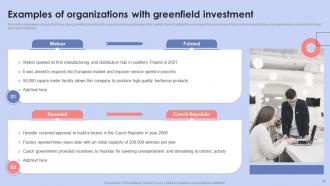
Slide 46: This slide describes company that have done greenfield investment to expand overseas and expand the market share.
Slide 47: This slide shows title for topics that are to be covered next in the template.
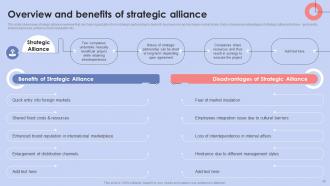
Slide 48: This slide showcases strategic alliance overview that can help organization form strategic partnership to diversify business risk and increase market share.
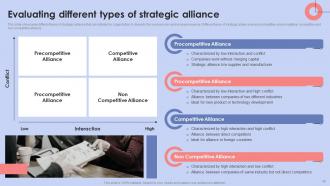
Slide 49: This slide presents different types of strategic alliance that can initiated by organization to diversify the business risk and increase revenue.
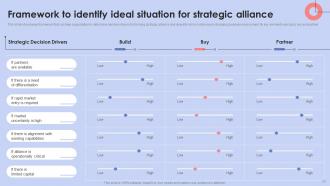
Slide 50: This slide depicts framework that can help organization to form strategic alliance and diversify risk in continuously changing business environment.
Slide 51: This slide shows title for topics that are to be covered next in the template.
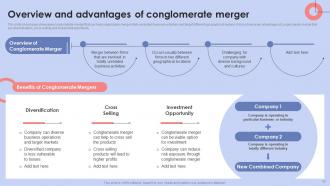
Slide 52: This slide showcases conglomerate merger that can help organization merge totally unrelated business activities and target different geographical regions.
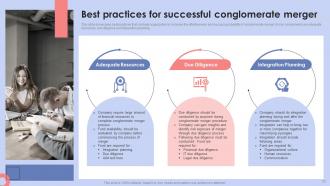
Slide 53: This slide presents best practices that can help organization to increase the effectiveness and success probability of conglomerate merger.
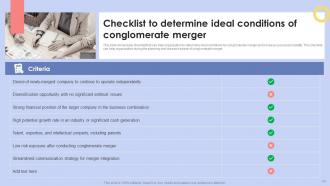
Slide 54: This slide showcases checklist that can help organization to determine ideal conditions for conglomerate merger and increase success probability.
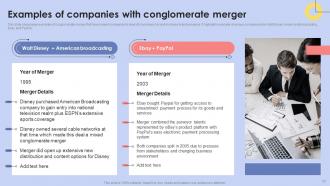
Slide 55: This slide describes examples of conglomerate merger that have helped companies to diversify business risk and increase brand presence.
Slide 56: This slide shows title for topics that are to be covered next in the template.
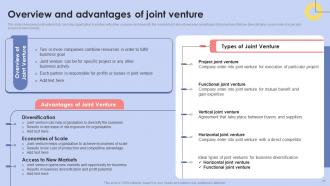
Slide 57: This slide presents joint venture that can help organization to partner with other company and diversify the market risk.
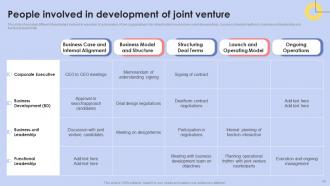
Slide 58: This slide showcases different stakeholders involved in execution of joint venture of two organizations.
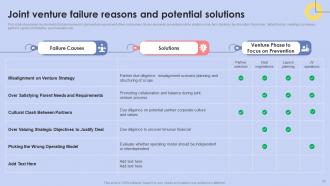
Slide 59: This slide describes joint venture reason of faliure and potential solutions.
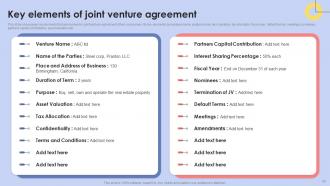
Slide 60: This slide showcases key elements that are involved in joint venture agreement of two companies.
Slide 61: This slide shows all the icons included in the presentation.
Slide 62: This slide is titled as Additional Slides for moving forward.
Slide 63: This is Our Team slide with names and designation.
Slide 64: This slide shows SWOT analysis describing- Strength, Weakness, Opportunity, and Threat.
Slide 65: This slide provides 30 60 90 Days Plan with text boxes.
Slide 66: This slide displays Mind Map with related imagery.
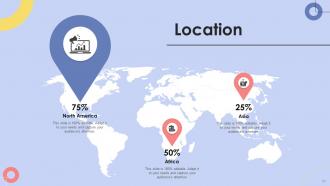
Slide 67: This is a Location slide with maps to show data related with different locations.
Slide 68: This slide showcases Magnifying Glass to highlight information, specifications etc.
Slide 69: This is an Idea Generation slide to state a new idea or highlight information, specifications etc.
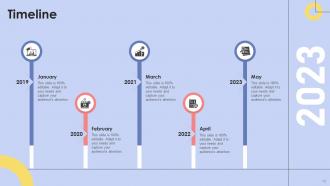
Slide 70: This is a Timeline slide. Show data related to time intervals here.
Slide 71: This is a Thank You slide with address, contact numbers and email address.
Diversification Strategy To Manage Business Risk And Increase Market Share Powerpoint Presentation Slides Strategy CD with all 76 slides:
Use our Diversification Strategy To Manage Business Risk And Increase Powerpoint Presentation Slides Strategy CD to effectively help you save your valuable time. They are readymade to fit into any presentation structure.















FAQs for Diversification Strategy To Manage Business Risk And Increase Market Share Powerpoint Presentation
Honestly, it's all about not putting your eggs in one basket. Diversifying protects you when one area tanks - and trust me, something always does eventually. You'll also open up new revenue streams and hit different customer groups. Amazon's the perfect example - books to literally everything (though I still miss when they were just a bookstore, weird nostalgia). Look for markets next to what you're already doing well. That way you can use your current strengths instead of starting completely from scratch. Plus you get those nice operational benefits where everything works better together.
Honestly, first thing is figuring out what you're *actually* good at - not what you think you are. Check your finances and bandwidth too. Can your current skills even transfer? The whole "grass is greener" thing is so real with diversification - it always looks easier from the outside. Research the hell out of that new industry. Who's your competition? What's it really take to get in? But here's the key part - don't go all in right away. Try small experiments first. Like, really small. Test stuff out before you commit serious money or time. Learn fast, fail cheap if you're gonna fail.
Dude, you absolutely need market research before diversifying - learned this the hard way watching companies tank. First figure out if there's actual demand in whatever market you're eyeing. Then dig into what customers really want and see who you'd be competing against. I swear, half the businesses I know just threw money at new ventures without doing homework first. Bad idea. Start with some basic online research to get a feel for things, then actually talk to potential customers in that space. Trust me, it'll save you from burning through cash on something nobody wants.
Honestly, most companies just look for stuff that builds on what they're already good at. Like Disney jumping from movies to theme parks - that made total sense. You want to find markets where your current skills actually give you an edge over competitors. Smart move is also thinking defensively. Pick industries that do well when yours tanks - keeps you covered during rough patches. But yeah, don't just chase random trending sectors. Start by listing what you're genuinely strong at, then see which nearby markets could use those exact skills. Way better than starting from scratch in something completely foreign.
Don't jump into stuff you know nothing about - honestly, I've watched people basically gamble their way into bankruptcy that way. Spreading yourself too thin is another killer mistake. Your main business suffers when you're chasing five different things at once. Also, don't diversify just because you're getting restless (trust me on this one). Pick markets that actually connect to what you're already good at. Start small and see what happens before you dump serious money in. You need people who can actually run these new ventures too.
So diversification is just not putting all your money/effort into one thing, right? Like if you're only selling ice cream and summer sucks, you're screwed. But if you've got ice cream AND hot chocolate, weather doesn't kill you. Same idea with different markets or products - one tanks, others keep you afloat. Though honestly, managing a bunch of different stuff gets messy fast. You don't want to spread yourself so thin that you suck at everything. The trick is finding that balance where you're protected but still focused enough to actually be good at what you do.
Amazon's the obvious one - started with books, now they're everywhere from cloud computing to groceries. Disney went from cartoons to theme parks and cruise ships. 3M? They literally went from making sandpaper to Post-it notes and medical stuff. Google branched out from search into Android and YouTube, though they've definitely had their flops too. The pattern I notice is that companies succeed when they build off what they're already good at. Amazon had logistics down pat. Disney knew how to build a brand. For your situation, I'd honestly start with whatever you do best and figure out where else those skills could work.
Figure out what your new market actually cares about first - like, really dig into their problems. Then see where your existing skills can solve those issues better than anyone else. Don't try to be something you're not. Instead, just package what you're already good at differently. Honestly, customer research is boring but you gotta do it. We discovered once that our shipping process was way more impressive to clients than our actual product (weird but true). Make a simple chart - your top skills on one side, their biggest headaches on the other. You'll probably find connections you didn't expect. Short sentences work here. The goal isn't changing your core strengths, it's just presenting them in a way that clicks.
Honestly, start with whether it actually makes sense for your business - like, does it fill a real gap or just look shiny? Their financials are make-or-break obviously. Dig into cash flow, not just the surface numbers. Market position tells you a lot too. Are they actually competitive or just limping along? (I've watched friends buy disasters thinking they could turn them around - spoiler alert: they couldn't.) Company culture fit gets ignored but it's huge. Also think about whether you can realistically handle integrating them without losing your mind. Make a simple scorecard before you start shopping around.
Dude, cultural fit is huge for this stuff. When new business units totally clash with your company's vibe, everything gets messy - decision-making, keeping good people, all of it. You want different perspectives, sure, but if the core values are completely off? Good luck getting teams to work together. Communication breaks down, performance expectations don't align... it's brutal. I learned this the hard way at my last job actually. Look for units that feel different but still make sense with what you've already got going.
Track your revenue growth by segment and profit margins for each unit - that's the basic stuff. But here's what really matters: correlation coefficients between revenue streams. Lower numbers mean better diversification. Market share in each area matters too, plus how much each segment contributes to total revenue. ROI is obviously crucial. Oh, and definitely set your benchmarks before you start diversifying - learned that one the hard way. Without baseline numbers, you're basically flying blind on whether it's actually working or not.
Yeah, diversification gets tricky fast. Your customers might get totally confused about what you actually do - like, are you the reliable software company or some random lifestyle brand now? Amazon somehow made it work going from just books to literally everything, but that's rare. You don't want to stretch your brand so far it snaps, you know? Test how your existing customers react to new stuff before diving in headfirst. The goal is expanding while still making sense with what people already think about you. Nobody wants a brand identity crisis on their hands.
Honestly, tech makes diversifying way easier than it used to be. Real-time market data helps you spot opportunities faster. Digital platforms let you test stuff without dropping tons of cash upfront - which is huge. You can scale into new markets using infrastructure you already have, plus AI handles managing multiple business lines (though sometimes there's almost too many options, you know?). The barriers are just lower now. Better data means you actually know what might work instead of just guessing. I'd start by figuring out what tech you've already got that could work for expanding into related areas.
Okay so related diversification is when you expand into stuff that connects to what you're already doing - Amazon started with books then moved into other retail. Unrelated is totally different industries, like how Samsung does phones AND shipbuilding which honestly seems crazy but whatever works I guess. Go related when you can use your current skills, customers, or suppliers. Unrelated makes sense if you want to spread risk across different markets that don't all tank together. Just don't fool yourself into thinking you can manage businesses you know nothing about - that's how companies mess up big time.
Honestly, partnerships are your best bet for diversifying without risking everything. Look for companies that already have the market knowledge or distribution you're missing - don't just team up with someone who does the same stuff you do. Joint ventures are clutch because you're not putting all your eggs in one basket (my old company tried going solo on expansion and it was a disaster). Map out what skills you actually need first. Then find partners who fill those gaps while you bring what you're good at. Way smarter than trying to figure out a whole new market by yourself.
-
Illustrative design with editable content. Exceptional value for money. Highly pleased with the product.
-
It's always a delight to see new templates from you! I am extremely pleased with the fact that they are easy to modify and fit any presentation layout in seconds!