E Governance Powerpoint Ppt Template Bundles
Try Before you Buy Download Free Sample Product
Audience
Editable
of Time
Our E Governance Powerpoint Ppt Template Bundles are topically designed to provide an attractive backdrop to any subject. Use them to look like a presentation pro.
People who downloaded this PowerPoint presentation also viewed the following :
E Governance Powerpoint Ppt Template Bundles with all 19 slides:
Use our E Governance Powerpoint Ppt Template Bundles to effectively help you save your valuable time. They are readymade to fit into any presentation structure.
FAQs for E Governance Powerpoint
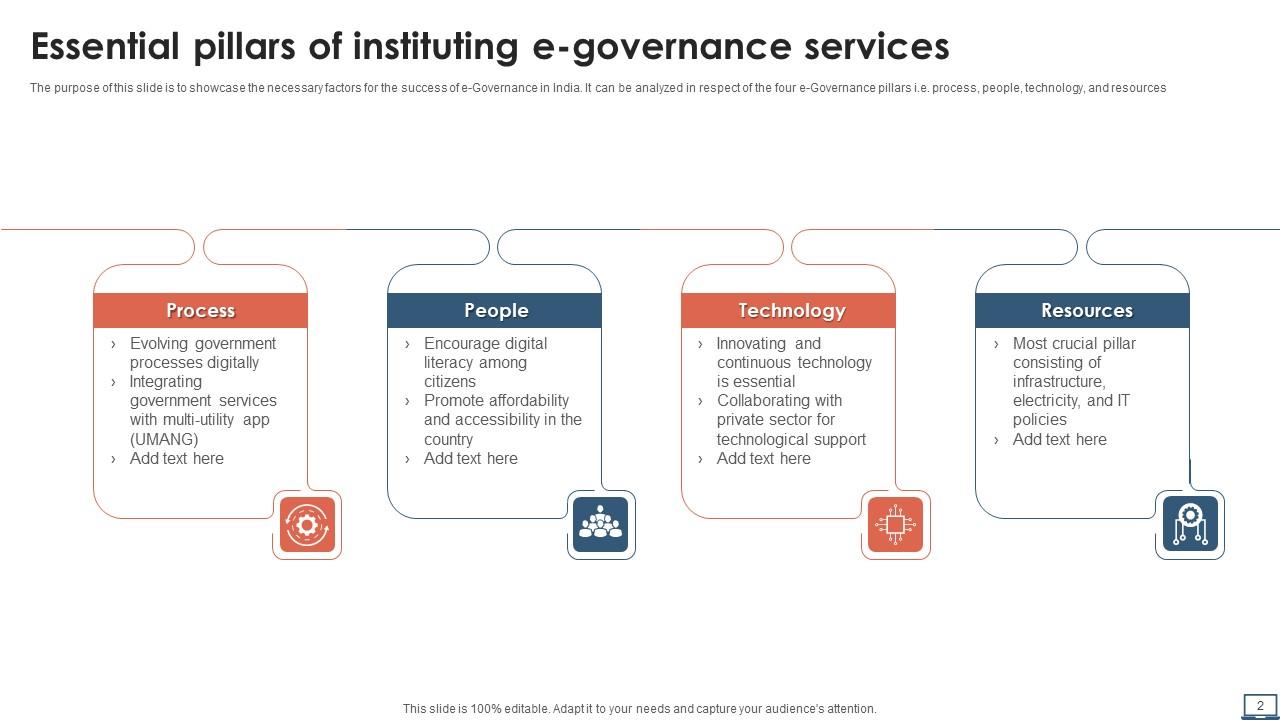
You'll need solid digital infrastructure first - can't have government sites crashing when everyone's filing taxes, that's just embarrassing. Data management and cybersecurity are huge too. Make sure different departments can actually talk to each other so people aren't jumping between five different portals for one thing. Authentication has to be bulletproof but not annoying. Mobile-friendly is non-negotiable these days, obviously. Honestly, the whole point is making it feel as smooth as ordering food online. I'd start by figuring out where citizens get most frustrated and fix those headaches first.

Okay so e-governance is honestly pretty cool - you can do government stuff online anytime instead of waiting in those awful lines at city hall. Track your applications, see where tax money goes, give feedback on policies. Most cities have apps now where you can report potholes or whatever from your couch. The transparency thing is huge too because you can actually watch what officials are doing. Only downside is making sure older folks or people without good internet don't get left out. But yeah, it's way better than the old system where you'd waste half your day just to renew something.
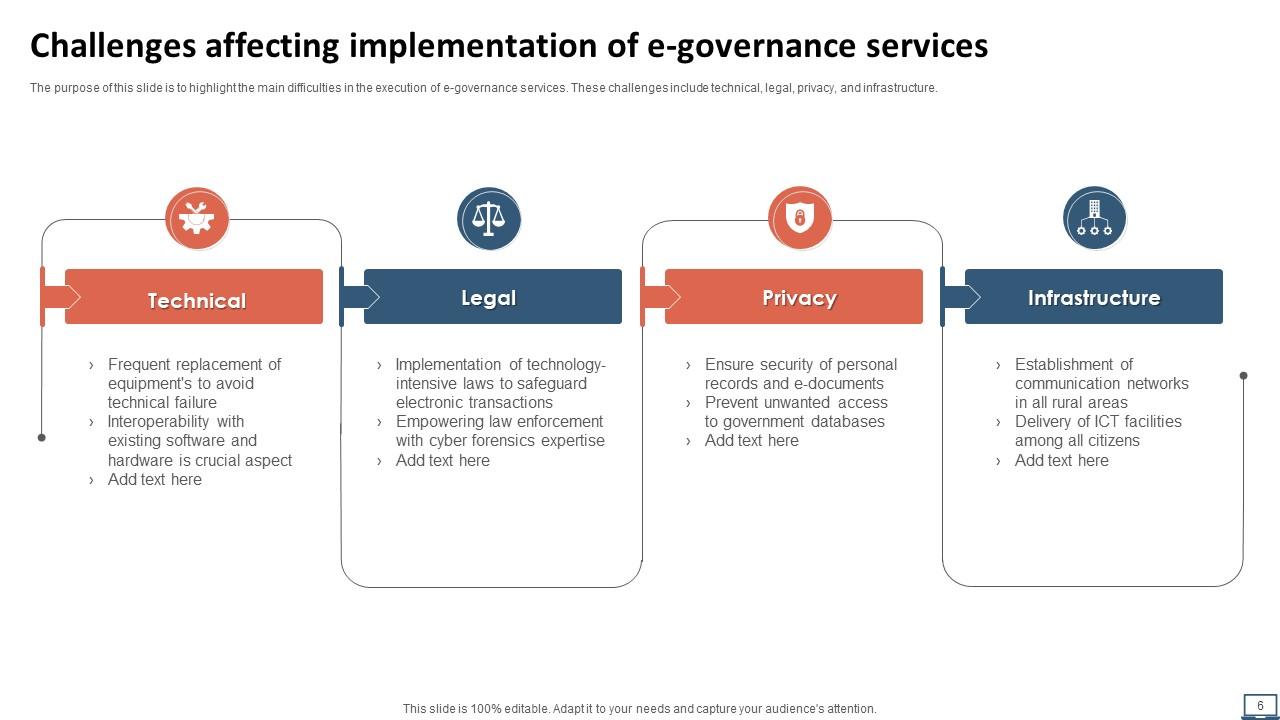
Honestly, funding's your biggest nightmare - there's never enough money. Rural areas get screwed over by terrible internet while cities are fine. People hate change, whether it's citizens or government workers dragging their feet. Most places are running on ancient tech that barely works, and don't get me started on cybersecurity with all that personal data floating around. Training staff takes forever because nobody wants to learn new systems. Oh, and you need solid laws for digital stuff and privacy protection. My advice? Start tiny with test programs instead of going full overhaul - I've seen those crash and burn spectacularly.
Okay so first off - encryption everywhere, no exceptions. Data transmission, storage, all of it needs to be locked down tight. Set up role-based access so random people can't just browse through citizen records (you'd be shocked how often this gets overlooked). Multi-factor authentication is a must, obviously. Regular pen testing will catch vulnerabilities before hackers do. ISO 27001 compliance helps too. Here's the thing though - don't keep data longer than you actually need it. Creates unnecessary risk. Honestly? Just imagine it's your own personal info being stored and go from there.
Honestly, tech has changed everything about government transparency. Instead of filing those annoying FOIA requests and waiting forever, you can just hop online and see budgets, spending records, all that stuff in real-time. Plus they've got live-streaming for meetings now - politicians hate it but it keeps them way more honest when they know everything's being recorded. What's cool is that regular people don't have to go through bureaucrats anymore to get basic info. Your city probably isn't doing this yet (mine took ages to catch up), but you should totally bug them about putting their data online and setting up digital comment systems.
So basically, e-governance kills corruption because there's no human middleman to bribe anymore. Everything goes through automated systems, which is actually pretty smart. You can't slip someone cash when you're just clicking buttons online, you know? Plus all your transactions get recorded digitally - like having cameras everywhere but for paperwork. Officials hate this because they can't do shady deals when everything's tracked. Real-time status updates are huge too. No more "pay me extra and I'll move your application to the top" bullshit. Just make sure you digitize the whole process, not bits and pieces.
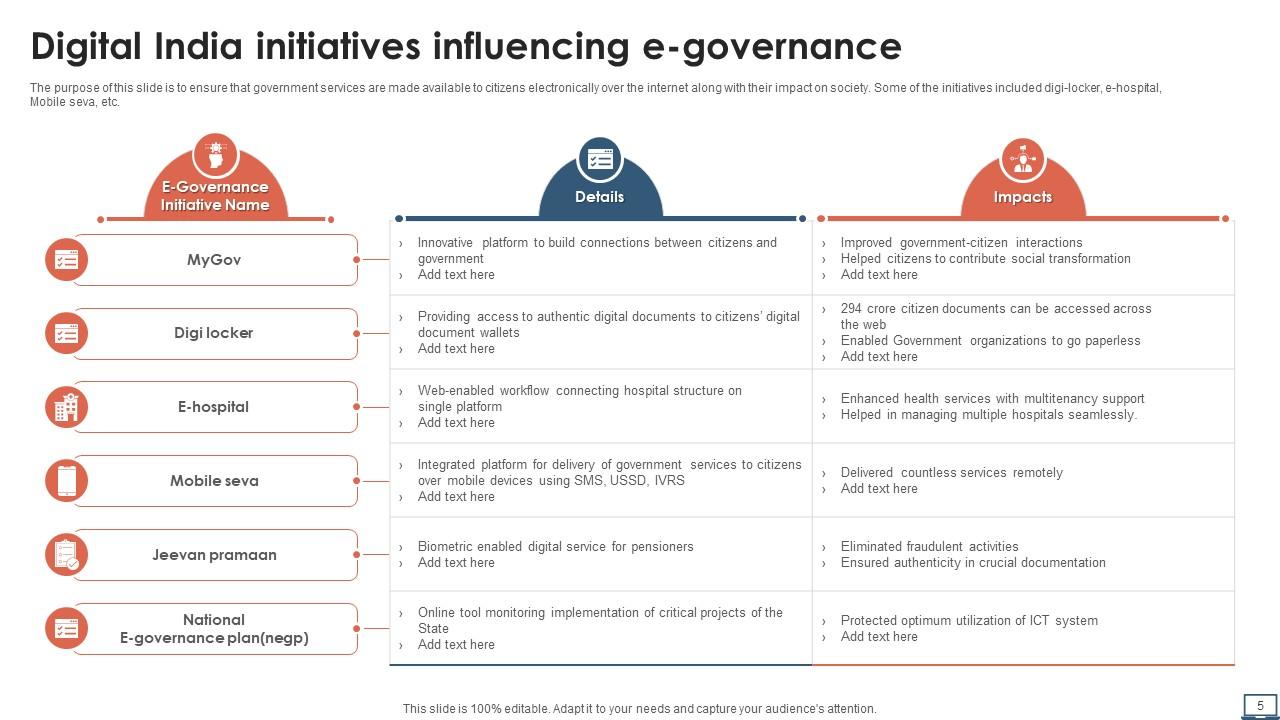
Honestly, Estonia's killing it with their e-Residency thing - you can literally become a digital resident from anywhere. Singapore's getting crazy smart with AI that predicts what citizens need before they even ask. India's unified identity system is massive too, like genuinely impressive scale. Everyone's going mobile-first now and building these one-stop government portals. The countries doing it right aren't just making PDFs digital though - they're actually redesigning how services work. UX is everything now. Oh, and cross-border digital identity is huge if you're thinking internationally. Focus on making stuff genuinely easier for people, not just slapping apps on old processes.
Dude, e-governance is honestly a lifesaver for rural folks. No more crazy long trips to district offices just to get basic certificates or apply for subsidies - you can handle most of that stuff online now. Digital payments cut out all those sketchy under-the-table fees too, which is huge. Your state probably has way more services available than you'd think. Agricultural schemes, pensions, healthcare apps - it's all there. The transparency thing is nice too since you can actually track your applications instead of wondering if they got lost in some bureaucrat's desk drawer. Just check your state's website and see what they've got.
Honestly, I'd focus on the basics first - adoption rates, how fast transactions actually complete, and whether you're saving money per transaction. Response times are probably your biggest win since everyone hates waiting around. User satisfaction surveys will tell you if people actually like using it or just tolerate it. Don't forget to check if you're reaching everyone or just the people who are already comfortable with tech. That digital divide thing is real. Pick maybe 3-4 metrics max though - tracking everything just makes it harder to see what's actually working.
Digital systems totally change how disasters get handled. Emergency services can actually talk to each other instantly instead of that whole broken telephone thing between departments. Real-time data tracking lets officials see where resources are needed most - honestly, it's pretty cool how they can predict problems before they spiral. Citizens report stuff through apps and get direct updates too. The catch? You've got to build all this tech infrastructure beforehand. Can't exactly set up communication networks while your city's flooding, you know?
So basically you need explicit consent before collecting any citizen data - can't just grab whatever you want anymore. GDPR really changed the game on this stuff. Your data can only be used for what you originally said it was for, nothing else. Security has to be bulletproof too. Honestly, the transparency requirements are probably the biggest pain - you've got to tell people exactly what you're doing with their info. Citizens get rights to see their data, fix mistakes, or delete everything. Don't even think about launching without getting lawyers to review your whole setup first.
Honestly, start with the basics - workshops on internet stuff, passwords, government apps. A shocking number of people can't even fill out online forms properly. Libraries and community centers are your best bet for reaching everyone. Do everything in local languages, both online and in-person sessions. The trick is showing people it'll actually save them time and hassle versus the old way of doing things. Simple tutorial videos work great for tax stuff and license renewals. Oh, and partner with NGOs - they know the communities way better than you do.
Honestly, just keep it stupid simple. People want to get in, do their thing, and get out - not decode government speak. Mobile-first is a must since everyone's on their phones anyway. Clean interface, plain English, and for the love of god make sure it actually loads fast. Accessibility should be baked in from the start, not slapped on later. When stuff breaks (and it will), give clear error messages instead of those cryptic "Error 404" nightmares. Oh and test with real people, not just your coworkers who already know how everything works. Map out the most common tasks first and cut any unnecessary steps.
Look, you basically need to get all your systems speaking the same language - REST APIs, shared data formats, that stuff. Authentication needs to be consistent across everything too. I always think of it like making sure your iPhone apps can actually share photos with each other, you know? Middleware helps translate between systems that don't naturally get along. SOA or microservices work well for this. Honestly though, start simple - just map what you've got first and figure out which connections matter most. Don't try to fix everything at once or you'll go crazy.
Dude, COVID basically forced governments to figure out digital services super fast. Like, overnight they had to move everything online - taxes, permits, all of it - because people couldn't go anywhere. Countries that were slow with tech suddenly didn't have a choice anymore. Go digital or your whole system stops working, you know? Citizens needed stuff done remotely and governments had to make it happen through screens. Honestly, it was kind of wild how fast things changed. If you're doing any e-gov work now, people are way more cool with digital stuff than before 2020.
-
I really liked their customized design services. I got my desired template made by their expert team. Thank You!
-
“Immediate response, professional support, and effective solutions that were customized and immediately provided. Well done- Thank you!”