


E Commerce Framework Powerpoint Ppt Template Bundles






Try Before you Buy Download Free Sample Product
 Impress Your
 Audience
 100%
100% Editable
 Save Hours
 of Time


Our E Commerce Framework Powerpoint Ppt Template Bundles are topically designed to provide an attractive backdrop to any subject. Use them to look like a presentation pro.
People who downloaded this PowerPoint presentation also viewed the following :
E Commerce Framework Powerpoint Ppt Template Bundles with all 17 slides:
Use our E Commerce Framework Powerpoint Ppt Template Bundles to effectively help you save your valuable time. They are readymade to fit into any presentation structure.
-

E Commerce Framework Powerpoint Ppt Template Bundles
-
E Commerce Framework Powerpoint Ppt Template Bundles
-
E Commerce Framework Powerpoint Ppt Template Bundles
-
E Commerce Framework Powerpoint Ppt Template Bundles
-
E Commerce Framework Powerpoint Ppt Template Bundles
-
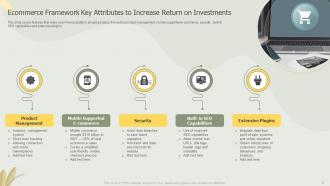
E Commerce Framework Powerpoint Ppt Template Bundles
-
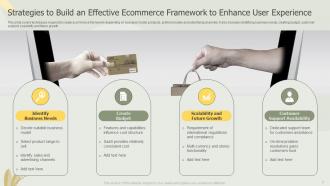
E Commerce Framework Powerpoint Ppt Template Bundles
-
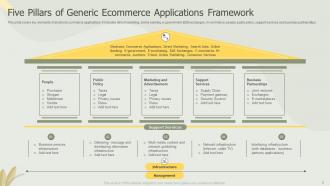
E Commerce Framework Powerpoint Ppt Template Bundles
-
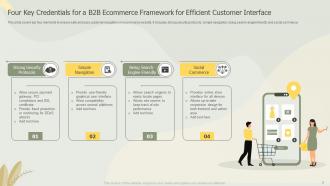
E Commerce Framework Powerpoint Ppt Template Bundles
-
E Commerce Framework Powerpoint Ppt Template Bundles
-

E Commerce Framework Powerpoint Ppt Template Bundles
-

E Commerce Framework Powerpoint Ppt Template Bundles
-

E Commerce Framework Powerpoint Ppt Template Bundles
-

E Commerce Framework Powerpoint Ppt Template Bundles
-

E Commerce Framework Powerpoint Ppt Template Bundles
-

E Commerce Framework Powerpoint Ppt Template Bundles
-

E Commerce Framework Powerpoint Ppt Template Bundles
FAQs for E Commerce Framework Powerpoint
A robust e-commerce framework includes secure payment gateways, inventory management systems, customer relationship management tools, mobile optimization capabilities, and analytics dashboards. These components work together by streamlining transactions, enhancing user experiences, and providing data-driven insights, with many retailers finding that integrated frameworks deliver faster checkout processes, improved customer retention, and ultimately significant competitive advantage in increasingly digital markets.
UX design significantly impacts e-commerce conversion rates by streamlining navigation, optimizing checkout processes, and enhancing mobile responsiveness across all customer touchpoints. Through intuitive interfaces and reduced friction points, retailers like fashion brands and electronics stores achieve conversion rate improvements of 200-400%, while minimizing cart abandonment and ultimately delivering higher revenue per visitor.
Payment gateways serve as the critical infrastructure enabling secure, seamless transactions between customers and merchants, supporting multiple payment methods, currencies, and fraud protection protocols. They directly impact conversion rates, customer trust, and global expansion capabilities, with many e-commerce businesses finding that reliable, fast payment processing reduces cart abandonment and enhances customer experience significantly.
E-commerce frameworks support mobile commerce through responsive design capabilities, optimized checkout processes, mobile payment integrations, progressive web app features, and touch-friendly interfaces. These frameworks enable retailers to deliver seamless shopping experiences across devices, with many businesses finding that mobile-optimized platforms increase conversion rates, reduce cart abandonment, and ultimately drive higher revenue through enhanced customer engagement.
Security best practices for e-commerce include SSL encryption, PCI DSS compliance, two-factor authentication, regular security audits, and secure payment gateways. These measures work together by encrypting sensitive data, monitoring transactions for fraud, and maintaining compliance standards, with many retailers finding that robust security frameworks ultimately enhance customer trust while reducing breach risks and regulatory penalties.
An effective product catalog management system enhances e-commerce operations by centralizing inventory data, automating product updates, and ensuring consistent information across all sales channels. This streamlines workflows for retailers and manufacturers, reduces manual errors, and accelerates time-to-market for new products, while ultimately delivering improved customer experiences and increased operational efficiency.
Headless e-commerce architecture offers faster site performance, enhanced customization flexibility, omnichannel content delivery, improved developer experience, and seamless third-party integrations. This approach enables retailers to deliver personalized customer experiences across multiple touchpoints while reducing development time, with many brands finding that decoupling front-end presentation from back-end commerce ultimately drives higher conversion rates and competitive advantage.
E-commerce frameworks incorporate personalization through AI-driven recommendation engines, dynamic content customization, behavioral tracking analytics, personalized email campaigns, and adaptive user interfaces. These technologies enhance customer engagement by delivering tailored product suggestions, customized shopping experiences, and targeted promotions, with many retailers finding that personalized approaches significantly increase conversion rates and customer loyalty.
Key e-commerce metrics include conversion rates, average order value, customer acquisition cost, cart abandonment rates, and customer lifetime value. These indicators enable businesses to optimize user experiences, streamline checkout processes, and enhance marketing strategies, with many retailers finding that tracking these metrics delivers improved profitability and sustainable growth.
An omnichannel strategy integrates seamlessly across all customer touchpoints within an e-commerce framework, connecting online stores, mobile apps, social media, and physical locations through unified data and inventory systems. This strategic combination enables retailers to deliver consistent experiences, streamline operations, and maximize conversions, with many brands finding that synchronized channels significantly boost customer loyalty and revenue growth.
Scalability challenges in e-commerce platforms include server capacity limitations, database performance bottlenecks, payment processing delays, inventory management complexities, and customer service strain during peak periods. These technical and operational hurdles can result in slower page loads, checkout failures, and poor user experiences, with many retailers finding that inadequate infrastructure ultimately leads to lost sales and competitive disadvantage.
Integration with third-party services enhances e-commerce functionality by streamlining payment processing, automating inventory management, and expanding marketing capabilities through specialized platforms. These strategic combinations enable businesses to leverage services like PayPal, Stripe, Mailchimp, and analytics tools, ultimately delivering faster checkout experiences, better customer insights, and improved operational efficiency across their digital commerce operations.
Regulatory compliance implications for e-commerce businesses include data protection requirements, tax obligations across jurisdictions, consumer rights adherence, payment security standards, and accessibility mandates. While compliance presents operational challenges and costs, it ultimately delivers enhanced customer trust, reduced legal risks, and competitive advantage, with many retailers finding that robust compliance frameworks streamline international expansion and strengthen market positioning.
Artificial intelligence improves e-commerce inventory management by analyzing purchasing patterns, predicting seasonal demand fluctuations, automating reorder points, and optimizing stock levels across multiple channels. Through machine learning algorithms, retailers can reduce overstock situations by up to 30%, minimize stockouts, and enhance supplier coordination, ultimately delivering improved cash flow and customer satisfaction.
Customer support serves as a critical retention and conversion component within e-commerce frameworks, handling inquiries, resolving disputes, managing returns, and providing product guidance across multiple channels. This strategic function enables businesses to build customer loyalty, reduce cart abandonment, and increase lifetime value, with many retailers finding that responsive support directly correlates with higher conversion rates and competitive advantage.
-
“Slides are formally built and the color theme is also very exciting. This went perfectly with my needs and saved a good amount of time.”
-
Every time I ask for something out-of-the-box from them and they never fail in delivering that. No words for their excellence!