


Ecommerce payment methodologies powerpoint presentation slides




Try Before you Buy Download Free Sample Product
 Impress Your
 Audience
 100%
100% Editable
 Save Hours
 of Time


In this age of digitization, it is not surprising that the world of e-commerce payment system is growing day by day. Talk about online payment methods with our content ready E-commerce Payment Methodologies PowerPoint Presentation Slides. Explain the options available for payment in e-commerce. Showcase online payment mechanism using professionally designed online payment methods presentation templates. This is an effective design, helps to demonstrate the processing cycle of e-transaction. Online payment methods PPT visuals can also be used to discuss the steps of online payment processing. Ecommerce payment system PowerPoint complete deck contains ready-to-use templates with all sorts of editable charts and graphs. The presentation is fully editable. You can modify, color, text, and font size. Outline all the important concepts without any hassle. This includes infographics slides that help you to make an inclusive and comprehensive presentation. You can convey your message more convincingly with this visually appealing e-commerce online payment solution PowerPoint presentation.
People who downloaded this PowerPoint presentation also viewed the following :
Content of this Powerpoint Presentation
Slide 1: This slide introduces Ecommerce Payment Methodologies. State Your Company Name and begin.
Slide 2: This slide shows CONTENT of the presentation.
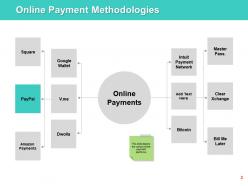
Slide 3: This slide presents Online Payment Methodologies depicting various online payment platforms.
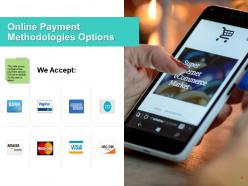
Slide 4: This slide displays Online Payment Methodologies Options that are available for the user to select.
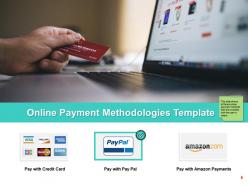
Slide 5: This slide represents Online Payment Methodologies Template with related imagery and payment options.
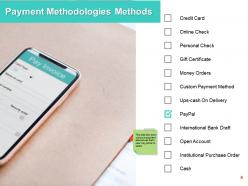
Slide 6: This slide showcases Payment Methodologies Methods including- Online Check, Personal Check, Gift Certificate, Money Orders, Custom Payment Method, Ups-cash On Delivery, International Bank Draft, Open Account, Institutional Purchase Order, Cash, Credit Card, PayPal.
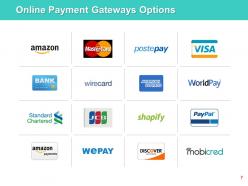
Slide 7: This slide displays Online Payment Gateways Options.
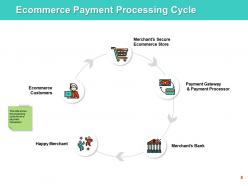
Slide 8: This slide shows Ecommerce Payment Processing Cycle as- Merchant’s Secure Ecommerce Store, Merchant’s Bank, Payment Gateway & Payment Processor, Happy Merchant, Ecommerce Customers.
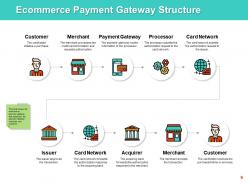
Slide 9: This slide presents Ecommerce Payment Gateway Structure describing- Customer, Merchant, Payment Gateway, Processor, Card Network, Issuer, Acquirer.
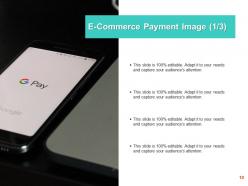
Slide 10: This slide displays E-Commerce Payment Image with text boxes.
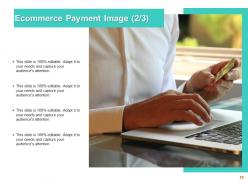
Slide 11: This is another slide with Ecommerce Payment Image.
Slide 12: This is another slide displaying Ecommerce Payment Image with additional text boxes to show information.
Slide 13: This slide represents Ecommerce Payment Vector with text boxes.
Slide 14: This slide is titled as Additional Slides for moving forward.
Slide 15: This is Our Mission slide with related imagery and text boxes.
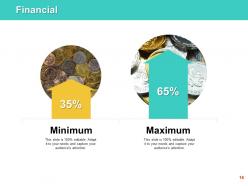
Slide 16: This is a Financial slide. Show your finance related stuff here.
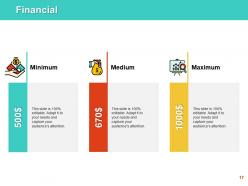
Slide 17: This is another slide to show your Financial stuff.
Slide 18: This is Our Team slide with names and designation.
Slide 19: This is Our Goal slide. State your important goals here.
Slide 20: This is About us slide to show company specifications etc.
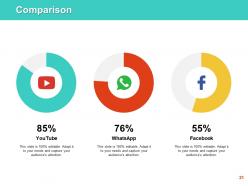
Slide 21: This is a Comparison slide to state comparison between commodities, entities etc.
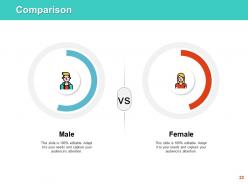
Slide 22: This is another Comparison slide with data in percentage.
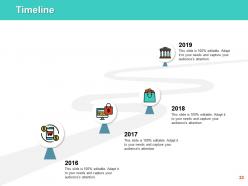
Slide 23: This is Timeline slide to show information related with time period.
Slide 24: This is a Quotes slide to convey message, beliefs etc.
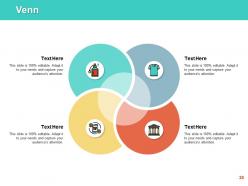
Slide 25: This is a Venn slide with additional text boxes.
Slide 26: This is a Thank you slide with address, contact numbers and email address.
Ecommerce payment methodologies powerpoint presentation slides with all 26 slides:
Pick up a germ of an idea from our Ecommerce Payment Methodologies Powerpoint Presentation Slides. Your thoughts will certainly create a gem.






FAQs for Ecommerce payment methodologies
The most popular ecommerce payment methods include credit and debit cards, digital wallets like PayPal and Apple Pay, bank transfers, buy-now-pay-later services, and mobile payment apps. These options enhance customer convenience by offering secure transactions, faster checkout processes, and flexible payment terms, with many retailers finding that multiple payment options significantly increase conversion rates and customer satisfaction.
Consumer preferences for payment methods vary significantly by region due to cultural habits, banking infrastructure, regulatory environments, and technological adoption rates. In Asia, mobile wallets like Alipay dominate, while Europeans favor bank transfers and Americans prefer credit cards, with emerging markets increasingly adopting digital-first solutions that bypass traditional banking, ultimately enabling businesses to optimize checkout experiences and reduce cart abandonment across diverse markets.
Mobile payment serves as a cornerstone of modern ecommerce by enabling faster checkouts, reducing cart abandonment, and enhancing user experiences through streamlined authentication and stored payment credentials. With many retailers finding that mobile-optimized payment options significantly boost conversion rates, these technologies ultimately deliver increased sales velocity and competitive advantage in an increasingly mobile-first marketplace.
Key security considerations include PCI DSS compliance, SSL encryption, tokenization, fraud detection systems, and secure payment gateways. These safeguards protect customer data by encrypting transactions, masking sensitive information, and monitoring suspicious activities, with many ecommerce businesses finding that robust security measures ultimately reduce chargebacks while building customer trust and competitive advantage.
Ecommerce platforms reduce cart abandonment by streamlining checkout flows, offering multiple payment options, implementing guest checkout capabilities, and displaying transparent pricing throughout the process. These optimizations enhance user experience by minimizing form fields, enabling one-click payments, and providing real-time shipping calculations, with many retailers finding that simplified checkout processes increase conversion rates by up to thirty percent.
Cryptocurrency and blockchain technologies significantly impact ecommerce by offering decentralized payments, reduced transaction fees, enhanced security through cryptographic verification, and faster cross-border settlements. These emerging payment methods enable businesses to reach global markets more efficiently, minimize processing costs, and appeal to tech-savvy consumers, with many retailers finding that cryptocurrency integration delivers competitive advantage and expanded customer bases.
Businesses integrate multiple payment methods through payment gateway platforms, API integrations, mobile wallet partnerships, and omnichannel checkout systems that support credit cards, digital wallets, bank transfers, and buy-now-pay-later options. This strategic approach enhances customer experience, reduces cart abandonment rates, and expands market reach globally, with many retailers finding that diverse payment options significantly increase conversion rates and customer satisfaction.
Buy now, pay later options increase conversion rates, average order values, and customer acquisition by removing immediate payment barriers, while attracting younger demographics seeking financial flexibility. However, businesses face higher transaction fees, potential fraud risks, and customer service complexities, with many retailers finding that strategic implementation ultimately delivers competitive advantage despite increased operational considerations.
International payment gateways facilitate global ecommerce by processing multi-currency transactions, integrating with local payment methods, and ensuring compliance with regional regulations. These platforms enable businesses to accept payments from customers worldwide through credit cards, digital wallets, and region-specific options, while automatically handling currency conversion, fraud detection, and secure data encryption, ultimately expanding market reach and streamlining international sales operations.
Ecommerce payment challenges include PCI DSS compliance, data protection regulations like GDPR, anti-money laundering requirements, cross-border transaction laws, and consumer protection standards. These regulatory frameworks create complexity for online retailers, particularly those operating internationally, while ensuring secure transactions, protecting customer data, and maintaining financial transparency, ultimately building consumer trust and competitive advantage.
Transaction fees significantly influence pricing strategies by varying from 1.5-3.5% across payment methods, with credit cards typically costing more than digital wallets or bank transfers. Many ecommerce businesses absorb these costs into product margins, offer payment-specific discounts, or implement dynamic pricing models that adjust based on selected methods, ultimately balancing customer convenience with profitability optimization.
Key trends shaping ecommerce payment methods include digital wallets, buy-now-pay-later services, cryptocurrency integration, biometric authentication, and AI-powered fraud detection. These innovations streamline checkout experiences, enhance security protocols, and accommodate diverse consumer preferences, with retailers increasingly finding that offering multiple payment options significantly boosts conversion rates and customer satisfaction.
Businesses can assess payment service provider reliability through uptime history, transaction success rates, security certifications, customer support responsiveness, and regulatory compliance records. Financial institutions and retail companies increasingly evaluate providers based on their fraud protection capabilities, settlement times, and scalability during peak periods, ultimately choosing partners that deliver consistent performance and minimize revenue loss from payment failures.
User experience significantly influences payment method effectiveness by determining conversion rates, customer retention, and transaction completion. A streamlined, intuitive payment process reduces cart abandonment, builds trust through secure interfaces, and accommodates diverse user preferences, with many ecommerce platforms finding that optimized payment experiences directly correlate with increased sales and customer loyalty.
Loyalty programs integrate with ecommerce payment methods through points-based rewards systems, cashback mechanisms, tiered membership benefits, and seamless checkout experiences that automatically apply discounts. Through strategic APIs and payment gateway partnerships, retailers streamline reward redemption, enhance customer retention, and accelerate purchase decisions, with many finding that integrated loyalty systems increase average order values and repeat purchases significantly.
No Reviews