


Effective Demand Generation With Direct Mail Marketing Powerpoint Presentation Slides




Try Before you Buy Download Free Sample Product
 Impress Your
 Audience
 100%
100% Editable
 Save Hours
 of Time


Direct mail marketing strategy involves sending physical correspondence to potential consumers or existing ones. Check out our Effective demand generation with direct mail marketing template. It exhibits things like letters, packages, mailers, brochures, or postcards to enhance sales and generate more demand. Our Direct mailing deck involves strategies such as postcard marketing, catalog marketing, and self-mailer marketing to improve conversion rate and decrease customer acquisition costs. Additionally, marketing campaigns, action plans, checklists, training programs, and best practices are required to implement marketing strategies more effectively and enhance operational effectiveness. Further, our Postcards marketing PPT includes workflow chart roles and responsibilities of the marketing manager and team. The complete module also contains cost analysis and comparative software assessment for enhancing overall performance. Lastly, it provides KPI dashboards and impact analysis for measuring the effectiveness of strategies implemented. Get access to this powerful template now.
People who downloaded this PowerPoint presentation also viewed the following :
Content of this Powerpoint Presentation
Slide 1: This slide introduces Effective demand generation with direct mail marketing. Commence by stating Your Company Name.
Slide 2: This slide depicts the Agenda of the presentation.
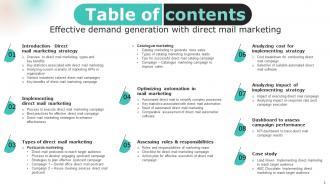
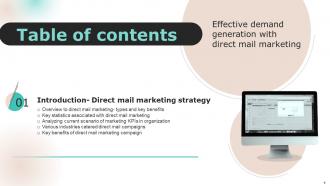
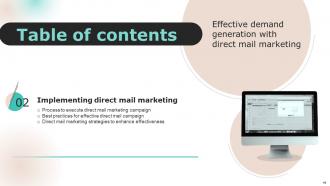
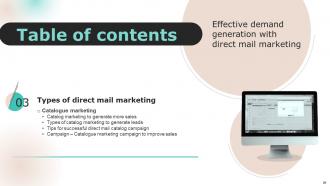
Slide 3: This slide incorporates the Table of contents.
Slide 4: This slide highlights the Title for the Topics to be discussed further.
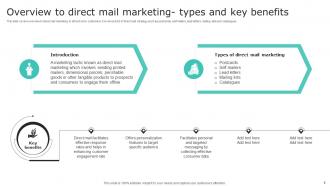
Slide 5: This slide covers overview to direct mail marketing to attract more customers.
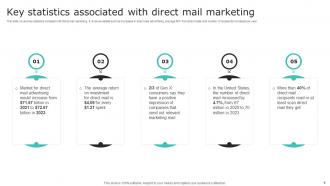
Slide 6: This slide states the Key statistics associated with direct mail marketing.
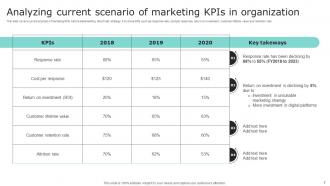
Slide 7: This slide deals with Analyzing current scenario of marketing KPIs in organization.
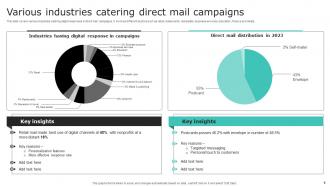
Slide 8: This slide depicts the Various industries catering direct mail campaigns.
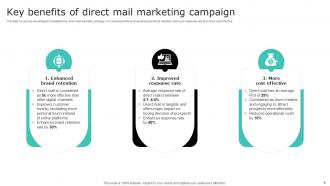
Slide 9: This slide covers key advantages of implementing direct mail marketing strategy.
Slide 10: This slide presents the Heading for the Contents to be covered next.
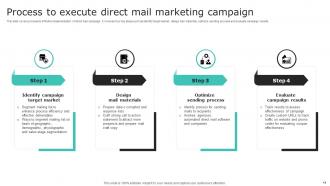
Slide 11: This slide highlights the Process to execute direct mail marketing campaign.
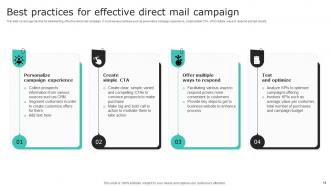
Slide 12: This slide covers approaches for implementing effective direct mail campaign.
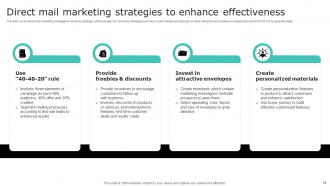
Slide 13: This slide talks about Direct mail marketing strategies to enhance effectiveness.
Slide 14: This slide includes the Title for the Ideas to be discussed further.
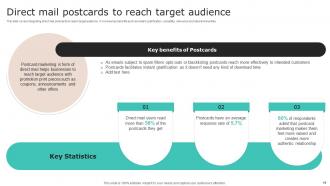
Slide 15: This slide focuses on integrating direct mail postcards to reach target audience.
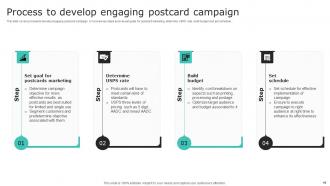
Slide 16: This slide showcases the Process to develop engaging postcard campaign.
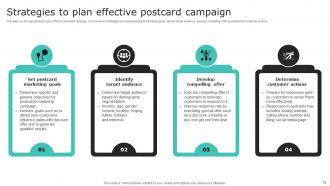
Slide 17: This slide reveals the approaches to plan effective postcard campaign.
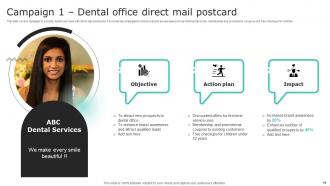
Slide 18: This slide mentions about the campaign to promote dental services with direct mail postcards.
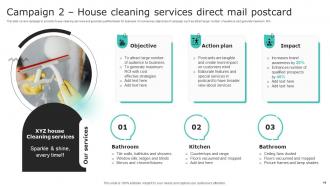
Slide 19: This slide covers campaign to promote house cleaning services and generate qualified leads for business.
Slide 20: This slide presents the Heading for the Ideas to be covered in the next template.
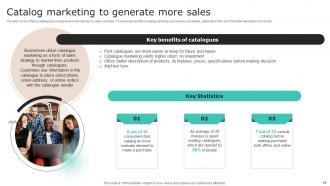
Slide 21: This slide focuses on offering catalogues to prospects and motivate them to make purchase.
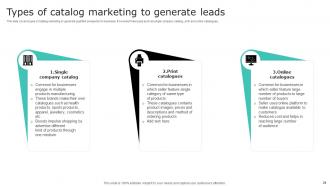
Slide 22: This slide states the types such as single company catalog, print and online catalogues.
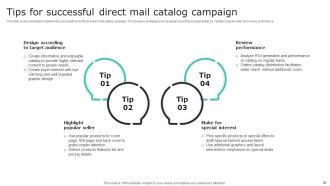
Slide 23: This slide displays the Tips for successful direct mail catalog campaign.
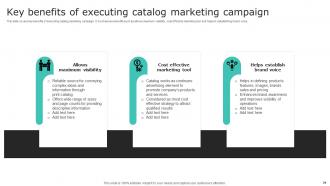
Slide 24: This slide exhibits the Key benefits of executing catalog marketing campaign.
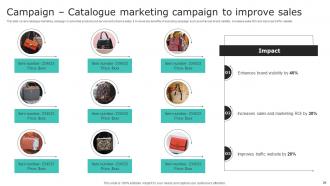
Slide 25: This slide covers catalogue marketing campaign to advertise products and service and enhance sales.
Slide 26: This slide indicates the Heading for the Contents to be further covered.
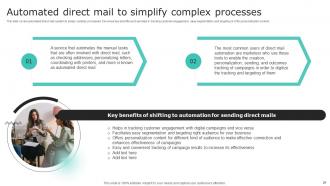
Slide 27: This slide talks about the Automated direct mail to simplify complex processes.
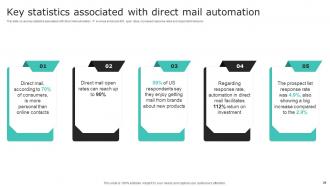
Slide 28: This slide covers key statistics associated with direct mail automation.
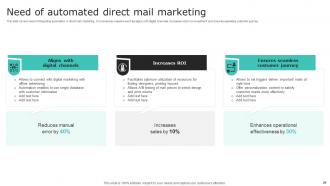
Slide 29: This slide exhibits the Need of automated direct mail marketing.
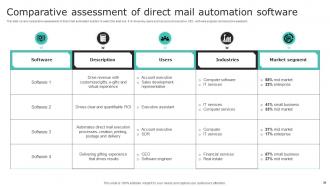
Slide 30: This slide reveals the Comparative assessment of direct mail automation software.
Slide 31: This slide highlights the Title for the Topics to be discussed next.
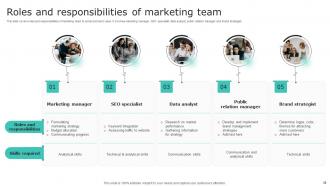
Slide 32: This slide covers roles and responsibilities of marketing team to enhance brand value.
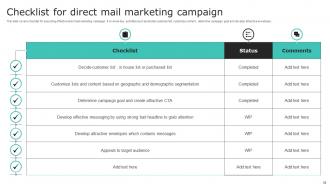
Slide 33: This slide shows the checklist for executing effective direct mail marketing campaign.
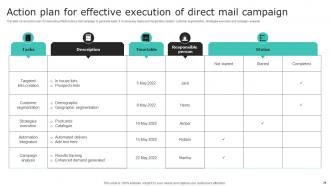
Slide 34: This slide illustrates the Action plan for effective execution of direct mail campaign.
Slide 35: This slide depicts the Heading for the Ideas to be further covered.
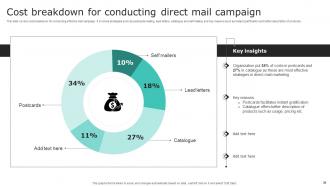
Slide 36: This slide covers cost breakdown for conducting effective mail campaign.
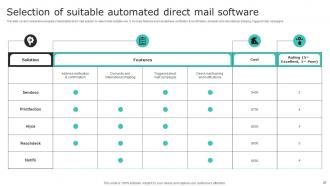
Slide 37: This slide deals with the Selection of suitable automated direct mail software.
Slide 38: This slide exhibits the Title for the Contents to be discussed next.
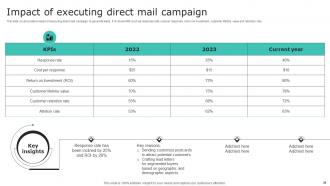
Slide 39: This slide covers positive impact of executing direct mail campaign to generate leads.
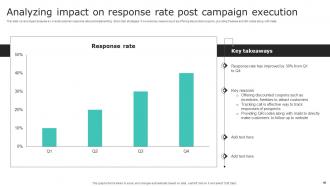
Slide 40: This slide focuses on Analyzing impact on response rate post campaign execution.
Slide 41: This slide reveals the Heading for the Topics to be covered in the upcoming template.
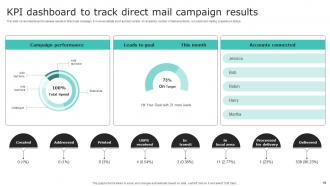
Slide 42: This slide displays the dashboard to assess results of direct mail campaign.
Slide 43: This slide includes the Title for the Contents to be discussed in the following template.
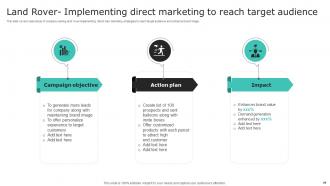
Slide 44: This slide covers case study of land rover implementing direct mail marketing strategies to reach target audience.
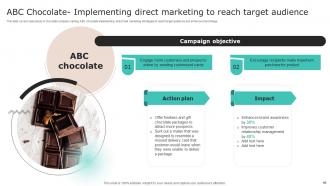
Slide 45: This slide shows the case study of chocolate company.
Slide 46: This is the Icons slide containing all the Icons used in the plan.
Slide 47: This slide is used for displaying some Additional information.
Slide 48: This slide highlights the organization's Roadmap.
Slide 49: This slide displays the firm's Mind map.
Slide 50: This is Our goal slide for stating the company's long-term goals.
Slide 51: This is the 30 60 90 days plan slide for effective planning.
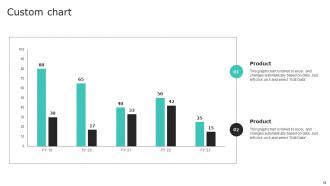
Slide 52: This slide reveals the Custom chart.
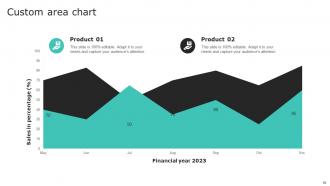
Slide 53: This slide presents the Custom area chart.
Slide 54: This slide showcases the Venn diagram.
Slide 55: This is the Puzzle slide with related imagery.
Slide 56: This slide contains the Post it notes for reminders and deadlines.
Slide 57: This is the Thank You slide for acknowledgement.
Effective Demand Generation With Direct Mail Marketing Powerpoint Presentation Slides with all 65 slides:
Use our Effective Demand Generation With Direct Mail Marketing Powerpoint Presentation Slides to effectively help you save your valuable time. They are readymade to fit into any presentation structure.










FAQs for Effective Demand Generation With Direct Mail Marketing
Key components of an effective demand generation strategy include content marketing, lead nurturing campaigns, marketing automation, targeted advertising, and data analytics integration. These elements work together by attracting qualified prospects, building trust through valuable content, and guiding potential customers through the sales funnel, ultimately delivering higher conversion rates and sustainable revenue growth.
Businesses leverage content marketing for demand generation by creating valuable educational resources, targeted blog posts, compelling case studies, interactive webinars, and strategic social media campaigns that address prospects' pain points. Through consistent, high-quality content across multiple channels, companies nurture leads effectively, build trust with potential customers, and ultimately drive qualified prospects through their sales funnel.
Social media drives demand generation through targeted advertising, content marketing, influencer partnerships, community building, and real-time customer engagement across multiple platforms. These channels enable businesses to reach specific demographics, showcase thought leadership, and nurture prospects through personalized content, with many B2B companies finding that LinkedIn and Twitter significantly accelerate their sales pipeline conversion rates.
Target audience personas significantly influence demand generation tactics by informing content creation, channel selection, messaging strategies, timing optimization, and resource allocation decisions. These detailed buyer profiles enable organizations to craft personalized campaigns across industries like SaaS, healthcare, and financial services, ultimately delivering higher engagement rates, improved conversion metrics, and more strategic marketing investments that resonate with specific customer segments.
Companies should track conversion rates, lead quality scores, customer acquisition cost (CAC), pipeline velocity, marketing qualified leads (MQLs), and return on investment (ROI). These metrics work together by revealing campaign effectiveness, cost efficiency, and revenue impact, with many organizations finding that tracking both leading indicators like MQL volume and lagging indicators like customer lifetime value ultimately delivers comprehensive insights into demand generation performance.
Automated marketing tools enhance demand generation by streamlining lead nurturing, personalizing customer journeys, and optimizing campaign performance across multiple channels simultaneously. These technologies enable organizations to deliver targeted content at scale, track engagement patterns more effectively, and accelerate conversion processes, with many companies finding that automation significantly reduces manual workload while improving lead quality and sales outcomes.
Email marketing contributes to demand generation through targeted lead nurturing, personalized content delivery, automated drip campaigns, behavioral triggers, and segmented messaging strategies. These approaches enable businesses to guide prospects through sales funnels systematically, with many organizations finding that strategic email sequences deliver higher conversion rates, reduced acquisition costs, and enhanced customer lifetime value across diverse industries.
Common pitfalls include neglecting lead nurturing, targeting overly broad audiences, misaligning sales and marketing teams, focusing solely on quantity over quality, and insufficient measurement of campaign effectiveness. These missteps often result in wasted resources, poor conversion rates, and missed opportunities, with many organizations finding that strategic alignment and data-driven approaches ultimately deliver stronger pipeline growth and revenue outcomes.
Customer feedback is crucial for demand generation success, helping businesses understand preferences, pain points, and purchasing behaviors that directly influence campaign effectiveness. Through surveys, reviews, and engagement analytics, organizations can refine messaging, optimize channel strategies, and personalize outreach approaches, ultimately delivering higher conversion rates and stronger ROI while building more targeted campaigns that resonate with their ideal prospects.
Educational content like whitepapers and case studies, interactive webinars and product demonstrations, personalized email sequences, industry-specific guides, and customer success stories prove most effective for lead nurturing. These content types work strategically across funnel stages, with financial services and healthcare organizations finding that combining educational resources with targeted messaging ultimately delivers higher conversion rates and stronger customer relationships.
Businesses can align sales and marketing teams through shared revenue goals, unified customer data platforms, regular cross-team meetings, and collaborative content creation strategies. This strategic combination streamlines lead qualification processes, enhances customer journey mapping, and delivers consistent messaging across touchpoints, with many organizations finding that integrated teams generate significantly higher conversion rates and accelerated sales cycles.
Creative demand generation approaches in competitive markets include account-based marketing targeting high-value prospects, interactive content experiences, strategic partnerships with complementary brands, thought leadership through original research, and personalized video outreach campaigns. These strategies differentiate organizations by delivering highly targeted messaging, building authentic relationships, and creating memorable customer experiences, with many companies finding that combining multiple approaches simultaneously drives significantly higher engagement rates and accelerates sales cycles.
SEO significantly enhances demand generation by improving organic visibility, attracting qualified prospects, and building long-term brand credibility through strategic content optimization. By targeting high-intent keywords and creating valuable content, businesses capture potential customers actively searching for solutions, ultimately delivering sustained traffic growth, reduced acquisition costs, and higher conversion rates compared to paid advertising alone.
A/B testing enables marketers to systematically compare campaign elements like subject lines, CTAs, landing pages, and messaging to identify highest-performing variations. Through controlled testing of email campaigns, ad copy, and conversion paths, organizations can increase click-through rates, improve lead quality, and maximize ROI, with many finding that continuous optimization delivers significantly better campaign performance and cost efficiency.
Partnerships and collaborations enhance demand generation by expanding reach, sharing resources, and leveraging complementary expertise to access new audiences and markets. Through strategic alliances, co-marketing initiatives, and joint ventures, organizations can reduce acquisition costs, accelerate market penetration, and deliver enhanced value propositions, with many finding that collaborative approaches ultimately drive higher-quality leads and stronger competitive positioning.
-
Top Quality presentations that are easily editable.
-
I am extremely pleased with these PPT slides that we used for our event. They were easy to modify and came out great in all aspects!