


Effective Omnichannel Marketing Performance Dashboard




Try Before you Buy Download Free Sample Product
 Impress Your
 Audience
 100%
100% Editable
 Save Hours
 of Time


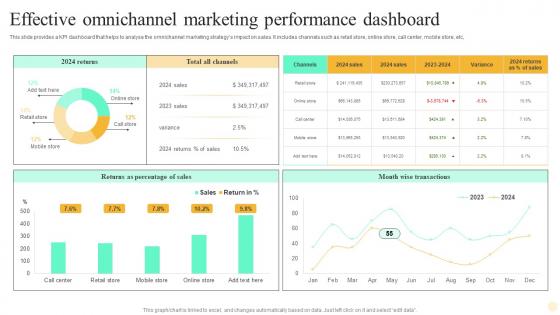
This slide provides a KPI dashboard that helps to analyse the omnichannel marketing strategys impact on sales. It includes channels such as retail store, online store, call center, mobile store, etc,
People who downloaded this PowerPoint presentation also viewed the following :
Effective Omnichannel Marketing Performance Dashboard with all 7 slides:
Use our Effective Omnichannel Marketing Performance Dashboard to effectively help you save your valuable time. They are readymade to fit into any presentation structure.






FAQs for Effective Omnichannel
So you need consistent messaging everywhere - website, social, in-store, the whole deal. Same brand voice and visuals across the board. Data integration is honestly a pain but super important for tracking how customers move around. Oh, and you'll want cross-channel attribution to see what's actually working (spoiler: it's probably not what you think). I'd start by looking at all your touchpoints and finding where things feel weird or disconnected. Fix those first since they're probably annoying your customers the most. The unified customer profiles thing comes after you get your data sorted.
Map out your whole customer journey first - every place they might interact with your brand. The big thing is making sure your data connects between channels. Like if someone browses on their phone then calls, your rep should see that history. This is honestly where tons of companies mess up - each department does their own thing. Your teams need the same training and messaging across everything. A solid CRM that actually talks to all your systems is key. Oh, and don't try to fix everything at once. Just tackle your worst problem areas first.
Okay so data analytics is basically how you figure out what's actually working with your omnichannel stuff. You can see where customers jump from like Instagram to your website to buying in-store - it's wild how much you can track these days. Look for where people are dropping off and which messages hit different on each platform. Honestly, most brands are terrible at connecting these dots. The whole point is personalizing their experience and not wasting money on channels that suck. Oh, and set up tracking everywhere first or you'll be flying blind.
Stop thinking of each social platform as its own separate thing - they're all just different stops on your customer's path to buying from you. Listen to what people are actually saying online first, then figure out what content pushes them toward the next step. Maybe Instagram gets them interested, LinkedIn makes them seriously consider it, Facebook keeps them coming back. Your brand voice should feel the same everywhere, but honestly? Each platform has its own vibe, so adapt accordingly. I'd start by sketching out where your customers hang out and how social media fits into that flow naturally.
Ugh, the worst part is when your teams don't talk to each other. Marketing promises one thing, then customer service has no clue what they said. Your email blast says something totally different from your Instagram posts - customers get confused and honestly, who can blame them? Integrating all these different platforms is a pain too since most weren't designed to work together. Plus you're stretching your budget across so many channels. My advice? Don't try to fix everything at once. Look at where your biggest gaps are first and tackle those.
Honestly, you've gotta grab feedback from everywhere - social comments, email surveys, those random chat logs, even what people say in-store. Most companies are terrible at this because everything's scattered in different systems, which drives me crazy. The real trick is connecting it all so when someone bitches about checkout on Twitter, you fix it everywhere, not just online. I'd set up monthly meetings where teams actually look at patterns together instead of working in silos. It's messier than it sounds but worth it.
Start with a good CRM - that's where everything connects. Then grab marketing automation like HubSpot or Marketo to actually coordinate your campaigns. You'll want analytics too (Google or Adobe) for tracking the customer journey. Social media management platforms will save your life when you're posting everywhere. Email tools, SMS, and maybe a CDP later. The whole tech stack gets crazy overwhelming honestly - I made that mistake early on. Just begin with CRM and automation, then add more as you grow. Way easier than trying to implement everything at once.
Honestly, personalization is a game changer for omnichannel stuff. You're basically having real conversations with customers instead of just blasting generic messages everywhere. Connect all your data first - that's crucial. When someone buys something in-store, they shouldn't see ads for that same product on Instagram later (so annoying). Use their names, buying history, whatever you've got. Even simple personalization bumps up engagement like crazy. The whole point is making each touchpoint feel tailored - email, social, your website, everything. It's way more work upfront but worth it.
Look at the whole customer journey instead of just individual channels. Track lifetime value and see how touchpoints work together - I totally screwed this up at first by only checking last-click data. Big mistake! Cross-channel attribution shows you the real conversion paths. Also measure if your messaging stays consistent everywhere and how smooth the experience feels. Honestly, most people get obsessed with channel competition when they should be optimizing integration. Start with one dashboard that tracks customer movement between all your touchpoints. Makes it way easier to spot what's actually working.
Totally doable! Big brands are actually kinda clunky - they can't move fast or sound personal like you can. Pick 2-3 places where your people actually are (not everywhere at once) and just nail those first. Email plus social plus your site is honestly enough to start crushing it. The trick is staying consistent across whatever channels you pick, then automating the tedious stuff with tools like Zapier so you're not drowning. Your superpower? You can change direction tomorrow if something isn't working, and you don't sound like a corporate robot when you talk to customers.
Mobile is huge for omnichannel - honestly can't do it without solid mobile integration. Your customers jump around like crazy between devices. They'll browse products on their phone during lunch, then go home and actually buy on their laptop. Later they're back on mobile checking shipping updates. The trick is making sure everything talks to each other properly. Same messaging everywhere, data synced up, smooth transitions when they switch devices. I've seen brands totally mess this up and it's painful to watch. Don't let your mobile experience feel like it's from a different company than your website or store.
Write down your brand's main story first - like, the whole thing in one paragraph. Then figure out how to slice it up for different places. Instagram gets the pretty visual moments. Your emails can go deeper into the feels. Website tells the complete story. Here's the thing though - someone should be able to hop from your TikTok to your blog to talking with customer service and think "yep, same brand." The vibe might shift a little but the core personality stays put. I always tell people to test this by pretending you're channel-surfing your own content. Does it actually feel cohesive or not?
So three big things are totally changing omnichannel right now. AI personalization is getting scary good - like predicting what you want before you do. Voice shopping through Alexa exploded way faster than I expected, honestly. AR lets people try stuff at home now which is huge for retail. Oh and real-time data across every touchpoint isn't fancy anymore, it's just expected. I'd start by looking at your current data setup and figuring out where you can make things more personal. The whole landscape shifted pretty quickly if you ask me.
Oh man, cultural differences are HUGE for omnichannel stuff. Americans love those pushy email blasts, but try that in Japan and you'll totally alienate people - they want subtle, respectful messaging. Europeans get weird about data privacy (fair though), while other markets just care about speed and convenience. Each region uses different social platforms too, which is obvious but easy to forget when you're planning. I bombed a campaign last year because of this exact thing! You can't just translate your content - the whole customer journey needs to change for each market. Even colors mean different things depending where you are.
Honestly, the companies crushing it with omnichannel are obsessed with tracking data everywhere - Starbucks and Disney are perfect examples. They know what you're doing whether you're on their app, in-store, whatever. Can't just slap different channels together though (trust me on that one). What really matters? Keep your messaging consistent across everything. Mobile, physical stores, social - it should all feel like the same brand. Oh and train your staff properly! Everyone needs to deliver that same experience. I'd start by looking at where your data's flowing and honestly, where customers are getting confused between your different touchpoints.
-
This PowerPoint layout is very helpful from a business point of view, and it's visually stunning too! I'm so happy with this product because it has helped me understand and deliver great presentations.
-
I was mind-blown by the services that SlideTeam provided me. Thanks a ton!