


Private Wealth Management Powerpoint Ppt Template Bundles





Try Before you Buy Download Free Sample Product
 Impress Your
 Audience
 100%
100% Editable
 Save Hours
 of Time


Our Private Wealth Management Powerpoint Ppt Template Bundles are topically designed to provide an attractive backdrop to any subject. Use them to look like a presentation pro.
People who downloaded this PowerPoint presentation also viewed the following :
Private Wealth Management Powerpoint Ppt Template Bundles with all 23 slides:
Use our Private Wealth Management Powerpoint Ppt Template Bundles to effectively help you save your valuable time. They are readymade to fit into any presentation structure.







FAQs for Private Wealth Management Powerpoint
Honestly, you gotta think about four main things: managing your investments, optimizing taxes, estate planning, and insurance for risk coverage. Build a solid financial plan around your actual goals - retirement, leaving money to kids, buying a house, whatever. The hardest part? Making sure everything works together instead of just having random separate accounts everywhere. I'd say start by figuring out your risk tolerance first, then work backwards from there. Oh, and don't forget to rebalance your portfolio regularly - tax laws change constantly so you'll need to stay on top of that stuff too.
Look, risk tolerance and investment goals are literally the starting point for everything in wealth management. They drive your asset allocation, what products you pick, even timing for big financial moves. Conservative clients? You're looking at bonds and stable stuff. High-risk folks can handle equities and alternatives no problem. Your objectives decide if you're going for growth, income, or just protecting what's there. I always tell people it's like - you wouldn't build a house without laying the foundation first, right? The thing is, you've got to circle back and reassess these regularly since people's situations change as they get older.
Dude, tax planning is HUGE for wealth management - like it can totally make or break everything. Rich people have way messier tax situations than regular folks, so you need all these strategies: charitable giving, estate stuff, asset location timing. You're not just thinking about this year either, you're planning decades ahead. Honestly, most financial advisors are pretty mediocre at the tax side of things. You really need someone who gets both investments AND tax law because they're completely tied together. Otherwise you're just leaving money on the table every year.
Honestly, you've got to dig deep into what each client actually wants - their family stuff, how much risk they can handle, what wealth even means to them. Some are all about aggressive growth. Others just want to leave something behind or give it away. It's weird but you're basically half financial advisor, half therapist lol. White-glove service is non-negotiable with these folks - they expect you to be available and think ahead for them. Customize everything from how you invest their money to how you talk to them. Those discovery sessions at the beginning? Super important for mapping out their whole situation.
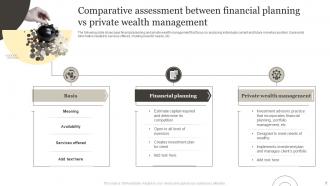
So basically, private wealth management is for people with serious money - like $1M+ to invest. Those clients get the full VIP treatment: custom investment plans, tax strategies, estate planning, sometimes even weird concierge stuff. Traditional financial planners work with everyone else and stick to the basics - retirement savings, budgeting, standard portfolios. Honestly, the service difference is huge. It's like having a personal trainer versus watching YouTube fitness videos. Both can work, but wealthy clients expect (and pay for) that hands-on approach. You'll definitely need to know the more complex strategies if you're going after that market.
Dude, wealth management is basically like playing whack-a-mole with market changes. You can't just set portfolios and walk away - they need constant tweaking when things get crazy. Volatile markets mean rebalancing way more often. Interest rate shifts totally mess with bonds, and inflation makes cash look pretty stupid honestly. I learned this the hard way last year! The trick is building wiggle room into your strategies upfront. Schedule those client check-ins religiously so you can pivot fast. It's exhausting but that's literally the job.
Robo-advisors are probably the biggest thing right now - they'll handle all that portfolio rebalancing stuff automatically. Risk analytics platforms are pretty sick too, they can stress-test everything in real-time. Digital onboarding has made client acquisition way less of a nightmare compared to all that paperwork we used to deal with. Even basic CRM systems don't suck anymore at tracking family relationships and complex structures. Oh, and there's blockchain for alt investments and crypto integration, though that's still kind of a mess honestly. Just make sure whatever tools you pick actually talk to each other instead of creating more headaches.
Don't treat estate planning like some separate thing you'll deal with later. Honestly, it should shape your whole investment approach from the start. What's the point of growing your portfolio if estate taxes are gonna crush it down the road? Your investments, tax moves, and insurance all need to sync up with your legacy goals. Start early with this stuff - the laws keep changing anyway, so you'll want to check in annually. Maybe do it when you're already reviewing your investments? Trust strategies and gifting programs should work together, not against each other.
Dude, start these talks way sooner than you think. Most families wait too long. Get your tax structures sorted first - trusts, gifting, all that technical stuff. But honestly? The family drama part is usually messier than the money mechanics. Your kids need to learn responsibility before they inherit anything substantial. Oh, and don't try handling this alone - you'll need lawyers and tax people who actually know wealth planning. Here's what actually works: have real family meetings every year where you talk values, not just account balances. Otherwise money becomes this weird family poison.
Look, always put your client first - not what makes you the most money. I know that sounds like a no-brainer, but you'd be shocked how often people mess this up. Be upfront about conflicts of interest, especially when you're pushing products your firm gets kickbacks from. Document literally everything. More clients these days actually care about ESG stuff too, so factor that in. Oh and obviously don't help anyone dodge taxes or launder money through sketchy offshore deals. When you're unsure about something? Just ask yourself what genuinely helps your client most.
Dude, your clients' emotions totally run the show when it comes to money decisions. Fear makes them dump everything when markets tank. Greed has them chasing whatever's hot right after it peaks - classic mistake. There's this weird thing called loss aversion too where people would rather not lose $10k than make $10k, which is kinda backwards but whatever. Overconfident clients think they're trading geniuses who can time everything perfectly. Spoiler: they can't. Best thing you can do? Spot these emotional patterns early and have real talks about their triggers before they blow up their portfolios.
Dude, there's some major stuff happening you should know about. ESG investing is exploding with younger clients - they actually care where their money goes now. Everyone expects Netflix-level tech experiences too, so your digital game better be solid. Alternatives aren't just for rich people anymore either. Robo-advisors are making fees crazy competitive (honestly kind of annoying but whatever). Your clients are way smarter now thanks to TikTok financial gurus and YouTube. They'll grill you on everything. I'd check your ESG options first and see how clunky your client portal is. Those are probably killing you right now.
Look, diversification really is everything when it comes to managing money well. Don't put all your eggs in one basket - spread things across different asset classes, sectors, maybe some international stuff too. That way if one thing crashes, you're not totally screwed. Remember when everyone was obsessed with crypto? Yeah, exactly. Find what works for your client's risk level and timeline, but honestly don't go overboard and just end up buying everything. I'd start by checking where they're already too concentrated first.
Track your Sharpe ratio, not just total returns - risk-adjusted performance matters way more than raw gains. Compare against a blended index that actually matches your client's allocation. Maximum drawdown is critical because watching a 30% drop sucks even when it bounces back. Honestly, I'd rather have steady 8% returns than wild swings that average higher. Measure against their actual goals too - retirement funding, that dream cabin, whatever. Fees and taxes kill returns so factor those in. Review quarterly and pivot if you're consistently missing the mark.
Honestly, it's all about not going MIA when things get rough. Rich clients have been screwed over before by advisors who disappear during market crashes or sugarcoat everything. Be upfront about fees and risks from day one - they'd rather hear bad news straight than get blindsided later. Regular check-ins matter, even when nothing's happening. Don't just push cookie-cutter investments either. Show them you actually get their specific situation. I know it sounds basic, but most advisors fail at this stuff. They want to know you care about their money beyond just collecting your cut.
-
I was confident and well prepared for my presentation for the first time ever. With SlideTeam’s templates, I could deliver one of my best presentations. Will be coming back for more!
-
Thank you for offering such helpful pre-designed templates. They are really beneficial to me in my job.