


Electric Vehicle Battery Life Cycle Powerpoint Presentation And Google Slides ICP




Try Before you Buy Download Free Sample Product
 Impress Your
 Audience
 100%
100% Editable
 Save Hours
 of Time


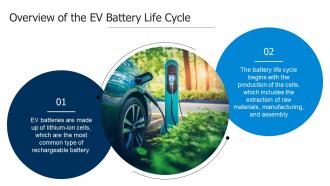
This PowerPoint presentation provides an overview of the electric vehicle battery life cycle. It covers the different stages of the life cycle, from production and assembly to disposal and recycling. It also examines the environmental impacts of electric vehicle batteries and the importance of proper disposal and recycling. The presentation also looks at the potential for reuse and repurposing of electric vehicle batteries. Finally, it provides an overview of the current and emerging technologies for extending the life cycle of electric vehicle batteries.
People who downloaded this PowerPoint presentation also viewed the following :
Electric Vehicle Battery Life Cycle Powerpoint Presentation And Google Slides ICP with all 21 slides:
Use our Electric Vehicle Battery Life Cycle Powerpoint Presentation And Google Slides ICP to effectively help you save your valuable time. They are readymade to fit into any presentation structure.










FAQs for Electric Vehicle Battery Life Cycle Powerpoint Presentation And
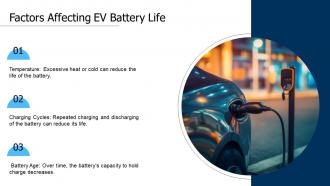
Heat's honestly your battery's worst nightmare - it just kills the chemistry way faster than anything else. Try to keep it between 20-80% charge most of the time instead of always topping off to 100%. Don't let it completely die either, that's rough on it too. Fast charging constantly isn't great, but honestly I still do it when I'm in a rush. Temperature extremes are brutal - my neighbor parks his Tesla in direct sun all day and wonders why his range dropped. Modern batteries can handle tons more cycles than old ones though, so that's nice.
So there's basically two main types you'll see. LFP batteries are like the reliable Honda of batteries - they'll do 3,000-5,000 charge cycles and don't get cranky in heat, just weigh more. NCM gives you better range and charges faster, but starts dying around 1,000-2,000 cycles. Look, all this chemistry stuff gets complicated fast. Here's my take: charge daily? Go LFP for sure. Need max range for road trips? NCM's probably worth it even though it won't last as long.
Oh man, temperature is everything with EV batteries! Heat above 95°F is the real killer - speeds up all the chemical stuff inside and basically cooks your cells over time. Cold weather sucks too but more for performance than permanent damage. Your phone probably gets sluggish in winter, right? Same deal but with a $15k battery pack. Try to keep it between 60-80°F if you can. Garage parking helps tons, and definitely pre-condition while you're still plugged in. Honestly wish more people knew this before buying.
So basically keep it between 20-80% charge - those extremes are what kill the battery. Don't leave it sitting at 100% for like a week either. Heat's the worst thing for these batteries, so shade is your friend. I try to avoid fast charging unless I'm road tripping or whatever. Cold weather? Warm up the battery while it's still plugged in if your car does that. Honestly just baby it a bit - same concept as your phone but replacing this thing costs like $15k lol.
Honestly, the battery tech is getting pretty wild these days. Solid-state batteries are replacing the liquid stuff, which means way less degradation over time. Silicon nanowires are beating out regular graphite anodes too - better energy density and they last longer. The management systems are insane now, like they'll actually optimize your charging patterns and keep temps perfect. Thermal management has improved a ton, plus lithium iron phosphate cathodes are becoming more common. When you're car shopping, definitely ask about active thermal management. Oh and check their battery warranty - some are way better than others.
Yeah, fast charging does wear down your battery faster, but honestly it's not as bad as everyone makes it sound. The extra heat and stress from pumping electricity in quickly just ages the cells more than normal charging - kinda like how chugging coffee hits different than sipping it slowly. Most newer EVs are pretty smart about protecting the battery though. I'd just use fast charging when you're road tripping or whatever, then stick to regular home charging for daily stuff. That's what I do anyway.
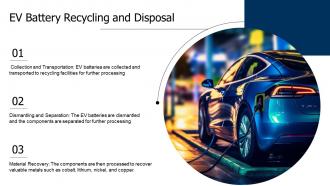
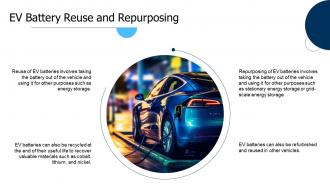
Oh man, battery recycling is actually a game changer for the environment. Toxic stuff stays out of landfills, plus we get to reuse all those expensive metals - lithium, cobalt, nickel, you name it. Mining for new materials is brutal on the planet and uses tons of energy. Recycling cuts way down on that mess. My cousin works in mining and the stories he tells... anyway, the trick is finding a proper recycling facility when your battery's toast. Most EV companies have programs now where they'll take it back. Way easier than I thought it'd be.
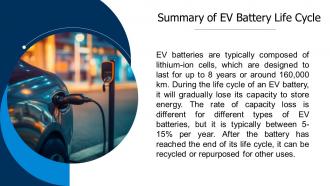
Yeah so battery replacement runs around $5k-15k, but honestly most EV batteries are lasting way longer than anyone thought they would. We're talking 8-10 years or 100k+ miles before you see real degradation. Plus most come with 8-year warranties anyway. Those old 2012 Tesla Model S cars? Their batteries are still kicking. Costs keep dropping too, so by the time you actually need a replacement it'll probably be way cheaper. I'd maybe budget like $1k-2k per year just in case, but realistically you'll trade the car in first.
Yeah dude, how you drive totally affects your EV battery life. Like, if you're constantly flooring it and slamming the brakes, you're creating way more heat and stress on those cells. Highway driving over 80mph is rough on batteries too - found that out the hard way last summer on a long trip. Heat and cold while driving don't help either. Honestly though, just drive smoother when you can and don't always use the fastest chargers. Eco mode is your friend. It's crazy how much these little changes can actually extend your battery's life by years.
So the big ones to watch are State of Health (SOH) and State of Charge (SOC). SOC is just how charged it is right now. SOH shows how degraded the battery's gotten over time - that's the important one. You'll also see capacity retention percentages and cycle counts. Heat's a killer for these things, so temperature matters way more than people think. Most cars show SOH in their diagnostics somewhere, though some hide it better than others. If you're buying used, don't go below 80% SOH unless you want range anxiety and a massive repair bill down the road.
So here's the deal - car companies test these batteries like crazy before setting warranties. They run thousands of charge cycles at different temps and speeds to figure out when capacity drops to around 70-80% of what you started with. Most end up offering 8 years/100k miles because that's when things really start declining. Tesla's being more aggressive with longer coverage though, which is cool. One thing to watch out for - these warranties usually cover gradual capacity loss, not total dead battery situations. Definitely check what percentage they'll guarantee you keep before buying.
Yeah, battery degradation is definitely the wild card here. You're looking at maybe 2-3% capacity loss each year, and if you get unlucky with timing, replacement could run you $10k-15k. Ouch. But here's the deal - most batteries actually last 8-10 years and have decent warranties backing them up. The newer EVs have way better battery management than the older models too, which helps. I'd honestly just factor replacement costs into your comparison shopping. Oh, and if you're really stressed about it? Leasing might be the move instead of buying.
Dude, the battery tech coming out is actually insane. Solid-state batteries are ditching that liquid stuff that breaks down over time. Silicon nanowires are replacing graphite anodes - I know it sounds nerdy but the test results are legit impressive. Tesla's working on these "million mile" batteries with lithium iron phosphate chemistry. Oh, and there's AI systems now that learn your driving patterns and optimize charging accordingly. Pretty smart stuff. If you're car shopping, definitely find one with active thermal management though. Heat absolutely destroys batteries faster than anything else.
So basically your EV has this built-in system that's like a helicopter parent for your battery. It stops overcharging, keeps temps from getting too hot (which totally kills batteries btw), and makes sure all the cells charge evenly. The system won't let you drain it completely either - apparently that's bad for the chemistry or whatever. You don't need to overthink it though. Just plug in when you need to and let the car handle the rest. It's doing all the battery protection stuff automatically so you can actually just drive the thing.
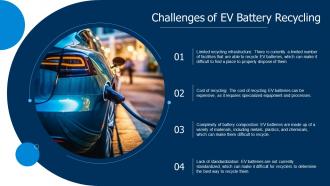
Honestly, it's still pretty messy. Cost is the biggest issue - recycling EV batteries is crazy expensive and you need specialized facilities to handle all the hazardous stuff. Each manufacturer uses different chemistry too, so there's no one-size-fits-all process yet. Second-life uses sound cool but require tons of testing to make sure they're safe. Infrastructure is slowly getting better though. Tesla and GM are pouring money into closed-loop systems, which is smart. If you're thinking about getting an EV, maybe check if the company has a take-back program first? Worth factoring those end-of-life costs in now.
-
A library of engaging, customizable and content-ready templates.
-
It is my first time working with them and that too on a friend's recommendation. I would say, I am not expecting such a worldly service at this low price.